
Quick wins for a faster PC:
Clear out junk files and repair common Windows errorsFree Scan →Scan for outdated or missing drivers - takes under a minuteDriver Scan →Repair Windows errors before they cause bigger problemsFix Now →iTechGuides is reader-supported. When you buy through links on our site, we may earn an affiliate commission. As an Amazon Associate I earn from qualifying purchases. Learn more
A YouTube live stream stopping on a low-cost VPS does not, by itself, prove the VPS is at fault. Start by recording the exact Live Control Room error and its time, then compare it with encoder logs, CPU use, and the VPS’s outbound network measurements. That evidence helps distinguish an encoder or settings problem from a capacity or connection issue.
Start with the stream’s status and the time it stopped
While the stream is running, open YouTube Studio’s Live Control Room and note the stream-health status, any exact error message, and when it appeared. The Live Control Room provides stream status, specific error messages, and real-time metrics; timing those observations makes it easier to compare them with VPS and encoder records. YouTube Help: See your live stream’s metrics



A health label is a clue, not a complete diagnosis. Record whether the stream stopped outright, became unstable, or continued in the encoder while YouTube showed a problem.
Free tools Windows power users keep installed
One-click scans. No signup required.
Check the encoder before blaming the VPS
YouTube advises using the latest encoder version and checking the stream directly in the encoder. If the encoder’s own output looks or sounds wrong, inspect its error messages and CPU load; if you are recording a local archive, review that too. YouTube’s troubleshooting guidance treats encoder output and outbound connectivity as separate possibilities. YouTube Help: Troubleshoot your YouTube live stream
#1 Best Overall
- Encoder output is bad or stops: look for encoder errors, dropped frames, and CPU pressure at the recorded failure time.
- Encoder output looks healthy but YouTube reports a problem: check outbound connectivity and available upload capacity.
- Neither the encoder nor YouTube records a clear cause: correlate timestamps across encoder logs and VPS CPU and network monitoring before changing providers or resources.
Measure VPS CPU and outbound network capacity during the interruption
Compare the encoder log timestamps with the VPS’s CPU use and the provider’s network monitoring. Look for CPU saturation, sustained outbound throughput that approaches the instance’s available capacity, and connection interruptions coinciding with the stream failure. These checks apply YouTube’s guidance to a VPS; they do not establish that any particular host or low-cost plan is defective.
YouTube recommends testing the outbound connection. Make sure the stream’s total bitrate fits available upload bandwidth and leave the recommended 20% headroom. A download-speed result alone does not demonstrate stable, sustained outbound capacity from the VPS to YouTube. YouTube Help: Streaming tips
Verify bitrate, keyframes, and streaming protocol
Use the settings for your chosen codec, resolution, and frame rate rather than choosing a bitrate without reference to the video format. YouTube’s published settings for H.264 recommend 3 Mbps at 720p/30 fps and 14 Mbps at 1080p/30 fps. The same YouTube settings guidance recommends CBR, a two-second keyframe interval that should not exceed four seconds, and RTMPS. Confirm the current recommendations in YouTube’s settings page because encoder guidance can change. YouTube Help: Choose live encoder settings, bitrates, and resolutions
Outdated Drivers Are Slowing You Down
One free scan finds every outdated or missing driver and matches the right update for your exact hardware.Free scan · exact hardware matchPC Slower Than It Used to Be?
A free scan shows the junk files, broken settings and background clutter dragging Windows down - then fixes them in one click.Free scan · Windows 10 & 11| Setting or check | YouTube guidance | What to verify |
|---|---|---|
| H.264 at 720p/30 fps | 3 Mbps recommended | Use this as a resolution- and frame-rate-specific reference, not a universal bitrate. |
| H.264 at 1080p/30 fps | 14 Mbps recommended | Check that available outbound capacity leaves the recommended headroom at the selected stream bitrate. |
| Rate control | CBR | Confirm the encoder profile is set to constant bitrate. |
| Keyframe interval | 2 seconds recommended; do not exceed 4 seconds | Check the encoder’s keyframe or GOP setting. |
| Protocol | RTMPS recommended | Use the protocol supported by the YouTube ingest configuration and encoder. |
Change one measured constraint at a time
After identifying a likely constraint, change only the relevant setting or resource, then repeat a representative test. That makes the result useful: if several variables change together, it becomes harder to tell which one affected the interruption.
Rank #3
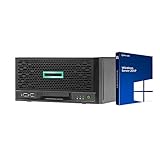
- HP MicroServer Gen10 Plus Tower Server for Business with Microsoft Windows Server 2019 OS!
- Intel Xeon E-2224 Quad-Core 3.4GHz 8MB CPU, Up To 4.6GHz Turbo
- 32GB (2 x 16GB) DDR4 PC4-21300 2666MHz Unbuffered Memory
- 16TB (4 x 4TB) 7.2K 6Gb/s SATA 3.5" HDDs in RAID
- Hard drives and memory upgrades included separately NOT installed, installation required.
- Bitrate is too close to measured outbound capacity: lower the bitrate, resolution, or frame rate, then retest with the recommended upload headroom.
- Encoder or VPS CPU is saturated: reduce encoding load or assess whether the VPS has adequate CPU resources for the encoder settings.
- Outbound connectivity drops at the failure time: investigate the VPS provider’s network path, connection stability, and plan limits. Consider a provider or resource change only if measurements point to that constraint.
YouTube’s public guidance does not identify a particular VPS provider as the cause of an individual failure. Switching hosts without evidence may add cost and work without addressing an encoder or bitrate problem.
Test the setup before relying on it
YouTube recommends setting up in advance, checking the preview, monitoring audio and video, and testing backup-encoder failover. Reproduce the conditions that matter—your intended resolution, frame rate, bitrate, video movement, and audio—then check the encoder and Live Control Room together. If a failure recurs, compare its timestamp against CPU, encoder, and outbound-network records. YouTube Help: YouTube live streaming tips
Rank #4
Or let it run in the cloud
If your goal is a 24/7 YouTube stream of uploaded video rather than a live camera feed, StreamNeo is a cloud option: upload a recording or build a playlist, add your YouTube stream key, and go live. It loops uploaded videos from the cloud, so nothing has to stay on at home. Any quality up to 4K 60fps streams as uploaded at one flat price per slot; there are no quality tiers or re-encoding. StreamNeo automatically recovers if YouTube drops the stream. The first day is free with no card, with one free day per account. Monthly billing is $9.99 per month. See StreamNeo, or start your free day.
The Tool Desk
Outbyte PC Repair FREEClear out junk files and repair common Windows errorsFree Scan →Outbyte Driver Updater FREEScan for outdated or missing drivers - takes under a minuteDriver Scan →Quick Recap
Best Value
Product prices and availability are accurate as of the date/time indicated and are subject to change. Any price and availability information displayed on Amazon at the time of purchase will apply.

