
Do these 3 things before closing this tab:
1Repair Windows errors before they cause bigger problems2Scan for outdated or missing drivers - takes under a minute3Clear out junk files and repair common Windows errorsiTechGuides is reader-supported. When you buy through links on our site, we may earn an affiliate commission. As an Amazon Associate I earn from qualifying purchases. Learn more
wpad.lan is usually a local hostname a device tries to resolve while looking for proxy settings; it is not a separate proxy protocol. WPAD (Web Proxy Auto-Discovery Protocol) helps a client find a PAC file, and the PAC file—not WPAD—contains the rules that decide whether a request goes through a proxy or connects directly.
What WPAD does—and what a PAC file does
WPAD automates finding the location of a Proxy Auto-Configuration (PAC) file. A client can discover a PAC URL using DHCP, DNS, or both, depending on the client’s implementation and configuration. After retrieving the file, the client evaluates its rules for requests. A PAC script can return one or more proxy choices or instruct the client to connect directly.
| # | Preview | Product | Price | |
|---|---|---|---|---|
| 1 |
|
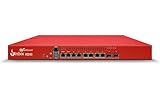
WatchGuard Firebox M295 High Availability Unit with 3 Year Standard Support - HA Device for... | $2,185.11 | Buy on Amazon |
In WinHTTP documentation, Microsoft describes PAC evaluation using FindProxyForURL(url, host). The script’s routing decision is separate from the discovery process: WPAD finds the file; PAC determines the route for a request. Microsoft also notes that the WPAD specification did not progress beyond an Internet-Draft and expired in May 2001. That describes the specification’s status, not whether operating systems and browsers implement WPAD.
Free tools Windows power users keep installed
One-click scans. No signup required.
Why a device may look for wpad.lan
DNS-based WPAD typically starts with the short name wpad. The device’s resolver may append configured DNS search suffixes when it tries to resolve that name. If a suffix is lan, a resulting lookup may be for wpad.lan. The actual name depends on the device’s DNS configuration and the network’s naming setup.
#1 Best Overall
- High Availability (HA) redundant unit for resilient failover and uptime. Operates only as the secondary in an HA pair and must be paired with a primary WatchGuard Firebox of the same model for synchronization and failover. Not a standalone appliance.
- WatchGuard Firebox M295 High Availability Unit with 3 Year Standard Support License (WGM29501603) - The Firebox M295 combines enterprise-grade security with multi-gig connectivity, SD-WAN, TLS decryption, and proxy-based inspection in a compact rackmount design.
- Standard Support covers software updates and round-the-clock emergency help. Add a Basic or Total Security Suite to activate IPS, gateway antivirus, and web filtering so threats are blocked before they reach users.
- Standard Support provides reliable technical assistance and software updates for WatchGuard Firebox appliances. Offering 24x7 help for emergencies and business-hours support for routine needs, it ensures your network stays secure and operational.
- Interfaces and continuity: 4x 2.5Gb RJ45, 4x 1Gb RJ45, 2x 10Gb SFP+ with VLANs and link aggregation, plus RIP, OSPF, BGP, and high availability to keep sites online.
The suffix does not make .lan a WPAD mode or a special WPAD standard. To understand a particular lookup, check the DNS zones served by the network and the suffix search list configured on the affected client. A name visible in a lookup log alone does not establish that a PAC file was found or that the client is using a proxy.
How clients discover the PAC URL
DHCP discovery
A DHCP server can provide a PAC URL through option 252. This can let clients on a managed network find the PAC file without relying on DNS search-suffix expansion. It only works as intended when the client supports DHCP-based WPAD and the option is configured and delivered on the relevant network.
Client behavior is not uniform. Chromium’s rolling proxy documentation says Chrome checks DHCP-based WPAD before DNS-based WPAD when auto-detection is enabled. It documents DHCP WPAD support in Chrome on Windows and ChromeOS, but not in Chrome on macOS itself. macOS may nevertheless place a DHCP-discovered PAC URL in system proxy settings, which is distinct from Chrome implementing DHCP WPAD under its own auto-detect behavior.
Recommended Free Tools
DNS discovery
With DNS-based WPAD, the client probes for wpad and relies on its configured resolver and suffixes to find a host. The host must provide a PAC file at the location expected by the implementation. A long suffix list can cause repeated unsuccessful DNS lookups and slow resolution. More importantly, a suffix outside the organization’s control can put discovery in an untrusted DNS zone: a client might find an attacker-controlled PAC host and be directed to an attacker-selected proxy.
Precedence and implementation differ
Do not assume every browser or operating system uses the same discovery order or supports the same methods. For example, Chromium documents DHCP before DNS for Chrome auto-detect, while platform integrations can also affect system proxy settings. Check the policy and resolver behavior of the specific client, and remember that Chromium’s documentation tracks its rolling main branch rather than a fixed release.
What wpad.lan does not tell you
- It does not identify a universal proxy server or prove that one is configured.
- It does not prove that a client downloaded or executed a PAC file.
- It does not specify whether the lookup came from DHCP discovery, DNS discovery, or another local configuration detail.
- It does not guarantee that all browsers, applications, or operating-system services will use the same proxy settings.
Microsoft’s Windows proxy guidance notes that applications that do not obtain settings from Internet Explorer may need their own proxy configuration. Google’s ChromeOS documentation likewise distinguishes proxy modes and organization policy. A successful setting in one browser is not proof that every application follows it.
Proxy configuration choices compared
| Approach | How it works | What to weigh |
|---|---|---|
| WPAD through DHCP or DNS | Client discovers a PAC URL automatically. | Convenient for managed networks, but depends on client support and trustworthy DHCP, DNS, and—when DNS is used—search suffixes. |
| Manual proxy settings | Configure a proxy address and any bypass list directly on the client. | Explicit and straightforward, but changes must be maintained on clients or distributed through management. Some applications may not inherit these settings. |
| Centrally managed settings | Distribute proxy configuration through an organization’s management policy, such as Group Policy or platform-specific policy. | Provides centralized control, but administrators still need to validate which platforms and applications receive and honor the policy. |
| Explicit PAC URL | Configure the PAC file’s location directly rather than discovering it through WPAD. | Retains PAC-based routing while removing the WPAD hostname-discovery step. The NIST NCCoE guide uses explicit PAC configuration through browser policy as an example mitigation, not as universal vendor setup guidance. |
| Direct connection | Do not use a proxy. | Appropriate only when network policy permits direct access; requests do not receive proxy routing or controls. |
Google’s ChromeOS documentation describes manual proxy settings, PAC scripts, auto-detect/WPAD, and direct access as distinct modes, along with organization-wide and per-network policy options. The available choices and controls depend on platform and management context.
What’s actually slowing this PC down?
Pick the symptom - the matching free tool is one click away.
Choosing an alternative to WPAD
Choose based on how much control the organization needs, how devices receive settings, and whether traffic must pass through a proxy. A useful comparison is:
- Administrator control: Is the DHCP server, DNS zone, PAC host, or endpoint policy under the organization’s control?
- Rollout and change management: Can settings be applied consistently to all intended devices, and how will changes reach them?
- Client coverage: Do the specific browsers, operating systems, and applications support the chosen configuration path?
- Network trust boundaries: Can an untrusted DHCP service, DNS response, or suffix influence the PAC location?
- Network changes: Must devices change proxy behavior as they move between networks?
- Routing requirement: Must requests use a proxy, or is direct access allowed?
For a managed environment that needs PAC routing but wants to avoid DNS-based WPAD discovery, an explicitly configured PAC URL is one option. Manual settings can suit a small number of clients or a fixed proxy, while centrally managed policy can simplify consistent deployment. Direct access is a separate choice, not a fallback that should be assumed safe or permitted.
Independent reader supportYour contribution helps us test, update, and keep practical guides available for everyone.Security and reliability checks for administrators
WPAD is a discovery convenience, so the trustworthiness of the discovery path matters. Chromium warns that DNS suffix expansion can both delay lookups and expose clients to a PAC host outside the organization’s administrative control. NIST NCCoE’s enterprise example also warns that if a WPAD host is unavailable, a browser may try a subsequent WPAD result controlled by an attacker. The guide explicitly presents its quick setup as insufficient for a secure configuration; treat it as design context, not a complete hardening standard.
- Control DNS zones and search suffixes used by managed clients; remove suffixes that should not participate in internal discovery.
- Scope DHCP option 252 to the networks and clients intended to use it.
- Secure the PAC file’s hosting and delivery, and control who can change its contents.
- Review how each client handles failed discovery and fallback rather than assuming it stops safely.
- Validate the effective policy, DNS resolution, PAC retrieval, and proxy behavior on representative clients and applications.
These checks address the risks described in Microsoft, Chromium, and NIST material; they are not a substitute for an organization-specific security standard.
Diagnosing a wpad.lan lookup
- Check the client’s effective proxy mode. Determine whether it is set to auto-detect/WPAD, an explicit PAC URL, a static proxy, or direct access. On managed devices, inspect the policy that applies to the user, device, or network.
- Inspect DNS context. Confirm which DNS servers and search suffixes the client is using, and identify the zone that answers the
wpadlookup. Do not assume the suffix from the observed hostname is the only configured suffix. - Check DHCP configuration if applicable. Verify whether option 252 is provided on that network and whether the particular client supports DHCP WPAD. Support varies by implementation; Chrome’s documented platform behavior is one example.
- Verify the PAC location and contents. If discovery returns a URL, check that the client can retrieve the PAC file and that its rules return the expected proxy or direct route for the request being tested.
- Test the application that actually fails. Compare its behavior with the browser or operating-system proxy settings; an application may use its own configuration rather than inheriting system settings.
- Review failure and fallback behavior. If the intended WPAD host cannot be reached, establish whether the client retries another result or uses another configured route. Avoid relying on undocumented assumptions about fallback.
Which configuration should you use?
Use WPAD when automatic discovery is useful and the organization can control the relevant DHCP or DNS path, PAC hosting, and client behavior. Use an explicit PAC URL or centrally managed proxy policy when you want clearer control over which PAC file clients receive. Use manual settings where the environment is small or static and maintenance is practical. Choose direct access only when policy allows traffic to bypass the proxy.
Microsoft’s WinHTTP documentation describes WPAD as a discovery mechanism despite the expired Internet-Draft status of its specification. For platform-specific behavior, Microsoft Learn’s Windows proxy guidance, Chromium’s proxy documentation, and Google’s ChromeOS proxy guide describe different implementation and policy contexts; apply the one that matches the client under investigation.
Quick Recap
Product prices and availability are accurate as of the date/time indicated and are subject to change. Any price and availability information displayed on Amazon at the time of purchase will apply.

