
Quick wins for a faster PC:
Scan for outdated or missing drivers - takes under a minuteDriver Scan →Clear out junk files and repair common Windows errorsFree Scan →iTechGuides is reader-supported. When you buy through links on our site, we may earn an affiliate commission. As an Amazon Associate I earn from qualifying purchases. Learn more
“Wireless mobile modes” has no single standard definition. It may refer to cellular generations such as 4G LTE and 5G, wireless links such as Wi-Fi and Bluetooth, or phone settings such as Airplane Mode. The label’s context tells you which one it means.
What does “wireless mobile mode” mean?
It is a broad, context-dependent phrase—not the name of one universal technology or a fixed list of phone modes. A carrier or network document may use it for cellular technology; a device menu may group different wireless connections; and a phone control may change which connections are enabled.
To interpret a label, first check where it appears: a network-status icon, a connectivity menu, or a setting. These categories describe different things and should not be treated as interchangeable.
Cellular generations: 2G, 3G, 4G LTE, and 5G
The “G” in 2G, 3G, 4G, and 5G refers to a generation of mobile-network technology. These labels identify cellular service categories, not a guaranteed speed or quality at a particular location. The GSMA glossary describes the generations in terms of successive wireless telephone and mobile telecommunications technologies, with 3G associated with the ITU’s IMT-2000 specifications: GSMA glossary.
#1 Best Overall

- YOUR CONTENT, SUPER SMOOTH: The ultra-clear 6.7" FHD+ Super AMOLED display of Galaxy A17 5G helps bring your content to life, whether you're scrolling through recipes or video chatting with loved ones.¹
- LIVE FAST. CHARGE FASTER: Focus more on the moment and less on your battery percentage with Galaxy A17 5G. Super Fast Charging powers up your battery so you can get back to life sooner.²
- MEMORIES MADE PICTURE PERFECT: Capture every angle in stunning clarity, from wide family photos to close-ups of friends, with the triple-lens camera on Galaxy A17 5G.
- NEED MORE STORAGE? WE HAVE YOU COVERED: With an improved 2TB of expandable storage, Galaxy A17 5G makes it easy to keep cherished photos, videos and important files readily accessible whenever you need them.³
- BUILT TO LAST: With an improved IP54 rating, Galaxy A17 5G is even more durable than before.⁴ It’s built to resist splashes and dust and comes with a stronger yet slimmer Gorilla Glass Victus front and Glass Fiber Reinforced Polymer back.
In its U.S. Broadband Data Collection, the Federal Communications Commission lists 3G, 4G LTE, and 5G-NR as mobile technology categories. The FCC maps 4G LTE to 3GPP Releases 8–14 and 5G-NR to Releases 15–17. Those release ranges define reporting categories; they are not speed measurements or guarantees: FCC mobile technology codes.
- LTE: A cellular technology used for 4G mobile service. A phone may show “LTE” rather than “4G LTE,” depending on the device and carrier.
- 5G-NR: The FCC’s label for fifth-generation mobile wireless service using 5G New Radio. The cited FCC category covers 3GPP Releases 15–17.
What does 5G mean on your phone? An icon indicates that a compatible device can use a carrier’s available 5G network, subject to the carrier, model, and region. It does not by itself establish the connection’s speed or reliability. Apple notes that 5G availability depends on country or region and supported models: Apple’s guide to 5G and LTE status icons.
Rank #2

- Please note, this device does not support E-SIM; This 4G model is compatible with all GSM networks worldwide outside of the U.S. In the US, ONLY compatible with T-Mobile and their MVNO's (Metro and Standup). It will NOT work with Verizon, Spectrum, AT&T, Total Wireless, other CDMA carriers, it is also not compatible with their MVNO (Visible, Xfinity Mobile, US Mobile, Cricket Wireless, etc).
- Compatibility with certain third-party devices and accessibility accessories, including some hearing aids, may vary depending on manufacturer support, Bluetooth protocols, software compatibility, and regional firmware limitations. For additional hearing aid compatibility information, please refer to Samsung’s official support documentation.
- 4G LTE Bands: B1/B3/B5/B7/B8/B20/B28/B38/B40/B41
- Display: Super AMOLED, 90Hz, 800 nits (HBM) | 6.7 inches, 110.2 cm2 (~86.0% screen-to-body ratio) | 1080 x 2340 pixels, 19.5:9 ratio (~385 ppi density)
- Camera: 50 MP, f/1.8, (wide), 1/2.76", 0.64µm, AF | 50 MP, f/1.8, (wide), 1/2.76", 0.64µm, AF | 2 MP, f/2.4, (macro)
Likewise, an LTE label identifies a type of cellular connection, not a promise that it will perform better than every other connection in every situation.
Do these 3 things before closing this tab:
1Repair Windows errors before they cause bigger problems2Scan for outdated or missing drivers - takes under a minute3Clear out junk files and repair common Windows errorsOther wireless connections are not cellular generations
Phones can use several kinds of wireless communication alongside cellular service. They differ by purpose and range, so Wi-Fi, Bluetooth, GPS, and NFC are not alternate names for 3G, 4G, or 5G.
Rank #3

- Please note, this device does not support E-SIM; This 4G model is compatible with all GSM networks worldwide outside of the U.S. In the US, ONLY compatible with T-Mobile and their MVNO's (Metro and Standup). It will NOT work with other CDMA carriers, and it is also not compatible with their MVNO (Visible, Xfinity Mobile, US Mobile, Cricket Wireless, etc).
- Compatibility with certain third-party devices and accessibility accessories, including some hearing aids, may vary depending on manufacturer support, Bluetooth protocols, software compatibility, and regional firmware limitations. For additional hearing aid compatibility information, please refer to Samsung’s official support documentation.
- Camera: 50 MP, f/1.8, (wide), 1/2.76", 0.64µm, AF | 50 MP, f/1.8, (wide), 1/2.76", 0.64µm, AF | 2 MP, f/2.4, (macro). Battery: 5000 mAh, non-removable | A power adapter is NOT included.
- Wi-Fi: Wireless local-area networking, commonly through an access point such as a home router. A phone can use Wi-Fi for internet access instead of cellular data.
- Bluetooth: Short-range personal-area communication, often used to connect accessories such as headphones.
- GNSS/GPS: Satellite-based positioning. Satellite navigation operates independently of cellular networks, though other phone services may use a network connection.
- NFC: Short-range, low-throughput radio communication used in applications such as mobile payments.
These distinctions follow the National Institute of Standards and Technology’s descriptions of wireless technologies: NIST GPS and timing overview.
Phone modes and settings change how connections behave
Airplane Mode
Airplane Mode is a device setting, not a cellular generation. It changes wireless functions, but it should not be assumed to disable every radio in the same way on every phone. Google’s Pixel instructions say Wi-Fi and Bluetooth turn off when Airplane Mode is first enabled; users can turn them back on, and Pixel remembers that choice: Google Pixel instructions for Airplane Mode. Controls and behavior can vary by model, software, and local requirements.
Rank #4

- Charger NOT Included, 6.7" Super AMOLED FHD+, 90Hz Refresh Rate, 385 ppi, 800 nits (HBM), 1080x2340px, 5000mAh Battery
- 128GB, 4GB RAM, microSDXC, Exynos 1330 (5nm), Octa-Core, Mali-G68 MP2 or Mali-G57 MC2 GPU
- Rear Camera: 50MP, f/1.8 (wide) + 5MP, f/2.2 (ultrawide) + 2MP, f/2.4 (macro), LED flash, panorama, HDR; Front Camera: 13MP, f/2.0, Android 14, up to 6 major Android upgrades, One UI 6.1
- 3G: HSDPA 850/900/1700(AWS)/1900/2100; 4G LTE: 1/2/3/4/5/7/12/13/14/20/25/26/28/29/30/38/39/40/41/48/66/71, 5G: 2/5/25/41/66/71/77/78 SA/NSA/Sub6/mmWave - Nano-SIM + eSIM
- US Model – Global Connectivity – Compatible with Most GSM Carriers like T-Mobile, AT&T, MetroPCS, etc. Will Also work with CDMA Carriers Such as Verizon, Straight Talk.
Adaptive Connectivity
On supported Pixel phones, Adaptive Connectivity can enable 5G when an app needs more speed, such as when streaming or downloading video. This setting changes device behavior; it is not a separate generation of network service. Availability can depend on the phone model, carrier, and software version. Google lists it among Pixel network settings: Google Pixel network and connectivity settings.
Wi-Fi, mobile data, hotspot, and VPN controls
Phone network menus may group Wi-Fi, mobile network, hotspot or tethering, VPN, and Airplane Mode together. They are related controls, but each serves a different function: Wi-Fi connects to a local wireless network, mobile data uses a carrier network, hotspot shares a connection, and a VPN routes network traffic through a configured service. Menu wording and steps vary by phone and software version. Check with your mobile operator for mobile-data fees and service details.
Best Value
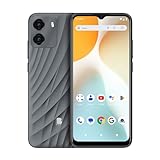
- GSM Unlocked: Enjoy seamless connectivity with your preferred GSM carrier. Compatible with T-Mobile, Metro PCS, AT&T, Cricket, Mint Mobile and other GSM networks. SIM card not included. For network compatibility, please check with your carrier. Note: Not compatible with CDMA networks like Verizon (Visible, Spectrum Mobile, US Mobile, Total Wireless, Straight Talk Wireless)
- Boundless Views: Enjoy immersive viewing on the spacious 6.5” HD+ display. Whether you're watching videos, browsing, or gaming, every detail comes through with stunning clarity.
- Smooth Performance, All Day: Powered by an efficient octa-core processor, the G35 ensures smooth performance for your everyday tasks. Enjoy faster app launches, seamless multitasking, and reliable speed.
- Snap, Share, Repeat: The G35 features a dual rear camera setup for sharp, detailed shots, and a front-facing camera that’s perfect for selfies and video calls. Capture every moment with ease and clarity.
- Effortless Access: Keep your phone secure with A.I. Face ID technology. Instantly unlock your G35 with just a glance. It's fast, easy, and secure.
How to read a wireless label or icon
- Identify where it appears. A status-bar label such as 5G or LTE describes a cellular-network connection or availability. A Wi-Fi or Bluetooth icon identifies a different wireless link. A control named Airplane Mode is a setting.
- Check device compatibility and carrier support. A phone must support the relevant technology, and the carrier must offer it in the area. Some labels also depend on country or region.
- Separate availability from performance. An icon is not a speed test. Actual service depends on conditions beyond the label, including network availability and the connection in use.
- Use the phone’s documentation for settings. If you are unsure what a mode changes, look up the exact setting for your model and software version. If asking for help, provide the phone model and the label as it appears.
Apple’s iPhone guide, for example, distinguishes Wi-Fi, cellular signal strength, Airplane Mode, 5G and carrier-marketed 5G variants, LTE, 3G, EDGE, and GPRS/1xRTT icons. Which labels appear depends on supported models and carrier availability in a country or region: Apple’s status icon guide.
Does Airplane Mode explain aviation rules?
No. The phone setting and rules for using wireless equipment aboard aircraft are separate questions. In the United States, the FAA says 5G C-band and flight operations can coexist safely under mitigations and aircraft radio-altimeter retrofits through at least January 1, 2028. That statement concerns U.S. 5G C-band aviation measures; it is not a universal definition of Airplane Mode or a rule for every country: FAA update on 5G and aviation safety.
Quick Recap
Product prices and availability are accurate as of the date/time indicated and are subject to change. Any price and availability information displayed on Amazon at the time of purchase will apply.

