
Recommended Free Tools
Supersonic aircraft create sonic booms because their shock waves travel through the atmosphere and reach the ground as a pressure disturbance. Aircraft shaping can weaken the pattern people hear, while route and flight-parameter planning can help predict and manage where that sound reaches the ground. Neither approach guarantees silence: atmospheric conditions also affect propagation, and NASA’s X-59 is a research demonstrator—not approval for passenger flights over land.
Why do supersonic aircraft create sonic booms?
An aircraft flying faster than sound produces shock waves. As those pressure disturbances spread through the atmosphere, people on the ground hear a sonic boom when the waves reach them. A boom is therefore not simply the sound of an aircraft passing overhead; it is the ground-level result of shock waves generated and propagated during supersonic flight.
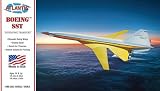
For a conventional aircraft, shock waves from different parts of the airframe can merge as they expand away from the aircraft. NASA describes that coalescence as producing two distinct, stronger booms. The resulting ground signature depends not only on the aircraft, but also on how the waves travel through the atmosphere.
What is a low-boom aircraft?
A low-boom aircraft is shaped to produce a less intense sonic-boom signature at the ground. NASA says the X-59’s distinct hull shape is designed to keep shock waves from merging into the stronger pattern associated with conventional aircraft. Its intended ground perception is a series of softer thumps rather than the familiar stronger boom. That is a design goal being studied, not a guarantee of silence under all operating and atmospheric conditions. NASA’s 2018 explanation of the X-plane’s design describes the engineering premise.
#1 Best Overall
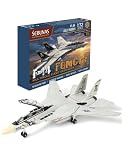
- Experience the legendary F-14 Tomcat through a highly detailed model designed for aviation collectors and hobby enthusiasts. The finished model becomes a striking desktop or showcase centerpiece.
- This 3D puzzle is designed for beginner-level assembly enthusiasts, offering an immersive hands-on building experience that helps cultivate patience, concentration, and mechanical problem-solving skills.
- This product is manufactured using high-quality, environmentally friendly plastic and employs an ultra-fine etching process to ensure durability, structural precision, and realistic aircraft details.
- Encourages understanding of aircraft engineering concepts while improving hand-eye coordination and spatial thinking through engaging mechanical assembly.
- Ideal gift for childs, engineers, collectors, model builders, and puzzle lovers for birthdays, Children’s Day, Christmas, or special hobby occasions.
Can route planning reduce the impact of a sonic boom?
Yes. Route planning and aircraft controls can help manage the boom’s footprint—where and how strongly it reaches the ground—but they do not eliminate the shock waves. NASA describes software called CISBoomDA that estimates a boom footprint, assesses route impact, displays real-time information, and provides guidance that includes Mach and altitude options. Such software is specialized aircraft technology, not an ordinary travel-planning app. NASA’s supersonic technologies overview describes these research capabilities.
NASA also describes supersonic autopilot research intended to control flight path and Mach changes to reduce ground-level boom noise. The practical distinction is that airframe shaping changes the shock-wave pattern the aircraft produces, while operational planning uses predictions and flight adjustments to manage exposure and footprint location. These are complementary approaches, not substitutes for one another.
Rank #2

- IFF antenna array in front of the cockpit distinguishes this CCIP-equipped model from other F-16s.
- Curved form of the F-16 accurately reproduced with trademark Tamiya precision.
- Moveable horizontal stabilizers. "Flaperons" can be modelled in the up or down positions.
- Full ordnance load including AGM-88 HARM, AIM-120C AMRAAM, AIM-9M/X Sidewinder, ECM pod, and fuel tanks included.
- Centerline and inner wing pylons as well as tail assembly feature polycaps to allow easy detachment for storage.
What affects the boom people hear?
The aircraft’s shape and flight path are only part of the picture. The atmosphere influences how shock waves propagate, and NASA’s research includes work on atmospheric turbulence and boom propagation. That variability is one reason a predicted footprint should be understood as an operational estimate, not a promise that every person beneath a route will hear the same sound.
Human response is another part of the problem. Sound, vibration, and rattling may contribute differently to annoyance. In a NASA article published November 24, 2015, the agency described research separating these effects and said the results of a particular vibration test were still being analyzed at that time. Those findings should not be treated as a final consensus or a universal acceptable-loudness threshold.
The Tool Desk
Outbyte Driver Updater FREEScan for outdated or missing drivers - takes under a minuteDriver Scan →Outbyte PC Repair FREERepair Windows errors before they cause bigger problemsFix Now →Rank #3
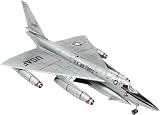
- 1/91
- 1957
- Atlantis Modelive ()
What is NASA’s X-59, and does it allow passenger flights over land?
The X-59 Quesst is a NASA research demonstrator intended to gather data about low-boom aircraft and community response. NASA’s stated aim is for those measurements and responses to inform the FAA and the International Civil Aviation Organization (ICAO) as they consider possible future rules. The research purpose does not mean the aircraft is a commercial airliner or that commercial supersonic passenger flights over land have been approved.
NASA’s TechPort project record, updated February 22, 2024, describes community testing intended to build a database linking public annoyance with relevant noise measures for regulators. That is a regulatory input, not evidence that a new noise-based rule has already been adopted.
Rank #4
What stands in the way of commercial supersonic service?
Overland boom restrictions are not the only challenge. NASA’s High-Speed Market Studies page, published June 18, 2024 and last updated June 22, 2026, says current restrictions on overland sonic booms, takeoff and landing noise, and engine emissions prohibit high-speed commercial aircraft operations. NASA reports that initial studies considered aircraft operating at Mach 2–4 and that later studies found the most profitable market at the lower end of that range. Those are findings from the studies NASA summarizes, not a guaranteed forecast of future service.
Quick Recap
Best Value

- U.S. Air Force's supersonic strategic bomber with vaaiable-sweep wing
- Muti-Colored Parts(MCP), no painting needed
- Main wings can be build at minimum sweep or maxium sweep
- Landing gears and bomb bays can be built open or closed
- Cartograf decal included
Product prices and availability are accurate as of the date/time indicated and are subject to change. Any price and availability information displayed on Amazon at the time of purchase will apply.
Do these 3 things before closing this tab:
1Scan for outdated or missing drivers - takes under a minute2Repair Windows errors before they cause bigger problems3Fix the driver behind crashes, sound loss and screen glitches
