
Quick wins for a faster PC:
Repair Windows errors before they cause bigger problemsFix Now →Fix the driver behind crashes, sound loss and screen glitchesFind Drivers →Clear out junk files and repair common Windows errorsFree Scan →iTechGuides is reader-supported. When you buy through links on our site, we may earn an affiliate commission. As an Amazon Associate I earn from qualifying purchases. Learn more
Remote workers report higher engagement in Gallup’s global comparison, but the data do not show that remote work causes it. Gallup found 31% of fully remote workers were engaged, versus 23% of hybrid workers, 23% of on-site workers whose jobs could be done remotely, and 19% of on-site workers whose jobs could not. Autonomy, strengths-based work, and fewer interruptions may help explain the difference; stress and lower overall wellbeing show why engagement is only part of the picture.
What higher engagement means—and what it does not
Engagement describes how involved and enthusiastic people are about their work. It is not the same as happiness, low stress, or overall wellbeing. Gallup’s May 2025 global comparison found that fully remote workers were more likely to be engaged than the other groups, but less likely to be thriving than hybrid and on-site remote-capable workers.
| Work arrangement | Engaged | Thriving | Experienced stress the previous day |
|---|---|---|---|
| Fully remote | 31% | 36% | 45% |
| Hybrid | 23% | 42% | 46% |
| On-site, remote-capable | 23% | 42% | 39% |
| On-site, not remote-capable | 19% | 30% | 38% |
These are reported differences across work arrangements, not evidence that changing someone’s location will produce the same outcome. Gallup’s comparison is global; its figures should not be treated as a controlled experiment or merged with findings from separate U.S. studies.
Free tools Windows power users keep installed
One-click scans. No signup required.
Gallup also found that 57% of fully remote workers were actively looking or passively watching for other job opportunities. That share was 47% among fully remote workers who were engaged and 38% among those who were both engaged and thriving. Engagement can coexist with job-search interest, so it is not a stand-alone measure of retention.
#1 Best Overall

- Digital Stereo Sound: Fine-tuned drivers provide enhanced digital audio for music, calls, meetings and more
- Rotating Noise Canceling Mic: Minimizes unwanted background noise for clear conversations; the rotating boom arm can be tucked out of the way when you’re not using it
- Handy In-line Controls: Simple in-line controls on the headset cable let you adjust the volume or mute calls without disruption
- Plug-and-Play USB Computer Headset: Simply plug the USB-A connector into your computer and you’re ready to talk or listen without the need to install software
- Padded Comfort: Comfortable headphones with adjustable headband features swivel-mounted, leatherette ear cushions for hours of comfort and is easy to clean
Five reasons remote teams may report higher engagement
These are plausible explanations for the pattern, not a validated five-factor model or five causes isolated by an experiment.
1. More autonomy over work
Remote work can give employees more control over when and how they complete tasks. Gallup identifies autonomy as a possible explanation for higher engagement. Greater control may help people organize work around their focus and energy, but it also asks them to manage their own time and boundaries. Without clear expectations or manageable workloads, that responsibility can become another source of stress.
Rank #2

- Crystal-Clear Calls with Noise Cancelling Mic:Our bluetooth headset with microphone features advanced noise cancelling technology, filtering out 99% of background noise like keyboard clicks and office chatter. The built-in mute button lets you instantly pause calls for privacy, making this noise cancelling headset perfect for call centers, open offices, and remote work.
- Seamless Dual-Device Connection for Multi-Tasking:This wireless headset for work connects to your PC/laptop and cellphone simultaneously, allowing you to switch between Zoom meetings and business calls with one click. No more disconnecting and reconnecting—stay productive during back-to-back meetings with this computer headset with microphone.
- 30H All-Day Battery Life with Convenient Charging Base:Get up to 30 hours of continuous talk time on a single charge with this wireless bluetooth headset. The included plug-and-play charging base lets you charge the headset between meetings, so you never miss an important call. Ideal for heavy daily use, this headset with mic is always ready for work.
- All-Day Comfort for Long Work Hours:Designed with ultra-soft breathable ear cushions and an adjustable padded headband, this computer headset with microphone keeps you comfortable even after 8+ hours of video calls. The lightweight design won’t strain your head or ears, making these headsets with microphone for work perfect for remote workers and call center agents.
- Universal Compatibility with All Office Platforms:This bluetooth headset works seamlessly with Zoom, Microsoft Teams, Skype, Webex, and most video conferencing apps. It’s compatible with Windows, Mac, PC, laptops, and smartphones, so you can use it anywhere you work—at home, in the office, or on the go.
2. More opportunity to use personal strengths
Engagement is more likely when people can apply their strengths to meaningful work. Remote work may make it easier to shape a workday around individual ways of concentrating or solving problems, but location alone does not ensure a good fit between a person’s skills and assignments. Gallup recommends that managers understand employees’ strengths, clarify expectations, coach them, and remove obstacles that prevent them from doing their best work.
3. More time for focused work
For tasks that can be done independently, fewer interruptions or less time spent moving between workspaces may create more opportunity for sustained concentration. Gallup suggests that reaching focus or “flow” could contribute to engagement among remote workers. The benefit is less certain for work that depends on rapid coordination, shared equipment, or frequent informal decisions; those teams still need deliberate ways to collaborate.
Rank #3

- Great Noise Cancelling & Mute Function: Experience crystal-clear calls with environmental noise cancelling (ENC) technology in our wireless headset. Our noise cancelling headphones for work blocks most background distractions (loud pets/children), making it the ideal headset for noisy environments. One-touch mute button instantly silences your mic during Zoom/Teams meetings.【NOTE】 Mute function activates only during calls
- Bluetooth 5.3 & Dedicated USB Dongle: Our Bluetooth headset features low-latency transmission for music/video calls, and includes a USB-A adapter for Windows PC (non-Bluetooth compatible), making it a versatile computer headset. It works seamlessly with popular platforms like Webex, Zoom, MS Teams, etc.【NOTE】Dongle incompatible with desk phones or landlines. Remove it when the headset is not in use
- Dual Pairing & Extended Mobility: Boost productivity by connecting this work headset to your laptop and smartphone simultaneously. This wireless headset with mic for work lets you seamlessly switch between conference calls and mobile chats, while its 33ft Bluetooth range enables free movement during meetings or calls—ideal for dynamic office setups.
- 40-Hour Battery & Rapid Charge: The 600mAh rechargeable battery delivers 40hrs talk time, with a full charge in just 2 hours using the included charging stand. Perfect for remote work, hybrid office, and business travel, this office headset keeps up with your busy schedule.【NOTE】Can be used while charging, but power off is recommended for optimal safety and battery longevity.
- All-DayComfort: Our Bluetooth headset for work features an adjustable headband and memory foam earcups, engineered for long-wearing comfort with breathable protein leather ear cushions. The flexible boom mic ensures voice clarity, making it a reliable wireless headset with mic for all-day use. A dedicated MFB button supports voice assistant access (Siri/Google) for added convenience.【NOTE】MFB button controls smartphone functions only (not computer apps)
4. More efficient use of time and flexibility
Flexibility can help employees fit work around personal responsibilities and use their working time more deliberately. That can make work feel more manageable and support involvement. It is a potential advantage, not a universal result: meetings spread across time zones, constant availability, or blurred work-home boundaries can consume the time flexibility is meant to protect.
5. More intentional management and coordination
Distance makes implicit expectations easier to miss. A team that agrees how to communicate, when people are available, how decisions get made, and when to meet can reduce uncertainty and make it easier for employees to contribute. In Gallup’s nationally representative U.S. study of 2,877 hybrid workers, 48% said their team had not discussed a formal or informal collaboration plan. Workers whose teams had a plan were 66% more likely to be engaged and 29% less likely to be burned out. Those are associations, not proof that a plan alone caused either outcome.
Rank #4
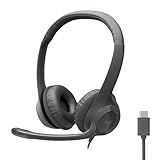
- Digital Stereo Sound: Fine-tuned drivers provide enhanced digital audio for calls, meetings, music, and more
- Rotating Noise-Canceling Mic: Minimizes unwanted background noise for clear conversations; the rotating boom arm can be tucked out of the way when not in use
- Handy Inline Controls: Simple inline controls on the headset cable let you adjust the volume or mute calls without disruption
- USB-C Plug-and-Play: Simply plug the USB-C cable into your computer, including MacBook Neo laptops, and you're ready to talk or listen without installing software.
- Padded Comfort: Comfortable USB C headphones with adjustable headband feature swivel-mounted, leatherette ear cushions for hours of comfort
How managers can support engagement without increasing strain
A useful remote or hybrid working agreement should answer practical questions rather than impose meetings for their own sake. Gallup’s hybrid-team findings support discussing a collaboration plan, setting availability expectations, holding regular team check-ins, and reviewing how well the arrangements work.
What’s actually slowing this PC down?
Pick the symptom - the matching free tool is one click away.
- Agree on communication: Define which channels are for urgent requests, routine updates, and decisions, along with expected response times.
- Make availability visible: Set shared hours for collaboration where needed, while making clear when employees can focus or disconnect.
- Match coordination to the work: Use live meetings when discussion or a decision requires them; use written updates when a task does not need everyone at once.
- Check workload and wellbeing: Ask about stress, isolation, and workload—not just output or engagement—and adjust practices when the team is struggling.
- Review the agreement: Revisit it periodically as tasks, team membership, or working arrangements change.
Gallup’s broader guidance also emphasizes effective managers, clear expectations, coaching, purpose, and aligning work with strengths. These are management practices, not automatic benefits of remote work.
Why the numbers do not prove remote work causes engagement
People and jobs differ in ways that can influence both where they work and how they feel about work. A global comparison can show that engagement rates differ by arrangement, but it cannot by itself tell whether location caused the difference or whether other factors contributed.
A 2026 study by Christos A. Makridis and Jason Schloetzer examined nearly 165,000 employees and found that the positive association between more frequent remote work and job satisfaction diminished substantially after accounting for compensation, occupation, demographics, and workplace characteristics. The study measured job satisfaction and retention-related outcomes, not Gallup’s engagement measure, so it does not directly explain Gallup’s engagement percentages. It does reinforce the need to consider job and workplace differences rather than credit location alone.
Quick Recap
Sources
- Ryan Pendell, Gallup, “The Remote Work Paradox: Higher Engagement, Lower Wellbeing”, May 7, 2025.
- Ben Wigert and Sangeeta Agrawal, Gallup, “How to Boost Productivity in Hybrid Teams”, July 18, 2024.
- Christos A. Makridis and Jason Schloetzer, “How Do Different Remote Work Arrangements Impact Employee Job Satisfaction and Retention?”, Management Science, published online February 13, 2026.
- Gallup, “A Strategic Guide for Managing Hybrid and Remote Teams”.
Product prices and availability are accurate as of the date/time indicated and are subject to change. Any price and availability information displayed on Amazon at the time of purchase will apply.

