
Do these 3 things before closing this tab:
1Fix the driver behind crashes, sound loss and screen glitches2Repair Windows errors before they cause bigger problems3Scan for outdated or missing drivers - takes under a minutePC trackpads are not inherently bad, but the Windows laptop market is inconsistent. For years, manufacturers combined inexpensive touchpad hardware, mechanical click mechanisms, vendor-specific drivers and uneven tuning. Apple controls the MacBook’s sensor, surface, firmware, haptics, chassis and operating-system behavior as one system, so its trackpads tend to feel more consistent. Windows has narrowed the software gap with Precision Touchpad, yet the laptop maker still determines the pad’s size, surface, rigidity, sensor, firmware and feedback.
What “a bad trackpad” actually means
“Bad” can describe several different failures. Separating them helps identify whether the cause is Windows settings, a driver, firmware, physical design or a defective part.
- Cursor movement is jerky, delayed or difficult to control in small increments.
- Scrolling is too fast, too slow, uneven or intermittently stops.
- Two-finger scrolling or three- and four-finger gestures fail.
- Palm rejection blocks the start of an intentional movement, or allows accidental touches while typing.
- Taps do not register reliably, or dragging fails when you hold the surface down.
- Clicking feels easier near the bottom than near the top, or the pad flexes, rattles or sounds hollow.
- The surface is rough, sticky, glossy, undersized or badly positioned under the keyboard.
- The cursor jumps, one area does not respond, or the pad becomes hard to click.
Tracking accuracy, pointer acceleration, gesture interpretation, click mechanics and surface feel are separate parts of the experience. A driver update can fix one without fixing the others.
“PC trackpad” is not one technology
Windows laptops fall into broad categories:
- Legacy or vendor-specific touchpads: Often depend on Synaptics, ELAN or another manufacturer package for gestures and filtering.
- Precision mechanical touchpads: Use Windows’ standardized input model but still rely on a physically moving or flexing click surface.
- Glass Precision touchpads: Add a smoother, usually larger surface; the click may still be mechanical.
- Haptic Precision touchpads: Keep a rigid surface and simulate a click with an actuator and controlled vibration.
Synaptics describes its touchpad family as configurable hardware with OEM-customized drivers, which illustrates why two Windows laptops can expose very different behavior even when both run the same Windows release: Synaptics touchpad family.
#1 Best Overall

- Spacious Design: Measuring 21.1" wide and 14.1" deep, our lap desk comfortably fits most laptops up to 15.6". Extra room for accessories ensures convenience.
- Enhanced Functionality: Packed with handy features, including a 5x9" precision tracking mouse pad and a built-in phone slot for seamless work or video calls. Plus, enjoy ergonomic support with the integrated cushioned wrist rest.
- Cool Comfort: Enjoy a stable surface with our lap desk's dual bolster cushion, designed for comfort and airflow, keeping your lap cool during extended use.
- Durable Surface: Work with confidence on our lap desk's solid surface, featuring a sleek black carbon color, ensuring optimal air circulation to prevent your laptop from overheating.
- On-the-Go Convenience: With an integrated handle and lightweight design (2.8 lbs), our lap desk is portable for travel or moving around the house, offering flexibility in any space.
Why PC trackpads historically felt worse
A fragmented hardware market
Windows has to support many laptop makers, touchpad suppliers, sensor designs, chassis layouts and price points. Apple ships a comparatively narrow range of MacBooks and can qualify one integrated design repeatedly. On PCs, the operating system often receives a component selected and tuned by each OEM.
Cost pressure
A laptop budget must cover the processor, display, memory, storage, battery, cooling, keyboard, wireless hardware and chassis. On low-margin models, the touchpad may receive a smaller active area, plastic instead of glass, a simpler sensor, a less rigid mount and less engineering time for tuning and validation. These are recurring economic trade-offs, not a rule that every inexpensive laptop is poor.
Vendor-specific drivers and firmware
Older Windows designs commonly relied on separate control panels and driver packages. That software could provide useful gestures, but it also created more opportunities for inconsistent defaults, outdated packages, broken updates and manufacturer-specific filtering.
Mechanical click limitations
A conventional clickpad pivots or flexes against a switch. Leverage changes across the surface, so the bottom may click easily while the top feels stiff. Holding that mechanism down while dragging can be awkward, and tolerances in the chassis can produce wobble, noise or an uneven click.
Outdated Drivers Are Slowing You Down
One free scan finds every outdated or missing driver and matches the right update for your exact hardware.Free scan · exact hardware matchWindows Errors? Fix Them Before They Spread
Repair common Windows errors and clear accumulated junk for a smoother, more stable PC - no reinstall needed.Free scan · no reinstallPalm rejection and pointer tuning
The system must decide whether contact is an intentional finger or an accidental palm. Aggressive suppression causes delayed movement, missed taps and a few ignored millimetres after typing. Permissive filtering causes cursor jumps, accidental clicks and unwanted selection. Pointer acceleration, movement thresholds and scroll distance also shape the “feel” even when the sensor is working correctly.
Rank #2

- 5-in-1 Connectivity: Equipped with a 4K HDMI port, a 5 Gbps USB-C data port, two 5 Gbps USB-A ports, and a USB C 100W PD-IN port. Note: The USB C 100W PD-IN port supports only charging and does not support data transfer devices such as headphones or speakers.
- Powerful Pass-Through Charging: Supports up to 85W pass-through charging so you can power up your laptop while you use the hub. Note: Pass-through charging requires a charger (not included). Note: To achieve full power for iPad, we recommend using a 45W wall charger.
- Transfer Files in Seconds: Move files to and from your laptop at speeds of up to 5 Gbps via the USB-C and USB-A data ports. Note: The USB C 5Gbps Data port does not support video output.
- HD Display: Connect to the HDMI port to stream or mirror content to an external monitor in resolutions of up to 4K@30Hz. Note: The USB-C ports do not support video output.
- What You Get: Anker 332 USB-C Hub (5-in-1), welcome guide, our worry-free 18-month warranty, and friendly customer service.
What Precision Touchpad fixed—and what it did not
Microsoft’s Precision Touchpad model standardizes how compatible hardware reports contacts to Windows. Core mouse and gesture handling uses Windows’ HID-based input path instead of requiring a separate third-party driver, and Windows exposes more consistent controls for scrolling, sensitivity and multi-finger gestures. See Microsoft’s Precision Touchpad protocol implementation and its touchpad interaction documentation.
That standard is a baseline, not a quality rating. Microsoft allows OEMs to tune sensitivity, defaults, haptic intensity and other behavior through their own implementation: touchpad tuning guidelines and touchpad experience customization.
- Precision does not guarantee glass.
- It does not guarantee haptics, a large surface or a rigid chassis.
- It does not guarantee excellent palm rejection, acceleration curves or firmware support.
The practical rule is: Precision Touchpad is necessary for a modern Windows experience, but it is not sufficient for a great one.
Why MacBook trackpads became the benchmark
Apple can coordinate the sensor, coating, mounting, click-force behavior, haptic actuator, firmware, macOS acceleration, gestures, palm rejection and chassis rigidity. That vertical integration lets Apple tune the trackpad as one pointing instrument rather than as a component assembled from several suppliers.
Force Touch-style designs use a rigid surface while sensors measure force and actuators create the sensation of a click. Clicking near the top can therefore feel much like clicking near the bottom. Windows now supports the same general haptic approach, but implementation remains model-specific. Microsoft’s technical description is in its Windows Precision Touchpad collection.
Rank #3
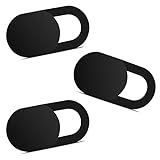
- Note: Not suitable for MacBooks released after 2023 or devices with a protruding front camera; Not applicable to full-screen or notch-style tempered glass screen protectors; Do not use on the rear camera of the phone.
- 💻 Why Do You Need a Webcam Cover Slide? — Safeguard your privacy by covering your webcam with our reliable webcam cover when not in use. Don't let anyone secretly watch you. Stay protected!
- ✅ Thin & Stylish — Enhance your laptop's functionality and aesthetics with our 0.027" ultra-thin webcam covers. Seamlessly close your laptop while adding a touch of sophistication.
- ✅ Fits Most Devices — Compatible with laptops, phones, tablets, desktops! Keep your privacy intact on Ap/ple, Mac/Book, iPh/one, iP/ad, H/P, L/novo, De/ll, Ac/er, As/us, Sa/msung devices.
- ✅ 365 Days Protection — Our upgraded 3.0 adhesive ensures a strong hold that won't damage your equipment. Experience reliable, long-term privacy protection day in and day out.
This is a consistency advantage, not proof that every MacBook is perfect or that every Windows pad is poor. A fair comparison should also account for a premium MacBook versus a budget PC, different default settings and the user’s familiarity with macOS.
Mechanical versus haptic trackpads
| Characteristic | Mechanical clickpad | Haptic trackpad |
|---|---|---|
| Click mechanism | Surface pivots or flexes against a switch. | Rigid surface; sensors and an actuator simulate a click. |
| Click uniformity | Often easier near the bottom and harder near the top. | Can feel consistent across the active area. |
| Dragging | Requires holding a moving surface down; flex can interrupt control. | Usually easier because the surface does not hinge. |
| Feedback | Physical travel, with possible hollow sound or rattle. | Vibration intensity and sound depend on tuning. |
| Cost and complexity | Generally simpler and cheaper. | Adds actuators, electronics, power demands and tuning work. |
| Repair considerations | May be part of the palm-rest or keyboard assembly. | Proprietary modules can be costly or difficult to replace. |
| Limitations | Cannot overcome poor mounting, friction or sensor quality. | Cannot compensate for poor tracking, firmware or an unsuitable surface. |
Haptics are a strong premium signal, not an absolute requirement. A well-built mechanical glass pad can be excellent, while a badly tuned haptic pad can feel artificial or buzzy. Microsoft documents haptic feedback and intensity controls for supported Windows 11 devices in its tuning guidance.
Free tools Windows power users keep installed
One-click scans. No signup required.
Surface, size and chassis matter as much as software
A good sensor still feels poor when the physical design is wrong. Check for:
- Enough vertical space for long drags and gestures.
- A smooth, low-friction coating that remains consistent with skin oils and humidity.
- A usable position relative to the keyboard and palm rest.
- Minimal flex, rattling or an uncomfortable lip around the active area.
- A rigid mounting structure that does not change when you press different locations.
Microsoft treats surface treatment as part of the experience and recommends an oleophobic coating for a clean, consistent surface: touchpad surface treatment guidance.
How to diagnose your Windows laptop
1. Identify the touchpad type
- Open Settings.
- Select Bluetooth & devices.
- Select Touchpad.
- Look for the full Precision Touchpad gesture and sensitivity controls.
That Windows 11 path is documented by Microsoft at Touch gestures for Windows. Sparse settings or a separate Synaptics/ELAN panel suggest a legacy or vendor-specific implementation, although labels vary by Windows build and manufacturer.
Rank #4

- Anti-Slip Surface - Transform your laptop into a mobile workstation with the AboveTEK portable laptop lap desk. The anti-slip surface provides a strong grip for laptops up to 15.6 inches(Diagonal), while the double rubber strip on the bottom ensures a stable display or typing experience on your lap, couch, or bed.
- Retractable Mouse Pad - Retractable laptop mouse pad extends on both directions for the left/right handed with elevation along the edges for stopping mouse from falling off. The size of laptop tray is 14" X 9.7" and the size of mouse pad is 7.4" X 6.1".
- Effective Heat Shield - The effective heat shield made of sturdy and thick material protects your laptop from overheating. Prioritizes your comfort and safety, an ideal lap pad or board for working anywhere.
- EASY to Carry and Store - With an ergonomic and simplistic design, the lap desk is portable to store in a backpack. Only 15" in size, 2.2 lb of weight and with slim 0.6 inch thickness, it is ready to be easily carried around.
- Widely Applicable - The smooth platform accommodates laptops and tablets up to 15.6 inches(Diagonal), making it a versatile accessory and one of the best gifts for mom, dad, students and professionals. Perfect for use as a laptop bed tray or tablet holder anywhere at home, library, or park.
2. Check settings
- Adjust touchpad sensitivity and cursor speed separately.
- Verify tap-to-click, two-finger scrolling and three- or four-finger gestures.
- Test whether disabling “leave touchpad on when a mouse is connected” changes behavior.
- If movement is delayed after typing, try a higher sensitivity setting; Microsoft’s guidance uses lower sensitivity values for more aggressive suppression.
3. Update or reinstall the driver
- Run Windows Update first.
- Open Device Manager.
- Check Human Interface Devices and Mice and other pointing devices.
- Update the touchpad device.
- If that fails, uninstall or reinstall it so Windows can load the device again.
- If the issue remains, use the laptop maker’s official support page or contact its service team.
These are Microsoft’s recommended steps in Fix touchpad problems in Windows. Create a restore point first, avoid random forum drivers, and keep a USB mouse available. A generic package can remove vendor functions or make the pad unusable.
4. Check for physical faults
- One area never registers touches, or the cursor jumps after software updates.
- Clicking changes when you flex the chassis.
- The surface is raised or suddenly difficult to press.
- The problem also appears in firmware setup or a live operating-system environment.
A raised pad or a new inability to click can indicate battery swelling. Stop pressing on it and seek manufacturer service rather than treating it as a driver problem.
5. Rule out application-specific behavior
Test another application, compare a native Windows app with the problematic program, disable browser extensions and check whether an external mouse shows the same issue. Applications can interpret scrolling and gestures differently even though Windows supplies the underlying touchpad input model.
Independent reader supportYour contribution helps us test, update, and keep practical guides available for everyone.How to buy a Windows laptop with a good trackpad
- Require Precision Touchpad support. Treat it as a baseline, not a promise of premium feel.
- Prefer a well-reviewed haptic design if uniform clicking and dragging matter most.
- Look for a large, smooth surface. Glass is a useful signal, but coating and texture still matter.
- Inspect placement and rigidity. A large pad can be uncomfortable if the keyboard forces your palms onto it or the chassis flexes.
- Read hands-on reviews. Search specifically for comments on palm rejection, click uniformity, scrolling, latency, friction and noise; processor and display reviews do not answer those questions.
- Check repairability and warranty. Some pads are integrated into the palm-rest, keyboard deck or a proprietary haptic module.
Model-specific evidence matters more than a brand label. Microsoft Surface devices, selected Lenovo ThinkPad X1 and premium Yoga systems, and some other newer laptops use haptic designs, but availability varies by exact generation and configuration. Coverage of newer Windows haptic hardware includes Windows Central’s HyperSpace Trackpad Pro review.
Important exceptions
Gaming laptops
Cooling, graphics hardware, keyboard space and price may take priority over a large or luxurious touchpad. A high-end gaming laptop is not automatically a high-end pointing device.
Quick wins for a faster PC:
Fix the driver behind crashes, sound loss and screen glitchesFind Drivers →Clear out junk files and repair common Windows errorsFree Scan →Scan for outdated or missing drivers - takes under a minuteDriver Scan →Best Value

- Spacious Design: Measuring 21.1" wide and 12" deep, our lap desk comfortably fits most laptops up to 15.6". Extra room for accessories ensures convenience.
- Enhanced Functionality: Packed with handy features, including a 5x9" precision tracking mouse pad and a built-in phone slot for seamless work or video calls. Plus, enjoy laptop support with the integrated device ledge.
- Cool Comfort: Enjoy a stable surface with our lap desk's dual bolster cushion, designed for comfort and airflow, keeping your lap cool during extended use.
- Durable Surface: Work with confidence on our lap desk's solid surface, featuring a blush pink color, ensuring optimal air circulation to prevent your laptop from overheating.
- On-the-Go Convenience: With an integrated handle and lightweight design (2.14 lbs), our lap desk is portable for travel or moving around the house, offering flexibility in any space.
Business laptops
Durability, replaceability, enterprise support and a TrackPoint may be more important than a huge pad. A smaller mechanical design can reflect those priorities.
Convertibles
Hinge geometry, touchscreen components, pen storage and thinness can constrain placement and chassis support.
Linux and other operating systems
Firmware, drivers, gesture libraries and desktop environments differ. A model that feels excellent in Windows may not feel identical under Linux, and vice versa.
External trackpads
An external pad can add desk comfort but is not a universal fix. Bluetooth wake behavior, gesture support, software requirements, desk space and operating-system compatibility vary. A mouse or trackball may be more practical for a desktop or gaming setup. Potential options include the HyperSpace Trackpads product line and Apple’s Magic Trackpad; verify current Windows support, return terms and price before buying.
The practical answer
PC trackpads used to feel bad because the market optimized for variety and price while Apple optimized one integrated experience. Precision Touchpad removed much of Windows’ old software fragmentation, but it cannot change a small, rough, flexing mechanical pad. In 2026, the meaningful distinction is not “PC versus Mac” so much as legacy hardware versus a well-built Precision design—and, at the top end, a carefully tuned haptic one.
Quick Recap
Product prices and availability are accurate as of the date/time indicated and are subject to change. Any price and availability information displayed on Amazon at the time of purchase will apply.

