
Outdated Drivers Are Slowing You Down
One free scan finds every outdated or missing driver and matches the right update for your exact hardware.Free scan · exact hardware matchWindows Errors? Fix Them Before They Spread
Repair common Windows errors and clear accumulated junk for a smoother, more stable PC - no reinstall needed.Free scan · no reinstalliTechGuides is reader-supported. When you buy through links on our site, we may earn an affiliate commission. As an Amazon Associate I earn from qualifying purchases. Learn more
Developers move from free hosting to a virtual private server (VPS) when a project outgrows its provider’s resource limits or needs server-level control that the free environment does not offer. A VPS is not automatically faster, safer, or cheaper: it also makes someone responsible for server setup, security, backups, and upkeep. For a simple, low-traffic site, free, static, shared, or managed hosting may still be the better fit.
Why are developers moving from free hosting to a VPS?
There is no reliable figure here showing how many developers are making this switch or how quickly. The practical reasons are clearer: a workload may need more resources, a custom software environment, or control over the server than its current hosting plan allows. Those needs depend on the project and provider; free hosting does not have one universal set of limits.



A project needs more resources
As an application grows, it may need more CPU time, memory, storage, database capacity, or bandwidth. A provider can impose limits even when a plan’s marketing emphasizes generous or unmetered usage. DreamHost, for example, says its shared customers use hardware alongside other customers, and that code, plugins, or database queries must not monopolize CPU, RAM, or disk read/write capacity. It may temporarily limit I/O when account usage threatens server stability. DreamHost also says “unmetered” bandwidth refers to billing, not an exemption from safeguards. See its Resource Usage Policy.
The Tool Desk
Outbyte Driver Updater FREEScan for outdated or missing drivers - takes under a minuteDriver Scan →Outbyte PC Repair FREEClear out junk files and repair common Windows errorsFree Scan →Replit has described a different, provider-specific reason for changing limits: it said some advanced apps used more resources than its platform could support, while abuse included cryptocurrency mining and bandwidth harvesting. The company also said it changed its free-tier bandwidth allowance from 1 GiB per month to 10 GiB per month after user feedback. That is a historical account of Replit’s own plan changes, not a current allowance or an industry-wide measure. Its explanation is available in “Why We Changed Our Resource Limits and Plans”.
#1 Best Overall
The application needs server-level control
A VPS can give its operator more control over the operating system, packages, web server, database, and security configuration. That can matter for custom PHP or Node.js applications, APIs, staging environments, dashboards, and small SaaS projects that need software or settings unavailable in a provider-defined environment. Greater control makes these configurations possible; it does not guarantee a performance improvement.
The free plan or its rules change
A free tier is governed by its provider’s business model, resource policies, and acceptable-use rules. Replit’s explanation illustrates how those rules can change as a platform manages resource use and abuse. It does not establish that all free-hosting providers are changing plans for the same reasons, so check the terms and current limits of the specific service you use.
Is a VPS better than free hosting?
Neither is universally better. The right choice depends on the workload, the control required, and whether someone can operate the server. The comparison below describes typical tradeoffs; actual resources, policies, and included services vary by provider and plan.
| Factor | Free or shared hosting | VPS | Managed hosting |
|---|---|---|---|
| Control | Usually limited to the provider’s environment and tools. | More control over the operating system, packages, web stack, and configuration. | The provider handles more infrastructure work; available flexibility varies by product. |
| Resources | Plan allowances and shared-hardware safeguards vary by host. | Allocation depends on the selected plan; verify which resources are dedicated or shared. | Allocations and usage policies depend on the specific product. |
| Operations | Generally less server administration for the customer. | The operator takes on more setup, patching, security, backup, and monitoring work. | The provider takes on more maintenance, according to the service’s scope. |
| Typical fit | Simple, low-traffic sites. | Workloads needing control or custom software, with an operator available. | Teams that prefer less infrastructure maintenance. |
| Cost to assess | Check caps and the cost or feasibility of upgrading. | Include storage, bandwidth, backups, support, tools, and administrator time—not only the server fee. | Compare the management included with the product and its fees. |
DreamHost’s policy says that if a site is fully optimized but consistently needs more computing power than its current environment provides, it may need to move to a Managed VPS, VPS, or dedicated server. That is DreamHost’s guidance about its own environment, not a rule that every resource issue requires a VPS.
Rank #3
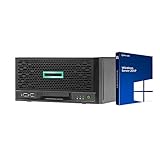
- HP MicroServer Gen10 Plus Tower Server for Business with Microsoft Windows Server 2019 OS!
- Intel Xeon E-2224 Quad-Core 3.4GHz 8MB CPU, Up To 4.6GHz Turbo
- 32GB (2 x 16GB) DDR4 PC4-21300 2666MHz Unbuffered Memory
- 16TB (4 x 4TB) 7.2K 6Gb/s SATA 3.5" HDDs in RAID
- Hard drives and memory upgrades included separately NOT installed, installation required.
When should I move from free hosting to a VPS?
Consider moving when you can identify a real constraint or requirement—not simply because a VPS sounds more professional. First determine what is limiting the project, then confirm that a VPS solves that specific problem and that your team can handle its operating duties.
- Identify the bottleneck. Check measured usage and the current provider’s terms for CPU, memory, storage, database limits, concurrency, bandwidth, or restrictions on software and runtimes.
- Match the need to the hosting model. If the issue is a need for custom packages, server configuration, or more control, a VPS may fit. If the issue is simply a small static site with low traffic, a VPS may add work without solving a meaningful problem.
- Calculate the full cost. Account for compute, storage, bandwidth, backups, snapshots, monitoring, support, and the time required to administer the server. A low advertised monthly fee is not the whole operating cost.
- Assign an operator. For an unmanaged VPS, make sure someone owns updates, firewall configuration, SSL, database maintenance, backups, monitoring, logs, and recovery. If no one can take that on, compare managed hosting instead.
- Plan and test the move. Prepare and test backups, choose a migration window, and define a rollback path. Migration steps and downtime depend on the application and providers; do not assume a switch will be effortless or downtime-free.
What are the downsides of moving to a VPS?
More responsibility for security and maintenance
More server control also means more work. The operator may need to configure and update the operating system and software, secure access, maintain databases, monitor logs and service health, and keep recoverable backups. A VPS is a poor fit if no person or service is responsible for those tasks.
Rank #4
More costs than the server fee
Storage, bandwidth, backup retention, snapshots, monitoring, support, and administration time can all affect total cost. Compare what a plan includes and what it charges for separately rather than comparing only headline prices.
More control does not guarantee faster performance
A VPS can provide a different resource allocation and configuration options, but application code, database queries, traffic patterns, and the selected plan still matter. Diagnose the bottleneck before upgrading; a server change alone may not correct inefficient software or a database problem.
Best Value
When is VPS the wrong move?
A small site does not need server administration
A low-traffic static site, brochure site, or simple blog may work well on free, shared, or static hosting. If the existing environment meets the site’s needs, moving to a VPS can add maintenance without a corresponding benefit.
The team wants a provider to manage infrastructure
Managed WordPress or other managed hosting may suit a team that wants less server maintenance. Compare exactly what the provider handles; “managed” does not mean every application, backup, or recovery task is automatically covered.
The application needs a broader cloud architecture
A full cloud platform may suit an application that needs a larger or more flexible architecture. It can also bring additional billing, networking, and design complexity. Choose based on the application’s requirements and the team’s capacity to operate it.
How should you choose?
Choose the smallest hosting model that safely meets the workload and the team’s operational capacity. Keep the current plan if it is reliable and sufficient. Move to a VPS when a specific resource or control requirement justifies it and someone can run the server; choose managed hosting when reducing maintenance is more important than server-level freedom.
Quick Recap
Product prices and availability are accurate as of the date/time indicated and are subject to change. Any price and availability information displayed on Amazon at the time of purchase will apply.

