
Do these 3 things before closing this tab:
1Fix the driver behind crashes, sound loss and screen glitches2Clear out junk files and repair common Windows errors3Scan for outdated or missing drivers - takes under a minuteEmbedded systems often use older processors, evolve more slowly, and have rougher development tools because they must work within fixed hardware, meet timing and safety requirements, and remain supportable long after newer platforms appear. A firmware update can affect hardware interfaces, timing, validation, and certification—not just add a feature. Some of the lag is a deliberate trade-off for predictable behavior; some reflects real weaknesses in verification, debugging, security, and software-understanding tools.
What does “behind” mean for embedded systems?
It usually means that an embedded product adopts newer processors, development practices, or security protections later than mainstream software platforms do. That impression is strongest when comparing a long-lived controller with a web service that can deploy changes frequently. Release speed alone is not a fair measure: embedded products also have to meet hardware, timing, safety, and service-life requirements that many web applications do not.

There is no single industry-wide measure of how far behind embedded systems are. A study published in 2020 examined 42 embedded operating systems and found that exploit-mitigation adoption significantly lagged the general-purpose world. That is evidence of a gap in the systems studied, not a score for every embedded product or sector.
Why do embedded systems use old processors?
A processor is part of a validated product
In a computer or cloud service, changing a processor may be hidden behind a stable platform. In an embedded device, firmware is closely tied to the processor, board, memory map, peripherals, drivers, boot process, and vendor toolchain. Replacing the chip can therefore mean redesigning a board, adapting low-level software, and retesting the system rather than swapping one interchangeable component.
#1 Best Overall

- ESP32 camera board: Dual-core 32-bit microprocessor up to 240 MHz, 4 MB flash, 8 MB PSRAM, onboard 2.4 GHz Wi-Fi and Bluetooth 4.2 (LE), USB code uploader, camera, memory card slot (Comes with 1GB memory card and card reader)
- 3 sets of code: MicroPython, C and Processing (Java). Python is one of the most popular languages, and C is one of the most classic languages. Processing code needs to run on computers to provide graphical interfaces
- Detailed tutorial: Can be downloaded (in English, 795-page in total) or viewed online (original in English, can be translated into other languages by browsers) (The tutorial link can be found on the product box, no paper tutorial)
- 122 projects from simple to complex: Provides step-by-step guide with electronics and components knowledge, each project has schematics, wiring diagrams, complete code and detailed explanations
- 240 items in total: This ultimate kit includes the most commonly used electronic components, modules, sensors, wires and other compatible items
Long service lives preserve old decisions
Vehicles, industrial equipment, medical devices, and aircraft subsystems may need support for many years. A processor selected for cost, availability, power consumption, or qualification can remain in service after newer generations arrive. Replacing it may also require supply-chain changes and renewed validation. A 2008 Software Engineering Institute study of real-time safety-critical systems warned that service lives longer than anticipated can make existing acquisition and development practices insufficient.
Newer does not automatically mean better for the job
A more capable processor can bring benefits, but it can also change power use, thermal behavior, timing, and software dependencies. If the current hardware meets the product’s requirements and a migration introduces substantial qualification work, an organization may rationally defer the upgrade. That does not mean every old processor is an optimal choice: prolonged dependence on unsupported components can create reliability, supply, and security risks.
Why is embedded development slower than web development?
Timing must be predictable
Many embedded systems interact with the physical world. They may need to read a sensor, process an input, or actuate a control within a bounded time. It is not enough for the software to be fast on average; engineers may need confidence about its behavior under specified conditions, including interrupts, competing tasks, and hardware states. That changes the optimization target from rapid feature delivery alone to repeatable behavior and controlled failure.
Rank #2
Changes cross the hardware-software boundary
A feature can touch interrupt handling, drivers, memory use, board support packages, bootloaders, or peripheral behavior. A seemingly small firmware change may affect timing or an interface with another component. NIST’s hardware-security work describes chips as involving both circuit designs and firmware, illustrating why defects and mitigations can span layers rather than stay within an application.
Safety evidence adds work beyond coding
Where a product is safety-critical, teams may have to show how hazards are controlled and how the system behaves under defined conditions. Verification, traceability, regression testing, and qualification evidence can take substantial effort. A CORDIS project report identifies inadequate formal-model verification and weak hardware/software co-simulation interfaces as limitations of existing computer-aided software engineering tools. The assurance burden is not simply bureaucracy: it is part of demonstrating that changes will not undermine safe operation.
Testing real conditions is harder
Desktop tests cannot always reproduce electrical behavior, tight timing, power loss, unusual interrupt sequences, or a rare hardware state. Engineers may need physical boards and specialized debugging setups to observe these cases. A problem that is intermittent in the field can be especially difficult to reproduce without the same hardware, workload, and environment.
Rank #3

- COMPATIBLE WITH ARDUINO MEGA 2560: Fully compatible with Arduino IDE and Mega 2560 Rev3 projects for easy coding uploading and prototyping
- ATMEGA2560 WITH ATMEGA16U2: Features ATmega2560 microcontroller with ATmega16U2 USB to serial converter for stable communication and reliable performance
- HIGH PIN COUNT AND FLEXIBILITY: Provides 54 digital I O pins including 15 PWM outputs and 16 analog inputs for complex electronics and IoT applications
- STABLE POWER AND MEMORY: Operates at 5V with recommended input 7V to 12V and includes 256KB flash 8KB SRAM and 4KB EEPROM for advanced projects
- USB CABLE INCLUDED READY TO USE: Comes with USB cable for immediate setup ideal for Arduino learning robotics automation and embedded system development
Why do embedded tools seem so bad?
The toolchain is fragmented
Embedded development spans many microcontrollers, real-time operating systems, vendor software development kits, compilers, debuggers, board support packages, and sector-specific standards. There is no single dominant runtime equivalent to a browser or a cloud platform that makes the same abstractions portable everywhere. A tool that works well for one chip family or industry may not transfer cleanly to another, raising onboarding and maintenance costs.
Existing tools do not remove the hardest verification gaps
The CORDIS report highlights shortcomings in formal verification and in the interfaces used for hardware/software co-simulation. Those limits make it harder to check system behavior comprehensively using models alone. Better tools can reduce friction, but they cannot eliminate the need to account for the actual hardware and operating conditions.
What’s actually slowing this PC down?
Pick the symptom - the matching free tool is one click away.
Understanding large software is a broader problem
In a 2025 announcement, DARPA said: “Mission owners and operators lack adequate capabilities for software understanding because technology manufacturers build software that greatly outstrips the ability to understand it.” The challenge is not unique to embedded software, but it is costly when a long-lived device depends on code, hardware, and assumptions accumulated across generations.
Rank #4
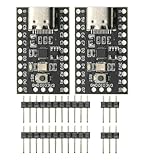
- CH32V003 Development Minimum System Board for Nano RISC-V CH32V003F4U6 Chip TYPE-C USB 22Pin
- on-board 24MHz Crystal oscillator
- Power by TYPE-C USB
Why is embedded security often weak?
Security is not always built into the lifecycle
NIST’s Secure Software Development Framework notes that few software-development lifecycle models explicitly address security in detail, so secure practices often have to be incorporated into an existing process. If security is treated as a late addition, foundational choices—such as secure boot, update signing, and key storage—may be difficult to retrofit.
Updating devices can be difficult
Some deployed devices are offline, have limited bandwidth, are physically hard to reach, or operate in settings where an update requires careful safety controls. A vulnerability response may therefore require more than publishing a patch: the product needs a secure update path, a way to deliver it, and a process for validating its effect.
Hardware and firmware weaknesses interact
Security boundaries can involve silicon, firmware, bootloaders, and higher-level software. A weakness in one layer may constrain what another layer can do to detect or contain it. This coupling makes it important to design security into the product lifecycle rather than assume a later software patch will address every flaw.
Outdated Drivers Are Slowing You Down
One free scan finds every outdated or missing driver and matches the right update for your exact hardware.Free scan · exact hardware matchWindows Errors? Fix Them Before They Spread
Repair common Windows errors and clear accumulated junk for a smoother, more stable PC - no reinstall needed.Free scan · no reinstallBest Value

- COMPATIBILITY: Supports multiple Renesas microcontroller families including RH850, RL78, and RX series for debugging and programming
- FUNCTIONALITY: Serves as an in-circuit debugger, emulator, and programmer for efficient embedded system development
- DEVELOPMENT TOOL: Professional-grade debugging capabilities for real-time code analysis and system optimization
- INTERFACE OPTIONS: Provides comprehensive debugging and programming interface for embedded system development
- VERSATILE APPLICATION: Ideal for firmware development, testing, and system programming across Renesas microcontroller platforms
How to judge whether an embedded product is actually behind
Compare products with similar responsibilities, not just similar release dates. A safety-critical controller and a consumer web application operate under different constraints. Useful questions include:
- Hardware coupling: How much would a processor or board change affect drivers, interfaces, and validation?
- Timing: Does the product need bounded response times or predictable behavior during faults?
- Safety evidence: What analysis, tests, traceability, or qualification must accompany a change?
- Updateability: Can the device receive a secure update reliably after deployment?
- Resources: What memory, power, and thermal limits does the hardware impose?
- Security maintenance: Is there a practical plan for vulnerability response, key protection, and patch delivery?
- Tooling: Can the team test and debug both software behavior and hardware interactions?
- Service life: How long must the product and its components remain supportable?
What can reduce the lag?
There is no universal fix, but organizations can make progress by treating maintainability, security, and verification as design requirements rather than later upgrades. The right priorities depend on the product’s risk and deployment conditions.
Quick Recap
- Plan for a long service life when choosing processors, toolchains, and suppliers, including how components and software will be supported.
- Design secure boot, signed updates, key storage, and vulnerability response into the architecture before deployment.
- Improve hardware/software co-simulation and formal verification where the product’s risk and requirements justify them.
- Build repeatable tests around timing, interrupts, power transitions, and relevant hardware states, alongside ordinary software tests.
- Document interfaces and assumptions so future teams can understand why a component or behavior was selected.
Product prices and availability are accurate as of the date/time indicated and are subject to change. Any price and availability information displayed on Amazon at the time of purchase will apply.

