
Do these 3 things before closing this tab:
1Clear out junk files and repair common Windows errors2Fix the driver behind crashes, sound loss and screen glitches3Repair Windows errors before they cause bigger problemsiTechGuides is reader-supported. When you buy through links on our site, we may earn an affiliate commission. As an Amazon Associate I earn from qualifying purchases. Learn more
A VAT rate endpoint answers one narrow question: what rate applies in a given country, on a given date, for a given category of supply. A production VAT integration usually needs answers to several more questions before it can charge, record, or report a transaction: which type of supply it is, which date governs it, how the amount is calculated, whether a business customer’s VAT number checks out, what must be reported and filed, and how the whole flow is tested and monitored. API documentation shows what a service can return and which inputs it accepts. It does not decide the legal VAT treatment of a transaction, and providers do not all offer the same capabilities.
What a rate lookup actually returns
A rate lookup is a read-only question. You supply a jurisdiction and usually a date, and you receive one or more rates. That is enough for showing a figure to a user, producing an estimate, or checking a single number. It stops being sufficient once the rate has to be applied to a real transaction, shown on an invoice, and later reproduced in a return.
Three inputs can change the answer without changing the country: the date that governs the rule, the category of goods or services, and the rate level, such as standard or reduced. A lookup that drops any of them can return a plausible-looking figure that is wrong for the transaction in front of you.
Why the date and product category matter
The European Commission publishes a VAT rate service through its TEDB (Taxes in Europe Database). Its specification makes these dimensions explicit. Version 1.10, dated 2 June 2023, lets a query name a member state, an applicability period, and optional product criteria, as set out in the European Commission TEDB specification.
#1 Best Overall

- 【5.5-Inch Large Screen & Big Buttons】The large screen ensures numbers and results are clearly visible, reducing eye strain—vital for prolonged use or those with less-than-perfect vision. Large buttons offer a comfortable and precise pressing experience, significantly minimizing errors and enhancing overall user experience efficiency
- 【Solar & Battery Power】The large calculator combines solar and battery power for continuous operation in all weather, and the desk calculator is encased in tough plastic to resist daily wear—guaranteeing years of dependable performance in homes or offices
- 【Desktop Calculator】This accounting calculator is especially suitable for seniors, accountants, sales professionals and other businessmen who work in office, shop, market, etc. Good choice for accounting professionals and students who have a lot of calculating work
- 【Tax Keys】Exclusive TAX+/TAX- buttons elevate this tool beyond the ordinary basic calculator capabilities. Compute VAT-compliant prices instantly—critical for invoices or retail pricing
- 【Automatic Replay/Correction】The large calculator's [AUTO REPLAY] traces calculation paths, while the [CORRECT] key allows you to review and edit past entries instantly to ensure 100% accuracy without restarting complex sums
| Query input | Why it matters | How the specification handles it |
|---|---|---|
| Member state | Each EU member state sets its own rates and categories | Selected as the country of the query |
| Applicability date | A rate in force on one date may not apply on another | A from and to date range; the older situationOn field is deprecated when from and to are used |
| Product criteria | Different goods in the same state can carry different rates | Optional Combined Nomenclature (CN) codes or Classification of Products by Activity (CPA) codes |
The specification states that situationOn is deprecated when from and to are used, so new queries should be built on the date range. It describes query fields for one EU service; it does not explain the VAT law behind each returned rate. Store the country, date, category, and rate type you queried alongside each invoice, because without that record you cannot later show how a figure was produced.
Transaction type comes before the rate
The VAT API provider documentation separates two rate types, GOODS and TBE. TBE is the rate type for telecommunications, broadcasting, and electronic services, and the documentation offers categories such as telecommunications, broadcasting, and electronic services under it. Choosing the wrong type returns a rate that may be correct for a different supply, even when the country and date are right.
| Rate type | Intended supply | Category options | Rate levels |
|---|---|---|---|
| GOODS | Physical goods | Not stated in the cited provider documentation | Standard and reduced levels named in the provider documentation |
| TBE | Telecommunications, broadcasting, and electronic services | Telecommunications, broadcasting, electronic services | Standard and reduced levels named in the provider documentation |
Location is an input, not proof
The rate-check resource accepts an explicit country code, or it can derive location from the requester’s IP address. The provider describes a geolocation score as a confidence indicator. That is a useful signal, but an IP address shows where a connection appears to come from. A VPN, a corporate gateway, or a mobile network can place a customer in a different country from their billing address.
Recommended Free Tools
Rank #2
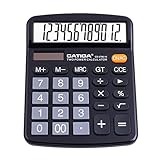
- [LARGE DISPLAY] - The huge LCD screen that clearly displays big numbers makes it easy to read from afar, and it’s aesthetically pleasing.
- [SENSITIVE AND BIG BUTTONS] - Your calculation process will be faster and smoother with this calculator’s responsive buttons. Once pressed, the buttons quickly register and display the corresponding number on the screen. The big size of the buttons prevents you from hitting the wrong button.
- [DUAL POWER DESIGN] - This calculator utilizes both the solar power and battery power (battery included). The solar panel, as long as you use it in a lit environment, will power up the calculator thoroughly.
- [VERSATILE PURPOSES] -This calculator is designed for many occasions: business, office, home, basic budgeting, school, and more. Use it to assist your personal finance or just a quick calculation session.
- [FUNCTIONALITIES] - Add, subtract, multiply, divide, backspace, grand total, CE, %, M+/M-/MRC, On/AC Button, and Auto Power-Off. The calculator will turn itself off after about 6 minutes of being idle.
A workable pattern is to take the country from the transaction record, use the address that your applicable rule relies on, treat IP geolocation as a cross-check, and send mismatches to a review queue rather than letting the API decide silently. Record which source drove each rate so that the decision can be audited later.
Calculation is arithmetic applied to a decision
The provider’s price resource takes a country code, an amount, a rate type, an optional category and level, and a flag that says whether the amount already includes VAT. The arithmetic is simple. Most errors come from the direction of the input. Using 20% as an illustrative rate:
- Net 100 with VAT added: VAT 20, gross 120.
- Gross 120 entered as VAT-inclusive: net 100, VAT 20.
- Gross 120 entered as if it were net: VAT 24 is added, the invoice total becomes 144, and the total is 24 too high.
Two further points matter. Rounding can differ depending on whether VAT is calculated per line or per invoice, so confirm what your jurisdiction and invoicing system require. And a calculation is only as current as the rate table it uses. Re-running an old invoice against today’s rate can produce a different result if the rate has changed.
Rank #3

- COMPACT & PORTABLE DESIGN – Space-saving design that fits easily on any desk or in a briefcase, making it ideal for both home and office use.
- LARGE EIGHT-DIGIT DISPLAY – Clear and easy-to-read 8-digit display, perfect for everyday calculations, ensuring accurate results in home or office settings.
- GENERAL PURPOSE CALCULATOR – Ideal for a wide range of applications, from basic math to business and personal use.
- DUAL POWER SOURCE: Operates on solar power with battery backup to ensure reliable use in any lighting condition.
- DURABLE HARD COVER: Built-in protective case shields the calculator from scratches, drops, and everyday wear.
Verifying a business customer’s VAT number is a separate call
The VAT API documentation lists VAT-number validation as its own resource, distinct from the rate and price resources. The response tells you what the provider’s check returned for that number at that moment. It does not, on its own, establish whether a reverse-charge treatment applies to a sale. That depends on the nature of the supply and the conditions in the relevant rules, which the API documentation does not settle.
Windows Errors? Fix Them Before They Spread
Repair common Windows errors and clear accumulated junk for a smoother, more stable PC - no reinstall needed.Free scan · no reinstallOutdated Drivers Are Slowing You Down
One free scan finds every outdated or missing driver and matches the right update for your exact hardware.Free scan · exact hardware matchKeep each validation response with its timestamp. A validation result is a point-in-time check, and you may need the record to show what your system knew when it applied a treatment.
Reporting and filing widen the scope: HMRC’s MTD API
HMRC’s VAT (Making Tax Digital) API reference shows how far an API can reach beyond rate lookup. Its documented endpoints cover:
Rank #4
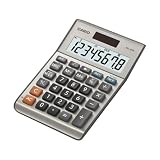
- LARGE EIGHT-DIGIT DISPLAY – Clear and easy-to-read 8-digit display, perfect for everyday calculations and ensuring accurate results in home or office settings.
- TAX & CURRENCY EXCHANGE FUNCTIONS – Effortlessly handle tax calculations and convert home currency to other currencies for easy financial management.
- GENERAL PURPOSE CALCULATOR – Ideal for a wide range of applications, from basic math to business and personal use, with memory keys for quick storage and recall.
- USER-FRIENDLY KEYBOARD – Easy-to-use layout, featuring square root, percent calculation, and simple functions that make it perfect for everyday tasks.
- COMPACT & PORTABLE DESIGN – Space-saving design that fits easily on any desk or in a briefcase, making it ideal for both home and office use.
- retrieving VAT obligations
- submitting and viewing VAT returns
- retrieving VAT liabilities and payments
- retrieving penalties and penalty financial details
- obtaining information about a VAT customer
This is a UK authority API. It illustrates what a reporting integration can involve, but it should not be read as a description of VAT reporting in any other country.
Independent reader supportYour contribution helps us test, update, and keep practical guides available for everyone.Operating the integration: environments, errors, versions, and metadata
The HMRC reference also documents the operational side of the API:
What’s actually slowing this PC down?
Pick the symptom - the matching free tool is one click away.
- separate sandbox and production base URLs, with test-user support
- scenario headers for exercising particular responses in the sandbox
- HTTP status-code groups for error handling
- API versioning
- fraud-prevention header data, which HMRC’s documentation says is required by law for this API
The same reference notes that some scenarios may not be testable in the sandbox. A sound build sequence accounts for that gap:
Best Value

- vat calculator simple easy
- Configure sandbox and production base URLs as separate settings, with separate credentials and test users.
- Write test cases for each status-code group your code handles, using scenario headers where the sandbox supports them.
- List the scenarios the sandbox cannot reproduce, and cover each with defensive code paths and close monitoring after release.
- Pin the API version you built against, and review version changes before upgrading.
- Attach the required fraud-prevention header data to every request, and treat a missing or malformed value as a failure at build or test time rather than a runtime surprise.
The HMRC reference is labelled version 1.0 beta and was last updated on 5 August 2026. Endpoint details can change while an API is in beta, so check the page before you build against it.
Comparing three kinds of API
Three kinds of service commonly appear in this comparison: a tax authority’s reporting API, a dedicated VAT data provider, and a tax-rate reference inside a broader payments platform. The table compares only what each cited source documents. It does not rank providers or cover pricing. Providers differ, so verify each capability against the provider’s own documentation.
| Capability | HMRC VAT (MTD) API | VAT API (provider docs) | Stripe tax-rate reference |
|---|---|---|---|
| Source type | UK tax authority | Dedicated VAT data and calculation provider | Tax-rate objects in a broader payments platform’s API reference |
| Geographic scope | UK VAT | Not stated in the cited provider documentation | Not stated in the cited Stripe reference |
| Rate lookup | Not among the documented endpoints | Rate check by country code or IP geolocation | Tax-rate listing documented; the reference does not establish equivalence to VAT workflows |
| Rate types and categories | Not among the documented endpoints | GOODS and TBE; TBE categories such as telecommunications, broadcasting, and electronic services | Not stated in the cited reference |
| Effective dates | Not documented as a rate input | Date handling not stated in the cited provider documentation | Not stated in the cited reference |
| Price calculation | Not among the documented endpoints | Price resource with a VAT-inclusive or VAT-exclusive input flag | Not stated in the cited reference |
| Number validation | Customer information endpoint documented; generic number validation not stated | VAT-number validation as a separate resource | Not stated in the cited reference |
| Filing and reporting | Obligations, returns, liabilities, payments, penalties | Not stated in the cited provider documentation | Not stated in the cited reference |
| Sandbox and testing | Sandbox and production base URLs, test users, scenario headers | Not stated in the cited provider documentation | Not stated in the cited reference |
| Versioning | Documented; page labelled version 1.0 beta | Not stated in the cited provider documentation | Pinned API version in the reference URL: 2025-05-28.basil |
| Required metadata | Fraud-prevention header data required by law for this API | Not stated in the cited provider documentation | Not stated in the cited reference |
Deciding whether a rate lookup is enough
Before you choose an endpoint, answer these questions:
- Does a transaction, invoice, or return need to exist, or is this a display or estimate figure?
- Do your products span more than one jurisdiction or product category?
- Do you convert between VAT-inclusive and VAT-exclusive prices?
- Do you accept business customers and need to record a validation result?
- Must you file VAT returns, or show liability and payment status?
- Must you reproduce any past calculation exactly?
If the answer to any of the last four questions is yes, a rate lookup alone will not cover the job.
Quick Recap
Product prices and availability are accurate as of the date/time indicated and are subject to change. Any price and availability information displayed on Amazon at the time of purchase will apply.

