
Quick wins for a faster PC:
Scan for outdated or missing drivers - takes under a minuteDriver Scan →Repair Windows errors before they cause bigger problemsFix Now →iTechGuides is reader-supported. When you buy through links on our site, we may earn an affiliate commission. As an Amazon Associate I earn from qualifying purchases. Learn more
Autonomous mobile robots (AMRs) are most clearly established in hospitals as internal logistics systems: they move medicines, supplies, linen, and specimens between departments. Some also help patients and visitors with tasks such as wayfinding or blanket delivery. Other uses—including disinfection, rehabilitation, and operating-room support—appear in research and design discussions, but the available evidence does not show that they are as widely or routinely deployed.
Where hospital AMRs are used today
AMR describes a mobile robot that navigates through an environment to carry out a task; it does not mean every healthcare robot or every automated cart. In a hospital, the clearest use is moving items along internal routes, while a smaller set of documented examples involves direct interaction with patients or visitors.


| Setting or task | What the AMR does | Evidence and maturity |
|---|---|---|
| Emergency department logistics | Moves medication loads between locations | Changi General Hospital described this as an operational use in its 2023 announcement. SingHealth, 14 July 2023 |
| Emergency department wayfinding and comfort | Guides visitors and delivers blankets to patients and accompanying family members | Changi General Hospital reported these functions for its emergency department; this local example does not establish widespread adoption. SingHealth, 14 July 2023 |
| Emergency department to laboratory | Transports blood samples toward a simulated central laboratory and returns to base | A HOSBOT pilot completed 17 protocol trips in a temporarily patient-free area of a tertiary teaching hospital in Łódź. This was a pilot, not evidence of routine service. Journal of Hospital Infection, published 2025 |
| Pharmacy, wards, and other internal routes | Delivers pharmaceuticals and other hospital items between locations | Hospital internal pharmaceutical logistics is the subject of a draft ISO standard; a draft is not a final published requirement. ISO/DIS 25268 |
| Operating-room support areas | Research concepts include fetching and handing over supplies and adjusting devices outside the sterile area | Discussed as a research and design use case in a 2024 review, not established here as routine operating-room deployment. Autonomous Robots, 24 January 2024 |
| Disinfection, rehabilitation, and social assistance | Potential mobile-robot tasks include disinfecting spaces, supporting exercises, and social assistance | Discussed in a review; comparative deployment frequency is not established. Autonomous Robots, 24 January 2024 |
How logistics robots fit into hospital workflows
For routine transport, an AMR can take over repeated point-to-point trips so staff do not have to make every run themselves. Routes may connect a pharmacy with wards, or move supplies, linen, and other items between hospital locations. The robot’s role is transport; people and local procedures still govern what is packed, who may receive it, and where a delivery is handed over.
Free tools Windows power users keep installed
One-click scans. No signup required.
Medication and supplies
Pharmaceutical delivery requires more than navigating a corridor. The draft ISO/DIS 25268 addresses hospital internal logistics for pharmaceutical delivery, including medication packaging, delivery chambers, emergency stops, elevator sequencing, and delivery locations. Those details illustrate the integration work involved; because the standard is still a draft, it should not be treated as a final compliance rule.
#1 Best Overall
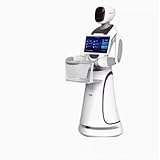
- Robots are taking over jobs previously held by humans.
- The substitution of human labor with robotic technology is on the rise.
- Automation is increasingly replacing human workers in various sectors.
- The trend shows a significant shift from human employment to robotic assistance.
- The integration of robots into the workforce is transforming traditional labor roles.
Specimens
Specimen transport has been tested in a clinical environment, but the evidence cited here is specific to one pilot. In February 2024, after technical validation, a HOSBOT system ran 17 protocol trips in a temporarily patient-free portion of the emergency department at a tertiary teaching hospital in Łódź, carrying blood samples from the department toward a simulated central laboratory and then returning to its base. The study demonstrates a tested workflow under those conditions, not routine use across hospitals or a guarantee of performance in occupied departments. Journal of Hospital Infection
Patient- and visitor-facing uses
Some AMRs operate in spaces where they interact with people rather than simply moving goods between staff-only locations. Changi General Hospital in Singapore announced three emergency-department robots—MEDi, EDi, and BLANKi—with functions that included medication deliveries, wayfinding, and blanket delivery to patients and accompanying family members. This is a named institutional example, not a measure of how common such services are in emergency departments generally. SingHealth, 14 July 2023
Uses that remain at the research or design stage
Hospital robotics reviews also examine disinfection, rehabilitation exercises, social assistance, and support for clinical teams. A 2024 review describes a project envisioning a mobile assistant in the non-sterile part of an operating-room wing, with tasks such as fetching and handing over supplies and adjusting medical devices. These are relevant areas of development, but the review does not establish that such roles are as mature or common as internal delivery. Autonomous Robots, 24 January 2024
Crashes, No Sound, or Screen Glitches?
Random freezes, missing sound and display glitches usually trace back to one bad driver. Find and replace yours safely.Free scan · under a minuteWindows Errors? Fix Them Before They Spread
Repair common Windows errors and clear accumulated junk for a smoother, more stable PC - no reinstall needed.Free scan · no reinstallIt is useful to distinguish evidence types: an institutional announcement describes a local deployment, a controlled pilot demonstrates a workflow under stated conditions, and a review may describe proposed or studied applications. They answer different questions and should not be treated as equivalent proof of routine adoption.
What hospitals must consider before deployment
Hospitals are busy, shared environments. AMRs must navigate around patients, staff, beds, equipment, and changing corridor conditions, while interacting safely with people and existing workflows. A 2024 hospital-navigation benchmarking paper identifies reliability and user safety as concerns in sensitive environments. Scientific Reports, 2024
- Route and access: Plan how the robot will reach wards, laboratories, elevators, and delivery points without obstructing care.
- Handoffs and payload: Define how medication or specimens are packaged, secured, accessed, and received.
- Exceptions and safety: Set procedures for blocked routes, faults, emergency stops, and situations requiring staff intervention.
- Coordination: Determine how tasks are scheduled, monitored, and recorded alongside hospital operations.
A separate committee draft, ISO/CD 26253, concerns centralized control of hospital pharmaceutical-logistics AMRs, including monitoring, failure response, hardware operations, communication, scheduling, task allocation, and record keeping. Its committee-draft status means it signals work in progress, not a finalized compliance requirement.
Rank #4
How common are healthcare AMRs?
The sources cited here do not establish a reliable adoption statistic for healthcare AMRs overall, nor a ranking of how often hospitals use each application. The 17 HOSBOT protocol runs are a detail of one pilot, not an industry-wide count. The documented examples support a narrower conclusion: internal hospital logistics is the clearest established use, while patient-facing functions have specific local examples and several other clinical applications remain discussed or tested rather than demonstrated as widespread practice.
Quick Recap
Best Value
Product prices and availability are accurate as of the date/time indicated and are subject to change. Any price and availability information displayed on Amazon at the time of purchase will apply.

