
NeoMagic announced MiMagic 6 in 2003 as a multimedia and graphics processor for smart cellphones and wireless or multimedia PDAs. The surviving MiMagic 6+ brief describes a 250 MHz ARM926EJ processor paired with a separate parallel multimedia engine, video and graphics hardware, camera and display functions, and mobile-device interfaces. “Highest multimedia performance” was a promotional claim, not a verified comparison against competing chips.
What was the NeoMagic MiMagic 6?
MiMagic 6 was an OEM semiconductor component intended for manufacturers building mobile devices—not a consumer phone, PDA, or retail accessory. Microprocessor Report recorded NeoMagic’s 2003 announcement of the chip for smart cellphones and wireless and multimedia PDAs; its related report, “New Magic in MiMagic 6,” was dated June 17, 2003. Microprocessor Report


The most detailed surviving technical description is NeoMagic’s MiMagic 6+ product brief, published in 2006. It presents the chip as the core of a mobile multimedia and communications device. The brief documents the MiMagic 6+ variant; its specifications should not automatically be treated as confirmed specifications for every MiMagic 6-family part. NeoMagic MiMagic 6+ product brief
How did the MiMagic 6+ architecture work?
ARM application processor
The MiMagic 6+ brief specifies a 250 MHz ARM926EJ RISC processor for application processing. Rather than relying on that CPU alone for media workloads, the design paired it with dedicated multimedia hardware.
The Tool Desk
Outbyte Driver Updater FREEFix the driver behind crashes, sound loss and screen glitchesFind Drivers →Outbyte PC Repair FREERepair Windows errors before they cause bigger problemsFix Now →#1 Best Overall

- Dual core ESP-32 development board, 2.4GHz dual mode development board; ESP32 Development Board Wireless WiFi Bluetooth module Ultra-Low Power Consumption Dual Core 30Pin ESP32-WROOM-32S 32D ESP32
- ESP32 is a safe, reliable, and scalable to a variety of applications; ESP32S ESP32 ESP-WROOM-32 Development Board 2.4GHz Dual-Core WiFi +Bluetooth 2 Function Microcontroller
- Ultra-Low power consumption, works perfectly with the Arduino IDE
- ESP32 Type C 30 Pin chip CP2102;The module is widely used in applications such as WiFi solutions, WiFi mini cameras, mesh networking, smart homes, and mobile IoT, providing a solution for various IoT and smart device development projects.
- you will get 10 PCS Type c 30pins CP2102 ESP-WROOM-32 ESP32 ESP-32S Development Board ESP32 CP2012 USB C (Type-C) core board
APA parallel multimedia engine
APA stands for Associative Processing Array. NeoMagic describes it as a massively parallel engine operating alongside the ARM core, with intelligent DMA and private buses. Its array contains 512 words, each with 160 elements, and performs SIMD-style processing. The brief says it can process 512 operations per clock cycle; this is the vendor’s architectural description, not an independent benchmark of overall performance or power use.
What multimedia features did the MiMagic 6+ support?
Video, audio, and conferencing
- Video: MPEG-4 and H.263 encoding and decoding, H.264 decoding, and two-way video conferencing.
- Audio: MP3, AMR, AAC, and AAC-SBR, plus 64-poly MIDI, SMAF, and KAR ringtones.
- Java and games: hardware-accelerated Java, Java M3G, OpenGL ES, and 3D game acceleration.
Camera and image pipeline
The documented camera path supports CMOS and CCD sensors, CCIR 601-5 or Bayer input, Bayer-to-YUV conversion, cropping, and scaling. The brief specifies support for cameras up to 16 megapixels. That figure describes the stated support ceiling, not an image-quality result or a guarantee that any particular device implemented it.
Rank #2
Graphics and display
The chip includes accelerated 2D graphics with BitBLT and 3D graphics. NeoMagic lists a 3D rate of up to one million polygons per second and display support up to 800 × 600 pixels at 18 bits per pixel. The display features include LCD bypass, dual overlay engines, and color-keying or programmed positioning.
What interfaces and memory did it provide?
The MiMagic 6+ brief describes interfaces aimed at mobile product designs, including:
Free tools Windows power users keep installed
One-click scans. No signup required.
Rank #3
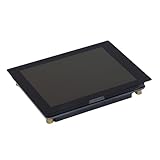
- [ENHANCED PERFORMANCE WITH DUAL CORE PROCESSOR] Experience elevated performance with dual ARM Cortex M33 and Hazard3 processors. Clock runs up to 150 MHz for smooth operation.
- [HIGH-RESOLUTION DISPLAY AND ABUNDANT MEMORY] Enjoy a 450x600 resolution 2.41" capacitive touch display. Integrates 520KB memory, 16MB Flash, and 2MB pseudo memory for efficient usage.
- [EFFICIENT CHIPS AND INTERFACES] Features RM690B0 driver IC and FT6336 touch IC for smooth communication. QSPI and I2C interfaces ensure seamless operation.
- [VERSATILE FUNCTIONALITY WITH GPIO PINS] Offers USB 1.1 support, low power modes, and 21 GPIO pins. Includes 2 I2C interfaces, 2 UART ports, and more for diverse applications.
- [ADDED FEATURES FOR UTILITY] Includes on-chip clock, temperature sensor, floating point libraries, and programmable I/ machines for custom peripheral support.
- Memory and storage: up to 128 MB of 32-bit SDRAM; SD, SDIO, MMC, Memory Stick variants, NAND and linear flash with ECC; and multiple boot sources.
- Connectivity and peripherals: USB OTG and full-speed USB 2.0, UART, IrDA, SPI, I2C, RTC, and camera and display connections.
These are capabilities listed in the product brief, not evidence that a particular commercial handset or PDA included every interface or maximum capacity.
Was MiMagic 6 really the highest-performing mobile multimedia processor?
The supplied title’s “highest multimedia performance” wording is not substantiated by a neutral cross-chip benchmark in the available sources. NeoMagic’s product brief gives feature and capability claims, while the 2003 announcement establishes the chip’s intended market. Neither provides comparable measurements against competing processors under shared test conditions. It is therefore more accurate to describe MiMagic 6 as an early-2000s multimedia processor with an integrated parallel engine than to call it definitively the fastest.
Independent reader supportYour contribution helps us test, update, and keep practical guides available for everyone.What products used MiMagic 6, and can you buy one today?
NeoMagic listed target categories including smartphones, feature phones, PDA phones, digital media players, handheld gaming systems, and handheld digital televisions. The cited materials do not identify a confirmed shipping device that used the chip, so the target list should not be read as a list of products actually sold with it.
MiMagic 6 was sold as an OEM design-in semiconductor, not as a normal retail product. No clearly retail MiMagic 6 chip, development board or evaluation kit, useful accessory, or SDK offering is established by the available material. A modern processor or generic development board would not be a substitute for an original MiMagic 6 system.
Quick Recap
Best Value

- The main body of the module is ESP-WROOM-32 module, which is powerful and supports LWIP protocol, freertos. The peripheral adopts USB serial port chip CP2102 to expand the micro USB interface, which can be directly debugged by connecting to the computer through USB.
- Support AP, STA, AP+STA three modes. Integrated power indicator (red light) and working status indicator (blue light), let you know the status of the module at any time.
- The ESP-32 dual-mode module is compact and easy to embed into your device for your convenience. Compatible with Arduino IDE.
- There are two buttons integrated, one is to reset, and the other is to make the module enter the halberd program mode. The 30 pins on both sides of the development board are convenient for developers to connect and use.
- In addition, this module also supports NodeMCU Lua programming, which expands the scope of its available resources and greatly improves the convenience of learning and development. Of course, it can also be widely used in IoT occasions.
Product prices and availability are accurate as of the date/time indicated and are subject to change. Any price and availability information displayed on Amazon at the time of purchase will apply.

