
Use the chipset or platform package for your exact computer or motherboard first. If Intel’s generic package is appropriate for your system, download it from Intel, extract it, run Setup.exe or SetupChipset.exe, follow the prompts, restart Windows, and check Device Manager. Intel Chipset Device Software mainly installs identification information for Windows; it is not a complete set of chipset or motherboard drivers.
What Intel Chipset Device Software actually does
Intel uses several names for this package: Intel Chipset Device Software, Intel Chipset Software Installation Utility, and Intel Chipset INF Utility. Intel says the newer name appears when you run the installation package. The package installs INF files, which give Windows information about hardware so it can identify chipset components and display more specific names in Device Manager.
Intel describes the utility as not being a driver. An INF installation may change a generic or unknown device label to a specific name without replacing the device’s functional driver. It does not supply every driver needed for USB, graphics, storage, audio, networking, or other motherboard components. Intel also says this package does not install AGP, AGP GART, or USB drivers. Intel explains the INF utility and driver distinction and lists the package’s limitations on its Chipset INF Utility download page.
Many Windows installations already recognize chipset components without this utility. If the system is working and Device Manager has no relevant errors, installing it may make no visible or functional difference.
#1 Best Overall
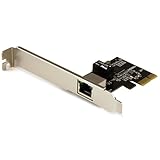
- Add Gigabit Ethernet to a client, server or workstation through a PCI Express slot
- Single Port PCIe network adapter card with Intel I210-AT Chipset
- PCI Express Gigabit network card / PCI Express Gigabit LAN card / PCI Express Gigabit server adapter / Gigabit Network Card / PCIe Gigabit NIC
- Provides fully compliant 10/100/1000 RJ-45 Ethernet port through single PCIe slot
- PXE network boot support
Choose the right package for your computer
| System | Where to start | Why |
|---|---|---|
| Laptop or branded prebuilt PC | Computer manufacturer’s support page for the exact model | The manufacturer may provide platform-specific, validated, or customized components. |
| Custom PC with a third-party motherboard | Motherboard manufacturer’s support page for the exact model and, where relevant, board revision | The board vendor is the appropriate source for its supported chipset and system-device packages. Intel directs third-party motherboard users to their manufacturer. |
| Eligible Intel retail platform without a suitable OEM package | Intel’s official Chipset INF Utility page | Use the generic package only when Intel lists support for the platform and operating-system architecture. |
Check the support page for the exact model rather than choosing a package solely because its name contains “Intel chipset.” Avoid third-party driver-download sites. Intel’s chipset software guidance advises users of third-party motherboards to contact the manufacturer for current updates and support.
Intel’s download page lists Windows 10, Windows 10 x64, Windows 11 x64, and Windows Server 2012 R2 x64, 2016, 2019, 2022, and 2025 as supported operating systems. Confirm the live page’s compatibility list before downloading because it can change. Package compatibility is not the same as operating-system support: Microsoft ended Windows 10 support on October 14, 2025. See Microsoft’s hardware-driver guidance for Windows Update information.
Intel’s U.S. support listing shows version 10.1.20398.8776, dated January 8, 2026. Treat that as the version and date shown on Intel’s listing, not a permanent “latest” version; check the live Intel support page and download page before installing. The download page identifies the installer as SetupChipset.exe, lists a 106 MB package, and publishes this SHA-256 checksum: 5DA882149294917142CEA8666832E37F4D846FF04E14A313913B6A22F05E0CE2. If you verify the download, compare its checksum with the value currently shown on that page.
Rank #2

- 【Ultrafast WiFi 6 & WiFi 6E Support 6GHz】The PCIE WiFi 6E Card Built-in AX210 chipset provides the latest 802.11ax standard technology. Target Wake Time, delivers from 80MHz to 160MHz higher peak data rates,boosts your overall speeds up to 5400 Mbps(574Mbps @2.4GHz + 2400Mbps @5GHz +2400Mbps @6GHz) and up to 4X capacity improvement in dense or congested environments comparing to 802.11ac. Heartily enjoy 8K movies, large file transfer and smart home devices with fewer dropped connections.
- 【The ALL-New 6GHz Band】The ALL-New 6GHz solves WiFi spectrum shortage by providing contiguous spectrum blocks, including 7×160MHz channels, 14×80MHz,which refuses signal congestion in high demand environments. Wider channel and faster data throughput fully satisfys high-bandwidth applications such as unified communications, cloud computing, augmented and virtual reality, and telepresence as well as lower latency connectivity. More choices to unlock your WiFi6E router’s full potential.
- 【The New-Gen Bluetooth 5.3】BT 5.3 is coming with AX210. Based on Bluetooth 5.2( 4x Range , 2x Transmit Speed over BT 4.2), it has larger capacity, higher speed, extremely low latency and stronger battery life.The powerful energy and continuous workflow can be an ideal home choice with game controllers,BT TWS earplugs, earphones, keyboards,etc., which can bring many devices connection and more demands convenience for your Desktop PC ultimate setup.
- 【OFDMA & MU-MIMO For Minimizing Lag】 The WiFi 6E Adapter with OFDMA,MU-MIMO support greater network flexibility, faster downloads, sharing and backup, as well as ultra-low latency, lower power consumption. 160 MHz large bandwidth double throughput greatly improves signal gain when multiple users are served at the same time. Minimized Lag for your PC on busy network for your ultra-responsive real-time gaming or an immersive VR experience.
- 【Broader Connection】Reduced dead zones for the best reception—Two 5dBi external multi-directional antennas for optimal signal reception focus on more reliable signal strength, greatly increase network coverage for a smoother online experience further away.
Install the package
- Identify the hardware. Record the exact computer model, or the motherboard model and revision if applicable.
- Get the package from the right source. Check the computer or motherboard manufacturer first. Use Intel’s official download only if it is appropriate for your platform and Windows edition.
- Save the download locally. Place it in a normal folder on the PC rather than running it from a browser archive, network location, or removable drive.
- Extract the complete package. If the download is compressed, extract it to a folder. Intel’s instructions for unidentified devices specify downloading the contents into a folder and unzipping them.
- Run the setup program. Open the extracted folder and run
Setup.exeor, for Intel’s current package,SetupChipset.exe. Accept the license and follow the on-screen instructions. Do not run an individual INF file unless the computer manufacturer specifically instructs you to. - Restart Windows. Restart after installation completes, as Intel recommends.
- Check Device Manager. Look under System devices and Other devices for unknown devices or yellow warning icons.
Running the installer as administrator is not a universal requirement, but if Windows denies access or setup cannot write files, right-click the setup executable and choose Run as administrator.
Plan the rest of the driver installation
There is no universal rule that the Intel INF utility must be the first driver after Windows. Follow the installation order specified by the computer or motherboard manufacturer, especially when it documents dependencies. A sensible general sequence is:
- Install Windows and complete Windows Update.
- Install the OEM chipset or platform package, if provided for the exact system.
- Install Intel Chipset Device Software if it is appropriate or still needed.
- Install any remaining system-device packages listed by the manufacturer, such as Intel Management Engine Interface, Serial IO, Dynamic Tuning or power management, storage-controller, USB, or Thunderbolt components.
- Install graphics, network, audio, and card-reader drivers as needed. Restart when an installer requests it.
The INF utility is not a substitute for a specific Management Engine, graphics, Wi-Fi, Ethernet, audio, SATA, RAID, VMD, Thunderbolt, USB4, power-management, firmware, or BIOS package. Get those components from the applicable OEM support page or their relevant official source.
Rank #3

- Low-halogen single-port PCI-Express 10/100/1000 Ethernet adapter
- The power management features including Energy Efficient Ethernet (EEE), DMA Coalescing, ultra-compact design, and a unique ventilated bracket for increased efficiency and reduced power consumption
- IEEE 802.1Qav Audio-Video-Bridging (AVB) for tightly controlled media stream synchronization, buffering, and reservation
- High-performing design supporting PCI Express Gen 2.1 2.5 GT/s
- Reliable And Proven Gigabit Ethernet Technology From Intel Corporation
Use Windows Update where it fits
Windows Update can install recommended hardware drivers and may offer additional drivers as optional updates. In Windows 11, open Settings → Windows Update → Advanced options → Optional updates. Optional driver updates are not installed automatically. Microsoft describes driver updates through Windows Update.
A working driver from Windows Update and a chipset INF serve different purposes: the driver enables a device’s functions, while the INF can help Windows identify the hardware. Windows Update does not guarantee that every manufacturer-specific platform component is installed, and a generic device name by itself does not prove that a functional driver is missing.
Troubleshoot installation problems and remaining devices
The installer reports that nothing needs to be installed
This can be normal. Windows may already have the necessary identification information, or the package may find no applicable changes. Do not keep rerunning it simply to force a different Device Manager label; Intel notes that many operating systems identify chipset components without the utility. See Intel’s explanation of how the utility is used.
Rank #4

- Wireless LAN Standard IEEE 802 11ac
- Bluetooth Standard Bluetooth 5 0
- ISM Band Yes
- UNII Band Yes
- ISM Maximum Frequency 2 40 GHz
Setup refuses to upgrade
Intel says setup may not install through setup.exe when another version is already installed. Check the installed version, the exact-system OEM package, and Intel’s upgrade guidance before taking further action. Do not force-install an unrelated or random package.
An unknown device or SMBus Controller remains
Do not assume that reinstalling the INF utility will provide the missing functional driver. Identify the device and look for its driver on the exact computer or motherboard support page:
- Open Device Manager and right-click the unknown device.
- Select Properties → Details.
- Choose Hardware Ids and record the displayed vendor and device IDs.
- Search the manufacturer’s support page for the exact system model and the identified component; install the matching driver.
An SMBus Controller may need a board-specific package or another Intel platform component. Microsoft documents cases where Intel Chipset Device Software does not provide the actual SMBus controller driver in its article on loss of functionality for some Intel SMBus Controller devices.
Do these 3 things before closing this tab:
1Repair Windows errors before they cause bigger problems2Fix the driver behind crashes, sound loss and screen glitches3Clear out junk files and repair common Windows errorsBest Value

- Low-halogen single-port PCI-Express 10/100/1000 Ethernet adapter
- Power management features including Energy Efficient Ethernet (EEE), DMA Coalescing, ultra-compact design, and a unique ventilated bracket for increased efficiency and reduced power consumption
- IEEE 802.1Qav Audio-Video-Bridging (AVB) for tightly controlled media stream synchronization, buffering, and reservation
- High-performing design supporting PCI Express generation 2.1 2.5 GT/s
- Reliable And Proven Gigabit Ethernet Technology From Intel Corporation
A USB or AGP problem persists
The Intel chipset INF package is not the fix for an AGP, AGP GART, or USB driver problem. Find the relevant device or controller package through the system or motherboard manufacturer instead.
The download will not run
Extract the complete package into a local folder and run its included setup executable. If Windows blocks access, retry with administrator privileges. If setup still fails, verify that the package matches the system and operating-system architecture, then consult the OEM package and instructions rather than trying an individual INF file.
Quick Recap
Product prices and availability are accurate as of the date/time indicated and are subject to change. Any price and availability information displayed on Amazon at the time of purchase will apply.

