
Free tools Windows power users keep installed
One-click scans. No signup required.
An Eye-Fi card was an SD memory card with built-in wireless LAN. A camera saved photos to the card as usual; after setup, the card could send them over Wi-Fi to a computer or another configured destination. Eye-Fi wireless support and related services ended in 2016, so an old card should be treated as a legacy device, not a dependable current transfer solution.
What an Eye-Fi card did
Eye-Fi combined two jobs in one camera accessory: storing image files on an SD card and wirelessly transferring selected or newly recorded images. The camera still wrote each photo to the card. The wireless radio then sent the file over a configured wireless network, avoiding the routine step of removing the card and inserting it into a computer.
The camera and card needed to be compatible, and the card needed to be configured before transfer. Sony’s historical camera guide describes the result as images automatically transferred “via wireless LAN to a computer, etc.” Sony Help Guide: Transferring image data using the Eye-Fi card
How wireless photo transfer worked
- Configure the card. Set its wireless access point and transfer destination or direction, as applicable to the card and software.
- Insert it into a compatible camera. Camera support and available Eye-Fi controls varied by model; consult the camera’s manual for its specific settings.
- Take photos or select transfer mode. Depending on the camera, communication might begin after a new image was taken, when the camera was turned on with pending images, or after a user selected Eye-Fi communication in playback mode.
- Allow the transfer to finish. The card sent image data over the wireless connection to the configured destination. Weak reception or interference could prevent or interrupt uploads.
Camera activity could affect timing. Casio’s FAQ notes that transfers may begin in response to a new shot or when the camera is powered on, while some camera arrangements require a playback-mode selection. It also says transfer may not occur while activities such as recording a movie or storing data are in progress. Casio Support: Eye-Fi FAQ
#1 Best Overall

- [Supported Formats] : sd adapter supports and viewing of jpg, png, bmp photo formats, and mp4, avi, mov video formats.
- [Applicable Devices] : Connect up to 3 devices simultaneously including and ios devices.
- [Abs Material] : Made of sturdy and abs material for long-lasting use.
- [Support Settings] : Customize , sd settings, passwords, and modes easily.
- [Simple : Easily access photos and videos wirelessly from your camera to smartphone or tablet via .
What affected whether a transfer succeeded
- Camera and card compatibility: support differed by camera model, and some cameras exposed only limited Eye-Fi controls.
- Wireless signal: the camera and card needed adequate reception from the access point. Sony recommends moving closer when reception is insufficient; Nikon warns that upload will not occur when signal strength is insufficient.
- Interference: other communication devices could disrupt wireless LAN communication, according to Sony.
- What the camera was doing: a movie recording, data write, or other activity could delay or prevent transfer on some camera models.
Nikon’s D3500 manual says its Eye-Fi Upload setting can enable or disable uploads, but the camera may not support other Eye-Fi functions. It also cautions that the card may emit wireless signals even when upload is disabled, so an “off” setting should not be assumed to stop all radio activity. Follow the manual for the specific camera and applicable local rules for wireless devices. Nikon D3500 Online Manual: Eye-Fi Upload
Independent reader supportYour contribution helps us test, update, and keep practical guides available for everyone.Can you still use an old Eye-Fi card?
Eye-Fi announced on June 30, 2016 that it would stop supporting several products, including SanDisk Eye-Fi SD cards. SanDisk says that some services used by the cards’ wireless functionality were shut down on September 16, 2016, and advised customers to stop using wireless functionality by that date. SanDisk Support: Eye-Fi SD Card End of Support
Rank #2

- SUPPORTED FORMATS: WiFi SD adapter supports the function of shooting and viewing, supporting JPG, PNG, BMP photo formats, and supporting MP4, AVI, MOV video formats.
- SIMPLE OPERATION: Insert your SDHC or TF card into the WiFi SD adapter, you can access photos and videos sent wirelessly from the camera to your smartphone or tablet via Wifi for sharing.
- SUPPORT WIFI SETTINGS: WiFi SD adapter supports WiFi, SD settings, WiFi password, AP mode and station mode switching, IP, channel, number or user, SSID.
- ABS MATERIAL: Wifi adapter is made of sturdy ABS material, which is wear resistant and durable, and can be used for a long time.
- APPLICABLE DEVICES: Wifi adapter can connect up to 3 devices at the same time, support for Android, for IOS devices.
That notice establishes the end of support and the shutdown of dependent services; it does not establish that every local transfer mode on every individual card became impossible. Whether a particular card can still do anything depends on its model, configuration, camera, and transfer path, and should not be assumed without testing. The available documentation does not establish a currently supported Eye-Fi model or guarantee that a secondhand card will work.
If you have an old card and your goal is simply to retrieve its files, a compatible SD card reader connected to a computer is a generic wired option. Match the reader to the card format and the computer’s ports; it is not an Eye-Fi wireless replacement.
Outdated Drivers Are Slowing You Down
One free scan finds every outdated or missing driver and matches the right update for your exact hardware.Free scan · exact hardware matchPC Slower Than It Used to Be?
A free scan shows the junk files, broken settings and background clutter dragging Windows down - then fixes them in one click.Free scan · Windows 10 & 11Quick Recap
Rank #4

- Supported Formats: WiFi SD adapter supports the function of shooting and viewing, supporting JPG, PNG, BMP photo formats, and supporting MP4, AVI, MOV video formats.
- Simple Operation: Insert your SDHC or TF card into the WiFi SD adapter, you can access photos and videos sent wirelessly from the camera to your smartphone or tablet via Wifi for sharing.
- Support WiFi Settings: WiFi SD adapter supports WiFi, SD settings, WiFi password, AP mode and station mode switching, IP, channel, number or user, SSID.
- ABS Material: Wifi adapter is made of sturdy ABS material, which is wear and durable, and can be used for a long time.
- Applicable Devices: Wifi adapter can connect up to 3 devices at the same time, support for Android, for IOS devices.
Rank #3
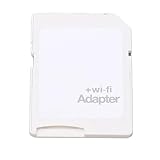
- SUPPORT WIFI SETTINGS: WiFi SD adapter supports WiFi, SD settings, WiFi password, AP mode, IP, channel, number or user, SSID.
What to check before relying on any legacy card
- Confirm the camera accepts the card’s format and supports the relevant Eye-Fi functions.
- Check whether the intended transfer depends on a vendor app, online service, or a locally configured access point.
- Determine how the camera triggers transfer and which activities interrupt it.
- Verify that the software and services required for the exact setup remain available; historical compatibility is not proof of present-day support.
Product prices and availability are accurate as of the date/time indicated and are subject to change. Any price and availability information displayed on Amazon at the time of purchase will apply.

