
Quick wins for a faster PC:
Fix the driver behind crashes, sound loss and screen glitchesFind Drivers →Clear out junk files and repair common Windows errorsFree Scan →iTechGuides is reader-supported. When you buy through links on our site, we may earn an affiliate commission. As an Amazon Associate I earn from qualifying purchases. Learn more
An AI assistant cannot literally remember everything forever. Its context window is finite, and a large archive does not guarantee that the right fact will be found. To carry useful information between conversations, a system needs persistent storage around the model, plus rules for what to save, how to retrieve it, when to update it, and how to delete it.
What does it mean for an AI assistant to remember?
During a conversation, a model works with information in its context window: the material available to it for that response. That working context is not the same thing as durable memory. A memory-enabled assistant stores selected information outside the window, then assembles a smaller, relevant set of notes when a later request needs them.
This distinction matters because an assistant with a large context window can still miss a detail, and a system with a large memory store can still retrieve the wrong one. A practical goal is not perfect recall. It is useful, scoped continuity: preserving information that helps future interactions, finding it when appropriate, and recognizing when it may be stale or uncertain.
What’s actually slowing this PC down?
Pick the symptom - the matching free tool is one click away.
Microsoft’s Long-Term Memory guidance puts the distinction plainly: “LTM is not a transcript archive and it is not a knowledge base.” A memory system should preserve useful context, not indiscriminately replay every past conversation.
#1 Best Overall

- [AI Smart Speaker] You can use tozo pm1 speaker to AI Chat by connect with TOZO APP, you can literally Talk to it like a real person, rather than just typing and reading on a screen. It’s perfect for hands-free assistance, learning, and entertainment.
- [Intelligent Meeting Assistant] Recording + real-time transcription: one-click recording, stopping as you go, AI real-time conversion of voice messages into text recordings, and automatically analyzing the recording/text content, intelligently refining the key points, action items, and conclusions, and also translating into multiple languages with one click.
- [Excellent Sound Quality] Experience studio-grade clarity with our precision-engineered 28mm dynamic driver. Delivering 30% louder output and deeper bass resonance, it captures every nuance—from crisp highs to rich mid-ranges, ensuring vibrant, distortion-free sound whether you’re streaming music, or voice call.
- [Up to 20H Playtime] Bluetooth speaker has a built-in robust rechargeable battery. Up to 20 hours playtime, ensuring continuous, uninterrupted playback, whether you use the speaker for lectures, work conversations, or listening to music while running outdoors, etc.
- [Unleash Your Hands] Clip-On Convenience make it secure the rugged built-in clip to jackets, backpacks, or belts, room-filling music or take calls hands-free, perfect for hiking, cycling, or busy workdays.
How can an assistant remember across conversations?
A reliable design treats memory as a lifecycle. Each step has to work: deciding what merits retention, recording it with enough context to interpret it, updating it when circumstances change, retrieving it for the right request, and enforcing expiration or deletion.
1. Select what is worth keeping
Good candidates include durable preferences, recurring project details, decisions that affect future work, and problem-solving patterns that have proved useful. Microsoft’s engineering guidance suggests using explicit requests or repeated, consistent signals as write triggers. The system should not assume that every detail is worth preserving.
- Prefer information that is likely to help in a later interaction.
- Avoid retaining secrets or sensitive facts without clear intent.
- Do not duplicate records that already have an authoritative home, such as a current project database.
- Give users a way to say that a detail should not be saved.
2. Store facts with their meaning and origin
A note such as “prefers concise answers” is more useful when the system knows whose preference it is, which settings it applies to, where it came from, and when it was last confirmed. Store metadata alongside the content: subject, scope, source, confidence, timestamps, version, sensitivity, and an expiration date when policy calls for one.
It also helps to distinguish memory types. Semantic memory holds compact, relatively durable facts such as a user’s preferred programming language. Episodic memory records particular events or conversation details that may be searched later. Procedural memory captures useful workflows, such as the steps a team follows to release a project.
3. Consolidate and update
Without maintenance, memory accumulates duplicates and contradictions. A system should merge redundant notes while preserving important source details, and it should represent changes over time rather than silently treating every stored statement as current. If a user changes a preference, the new information should supersede or qualify the old one; if two sources conflict, the assistant should not pretend the conflict is resolved.
Rank #2

- Meet Echo Dot Max: Experience rich room-filling sound that automatically adapts to your space and fine-tunes playback. Features a built-in smart home hub and Omnisense technology for highly personalized experiences.
- Music to your ears: With nearly 3x the bass versus Echo Dot (2022 release), it fits beautifully in any space, delivering your personal sound stage with deep bass and enhanced clarity. Listen to streaming services, such as Amazon Music, Apple Music, Spotify, and SiriusXM. Encore!
- Do more with device pairing: Connect compatible Echo smart speakers and smart displays in different rooms, or pair with a second Echo Dot Max to enjoy even richer sound
- Simple smart home control: Set routines, pair and control lights, locks, and thousands of smart home devices that work with Alexa without needing a separate smart home hub. With Omnisense technology, you can activate routines via temperature or presence detection.
- Say goodbye to drop-offs and buffering - With eero Built-in, Echo Dot Max doubles as a mesh wifi extender, adding up to 1,000 sq. ft. of wifi coverage to your existing eero network.
MemoryOS, an EMNLP 2025 paper, describes short-, mid-, and long-term tiers alongside separate storage, updating, retrieval, and generation modules. The tiers are one possible organization, not a requirement for every assistant. The underlying need is to manage information as it changes instead of treating storage as write-once.
4. Retrieve only what the current request needs
At response time, the system searches the persistent store and adds relevant results to the model’s working context. LongMemEval describes long-term memory in terms of indexing, retrieval, and reading. Metadata filters can help restrict results to the correct user, project, channel, or sensitivity level before they reach the model.
A compact profile can be available routinely, while a larger episodic history is searched on demand. Relationship graphs can help when a request requires traversing connections among people, projects, or events, but Microsoft’s guidance presents graph structures as a later-stage option—not a universal starting point. For an implementation example, Microsoft names Azure AI Search and Azure Cosmos DB vector search as retrieval infrastructure options; the right choice depends on the data, access controls, operational needs, and expected query patterns.
5. Use recalled information as evidence, not certainty
A retrieved note may be outdated, incomplete, or attached to the wrong scope. The assistant should retain provenance, communicate uncertainty when it matters, ask for clarification when sources disagree, and abstain when it cannot support a claim with a reliable memory. A plausible-sounding answer is not proof that the system actually remembers the underlying fact.
6. Expire, decay, or delete
Memory needs a defined end-of-life process. Depending on policy and usefulness, information may be reinforced, allowed to decay in priority, expired, or deleted. Deletion should cover not just the original record but also indexes and derived summaries that could continue surfacing it. Microsoft’s guidance also calls for expiry enforcement, purge jobs, and periodic memory-hygiene reviews.
Rank #3

- and : Long life, built in 1800mAh lithium ion battery, dual MOS tube , standby time up to 168 hours, play time up to 4‑8 hours.
- Upgrade Chip: Using the new Bluetooth 5.1 chip and HT8371 6W high power decoding chip, highly restored, three tone balanced.
- Intelligent AI Chip: New intelligent AI chip, no need to connect to wifi, AI voice intercom, knowledge encyclopedia, news, radio, navigation, music on demand.
- Intelligent Life Companion: Clock display, alarm setting, snooze mode, secondary wake up, humanized function design to meet various daily needs.
- Fully Compatible: Fully compatible, multi use, support cell phone Bluetooth playback, support desktop computer and laptop sound card mode playback.
What do memory benchmarks show—and what do they not show?
A longer context window or a larger store is not, by itself, evidence of dependable memory. The results below come from specific evaluations; they describe the tested systems and setups rather than predicting how every production assistant will perform.
| Evaluation | Reported result | What the result covers |
|---|---|---|
| LongMemEval, 2025 | 30% accuracy drop | The authors report this drop for commercial assistants and long-context LLMs on memorizing information across sustained interactions in their benchmark. The evaluation uses 500 questions embedded in chat histories and covers information extraction, multi-session reasoning, temporal reasoning, knowledge updates, and abstention. |
| MemoryOS, EMNLP 2025 | 48.36% average F1 improvement and 46.18% average BLEU-1 improvement | The authors report these average gains over baselines on LoCoMo using GPT-4o-mini. They are benchmark results for the paper’s system and setup, not a production guarantee. |
| Microsoft Research, 2026: issue tracking | 97.2% retention precision with a 58% store reduction | Reported for deduplication-based consolidation on a VSCode issue-tracking dataset containing 13,000 issues and 120,000 events. |
| Microsoft Research, 2026: personal chat | 70.1% versus 71.2% raw retrieval accuracy at a 200,000-token context budget; overlapping 95% confidence intervals | Reported on LongMemEval’s personal-chat benchmark. The overlapping intervals mean the figures do not establish a clear difference in raw retrieval accuracy. |
| Microsoft Research, 2026: preference recall | 13.3 percentage-point improvement at 50 sessions | Reported for preference recall from deduplication-based consolidation at the stated session scale. |
The Microsoft Research figures describe particular evaluations, including an issue-tracking dataset and a personal-chat benchmark; they should not be read as expected outcomes for unrelated workloads. Likewise, benchmark gains do not establish that a system will handle every user’s changing preferences, privacy boundaries, or real-world data reliably.
How should an assistant’s memory be tested?
Test whether memory behaves correctly over time, not merely whether the system can produce a convincing answer. Include ordinary use, changed facts, missing evidence, and boundary cases.
- After a user states a preference or makes a project decision, check whether the assistant retrieves it in a later session when it is relevant.
- Change or correct a stored fact, then verify that later answers use the current version rather than the superseded one.
- Ask questions that depend on dates or event order, and check whether the assistant distinguishes what happened first from what is still true.
- Remove the supporting memory or ask about an unsupported detail, and check that the assistant abstains instead of inventing a recollection.
- Test whether one user’s, project’s, or channel’s information can appear in another scope.
- Delete or expire a record, then verify that it no longer appears through indexes or derived summaries.
- Measure retrieval latency, storage growth, and context or token use alongside answer quality to determine whether the additional memory is worth its operational cost.
What can go wrong when memory persists?
Persistence changes the consequences of a mistaken or misplaced detail. Information that would once have disappeared with a session may be recalled later, potentially in a different context. Microsoft’s engineering guidance identifies several concrete risks:
- Prompt injection through stored content: text saved from a conversation may contain instructions intended to manipulate later responses.
- Memory poisoning: a user or external source may deliberately introduce false information that the system later treats as established fact.
- Context collapse: information from one domain, project, or channel may leak into another where it does not belong.
- Hallucinated summaries: a compressed or generated memory may distort the original statement while appearing authoritative.
- Retention beyond policy: records may remain accessible after their intended expiry if cleanup is not enforced.
Treat stored content as untrusted input. Validate writes, preserve provenance, enforce scope boundaries as retrieval filters, and make expiry and deletion automatic rather than relying on manual cleanup. These are engineering recommendations, not a universal legal checklist.
Recommended Free Tools
Rank #4
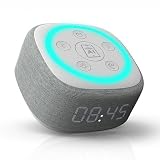
- Bedside Speaker and Sleep Sound Machine: This compact wireless speaker combines Bluetooth audio, 16 built-in sleep sounds (white noise, brown noise, rain, ocean, and more) and multiple RGB night light modes in one rechargeable device. Stream music while the light pulses in time with your audio, or switch to sleep mode and drift off to the sound you picked. A practical gift for teens and adults upgrading a bedroom setup.
- One Button, Your AI, Instantly: The BRS-180 has a dedicated AI button on top. Press it once and it wakes Google Assistant, Siri, or whichever assistant lives on your paired device. Ask it anything, play music, set a reminder, check the weather, or control your smart home, all from across the room without picking up your phone.
- Pairs in Seconds and Stays Connected: Bluetooth connects to any iOS or Android phone, tablet, or laptop with no app and no account required. Once paired, the 12-hour LED clock display syncs the correct time on its own. Three display settings keep you in control: full brightness, dimmed, or completely off for total darkness. A memory function saves your last volume, sleep sound, and light settings automatically.
- Built for the Nightstand, Night After Night: The soft fabric-wrapped enclosure sits on a nightstand, dresser, or shelf without looking like a gadget. Plug it in over USB-C and it runs continuously, or use the built-in rechargeable battery for up to 6 hours of wireless playback. Either way it is ready when you are. Available in White, Black, and Green.
- 16 Sleep Sounds, Fully Customizable: Choose from 16 built-in sleep sounds that play straight from the speaker with no phone, no app, and no subscription. Set a 15, 30, or 60-minute sleep timer and the sound fades out by itself. Want a different library? Connect it to any PC with the included USB-C cable and swap out every sound stored on the device.
What should users be able to control?
Memory should be visible and correctable, with clear indications of what is remembered, who or what it applies to, and how it can be removed. Products can also provide temporary or no-write interactions for conversations that should not create lasting memory. These controls make errors easier to find and limit the risk of users assuming that every conversation is either always remembered or never remembered.
Security claims should be evaluated according to their evidence. In a September 23, 2026 post, Google DeepMind described a proposed persistent cross-device memory layer for Private AI Compute. Google says the design stores information encrypted with keys held on user devices, uses authenticated encrypted channels, and temporarily decrypts data in secure cloud enclaves to handle a request before re-encrypting new context. The company also says it is publishing technical material and independent audit results. Those are the vendor’s stated design and claims; the post alone is not independent validation of the guarantees.
How to judge a persistent-memory design
When comparing implementations, focus on operational behavior rather than claims of “infinite” storage. A useful evaluation considers whether the system recalls relevant facts across sessions, handles temporal changes and abstention, updates conflicts, controls storage growth and retrieval costs, respects privacy boundaries, preserves source traceability, and reliably expires or deletes information. It should also distinguish evidence types: a benchmark paper, vendor description, and engineering guidance answer different questions and carry different weight.
The practical design principle is simple: memory is not a larger prompt. It is a governed system that selects, organizes, retrieves, verifies, and eventually removes information. Its quality depends as much on what it declines to remember—and what it can prove, correct, or forget—as on what it can recall.
The Tool Desk
Outbyte PC Repair FREERepair Windows errors before they cause bigger problemsFix Now →Outbyte Driver Updater FREEScan for outdated or missing drivers - takes under a minuteDriver Scan →Quick Recap
Product prices and availability are accurate as of the date/time indicated and are subject to change. Any price and availability information displayed on Amazon at the time of purchase will apply.

