
iTechGuides is reader-supported. When you buy through links on our site, we may earn an affiliate commission. As an Amazon Associate I earn from qualifying purchases. Learn more
After a cardiac arrest, surviving the emergency is the start of recovery—not proof that someone is back to their usual health. Hospital teams monitor the survivor, investigate possible causes, assess the effects of the arrest and plan follow-up care. Recovery varies: some people improve steadily, while others need rehabilitation or longer-term support for physical, cognitive or emotional changes.
What happens in hospital after cardiac arrest?
Survivors usually receive hospital care, which may include intensive, critical or coronary care. The team monitors the person’s condition, assesses effects on the heart and other parts of the body, investigates what may have caused the arrest and considers treatment intended to support recovery or reduce the risk of another arrest.
Cardiac arrest is not the same as a heart attack. A heart attack can be one cause of cardiac arrest, but there are other possible causes. Sometimes the cause is still unknown at discharge; Resuscitation Council UK describes an arrest with no identified cause as idiopathic.
Stabilization is only one part of survivorship. The American Heart Association’s 2025 post-cardiac-arrest guideline describes a broader journey through rehabilitation, recovery and social reintegration. Before discharge, it recommends assessment and treatment or referral for emotional distress, multimodal rehabilitation assessment for cognitive, physical, neurological and cardiopulmonary impairments, and multidisciplinary discharge planning.
#1 Best Overall

- Pedaler That Doubles as a True Cardio Workout: Other seated pedalers can’t do what TheraScoop can. Because it’s designed for clinical settings, TheraScoop is the seated foot pedal exerciser that can be customized to provide a true, heart-pumping cardio workout that also strengthens every muscle of the lower body. with 8 resistance settings and dual-pedaling action, it delivers what other pedalers can’t: real cardio results.
- FSA-HSA Eligible and Approved - The better choice: FSA-HSA eligibility is awarded only to products that have demonstrated a true medical purpose. TheraScoop offers a gentle way to stay active for seniors or rehabbing athletes without pills, shots or endless clinical appointments. Compact, portable and weighing under 30 lbs, it’s the home workout that’s proven to do more than other pedalers.
- Lateral Elliptical Motion That’s Better For Complete Lower Body Activation: Unlike basic pedal exerciser which only work half the lower body, TheraScoop uses a patented lateral motion that engages double the muscles of traditional machines. The sideways elliptical gently yet powerfully activates the core and all the muscles of the lower body, supporting strength, stability, and balance.
- The Same Upgraded Design Used By Professionals: Built with the same lateral technology used in clinical settings, this leg exercise machine is perfect for users seeking a quiet, effective workout without leaving home. With 8 resistance levels and two pedaling directions, the TheraScoop is customizable for any user, from injured athletes to seniors searching for gentle workouts.
- TheraScoop Quality – Built to Stand Up to Pro Settings: Every foot pedal exerciser we create is engineered for quality, durability and ease of use. TheraScoop Lateral Ellipticals are trusted by the pros to stand up to busy clinical settings, which means home users can rely on them long term, even with daily use. Trusted quality plus proven design equals confidence in your purchase.
What should be in a discharge plan?
A clear plan helps the survivor and caregiver know what happens next and whom to contact. The American Heart Association says a survivorship plan can summarize the hospital course, individualized treatment recommendations and expected recovery after discharge.
- Follow-up appointments, who is coordinating care, and whether further tests are planned.
- Which symptoms or changes to report, and how to reach the appropriate healthcare team.
- Recommended rehabilitation assessments, referrals and other professionals involved in care.
- Medication instructions, including which medicines are short-term and which are intended for longer-term use.
- Individual expectations or restrictions for activity, driving and work.
Ask the care team to clarify anything that is missing or unclear before leaving hospital. New or concerning symptoms should be raised with the healthcare team; urgent symptoms require local emergency services.
What can recovery feel like?
Recovery looks different for each survivor. Resuscitation Council UK cautions that it can take time and advises not rushing it. Fatigue, reduced energy, muscle weakness, pain, sleep difficulty and medication side effects are among the physical issues survivors may report. Some people also experience speech changes, difficulty swallowing or problems with fine motor skills. These effects do not happen to everyone, and their severity and duration vary.
PC Slower Than It Used to Be?
A free scan shows the junk files, broken settings and background clutter dragging Windows down - then fixes them in one click.Free scan · Windows 10 & 11Crashes, No Sound, or Screen Glitches?
Random freezes, missing sound and display glitches usually trace back to one bad driver. Find and replace yours safely.Free scan · under a minuteRank #2

- Full Body Exercise: This pedal exercise bike for seniors delivers a full body workout, including cross-body movement of upper and lower limb, synchronous movement of the arms and legs, and lateral wobble of the lower limbs. All these low-impact exercises help improve joint flexibility, build muscle strength, speed up limb function recovery, boost blood circulation, and enhance full-body coordination.
- Convenient Home Exercise: This exercise equipment is perfect for elderly users and those with muscle weakness to work out at home. It enables you to achieve your daily home exercise goals while sitting down. Regular use helps boost energy levels, maintain joint health, supports physical therapy, and aids in injury recovery.
- LCD Digital Display: This exerciser is equipped a built-in LCD monitor, allowing users to track their workout progress in real time. It displays exercise time, distance, swing count, total swing counts, and calories burned. Data cycles automatically when pressing the red button, making it extremely easy to operate for seniors and other users.
- Sturdy and Durable: Constructed with thickened steel tubing and supported by four corner feet for stable ground contact, this pedal exerciser offers good stability and high load-bearing capacity. It is an ideal choice for seniors, as well as individuals recovering from injuries, surgeries, and knee or hip replacements.
- A Great Gift for the Elderly and Physically Weak: This at-home exercise device provides gentle, low-impact training for arms and legs. It makes an perfect gift for families and friends on Christmas day, Birthday, Mother's Day, Father's Day and any other special occasions.
Thinking, memory and concentration
Some survivors notice difficulty with attention, short- or long-term memory, planning, organization, learning, language, problem-solving or thinking clearly. These changes may become more apparent after returning home or to work, when everyday demands increase. Some improve; some people need longer-term support.
Emotional wellbeing
Fear of another arrest, anxiety, low mood, depression, loneliness or distress can follow the event. These feelings can exist alongside relief or gratitude at surviving. The American Heart Association’s 2025 guideline recommends structured assessment and treatment or referral for emotional distress after medical stabilization. Family members, friends and people who witnessed or responded to the arrest can also be affected.
Being home, walking or appearing well does not establish that someone has fully recovered. Ask about how the person is functioning and feeling, and tell the healthcare team about changes in physical, mental or emotional wellbeing.
Rank #3

- Full Body Exercise: This pedal exerciser for seniors delivers a full-body workout, including upper and lower body training, resistance band exercises, and a massage function. The low-impact cycling effectively enhances muscle strength and joint flexibility, while resistance band stretches relieve should muscle tension and soreness. What’s more, the new massage function Improves blood circulation, reduces physical fatigue, and helps you relax both body and mind.
- Flexible Adjustment: Equipped with 5-level height adjustment for the handlebar and center pillar, with a total height range of 31''to 43'', the base also supports stepless length adjustment from 15.7'' to 21.5'', making it suitable for users of all body types. Moreover, the tension on both the handles and pedals can be easily adjusted by turning the knob to meet your needs for both general exercise and rehabilitation training.
- Convenient Home Exercise: This exercise equipment is perfect for elderly users and those with muscle weakness to work out at home. It enables you to achieve your daily home exercise goals while sitting down. Regular use helps boost energy levels, maintain joint health, supports physical therapy, and aids in injury recovery.
- Intuitive LCD Display: This pedal bike features a clear, user-friendly LCD display. With a single press of the red button, it sequentially shows time, counts, total counts, and calories burned. The display let users easily track their workout data and monitor their progress with ease.
- Sturdy and Durable Structure: Made with thickened steel tubing and a triangular base, this pedal exerciser offers good stability and load-bearing capacity. The upgraded larger U-shaped frame increases ground contact for enhanced steadiness. Plus, four non-slip suction cups on the bottom secure the device firmly to the floor. It is a safe choice for seniors, sedentary individuals and those recovering from injuries, surgeries, or knee and hip replacements.
What rehabilitation and support may help?
Rehabilitation is broader than exercise alone. The American Heart Association recommends considering cognitive, physical, neurological and cardiopulmonary needs before discharge. The right combination depends on the survivor’s condition and needs.
Cardiac rehabilitation
Cardiac rehabilitation is a medically supervised program that can include exercise training, education about heart-healthy living and support to reduce stress. It may help physical function, confidence and overall recovery after a cardiac event. A survivor may be referred depending on their heart condition and treatment; referral and eligibility are not universal.
Other rehabilitation and professional support
Depending on the difficulties identified, support may involve doctors, nurses, physiotherapists, pharmacists, occupational therapists, counsellors, clinical psychologists or clinical exercise physiologists. Ask providers which needs they assess, how they coordinate with the treating team, where and how services are delivered, and what referral, eligibility and access requirements apply.
Rank #4
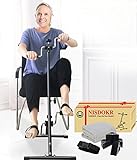
- 【Adjustable Design】The classic model - upper and lower limb rehabilitation machine has adjustable tension and height to let you work arms and legs for safe, low-impact exercise all from the comfort of your chair or sofa.
- 【Made for Exercise at Home】Family rehabilitation is a practical and effective rehabilitation pattern. This home physiotherapy station, covers an area of small, simple structure and reasonable. Compact design makes it easy for moving or storage, you can hide it away in the room corner. Recommend wearing gloves when assembling.
- 【Lightweight and Easy to Use】 Mini exercise bike is compact designed, sturdy carbon steel construction with rubber pedals and slip-resistant feet keeps stable, reinforce security. The base of the exerciser which is conveniently outfitted with four anti-slip rubber, an anti-skid mat and an extra strap. The adjustable foot band can flexibly adapt to users' feet of different sizes to meet different needs. Just slide your feet in and go! It's a great cardio workout for upper and lower body.
- 【Good for Lifelong Exercise】 With this mini bike pedal exerciser, you can exercise both your arms, legs, and knees when you are chatting or watching TV. Daily exercise can improve joint flexibility, accelerate limb function recovery, increase muscle strength, reduce paralysis, and improve blood circulation. This little gadget makes a good present for the elderly.
- 【NOTICE】Before using the product, please make sure that all screws, nuts, knobs, frames, and brackets have been fixed. If you received the Pedal Exerciser Bike missing hardware, please contact us by email, we will send you the hardware or refund. If you have any questions, please do not hesitate to contact us. We would like to do whatever we can do to help you out. We sincerely hope our products and customer service can give you the BEST SHOPPING EXPERIENCE on Amazon.
Peer and caregiver support
Peer groups and online communities can connect survivors with people who have had similar experiences. Caregivers and family members may need support in their own right. Peer support complements medical assessment and treatment; it does not replace them.
When can someone go home?
There is no single discharge timetable that applies to every survivor. The hospital team considers the person’s medical condition, treatment and recovery needs, as well as the follow-up and support that can be arranged. Before going home, ask what care is planned, how to report changes and who to contact with questions.
Do these 3 things before closing this tab:
1Repair Windows errors before they cause bigger problems2Fix the driver behind crashes, sound loss and screen glitches3Clear out junk files and repair common Windows errorsWhen can someone drive, exercise or return to work?
There is no universal safe date for resuming driving, exercise, work or other activities. The American Heart Association recommends that discharge planning include expectations for return to activity and work. Decisions depend on the cause of the arrest, its effects on health, treatment, symptoms and the demands of the activity or job.
Best Value

- 【Adjustable Design】 Upper and lower limb rehabilitation machine has adjustable tension and height to let you work arms and legs for safe, low-impact exercise all from the comfort of your chair or sofa.
- 【Made for Exercise at Home】 Family rehabilitation is a practical and effective rehabilitation pattern. This home physiotherapy station, covers an area of small, simple structure and reasonable. Compact design makes it easy for moving or storage, you can hide it away in the room corner. To assist stroke and muscle weakness patients, we include two special gloves designed to aid in recovery.
- 【With Massage Function and Easy to Use】 Sturdy carbon steel construction with rubber pedals and slip-resistant suction cups keeps stable, reinforce security. The base of the peddler which is conveniently outfitted with foot massager roller. The adjustable foot band can flexibly adapt to users' feet of different sizes to meet different needs. Just slide your feet in and go! It's a great cardio workout for upper and lower body.
- 【User-Friendly LCD Monitor】The intuitive one-button LCD monitor displays essential exercise data including time, distance, calories, counts, and total counts. The data will show in sequence after pressing the button, and you can set the desired data to be displayed permanently. Simple operation makes it accessible even for elderly users.
- 【Ideal for Daily Exercise and Lifelong Fitness】With this mini bike pedal exerciser, you can exercise both your arms, legs, and knees when you are chatting or watching TV. Daily exercise can improve joint flexibility, accelerate limb function recovery, increase muscle strength, reduce paralysis, and improve blood circulation. It's an excellent gift for seniors and patients in rehabilitation.
Driving
Driving restrictions depend on the cause of the arrest, its impact on health and the treatment received. Rules vary by jurisdiction. Ask the treating team for advice and check the current requirements of the relevant licensing authority. Feeling better or being discharged from hospital does not by itself mean someone is cleared to drive.
Exercise and everyday activity
Ask the clinical team what activity is appropriate and whether cardiac rehabilitation or other assessment is recommended. The plan should reflect the survivor’s condition and treatment rather than a generic timetable.
Work
Return-to-work planning should take account of health and job demands. Discuss whether a gradual or adjusted return is appropriate, especially if fatigue, memory or concentration difficulties, physical demands, safety-sensitive tasks or stress are concerns. The guidance does not establish one timetable for everyone.
Recommended Free Tools
Questions to ask at follow-up
- What is the likely cause of the arrest, and are more tests planned?
- What symptoms or functional changes should prompt a call or review, and whom should I contact?
- Which rehabilitation assessments or services are appropriate?
- What are my individual instructions for driving, exercise, intimacy and work?
- Which medications are short-term and which are intended for long-term use?
- What follow-up appointments are arranged, and who coordinates them?
- Could relatives be at increased risk, and should they seek assessment?
- Where can my caregiver and I find emotional or peer support?
How long does recovery take?
There is no guaranteed recovery schedule. The American Heart Association’s 2025 guideline notes that recovery and social reintegration can be slow. It cites research in which maximal recovery was typically assessed at three to six months after arrest; that describes the timing of recovery in the referenced research, not a promise that an individual will recover by then. A survivor’s course depends on the cause of the arrest, time to return of spontaneous circulation, overall condition, treatment and effects of the event.
Guidance and available services vary by country. This general information is not an individual care plan; decisions about treatment, rehabilitation and returning to activities should be made with the survivor’s healthcare team.
Quick Recap
Product prices and availability are accurate as of the date/time indicated and are subject to change. Any price and availability information displayed on Amazon at the time of purchase will apply.

