
The Tool Desk
Outbyte PC Repair FREERepair Windows errors before they cause bigger problemsFix Now →Outbyte Driver Updater FREEFix the driver behind crashes, sound loss and screen glitchesFind Drivers →iTechGuides is reader-supported. When you buy through links on our site, we may earn an affiliate commission. As an Amazon Associate I earn from qualifying purchases. Learn more
Two thermostats usually mean either one HVAC system serves separate zones, or separate heating and cooling systems serve different parts of the house. The number of thermostats alone cannot tell you which setup you have: ductless mini-splits and heat-pump systems with secondary heating can also use more complex controls. To find out what each thermostat operates, check the equipment and control layout—or ask an HVAC professional to trace it before changing or replacing anything.
Can two thermostats control one HVAC system?
Yes. In a ducted zoning system, each thermostat controls the temperature in a designated area, or zone. When a thermostat calls for heating or cooling, a zone controller and motorized dampers direct airflow to that area. One central HVAC unit can therefore serve multiple thermostat-controlled zones; each thermostat does not necessarily have its own furnace or air conditioner. Carrier explains how zoning systems use thermostats, a controller, and dampers.
A zoning setup generally involves more than adding another thermostat. A retrofit typically requires compatible thermostats, a zone-control panel, and dampers, and the equipment must suit the home. Trane recommends consulting a professional about whether zoning is appropriate.
What’s actually slowing this PC down?
Pick the symptom - the matching free tool is one click away.
Could the thermostats control separate HVAC systems?
Also yes. A house may have separate heating or cooling equipment serving different floors or sections. Independent systems can be considered when the home’s layout and heating and cooling loads warrant them, but two wall thermostats do not prove that there are two systems. Nor should you assume that each thermostat corresponds one-to-one with a visible indoor unit without checking how the equipment is connected. Carrier discusses how home size and characteristics affect equipment choices.
#1 Best Overall

- ENERGY STAR certified smart thermostat for home that helps you save energy and stay comfortable.Product note: You can also check your system’s compatibility before purchasing a Nest thermostat with our online Nest Compatibility Checker on the Google Nest support page.Connectivity Protocol : Wi-Fi.Connectivity Protocol : Wi-Fi
- The Nest Thermostat is designed to work without a C wire in most homes, but for some systems, including heating only, cooling only, zone controlled, and heat pump systems, you’ll need a C wire or other compatible power accessory. Lock feature: No
- Nest Thermostat turns itself down when you leave, so you don’t waste energy heating or cooling an empty home; easily program an energy efficient schedule in the Google home app on your Android or iPhone
- Remote control lets family members change the thermostat temperature from anywhere on a phone, laptop, or tablet[1]
- Savings Finder looks for more ways your thermostat can help you save, and suggests tweaks to your schedule in the app; check with your energy provider to learn more about rebates and more ways to save on a Nest thermostat
What other setups can involve two thermostats?
Ductless multi-zone mini-split
Several ductless indoor units, or heads, may connect to a single outdoor unit. That is another possible explanation for multiple temperature controls; the thermostat count alone does not identify this arrangement. Carrier’s sizing guide describes multi-zone mini-splits.
Heat pump with secondary heating
A heat pump paired with a secondary heating source can use more involved controls, and some strategies use two thermostats. The precise operation depends on the system’s capabilities and configuration. A U.S. Department of Energy Building Science Education Solution Center and Consortium for Energy Efficiency guide describes two-system control strategies.
Rank #2

- PRIVACY PROTECTION*: Sensi won’t sell your personal information to third parties
- EASY DIY INSTALLATION: Use the built-in level and step-by-step app instructions for a quick installation. Works with HVAC equipment found in most homes. Common wire (c-wire) is not required in most applications
- SAVE ABOUT 23% ON HVAC ENERGY*: The ENERGY STAR-certified Sensi smart thermostat can help you save energy with features like flexible scheduling, remote access and usage reports
- SIMPLE CONFIGURATION: Looks and feels like a thermostat. Has buttons and fits the same space as a traditional thermostat so you don’t have to patch and paint your walls
- SMART MAINTENANCE: Sensi can help monitor the performance and efficiency of your HVAC system by delivering valuable usage reports, alerts about your equipment, and maintenance reminders like filter replacement
Why might a two-story house have separate temperature controls?
Upper floors can run warmer because heat rises, but that is not the only factor. Roof exposure, windows, insulation, ceiling height, and ductwork can all affect room temperatures. A contractor might consider one properly sized system, zoning, or separate systems, depending on the home’s loads and characteristics. The presence of two thermostats alone does not show that the design is defective or that one particular solution is needed. Carrier outlines home factors involved in sizing air-conditioning equipment.
PC Slower Than It Used to Be?
A free scan shows the junk files, broken settings and background clutter dragging Windows down - then fixes them in one click.Free scan · Windows 10 & 11Crashes, No Sound, or Screen Glitches?
Random freezes, missing sound and display glitches usually trace back to one bad driver. Find and replace yours safely.Free scan · under a minuteA U.S. Department of Energy Building America report examined modeled homes in which two thermostats and two zones improved comfort under the scenarios studied. Those results apply to the modeled conditions; they do not establish a universal comfort improvement or energy saving for every home. Read the 2016 Building America report.
Rank #3

- An Alexa thermostat - Amazon Smart Thermostat is an easy way to switch from a traditional thermostats for homes and help reduce energy usage.
- Create comfort zones throughout your home by connecting to select Alexa devices to automatically adjust heating and cooling based on temperature readings or presence detection.
- Save money and energy - After purchase, Amazon will send you an email with details about home thermostat rebates that may be available from energy providers in your area.
- Save energy - According to EPA estimates, ENERGY STAR certified thermostats save an average of $90 on yearly energy bills.
- Programmable thermostat and automatic control - Create your own home, away and sleep schedules, or have Alexa automatically control the temperature with Alexa+ advanced features.
How can you identify what each thermostat controls?
- Note the locations and labels. Record which rooms or floors each thermostat appears intended to serve. Labels can offer clues, but they do not confirm the equipment arrangement.
- Observe what operates. When a thermostat calls for heating or cooling during normal use, note whether different equipment appears to run. Do not treat this observation alone as proof of how the controls are wired.
- Look for accessible zoning equipment. If it is safe and readily accessible, note whether there is a zone-control panel or motorized dampers on the ductwork. Do not remove thermostat covers or handle wiring to investigate.
- Have the controls traced if it remains unclear. An HVAC professional can identify which equipment each thermostat operates and whether the system is zoned, separate, or configured another way.
Until the setup is identified, do not rewire or replace a thermostat based only on the fact that there are two. Compatibility depends on the equipment and control arrangement.
Independent reader supportYour contribution helps us test, update, and keep practical guides available for everyone.Does having two thermostats mean the house is more efficient?
Not by itself. Separate zones can let occupants set different temperatures in different areas, but the thermostat count does not establish how much energy a particular home uses or saves. The Department of Energy report’s comfort findings are specific to its modeled scenarios, not a general savings estimate. ENERGY STAR discusses a single-family home with more than one thermostat and dual-fuel heating as separate connected-thermostat use cases; that distinction does not establish how common either setup is. See ENERGY STAR’s connected-thermostat discussion slides.
Quick Recap
Rank #4
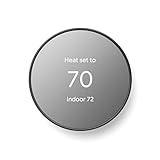
- ENERGY STAR certified smart thermostat for home that helps you save energy and stay comfortable.Connectivity : Wi-Fi - 802.11b/g/n 2.4 GHz, 802.11a/n 5 GHz Wi-Fi., Wireless interconnect : Bluetooth Low Energy Please refer to the product description section below for all applicable legal disclaimers.Product note: You can also check your system’s compatibility before purchasing a Nest thermostat with our online Nest Compatibility Checker on the Google Nest support page
- The Nest Thermostat is designed to work without a C wire in most homes, but for some systems, including heating only, cooling only, zone controlled, and heat pump systems, you’ll need a C wire or other compatible power accessory
- Nest Thermostat turns itself down when you leave, so you don’t waste energy heating or cooling an empty home. Lock feature: No
- Programmable thermostat that lets you create an energy efficient schedule in the Google Home app on your Android or iPhone
- Remote control lets family members change the thermostat temperature from anywhere on a phone, laptop, or tablet[1]
Product prices and availability are accurate as of the date/time indicated and are subject to change. Any price and availability information displayed on Amazon at the time of purchase will apply.

