
iTechGuides is reader-supported. When you buy through links on our site, we may earn an affiliate commission. As an Amazon Associate I earn from qualifying purchases. Learn more
AI voice misuse generally means using a person’s voice or a realistic digital replica to impersonate them, mislead or harm others, or exploit their identity without proper authorization. In the United States, there is no single legal test that covers every use: the rules depend on the state, the circumstances, and how the voice is used. The FCC has a specific rule for AI-generated voices in covered robocalls, but it does not make every use of a synthetic voice illegal.
What counts as AI voice misuse?
“Voice misuse” is a useful umbrella term, not a universal legal category. It can describe making or distributing a realistic replica of someone’s voice without authorization, using a clone to pretend to be that person, or exploiting a recognizable voice in a deceptive or harmful way.
Examples include a caller using a cloned voice to pose as a relative and demand money, a fake executive voice used to seek sensitive business information, or an unauthorized replica of a performer used in a way that could affect their reputation or income. The FTC has described these kinds of impersonation and creative-professional concerns in its discussion of AI-enabled voice cloning harms.
Recommended Free Tools
Not every synthetic voice is misuse. AI-generated speech can also support people who have lost the ability to speak. Whether a particular use is authorized, deceptive, harmful, or unlawful depends on its details and the applicable law.
#1 Best Overall
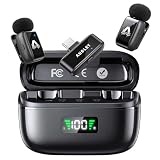
- 48 kHz / 24-bit Audio: Capture clear, detailed sound with this mini microphone’s 48 kHz sampling rate, 24-bit depth and 64 dB signal-to-noise ratio. Its 20 Hz–20 kHz frequency response helps preserve natural voice detail for videos, interviews, livestreams and online teaching
- Microphone for Content Creators: Designed for vloggers, YouTubers, TikTok creators, podcasters, journalists and educators, this mini microphone for vlogging delivers portable audio for social media videos, interviews, podcasts, livestreams and mobile content creation
- AI Noise Reduction and AI Voice Changer: Choose from three AI noise reduction levels to reduce wind, traffic and ambient sounds while keeping your voice clear and natural. The AI voice changer offers three modes—Original, Male and Female—for short videos, livestreams and creative social media content
- Up to 25 Hours with Charging Case: Each transmitter provides up to 5 hours of recording per charge. The compact charging case extends total use up to 25 hours and includes a battery display, helping podcasters, interviewers and video creators check available power before longer sessions
- Two Mics for Two-Person Recording: Two transmitters capture two speakers at the same time for interviews, podcasts, teaching and collaborative videos. The 2.4 GHz wireless system provides approximately 30 ms low latency and up to 65 ft (20 m) range in open areas
Can someone clone your voice without permission?
Technically, voice-cloning tools can be used to create a convincing replica from recordings. Whether making or using that replica without permission violates a law is a separate question. US protections are uneven: state laws differ in who they protect, which uses they cover, whether commercial purpose matters, and what exceptions or remedies apply.
The U.S. Copyright Office’s July 2024 report on digital replicas described gaps and inconsistencies among state laws. It noted, for example, that some states lacked relevant rights, some protections covered only particular people, and some required commercial value. The report described Tennessee’s 2024 ELVIS Act as extending its right of publicity to voice simulations and broadening covered conduct; that is a state-law example, not a complete or current survey of every state’s law. See the Copyright Office Part 1 report for its analysis. A state-specific dispute calls for checking current law and getting advice from a lawyer familiar with that jurisdiction.
For practical risk reduction, get explicit permission before creating or distributing a person’s voice replica. Put the scope in writing: permitted uses, duration, channels, editing rights, and how permission can be revoked. These practices help clarify authorization, but they are not a guarantee that every legal or contractual issue is resolved.
Rank #2

- Kinglucky Karaoke Microphone with Speaker
When does the FCC rule apply?
On February 8, 2024, the Federal Communications Commission announced that it had unanimously adopted a declaratory ruling treating AI-generated voices as “artificial” voices under the Telephone Consumer Protection Act (TCPA) in covered robocalls. The ruling gives enforcement authorities tools against covered AI-voice robocalls. Read the FCC’s February 8, 2024 announcement for the agency’s description of the ruling.
The scope matters: this is a robocall rule under the TCPA, not a declaration that every synthetic voice, voice clone, or AI-generated recording is illegal. The FTC has separately said that existing laws still apply to misuse involving AI; that is the agency’s position, not a court ruling that settles every possible case. Its explanation is in Approaches to Address AI-enabled Voice Cloning.
How are voice identity and copyright different?
A person’s interest in controlling use of their identity is not the same question as who owns copyright in an audio recording or AI-generated output. An unauthorized replica may raise identity-related concerns even when the copyright status of the resulting audio is a separate issue.
Rank #3

- Ultra-Light & Invisible Wear: Each mini microphone weighs only only 5g, ultra-lightweight. Whether you're filming TikTok dances on the move, recording immersive YouTube content, or conducting in-depth two-person street interviews, these mini mics clip securely to your collar without pulling or deforming your clothing
- Seamless Auto Connection: 0-second instant pairing—capture creative inspiration anytime! This wireless microphone for iphone requires no complicated Bluetooth setup or third-party apps. Just plug the receiver into your phone and start using this mic for iphone immediately. (NOTE: UPON FIRST UNBOXING, PLEASE REMOVE THE INSULATION FILM AT THE BOTTOM OF THE MICROPHONE TO ACTIVATE CHARGING AND INSTANT AUTO PAIRING.)
- Omnidirectional Pickup & 3-Level AI Noise Cancellation: Engineered for complex sound pickup environments, featuring a powerful built-in AI noise reduction chip. Whether you're using this lapel microphone wireless for street interviews in heavy traffic or live streaming in noisy shopping malls, one click precisely filters out wind and ambient noise, focuses on your voice and reduces background noise
- 30-Hour Relay Battery Life & 164ft Audio Range: A single microphone supports up to 5 hours of continuous recording. With the magnetic charging case, total battery life extends to 30 hours. This dual-mic setup is the perfect iphone microphone for video recording, interviews, or all-day outdoor shooting. With a clear line of sight, it ensures stable, low-latency transmission over long distances—giving you more freedom of movement and camera operation
- Compatible with iPhone, Android & iPad: Featuring a Type-C receiver alongside an additional Lightning adapter, making it a truly universal microphone for iphone as well as the latest Android phones and tablets. Beyond professional video recording, it also includes a fun AI voice-changing feature—double-tap to switch between “Uncle” and “Goddess” voices, adding unexpected fun to your live streams or prank videos
In its January 29, 2025 notice about Part 2 of its AI report, the Copyright Office said an AI-generated output may qualify for copyright protection when a human author determines sufficient expressive elements, but merely providing prompts is not enough. That does not mean a person’s voice is automatically protected by copyright, or that all AI voice outputs are unprotectable. See the Office’s Part 2 announcement for its summary of the report.
Outdated Drivers Are Slowing You Down
One free scan finds every outdated or missing driver and matches the right update for your exact hardware.Free scan · exact hardware matchPC Slower Than It Used to Be?
A free scan shows the junk files, broken settings and background clutter dragging Windows down - then fixes them in one click.Free scan · Windows 10 & 11Separately, in July 2024 the Copyright Office recommended that Congress enact a federal law protecting all individuals against knowing distribution of unauthorized digital replicas. A recommendation is not itself an enacted federal right. The Office’s announcement explains the recommendation and its context: Recommends Federal Digital Replica Law.
What should you do if a caller uses an AI voice to impersonate someone?
Do not rely on a familiar-sounding voice alone to verify identity. If a caller claims there is an emergency or urgently asks for money or personal information, independently contact the person through a number you already know or another separate channel before acting. Scammers may impersonate relatives, friends, business executives, or others using cloned voices, as the FTC describes in its voice-cloning overview.
Rank #4
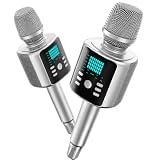
- Kinglucky Karaoke Microphone with Speaker
If you believe your voice has been used without authorization, preserve the recording, message, URL, or other evidence and note where and when you found it. The legal options depend on the use and jurisdiction, so consult a lawyer familiar with the relevant state and circumstances for advice about a specific dispute.
Independent reader supportYour contribution helps us test, update, and keep practical guides available for everyone.Can watermarking or detection prove a voice is fake?
No single technical measure establishes who created an audio clip, whether the speaker consented, or whether a law was broken. Watermarks may help identify where audio came from, but they can be altered or removed. Detection tools also vary in effectiveness, so a result should not be treated as conclusive proof.
The FTC groups possible interventions by when they operate. The trade-offs are practical as well as technical:
Best Value

- Third-level Noise reducion: Our METTOMUS T1 wireless mini microphone for vlogging with a one-click button for adjusting noise reduction levels helps to reduce background noise, ensure that you maintain clarity when recording in a high pitched environment. Designed for podcast microphone enthusiasts and professionals, this lavalier mic offers a wide frequency range and noise reduction. It’s good for Content Creators seeking studio-quality sound in a portable, small microphone format.
- Crystal-Clear Audio: This wireless mini podcast microphone for iphone delivers professional-grade sound quality, good for podcasting, video recording, and live streaming. Whether you're using it as a microphone for Android, or laptop, it ensures crisp, distortion-free audio every time. A must-have in your content creator essentials kit!
- Wide compatibility: METTOMUS T1 mini vlogging mic features a compact, lightweight design with a bluetooth microphone wireless connection, making it ideal for on-the-go recording, it’s plug-and-play. Compatible with all android phones microphone for video recording, camera, and laptop, ensuring versatility for all your devices.
- Extended Battery Life: Enjoy up to 6 hours of continuous operation on a single charge, thanks to our METTOMUS T1 mini wireless lavalier microphone high-capacity batteries. The included charging case provides an additional 2 recharges, extending your total operation time to 30 hours. The LED indicators on the case keep you informed of the battery status when you're on the go.
- Portable Design: Experience ultimate freedom with our lightweight, clip-on lavalier design that stays discreet and secure. The intuitive one-button operation for noise reduction make it incredibly user-friendly. Everything stores neatly in the pocket-sized charging case, offering a complete, professional audio solution for vloggers, journalists, educators, and business communicators on the move.
| Approach | When it operates | What it may help with | Important limitation |
|---|---|---|---|
| Prevention or authentication | Before a clone is used | Reducing unauthorized creation or helping verify an audio source | Effectiveness depends on whether it can be deployed in practice and withstand attempts to bypass it. |
| Real-time detection or monitoring | While audio is being used or transmitted | Flagging a suspected clone during an interaction | A detector can miss a clone or flag genuine audio; its output is not proof of identity or consent. |
| Post-use audio review | After a recording already exists | Assessing an audio clip for signs of synthetic generation | Results vary by detector and can be affected by manipulation; analysis alone does not establish who made the clip. |
These approaches can complement one another, but no single solution eliminates the risk. The FTC discusses watermarking, detection, deployment, and limitations in its April 2024 overview.
What is established—and what is not?
Federal consumer-protection and robocall rules address some harms, while identity-related protections vary across states. The July 2024 Copyright Office report described a patchwork of state laws and recommended federal legislation; that recommendation alone does not establish that Congress enacted such a law. State statutes and litigation may have changed since the report, so its examples should not be treated as a current, state-by-state legal guide.
The official sources cited here do not establish a single statistic for how common AI voice misuse is or quantify its total harms. The Copyright Office reported receiving over 10,000 comments by December 2023 on its broader AI notice of inquiry, but that count is not a measure of voice misuse.
Do these 3 things before closing this tab:
1Scan for outdated or missing drivers - takes under a minute2Repair Windows errors before they cause bigger problems3Fix the driver behind crashes, sound loss and screen glitchesQuick Recap
Product prices and availability are accurate as of the date/time indicated and are subject to change. Any price and availability information displayed on Amazon at the time of purchase will apply.

