
Crashes, No Sound, or Screen Glitches?
Random freezes, missing sound and display glitches usually trace back to one bad driver. Find and replace yours safely.Free scan · under a minutePC Slower Than It Used to Be?
A free scan shows the junk files, broken settings and background clutter dragging Windows down - then fixes them in one click.Free scan · Windows 10 & 11iTechGuides is reader-supported. When you buy through links on our site, we may earn an affiliate commission. As an Amazon Associate I earn from qualifying purchases. Learn more
Running AI hardware in space means balancing useful computing against limited power, difficult heat removal, radiation damage, faults, and slow or constrained communications with Earth. Onboard processing can let a spacecraft act on sensor data without waiting for instructions from the ground, but the hardware and software must be designed and qualified as part of the spacecraft—not treated as a plug-in terrestrial computer.
Why put AI computing aboard a spacecraft?
A spacecraft can use onboard AI to interpret sensor data, spot relevant events, or help control operations locally. That matters when communication delay makes a quick exchange with Earth impractical, or when instruments generate more data than a communications link can return. Processing near the source can support faster decisions and reduce the volume of data sent to mission control.


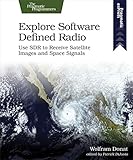
ESA has documented space-related AI applications including improving image quality, detecting and tracking Earth features, forest detection, and spacecraft-orientation control using reinforcement learning. These examples show possible uses, not that every AI workload belongs onboard. Whether local inference is worthwhile depends on the mission’s need for timely decisions, available resources, and the consequences of an incorrect result.
What makes space a difficult environment for AI hardware?
Radiation can damage components and trigger errors
High-energy particles from the Sun and interstellar space can cause computing errors and contribute to long-term electronics degradation. An error may interrupt a mission activity; NASA describes cases in which particle-triggered errors can put a spacecraft into safe mode, shutting down nonessential operations until controllers resolve the issue. A processor that performs well in ordinary conditions is therefore not necessarily dependable in the intended orbit for the mission’s full duration.
#1 Best Overall
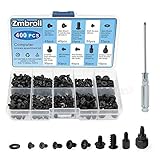
- Total 10 different computer screws,all black color,400pcs in a box,easy to distinguish,meet all your needs
- Material:Made of high quality carbon steel,black zinc plated which have superior rust resistance and excellent oxidation resistance
- Package included:SSD screw,fan screw,Insulating Gasket,Standoffs,Thumbscrews,Hard drive screws,Motherboard Screws,High-Strength Screws,Screwdriver
- This computer fixed screws assortment kit are good for PC building hobbyist or a professional tech for personal computer assembling
- Widely Applications:Perfect for PC case, power supply, motherboard, hard drives, fan and floppy/CD-ROM/DVD-ROM drives fixed installation
Radiation-aware design is only part of the response. A system also needs ways to detect errors, preserve critical functions, and recover. NASA describes fault tolerance and error correction as elements of its High Performance Spaceflight Computing (HPSC) effort. ESA’s ASCEND project describes a different example: a radiation-tolerant supervisory domain that handles functions such as fault detection, isolation and recovery, health monitoring, power sequencing, and redundant boot recovery, alongside a higher-performance Linux-based processing domain. These are project-specific approaches, not a universal spacecraft architecture.
Vacuum makes heat removal an integration problem
AI electronics produce heat, but in a vacuum there is no surrounding air to carry it away by ordinary convection. The spacecraft must provide suitable paths for heat to conduct from the computing module into systems that can reject it. At the same time, electronics face demanding environmental temperatures and temperature swings that can degrade components.
Rank #2
ESA identifies thermal management in conduction-cooled platforms as a qualification challenge for high-performance commercial modules. The exact solution depends on the spacecraft, orbit, equipment, and operating conditions; there is no single cooling method or thermal budget that applies to every AI payload. “Space is cold” is not a reason to assume cooling will be easy.
Power must be shared with the rest of the spacecraft
Computing competes with communications, instruments, propulsion, thermal control, and other spacecraft systems for electrical power. A processor’s peak performance is not enough to judge its usefulness: the mission has to consider the target workload, power draw, and when the spacecraft can afford to run it.
Rank #3

- 【Styles】Total 10 different computer screws, perfect for computer case, power supply, motherboard, hard drives, fan and floppy/CD-ROM drives fixed installation.
- 【Material】Made of high quality brass, steel and fiber paper, steel with nickel and black zinc plated which have superior rust resistance and excellent oxidation resistance.
- 【Package included】360 pieces computer case, power supply, motherboard, hard drives, fan, brass standoffs mounting screws and insulation washers, a screwdriver included.
- 【DIY Assortment Kit】Whether you are a PC building hobbyist or a professional tech, this set of replacement screw accessories is a necessity and the quantity should last for several projects.
- 【Widely Applications】Perfect for computer case, power supply, motherboard, hard drives, fan and floppy/CD-ROM/DVD-ROM drives fixed installation, they are placed in a box, easy to find and use.
NASA describes HPSC as designed to adjust power and performance, including switching functions off or placing them in lower-power modes as mission needs change. That kind of flexibility matters when demand varies across mission phases. The relevant question is not simply how much AI a chip can run, but whether it can run the needed workload within the power the spacecraft can allocate at the needed time.
Communication delay and bandwidth limit what Earth can do remotely
As distance from Earth increases, communication delay makes some time-sensitive decisions unsuitable for a ground-command round trip. NASA identifies that delay as a reason for spacecraft to perform some activities autonomously and in real time. NASA’s HPSC materials also point to limited Deep Space Network bandwidth relative to the large data volumes expected from future sensors and instruments.
Rank #4
Local inference can help a spacecraft decide what data matters, respond to a detected event, or control an operation before a ground response is possible. It can also reduce the amount of raw data that needs to be transmitted. But autonomy shifts responsibility onboard: the system must be designed to handle faults and uncertain inputs without depending on immediate intervention from Earth.
The Tool Desk
Outbyte Driver Updater FREEScan for outdated or missing drivers - takes under a minuteDriver Scan →Outbyte PC Repair FREEClear out junk files and repair common Windows errorsFree Scan →Why is making a terrestrial AI module space-ready difficult?
Running a neural network on a commercial accelerator does not establish that the module is suitable for flight. It must be integrated with the spacecraft’s power supply, thermal paths, data interfaces, fault handling, and mission operations, and its behavior must be assessed for the intended environment and mission. ESA’s ASCEND materials specifically identify radiation tolerance and thermal management as challenges in qualifying commercial computing modules, as well as low-latency inference needs in a closed communications-control loop.
Best Value
Qualification and integration also extend beyond the processor itself. A mission needs to account for memory, networking, sensor connections, software portability, update and recovery procedures, cybersecurity, and supply-chain constraints. The appropriate evidence and test burden depend on the orbit, mission duration, payload requirements, and how critical the AI system is to spacecraft operation. A design goal or advertised compute figure is not, by itself, proof of flight qualification.
Independent reader supportYour contribution helps us test, update, and keep practical guides available for everyone.How do space-computing approaches trade performance against resilience?
A radiation-hardened custom processor and a commercial module adapted for space represent different engineering approaches, not a simple fast-versus-slow choice. The right comparison is mission-specific, and the cited projects do not provide a quantified, independent head-to-head procurement comparison.
| Decision factor | Radiation-hardened custom processor | Commercial module adapted for space |
|---|---|---|
| Radiation and fault handling | Assess tolerance and qualification evidence for the intended orbit and mission duration; NASA’s HPSC effort emphasizes fault tolerance and error correction. | Assess the module’s radiation tolerance and the additional mitigation, supervision, and recovery needed; ESA’s ASCEND project describes a radiation-tolerant supervisory domain alongside higher-performance processing. |
| Workload performance | Measure capability against the mission’s inference, data movement, and autonomy needs—not peak processor figures alone. | Evaluate the target workload and interfaces; project performance figures are not independent benchmarks or proof of flight qualification. |
| Power and thermal integration | Determine whether power can be managed across mission phases and whether heat can be conducted into spacecraft rejection paths. | Check power controllability, temperature limits, and conduction-cooled integration as part of qualification. |
| System integration | Plan for interfaces, networking, memory, software, fault recovery, and preservation of critical spacecraft functions. | Plan for the same system needs, along with software portability, cybersecurity, updates, and mission-specific adaptation. |
| Schedule and mission fit | Weigh development, availability, and test schedule against the mission’s requirements. | Weigh module availability and adaptation effort against the mission’s requirements; the sources do not establish a general cost or schedule advantage. |
For either approach, useful comparisons include performance on the actual workload, power use, thermal integration, mass and volume, interfaces, recovery behavior, and the evidence needed for the intended mission. There is no universal winner independent of orbit, lifetime, criticality, and payload needs.
Do these 3 things before closing this tab:
1Repair Windows errors before they cause bigger problems2Scan for outdated or missing drivers - takes under a minute3Clear out junk files and repair common Windows errorsWhat do current space-AI project figures actually mean?
Published performance claims refer to specific projects and contexts. They should not be treated as interchangeable benchmarks or as evidence that a processor is already qualified for a particular mission.
- NASA HPSC design target: NASA describes the project as targeting more than 100 times the computing capability of current space processors. This is a project design claim.
- NASA HPSC test report: In May 2026, NASA reported that early testing indications showed up to 500 times the performance of radiation-hardened chips then in use. The report described testing as ongoing, with further tests and a future certification step. This test indication is distinct from the separate design target and should not be read as a general, independently normalized benchmark.
- ESA ASCEND module specifications: ESA lists at least 100 TOPS INT8 for Sterna and at least 250 TOPS INT8 for Morus, with a goal of around 1000 TFLOPS FP8 for Morus. These are project-page specifications and a goal, not independently verified performance or proof of flight qualification. The page describes Sterna with NVIDIA Jetson Orin NX and Morus with Jetson AGX Orin or Jetson Thor T5000 options.
NASA’s March 2026 HPSC project status said testing was in progress. NASA describes the effort as developed with Microchip and intended for commercial availability through Microchip; those statements do not establish that qualification or availability is complete. Testing, certification, configurations, and availability can change, so treat each status as time-sensitive.
Quick Recap
What should a mission team establish before choosing onboard AI?
- Mission need: Identify which decisions must happen onboard, what data can be filtered locally, and what can safely wait for Earth.
- Resource budget: Set the available power across mission phases and define thermal paths, mass, volume, memory, and networking constraints.
- Environmental evidence: Match radiation and temperature testing to the intended orbit, mission duration, and equipment configuration.
- Fault response: Decide how errors are detected, which functions remain available, how recovery works, and when the spacecraft should fall back to safer operations.
- Operational and software plan: Define interfaces, updates, cybersecurity, monitoring, and how operators will assess and recover the system.
- Workload-specific evaluation: Measure the complete inference path, including sensor data movement and response time, rather than relying on peak compute figures alone.
Product prices and availability are accurate as of the date/time indicated and are subject to change. Any price and availability information displayed on Amazon at the time of purchase will apply.

