
A hardware security module (HSM) is a specialized physical device that generates, stores, and uses cryptographic keys inside a protected security boundary. Applications can ask an HSM to encrypt, decrypt, sign, verify, hash, generate HMACs, or wrap keys without retrieving a protected private key in plaintext.
The main reason to deploy an HSM is stronger control over high-value keys—not automatically “better encryption.” HSMs are particularly useful for certificate authorities, code signing, payment processing, document signing, tokenization, and regulated workloads. They also introduce cost, availability dependencies, operational procedures, and recovery responsibilities.


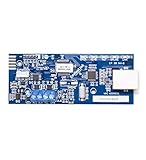
What does HSM stand for?
HSM means Hardware Security Module. “Hardware” refers to a dedicated security device or hardware-backed service; “module” refers to the cryptographic boundary and functions it provides. Cloud HSM services still use HSM hardware, although customers access it over a private network rather than installing an appliance in their own data center.
NIST defines an HSM as a physical computing device that safeguards and manages cryptographic keys and provides cryptographic processing. See the NIST HSM glossary.
#1 Best Overall
Encryption protects data; an HSM protects keys and controls selected operations involving those keys. A useful analogy is that encryption is the lock, while the HSM is a hardened vault and controlled mechanism for creating, storing, and using the lock’s keys. The analogy has limits: an HSM does not automatically protect plaintext, application logic, identities, or authorization decisions.
What does an HSM do?
- Generate symmetric and asymmetric keys.
- Store, protect, rotate, wrap, unwrap, import, and—where policy permits—export keys.
- Encrypt and decrypt data or key material.
- Create and verify digital signatures.
- Perform HMAC and CMAC operations.
- Support certificate-authority and public-key-infrastructure (PKI) operations.
- Protect code-signing, document-signing, TLS, database, tokenization, and DRM keys.
- Provide specialized payment cryptography in payment HSMs.
- Sometimes offload selected TLS or other cryptographic processing.
Supported algorithms, key attributes, interfaces, and export rules depend on the product and its security policy. AWS documents use cases including encryption, signing, HMAC/CMAC, PKI, TLS, database encryption, DRM, authentication, document signing, and transaction processing in its CloudHSM use cases.
How an HSM works
- Authenticate: an application or HSM client authenticates to the module.
- Request an operation: the application asks to sign, decrypt, unwrap, generate, or otherwise use a key.
- Enforce policy: the HSM checks the caller’s role, key attributes, permitted mechanism, and other controls.
- Process internally: the module performs the operation inside its cryptographic boundary.
- Return a result: it returns ciphertext, plaintext, a signature, verification status, or another result. A protected private key normally remains inside the boundary.
Key lifecycle controls
- Generation: the HSM creates key material internally.
- Import: externally generated material enters under defined policy, often wrapped.
- Use: authorized applications invoke operations without reading the key.
- Export: an exportable key may be released only in wrapped form; a non-exportable key cannot be retrieved as plaintext.
- Destruction: deletion or zeroization follows the module’s controls and approvals.
AWS describes these capabilities in its CloudHSM overview. Interfaces commonly supported by general-purpose HSMs include PKCS#11, Java Cryptography Extension (JCE), Microsoft Cryptography API: Next Generation (CNG), and Key Storage Provider (KSP), but mechanism coverage varies.
Why not keep keys in a database or environment variable?
Application-hosted keys are exposed to a much larger attack surface. A database or server administrator may be able to read them; malware or remote-code execution can extract them; backups, snapshots, logs, crash dumps, and developer tools can copy them; and an application compromise may expose both the key and the authorization context needed to use it.
The Tool Desk
Outbyte PC Repair FREERepair Windows errors before they cause bigger problemsFix Now →Outbyte Driver Updater FREEFix the driver behind crashes, sound loss and screen glitchesFind Drivers →An HSM narrows that exposure by keeping key material and selected operations inside a controlled boundary. It does not remove the need to protect application credentials, restrict which operations an identity may invoke, or prevent a compromised application from making legitimate requests.
Main benefits of HSMs
Hardware-backed and non-exportable key protection
HSMs are designed to provide tamper-evident, tamper-resistant, or intrusion-resistant protection, depending on the model, certification, configuration, and security policy. High-impact keys can be configured so applications may use them but cannot retrieve them in plaintext. This is valuable for CA, code-signing, document-signing, and payment keys.
Tamper response
Many modules detect physical or logical tampering and restrict access or destroy sensitive state. “Tamper-proof” is too broad: behavior differs by product and certification scope.
Separation of duties
Distinct administrator, security-officer, operator, and application roles can prevent one person from unilaterally creating, exporting, using, or destroying a critical key. Quorum or dual-control procedures can require multiple people for sensitive actions.
Outdated Drivers Are Slowing You Down
One free scan finds every outdated or missing driver and matches the right update for your exact hardware.Free scan · exact hardware matchPC Slower Than It Used to Be?
A free scan shows the junk files, broken settings and background clutter dragging Windows down - then fixes them in one click.Free scan · Windows 10 & 11Rank #2

- Ultra-Compact FIDO2 Security Key - Plug-and-stay or carry on a keychain. This USB-A hardware security key offers portable, always-on protection for desktop and mobile use. (Item Size: 0.75 X 0.74 IN x 0.25 IN)
- USB-A Hardware Key for All Devices - Works with USB-A ports on PC, Mac, Android, and other laptop/notebook device. Enables secure, cross-platform login with FIDO2.0 passkey support.
- FIDO Certified Security Key - Meets FIDO and FIDO2 standards. Works with Google, Microsoft, GitHub, Dropbox, and more. Please check service compatibility before purchase.
- Passwordless Login with Passkey - Supports passkey login via WebAuthn and CTAP2. Enjoy password-free sign-ins where supported. Not all websites or services currently support passkeys.
- Advanced Multi-Factor Authentication - Offers 200 FIDO2 passkey slots and 50 OATH-TOTP slots. Strong, flexible 2FA/MFA support across various apps and authentication platforms.
Compliance support, not automatic compliance
A validated cryptographic module can support evidence for security and regulatory programs, but it does not make an organization PCI DSS, HIPAA, SOC 2, or otherwise compliant by itself. Verify the exact certificate, module version, firmware, operating mode, algorithms, and configuration.
AWS documents hsm2m.medium as FIPS 140-3 Level 3 certified under certificate #4703. AWS also states that the hsm1.medium FIPS 140-2 certificate moved to the historical list on January 4, 2026. See the AWS CloudHSM FIPS validation documentation and check the official CMVP record before procurement.
Auditability and controlled use
Deployments can record administrator actions, key lifecycle events, and cryptographic use. Treat HSM audit logs, cloud control-plane logs, application authorization logs, and retained compliance evidence as separate sources that must be correlated.
Dedicated capacity and a root of trust
A dedicated module can provide predictable cryptographic capacity and reduce dependence on general-purpose CPU resources, although performance depends on algorithm, key size, operation, concurrency, network, client library, and model. HSMs can serve as roots of trust for CAs, enterprise PKI, code signing, firmware signing, tokenization, and key-encryption-key hierarchies.
What’s actually slowing this PC down?
Pick the symptom - the matching free tool is one click away.
HSM use cases
PKI and certificate authorities
Protecting root, intermediate, issuing, or subordinate CA private keys limits the damage from key theft, which could enable fraudulent certificates. Mature designs use key ceremonies, separated root and issuing keys, dual control, offline or tightly controlled root activation, authorization for certificate issuance, and tested backup and recovery across sites or regions.
Code signing and software supply chains
HSMs protect keys used to sign operating-system packages, firmware, mobile and desktop applications, drivers, container images, and updates. A stolen signing key could let an attacker distribute malware that appears legitimate. The HSM does not secure an unsafe build pipeline; signing must still be limited to approved release jobs and artifacts.
Document signing and electronic seals
Contracts, invoices, legal records, government documents, and electronic seals can use HSM-protected private keys. Azure documents HSM support for document and code signing and relevant eIDAS use cases in its Cloud HSM overview.
Payment processing
Payment HSMs handle functions such as PIN translation and verification, PIN blocks, EMV processing, key derivation, card personalization, message authentication, and payment tokenization. PCI PIN, PCI P2PE, PCI 3DS, and payment-network rules may require specialized commands, ceremonies, controls, and certifications. A general-purpose FIPS-validated HSM is not automatically suitable.
Rank #4
Database and storage encryption
An HSM may protect a transparent-data-encryption master key, key-encryption key, database credential, or wrapping key. That is different from performing every data-encryption operation inside the module. AWS documents protecting an Oracle TDE master key with CloudHSM in its use cases.
TLS private keys and selected offload
Web servers, load balancers, API gateways, and certificate services can use HSM-protected TLS keys. TLS offload is not the same as merely storing a certificate key in an HSM, and compatibility must be tested with the exact TLS stack.
Tokenization and data protection
Token vaults use HSMs for tokenization keys, format-preserving encryption keys, and key-encryption keys in payment, healthcare, identity, and data-masking systems. Security also depends on token generation, vault authorization, and lifecycle design.
Authentication, message integrity, and DRM
HSMs can generate and use HMAC or CMAC keys for API messages, service-to-service authentication, hardware identity, and challenge-response systems. DRM platforms use them for content-encryption keys, license-signing keys, and service credentials.
Backup and recovery
Securely wrapped HSM backups can support recovery, but ask whether they restore across devices, regions, or vendors; whether key attributes and policies are preserved; whether quorum approval is required; and whether imported keys are recoverable. An unrecoverable key can become a permanent data-loss incident.
Types of HSM
| Type | Typical fit | Key trade-off |
|---|---|---|
| General-purpose HSM | PKI, signing, encryption, TLS, databases, application cryptography | Flexible interfaces and controls, but specialist administration |
| Payment HSM | Card, PIN, EMV, payment-network, and transaction cryptography | Specialized compliance and commands; not a generic replacement |
| Network-attached appliance | On-premises, colocated, hybrid, or sovereign environments | Direct control, but procurement, facilities, maintenance, and capacity planning |
| Cloud HSM | Dedicated or single-tenant HSM capacity accessed through a cloud network | Faster deployment, but ongoing provisioned cost and customer-managed operations |
| HSM-backed cloud KMS | Managed storage, databases, backups, queues, and application encryption | Simple integrations and policies, with less direct HSM control |
| External key manager or XKS | Keys kept outside a cloud provider’s normal KMS boundary | Greater custody control, plus network, latency, and availability dependencies |
AWS describes CloudHSM as customer-controlled, single-tenant HSM instances in a VPC. Azure describes Cloud HSM as a highly available, single-tenant, FIPS 140-3 Level 3 validated service. See AWS CloudHSM and Azure Cloud HSM.
HSM versus related technologies
| Technology | Main purpose | Distinction from an HSM |
|---|---|---|
| Cloud KMS | Managed key lifecycle and cloud-service encryption | Usually easier to operate; less direct control of users, partitions, and mechanisms |
| TPM | Device identity, measured boot, and platform secrets | Usually tied to one computer or endpoint, not centralized enterprise cryptography |
| Secure enclave or TEE | Protect code and data during execution | Protects an execution environment rather than serving primarily as a centralized key appliance |
| Secrets manager | Passwords, tokens, and application secrets | Generally not designed for non-exportable private-key operations or high-assurance cryptographic processing |
| Software keystore | Encrypted files or operating-system key stores | Typically exposes a larger attack surface than a dedicated HSM boundary |
NIST discusses HSMs, TPMs, secure enclaves, and trusted execution environments as different hardware-enabled security technologies in Hardware-Enabled Security.
Do you actually need an HSM?
Choose a direct cloud or on-premises HSM when
- A private-key compromise would have catastrophic consequences.
- A regulator, contract, payment scheme, or internal policy requires HSM-backed controls.
- Keys must be non-exportable.
- The application requires PKCS#11, JCE, CNG, KSP, custom mechanisms, or specific key attributes.
- You operate a CA, code-signing, payment, or high-assurance document-signing system.
- Dedicated tenancy, direct custody, or predictable cryptographic capacity matters.
- Your team can operate redundancy, access control, monitoring, backup, and recovery.
Prefer a managed cloud KMS when
- The need is ordinary encryption for cloud storage, databases, backups, queues, or application data.
- Native cloud integrations and centralized policy matter more than direct HSM administration.
- No custom HSM API, mechanism, or custody requirement exists.
- Lower operational overhead is a priority.
Choose payment HSM capabilities when
Payment-card, PIN, EMV, or payment-network requirements define the workload. Select the required payment certification and command set rather than assuming a general-purpose module is adequate.
Best Value

- ADD WI-FI TO YOUR YALE ASSURE LOCK OR LEVER: No hub or Connect needed. Note: This product only works on 2.4 GHz Wi-Fi in the U.S. and Canada.
- SIMPLE TO ADD: Simply insert the Yale Wi-Fi Smart Module in the slot above the batteries. Add the module as an accessory in the Yale Access app.
- UPGRADE YALE ASSURE LOCKS: Add Wi-Fi to your Yale Assure Lock or Lever with no hub or Connect needed.
- ACCESS FROM ANYWHERE: Lock, unlock, share access and see who comes and goes from anywhere using the Yale Access app.
- AUTO-UNLOCK: Your Assure Lock/Lever will automatically unlock as you get home and relock for you.
Consider an external key store when
Contractual, sovereignty, or trust-boundary requirements require key material to remain outside a cloud provider’s normal KMS boundary and the organization can tolerate additional connectivity and availability dependencies.
Independent reader supportYour contribution helps us test, update, and keep practical guides available for everyone.Costs and operational trade-offs
Provisioned cost
HSMs cost more than ordinary software key stores and can cost more than managed KMS keys because of provisioned capacity, redundancy, connectivity, support, and specialist operations. The AWS CloudHSM pricing page showed $1.45 per hour per HSM in US East (Ohio) when checked in August 2026; AWS charges hourly per provisioned HSM with no upfront fee, and regional prices can change. See AWS CloudHSM pricing.
AWS displayed customer-managed KMS keys at $1 per month per key under its stated pricing model, plus usage charges; CloudHSM custom key stores add CloudHSM charges. See AWS KMS pricing.
Google Cloud’s pricing page displayed $4.794520548 per hour per single-tenant Cloud HSM instance—about $3,500 per month when continuously provisioned—with extra charges above 15,000 active key versions. See Google Cloud KMS pricing. Confirm current regional prices before buying.
Free tools Windows power users keep installed
One-click scans. No signup required.
Operational complexity
Plan for users and roles, quorum procedures, cluster membership, backups, firmware and client compatibility, firewalls, disaster recovery, ceremonies, monitoring, latency, capacity, and vendor escalation. AWS explicitly notes that CloudHSM gives customers more control and more responsibility than a fully managed service.
Availability, latency, and portability
An unreachable HSM can stop signing, decryption, key unwrap, or authentication. Production designs generally need multiple modules, site or availability-zone resilience, tested client failover, connection pooling, bounded retries, and defined behavior for queued operations. Remote calls add latency; load-test production-like workloads rather than relying on generic throughput figures.
Standards such as PKCS#11 can help portability, but vendor-specific attributes, backup formats, payment commands, partition models, and cloud libraries can still create lock-in. Test migration rather than assuming drop-in compatibility.
Failure modes to plan for
- HSM outage: deploy redundancy, health checks, failover, and site or regional recovery; define safe retry behavior.
- Lost administrator credentials: use multiple administrators, controlled recovery credentials, quorum procedures, and tested break-glass access.
- Incorrect key attributes: verify exportability, permitted mechanisms, signing versus encryption use, rotation, and destruction policy before production.
- Accidental destruction: require approvals, retention periods, protected backups, and recovery drills.
- Application authorization bypass: restrict which identity can use which key, operation, transaction, and rate; an HSM cannot distinguish a malicious request made with valid credentials.
- Plaintext exposure: protect data after it leaves the HSM; the boundary does not cover application memory, logs, or downstream systems.
- Cluster synchronization problems: understand vendor-specific quorum, state synchronization, restore, and failover behavior.
- Rotation incompatibility: retain old keys when needed for decryption or signature verification, and plan certificate replacement, data re-encryption, and artifact re-signing.
- Cloud integration limits: direct HSM APIs may require custom application work. AWS documents that KMS custom key stores backed by CloudHSM do not provide automatic key rotation or imported key material for those KMS keys; see AWS CloudHSM key stores.
Implementation checklist
- Define the threat model and identify keys whose compromise would cause the greatest harm.
- Decide whether the workload needs a general-purpose HSM, payment HSM, managed KMS, external key store, cloud HSM, or on-premises appliance.
- Verify the exact certification, module version, firmware, operating mode, and algorithm scope.
- Define roles, least privilege, dual control, quorum, and approval procedures.
- Design backups, cross-site recovery, credential recovery, and key ceremonies.
- Load-test signing, unwrap, decryption, and rotation with production-like concurrency and network placement.
- Test module, availability-zone, site, region, client, and network failures.
- Document rotation, retention, destruction, certificate replacement, and migration procedures.
- Monitor administrator activity, key use, failures, latency, capacity, and policy violations.
- Review the design whenever applications, vendors, certifications, or regulatory requirements change.
Bottom line
Use a managed cloud KMS when standard cloud encryption and integrated key policies meet the threat model. Use a direct cloud or on-premises HSM when you need non-exportable high-value keys, direct HSM interfaces, specialized mechanisms, dedicated tenancy, or stronger custody for PKI, signing, and regulated workloads. Use a payment HSM for payment-specific cryptography. An HSM is worthwhile when its control and assurance justify the cost and operational burden—not simply because hardware sounds more secure.
Quick wins for a faster PC:
Fix the driver behind crashes, sound loss and screen glitchesFind Drivers →Repair Windows errors before they cause bigger problemsFix Now →Scan for outdated or missing drivers - takes under a minuteDriver Scan →Quick Recap
Product prices and availability are accurate as of the date/time indicated and are subject to change. Any price and availability information displayed on Amazon at the time of purchase will apply.

