
The Tool Desk
Outbyte PC Repair FREEClear out junk files and repair common Windows errorsFree Scan →Outbyte Driver Updater FREEFix the driver behind crashes, sound loss and screen glitchesFind Drivers →A nanosecond is one billionth of a second. In that time, light in a vacuum travels about 30 centimeters—roughly a foot—so a short ruler or wire makes the timescale tangible. Grace Hopper used this kind of physical demonstration to help audiences understand signal delay and computing latency.
What does a nanosecond look like?
A nanosecond (ns) is 0.000000001 seconds, or 10-9 seconds. The number is difficult to picture, but its corresponding distance is easy to hold: light travels about 30 cm (approximately 11.8 inches) in a nanosecond in a vacuum. That distance is the intuition behind the short wire associated with Grace Hopper’s demonstration. Hackaday’s 2012 account describes the wire as about 11.8 inches long.

What did Grace Hopper’s nanosecond wire represent?
The wire represented the distance a signal traveling at the speed of light would cover in one nanosecond. Hopper used the object to make an otherwise abstract interval—and the delay involved in moving information—understandable to non-specialist audiences. It is a teaching analogy for propagation distance, not a universal measurement of how far an electrical signal travels in every cable: signal speed depends on the material and construction of the path.
The same basic idea appears in university demonstrations. The University of Minnesota School of Physics and Astronomy uses a 30 cm plastic length, while Michigan Technological University describes cutting a meter stick to 30 cm.
Quick wins for a faster PC:
Repair Windows errors before they cause bigger problemsFix Now →Scan for outdated or missing drivers - takes under a minuteDriver Scan →#1 Best Overall

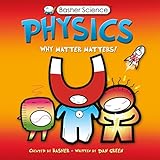
- Learn Physics Through Engaging Comics:Physics in a Minute Comic Book Edition turns complicated physics theories into fun, easy-to-follow comic stories. Vibrant illustrations and simple dialogues help kids grasp core physics ideas without boring textbooks or heavy formulas.
- Kid-Friendly STEM Physics Introduction:Perfect for young learners. This educational physics book covers foundational concepts including gravity, motion, light, sound and energy. It sparks children’s curiosity about science and builds solid STEM awareness at an early age.
- Short & Digestible Knowledge for Focused Reading:Designed with the “a minute per topic” reading style. Each physics lesson is concise, letting kids finish one concept quickly. Great for independent reading, homeschool practice and parent-child reading time.
- Great Gift for Science-Loving Boys & Girls:An awesome gift choice for birthdays, holidays or back-to-school. It works well for reluctant readers who dislike traditional science books, mixing entertainment and education to keep kids engaged.
- High-Quality Printed Educational Book:Carefully printed with clear comic artwork and readable fonts. Suitable for classroom libraries, home bookshelves and after-school learning. Help children build scientific thinking while enjoying comic reading fun.
How to demonstrate a nanosecond with a ruler
- Choose a length: Use a 30 cm ruler, plastic strip, or a 30 cm segment cut from a meter stick.
- Explain the comparison: Say that light in a vacuum travels about this far in one nanosecond.
- Connect distance to delay: When information must travel through a physical path, it takes time to get from one point to another. The wire or ruler gives a physical sense of that propagation distance.
Keep the qualification attached to the comparison: 30 cm is the approximate distance for light in a vacuum, not a promise that a signal in a real cable covers exactly that distance in one nanosecond. The university examples are useful classroom references for presenting the demonstration. Minnesota’s demonstration and Michigan Tech’s demonstration both specify 30 cm.
How can a nanosecond event be visualized?
For a hands-on explanation: use a short length
A ruler or wire is a static model: it shows the distance associated with the time interval, rather than showing an event unfolding over time. It is inexpensive and accessible, and works well when the goal is to make a tiny duration intuitive.
Rank #2

- 【Make Physics Fun & Easy】Turn complex physics concepts into exciting adventures with colorful comic-style illustrations and simple explanations. Children can easily understand topics like gravity, motion, energy, light, sound, and magnetism while enjoying every page.
- 【Build STEM Skills Through Everyday Science】Designed to spark curiosity and critical thinking, this engaging STEM book connects physics to real-life experiences, helping kids discover how science explains the world around them and encouraging a lifelong love of learning.
- 【Interactive Learning That Keeps Kids Engaged】Packed with fun quizzes, fascinating science facts, and hands-on activities, this book transforms passive reading into an interactive learning experience that strengthens comprehension and boosts confidence.
- 【Perfect for Independent or Family Reading】Short, easy-to-read chapters make learning manageable for young readers while creating meaningful opportunities for parents and children to read, discuss scientific ideas, and explore discoveries together.
- 【A Thoughtful Gift for Curious Young Minds】An excellent educational gift for birthdays, Christmas, homeschool families, classrooms, and back-to-school season. Ideal for boys and girls ages 6-12 who love asking questions, exploring science, and discovering how things work.
For scientific imaging: reconstruct the event
MIT Camera Culture describes femto-photography, an indirect method for visualizing extremely fast events. It uses a short laser pulse, repeated measurements, and temporal scanning; the measurements are then rearranged into a movie. MIT reports effective exposures of about two trillionths of a second and an equivalent imaging rate near half a trillion frames per second. This is not an ordinary camera recording a scene at that frame rate: the movie is reconstructed from measurements. MIT Camera Culture’s project description explains the approach.
For time-stamped data: use a zoomable timeline
A timeline can show when nanosecond-resolution events occur without depicting light moving through space. Cambridge Intelligence’s KronoGraph example uses values named timeNanoseconds and allows users to zoom across the timescale. This is useful for exploring event data; it is different from both a physical distance analogy and a high-speed movie. Cambridge Intelligence’s KronoGraph example illustrates this kind of timeline.
Quick Recap
Best Value
Rank #4
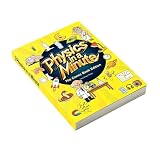
- COMIC-STYLE PHYSICS FOR KIDS: Tired of boring textbooks? This educational book uses vibrant comic panels to explain complex STEM concepts like motion and friction. It transforms difficult school science topics into hilarious, visual stories that kids aged 6-12 actually want to read
- HANDS-ON SCIENCE EXPERIMENTS AT HOME: Goes beyond theory! Includes simple, safe experiments using household items to demonstrate gravity and energy. Perfect for homeschool curriculum or weekend projects, encouraging critical thinking and making abstract physics tangible for young learners
- CORE STEM CURRICULUM MADE EASY: Covers essential topics including magnets, light, sound, and planetary space. Aligns with elementary/middle school science standards. Ideal for parents seeking science gifts for boys or educational toys for girls that provide real academic value while keeping kids engaged
- PERFECT FOR RELUCTANT READERS: The bite-sized "minute" format and speech-bubble dialogues hold short attention spans. Whether your child is a budding scientist or struggles with reading, this visual guide boosts confidence and turns confusion into "Aha!" moments instantly
- SCREEN-FREE LEARNING ADVENTURE: A healthier alternative to video games. This activity book sparks curiosity about how the world works—from why balls bounce to how planes fly. An excellent choice for travel, rainy days, or as a teacher-approved classroom resource for group learning
Rank #3
Product prices and availability are accurate as of the date/time indicated and are subject to change. Any price and availability information displayed on Amazon at the time of purchase will apply.
Independent reader supportYour contribution helps us test, update, and keep practical guides available for everyone.
