
For most agile teams, the best starting point is Git with one shared integration branch—usually main—and a policy that keeps changes small, reviewed, and tested. Prefer trunk-based development when the team can integrate and validate changes frequently; use short-lived branches when they help isolate parallel work. Add a more structured model only when release or maintenance needs justify its coordination cost.
These are engineering practices, not rules prescribed by Scrum. The Scrum Guide provides the framework context; it does not mandate a Git branching strategy or CI policy.
Choose a workflow that keeps integration frequent
Compare workflows by how often work reaches the shared branch, how long branches live, how much merge and review work they create, and whether the team has distinct release-coordination needs. The aim is not to eliminate branches; it is to avoid letting isolated work drift so far that integration becomes a project of its own.
| Workflow | Branch lifespan and integration | Review and merge considerations | Release coordination |
|---|---|---|---|
| Trunk-based development | Developers integrate small updates to a shared trunk or main frequently. Short-lived branches with a few commits can still fit this model. |
Frequent integration works best with automated tests and a healthy shared branch. Without those, a failing trunk can disrupt everyone. | Suitable when the team can keep the integration branch releasable. Feature flags can hide incomplete functionality when appropriate. |
| GitHub Flow or another short-lived feature-branch workflow | Work proceeds on a short-lived feature branch, then returns to main after review and validation. |
Branches create a clear review boundary for parallel work; keeping them short limits drift and merge complexity. | A lightweight option when the team wants explicit review before changes enter the shared branch without maintaining several long-lived branch lines. |
| Gitflow | Uses multiple branch lines and can include longer-lived feature branches. | More isolation can mean more planning and coordination, and work may drift from main. |
May suit distinct release or maintenance needs if those justify the added overhead; it is not inherently wrong. |
Microsoft’s Engineering Fundamentals Playbook advises: “Prefer trunk-based development where possible for new projects. Use short-lived feature branches when necessary and merge frequently into the default integration branch (commonly main or trunk).” It also recommends adapting practices to the project and toolchain rather than treating one checklist as universal.
Crashes, No Sound, or Screen Glitches?
Random freezes, missing sound and display glitches usually trace back to one bad driver. Find and replace yours safely.Free scan · under a minuteWindows Errors? Fix Them Before They Spread
Repair common Windows errors and clear accumulated junk for a smoother, more stable PC - no reinstall needed.Free scan · no reinstall#1 Best Overall

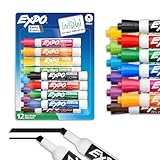
- ASSORTED COLORS: This pack of dry erase markers includes 12 markers in a broad range of colors including black, blue, light blue, purple, red, pink, green, light green, yellow, orange, and brown
- LOW ODOR INK: Enjoy a pleasant writing experience with low odor dry erase markers that write, draw, and erase cleanly
- CHISEL TIP VERSATILITY: The chisel tip dry erase marker design allows for versatile writing, allowing you to create both thick and thin lines with ease
- AMAZON BRAND QUALITY: These white board dry erase markers have the quality and reliability typical of this brand, making them a trusted choice for your writing, drawing, and erasing needs
Agree on a practical merge policy
Write down the minimum rules everyone will follow, then automate what the repository can enforce. The exact controls depend on the hosting platform and toolchain; the agreement should still be clear even when a control is not available.
- Keep changes focused. Break work into reviewable pieces and integrate early and often. Atlassian’s CI guidance says integration should happen daily or more frequently where possible; treat that as a practical cadence, not a universal quota.
- Give each pull request useful context. Describe the scope, link the relevant work item if your team uses one, and state what was tested. Keep reviews small enough for reviewers to assess meaningfully.
- Require review and passing checks. Where the repository supports it, protect the integration branch so changes need an approving peer review and successful required CI checks before merge.
- Run relevant validation before integration. Automate the build and tests that provide useful feedback, and keep that feedback quick enough to support frequent changes.
- Restore a broken shared build promptly. Agree that making the integration branch healthy takes priority over adding more changes. A failing shared branch undermines confidence in subsequent integration.
- Use feature flags selectively. A flag can let code be integrated before a feature is made visible. Assign ownership, document the flag, and remove stale flags so the mechanism does not become unmanaged operational complexity.
- Make releases and exceptions explicit. Document how releases are identified, such as with tags, and when a team may use a branch or other exception outside the usual flow.
- Keep naming conventions useful, not ceremonial. Agree on a branch naming pattern only if it helps people find work or connect it to a work item.
Roll out the policy and review its friction
- Choose the least complex workflow that meets the need. For a new project that can validate changes continuously, start with trunk-based development or short-lived branches. Retain more structure only for concrete release or maintenance requirements.
- Set the shared rules. Identify the integration branch, expected review, required checks, release-labeling approach, and exceptions. Make the agreement easy for new team members to find.
- Automate the enforceable parts. Configure branch protection and CI checks where your repository host and toolchain allow. Keep human review focused on design, correctness, and context rather than asking reviewers to perform routine automated checks by hand.
- Notice recurring delays. In retrospectives, look for review queues, branches that stay open too long, repeated merge conflicts, or recurring failures on the shared branch. These are signs the policy or delivery process may need adjustment, not reasons to add branching complexity automatically.
- Adapt as the team changes. Revisit the agreement when team size, delivery cadence, release needs, or toolchain changes. Microsoft’s guidance likewise treats branch rules as adaptable to the team and project.
Keep the distinction from Scrum clear
The Scrum Guides download page identifies the English November 2020 Scrum Guide as the official current version. The branching, pull-request, and CI recommendations here are software-engineering practices for supporting frequent delivery and shared ownership; they are not requirements stated by Scrum.
Quick Recap
Best Value

- Chisel tip for broad, medium, or fine lines
- Low-odor ink formula erases cleanly and is ideal for classrooms, offices and home offices
- For use on whiteboards and most non-porous surfaces
- Bold color is easy to erase and easy to see from a distance
- Includes: 8 dry erase markers in assorted colors
Rank #4

- Dry erase markers with the most vibrant ink yet from EXPO
- Vibrant ink makes it easier to read information from a distance
- Made for the whiteboard and beyond, writing pops on most non-porous surfaces like glass, acrylic, and more!
- Easily and cleanly erases with an EXPO eraser or dry cloth
- Fine tip markers perfect for accurate, detailed lines
Rank #3

- Dry erase markers with the most vibrant ink yet from EXPO
- Vibrant ink makes it easier to read information from a distance
- Made for the whiteboard and beyond, writing pops on most non-porous surfaces like glass, acrylic, and more!
- Easily and cleanly erases with included EXPO eraser and cleaner spray
- Versatile chisel tip creates multiple line widths
Rank #2
- Dry erase markers with the most vibrant ink yet from EXPO
- Vibrant ink makes it easier to read information from a distance
- Made for the whiteboard and beyond, writing pops on most non-porous surfaces like glass, acrylic, and more!
- Easily and cleanly erases with an EXPO eraser or dry cloth
- Versatile chisel tip creates multiple line widths
Sources and further guidance
- The Scrum Guides: Download — official guide editions.
- Atlassian: Trunk-based development — trunk-based workflows, Gitflow comparisons, and feature flags.
- Microsoft Engineering Fundamentals Playbook: Branching strategy — practical guidance with adaptation to project and toolchain.
- Atlassian: Code reviews — review practices for agile software development.
- AWS Prescriptive Guidance: Choosing a Git branching approach — workflow comparisons and recommendations.
- Atlassian: Continuous integration — integration, validation, and build-repair practices.
Product prices and availability are accurate as of the date/time indicated and are subject to change. Any price and availability information displayed on Amazon at the time of purchase will apply.

