
What’s actually slowing this PC down?
Pick the symptom - the matching free tool is one click away.
A rechargeable battery is not one specific chemistry: lithium-ion, NiMH, NiCd, NiZn, and lead-acid batteries differ in voltage, construction, charging requirements, and intended use. Choose a replacement and charger by the device maker’s specifications—not by physical fit alone—and follow the right handling and recycling guidance for the battery type.
What makes a battery rechargeable?
A rechargeable battery stores energy through chemical reactions that can be reversed by applying electrical energy. The term describes a function, not a single design: different chemistries are engineered for different power needs and products. The U.S. Environmental Protection Agency (EPA) notes that batteries use different mixtures of chemical elements to meet those needs in its Used Household Batteries guidance.
That means “rechargeable” does not tell you whether a battery fits a device, supplies the right voltage or current, or can use a particular charger. Shape, size, and label color are not reliable ways to identify chemistry. Check the markings, product manual, and device maker’s replacement instructions. Some products have batteries that are not removable or user-serviceable.
What are the different types of rechargeable batteries?
These are common rechargeable chemistries found in household, portable, vehicle, and backup applications. The examples are broad; a particular product’s specifications determine what is compatible.
Quick wins for a faster PC:
Fix the driver behind crashes, sound loss and screen glitchesFind Drivers →Repair Windows errors before they cause bigger problemsFix Now →Scan for outdated or missing drivers - takes under a minuteDriver Scan →#1 Best Overall
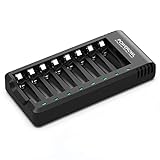
- POWEROWL smart charger passed US safety certification comes with chip control, when the battery is fully charged, it will automatically stop charging, and with LED indicator. (NOTE) only compatible with NiMH or NiCD AA and AAA rechargeable batteries.
- Scientific and reasonable battery charging position design, high quality materials effectively protect the battery from normal charging
- Charge any number of AA AAA rechargeable batteries to make your charging easier. It is recommended to use a 5V/2A plug.
- With a USB input interface, you can use a laptop, car charger, mobile phone charger, etc. to charge the battery
- AA AAA batteries charger uses trickle charge to extend battery life and charge up to 99%. Please read the instruction manual carefully before use.
| Chemistry | Common context | What to check |
|---|---|---|
| Lithium-ion (Li-ion), including lithium-polymer variants | Common in phones, laptops, cameras, power tools, toys, appliances, e-mobility products, and vehicles. | Use the battery and charger intended for the specific product. Pack design and protection systems matter, especially in higher-voltage equipment. |
| Nickel-metal hydride (NiMH) | Used in rechargeable household batteries and some portable devices. | An AA NiMH cell is a candidate only when the device specifies compatible removable AA cells. Use a charger designed for the relevant NiMH cell format. |
| Nickel-cadmium (NiCd) | Found in some cordless products and other equipment. | It contains cadmium and has specific collection and disposal implications. Do not substitute it for a different chemistry unless the device maker allows it. |
| Nickel-zinc (NiZn) | Used in some small electronics. | It is not automatically interchangeable with NiMH or disposable alkaline cells. Check the device and charger specifications. |
| Lead-acid, including small sealed lead-acid | Used in vehicle starting batteries and some backup, mobility, and emergency equipment. | These batteries contain lead and sulfuric acid. Use the proper battery and collection channel for the product and size. |
There is no single best chemistry for every device. A useful comparison starts with the product’s required battery format, nominal voltage, and current, then considers capacity and runtime, size and weight, charger requirements, replacement options, operating conditions, and end-of-life collection access. Those factors vary by model, and the available evidence does not establish a universal performance ranking across different devices.
Which rechargeable battery is best for my device?
The best choice is the battery type and pack specified by the device manufacturer. Before buying or installing a replacement, check these details in the manual, on the battery label, or on the manufacturer’s support page:
Rank #2

- Save Time & Charge More - Bonai AA AAA battery charger 16 bay for NiMH rechargeable batteries can charge any quantity in any slot. Single, double or triple ones can be charged, and not necessary to put them in neighboring slots. Besides, you can also mix charge AA and AAA batteries, as long as they are NiMH batteries
- Helpful LED Indicators - When you first plug it in, the LED lights run through a cycle then turn solid green on all empty ports to indicate power to each port. When you insert a battery to charge, the light will turn solid red, only on the port(s) containing the battery, to indicate the battery is charging. The light turns solid green when charging is complete. If a defective battery has been inserted, red light flashes
- Charging with Convenience- Attached with a regular AC power cord, without power brick, it can compatible with a wide range of voltage from 110V to 240V and input current is 0.5A(max.). Output voltage is 1.4V(DC) and current range 250-500mA. The more batteries you charge, the longer the time spend. *NOTE: It can not charge alkaline nor lithium battery
- Safe & Smart Battery Charger - This NiMH battery charger provides protection on overcharging, overvoltage, overcurrent, overheating, short-circuit and reverse-polarity. It is normal that the aa battery charger becomes heated while charging, just don't cover anything on it and keep it in a well-ventilated place. It is also a silent charger and doesn't emit any buzz
- WARRANTY: Bonai 16-bay battery charger for AA AAA NiMH batteries has 24/7 customer service available, you can rest assured to buy our battery charger and it has 12 months guarantee, if any questions, please don't hesitate to contact us
- Chemistry: Confirm whether the device calls for Li-ion, NiMH, NiCd, NiZn, lead-acid, or another specified type.
- Form and fit: Match the specified cell size or complete battery pack. A battery that physically fits may still be electrically unsuitable.
- Voltage and current: Match the stated electrical requirements. Do not assume that two batteries of the same shape have equivalent output.
- Pack and connector: For products using a battery pack, follow the exact model and connector requirements; protection electronics and pack design may be part of the system.
- Replaceability: If the manufacturer identifies the battery as non-removable or not user-serviceable, do not attempt to remove it.
For example, AA NiMH rechargeables are appropriate only for a device whose instructions support removable AA NiMH cells. A generic lithium-ion pack is not a safe substitute for a product-specific battery merely because its connector appears to match.
Can I use any charger with a rechargeable battery?
No. Chargers are chemistry- and product-specific, and physical compatibility does not establish electrical or safety compatibility. The U.S. Consumer Product Safety Commission describes battery safety as a system issue: cells must suit their intended loads and conditions, and batteries should be tested with the product and charger as a system. For lithium-ion products, Health Canada advises using the supplied charger or a trusted replacement with compatible voltage and current, and contacting the original manufacturer or retailer about replacement chargers for higher-voltage products such as e-bikes and tools.
Rank #3

- IN THE BOX: 4-hour Ni-MH battery charger for AA and AAA rechargeable batteries
- EASY & EFFICIENT: Unit plugs into an AC wall outlet; recharges 2 or 4 AA or AAA Ni-MH batteries at a time (batteries must be charged in pairs; never use non-rechargeable batteries)
- CHARGES USB DEVICES: USB port (maximum output 500 mA) for charging a smartphone, iPod, or other handheld device
- TRAVEL FRIENDLY: Flip-down plug with a slim profile and switching power ability for worldwide use (100 to 240 AC)
- SAFETY FEATURES: Wrong polarity protection and cut-off function to prevent overcharging
- Start with the device maker’s instructions. Use the supplied charger when possible, or choose a replacement the manufacturer recommends for that exact product.
- Check chemistry and electrical ratings. Confirm that the charger supports the battery chemistry and the product’s required voltage and current.
- Use the correct charger for removable cells. For AA or AAA NiMH cells, use a charger specified for the cell format and chemistry; do not infer compatibility from the battery’s dimensions.
- Stop if the combination is uncertain. Ask the manufacturer or retailer rather than experimenting with a charger that merely plugs in.
How should I charge and store rechargeable batteries safely?
Follow the battery and device makers’ instructions because charging and storage requirements vary by chemistry and product. For lithium-ion batteries, Health Canada’s Lithium-ion battery safety guidance says to charge according to manufacturer instructions, use a room-temperature location where practical, and keep a charging device off soft surfaces that can trap heat. Australia’s product-safety regulator, the ACCC, similarly advises against charging on beds, sofas, or carpet in its lithium-ion battery safety guidance. These are jurisdiction-specific public-safety recommendations, not a substitute for a product’s instructions.
- Do not use a lithium-ion battery that is swollen, dented, has a torn wrapper, is leaking, overheating, or otherwise visibly damaged.
- Keep batteries dry and store them at room temperature as directed by the maker. Protect loose cells from metal objects that could bridge their terminals.
- Do not put a battery designed for one product into another product unless the manufacturers specify compatibility.
- For a larger lithium-ion system stored long-term, Health Canada gives about 50% charge and a check every three months as guidance. This is not a universal rule for every chemistry or product; consult the manufacturer.
If a battery becomes hot, vents gas, leaks, or shows damage, stop using it and follow the product maker’s safety directions. Do not continue charging it or try to repair a damaged pack.
Rank #4

- Multi-Size Charging Slots: Compatible with 1-4 AA/AAA/C/D and 1-2 9V Ni-MH/Ni-Cd batteries. Independent slots allow simultaneous charging of mixed sizes. Freely combine different battery types without restrictions.
- Discharge Mode Activation: Press the blue button to initiate discharging. LCD displays "DISCHG," automatically discharging 1-4 Ni-MH/Ni-Cd batteries. Returns to charging mode post-discharge completion for optimized battery performance.
- Rapid Charging Capacity: Supports 2A total output for charging 2-4 AA/AAA/C/D batteries. Achieves full charge in ≤3 hours for AA/AAA, ≤10 hours for C/D/9V batteries.
- Intelligent Safety System: Auto-terminates charging upon detecting invalid input voltage, faulty batteries, short circuits, or non-rechargeable cells. Multi-protection design ensures user and device safety during operation.
- Stable Current Technology: Constant-current charging prevents power fluctuations, extending battery lifespan. Note: Align battery polarity (+/-) with device markings to ensure proper installation and operation.
How long do rechargeable batteries last?
Battery life depends on chemistry, product design, temperature, charging and storage practices, and how heavily the device is used. EPA’s 2026 Battery Collection Best Practices Report to Congress lists about 300–500 charging cycles as a typical illustrative lifespan range for lithium-ion batteries. That broad range is not a guarantee for an individual cell or device. The same report lists 3–5 years as a general typical lifespan for lead-acid batteries, not a warranty or universal service life.
Where can I recycle rechargeable batteries?
In the United States, EPA guidance says not to put rechargeable batteries in household trash or municipal recycling bins. Collection choices depend on the chemistry, battery size, local rules, and the location’s accepted materials. Check with a local hazardous-waste program, an appropriate retailer, or the battery or product manufacturer before traveling to a drop-off point.
Do these 3 things before closing this tab:
1Clear out junk files and repair common Windows errors2Scan for outdated or missing drivers - takes under a minute3Repair Windows errors before they cause bigger problemsBest Value

- Safe and Reliable: The charger with smart chip has passed the U.S. safety certification.With 6 protection functions
- USB High-Speed Charging: Type-C input for convenient charging anywhere, anytime via adapter, car, portable charger or computer
- 8 independent charging slots: Free to charge any number of AA/AAA NiMH/NiCd rechargeable batteries at the same time
- Trickle charge mode: Extends battery life by 2~ 3 years and increases battery capacity
- 【What You Get】Granicell 8-Bay AA/AAA NiMH/NiCD Battery Charger x 1, TYPE-C Charging Cable x 1, User Manual x 1
- Lithium-ion household batteries: EPA advises taping the terminals and/or placing each battery in a separate plastic bag before taking it to an appropriate collection location, reducing the risk of fire. Do not remove a battery the manufacturer says is non-removable or not user-serviceable.
- Lead-acid batteries: Take them to a battery retailer or local household hazardous-waste program; do not place them in trash or municipal recycling.
- Medium or large lithium-ion vehicle and energy-storage batteries: Contact the manufacturer, vehicle dealer, or installer for the appropriate return or recycling route rather than treating the pack like a household cell.
- Other rechargeable chemistries: Confirm that the collection site accepts the specific chemistry, particularly for NiCd batteries, which contain cadmium.
EPA’s 2026 report says there is no widely accepted U.S. lithium-ion battery recycling rate and that reliable data for several other chemistries are sparse or difficult to verify. It reports an industry-reported U.S. recycling rate of 99.3% for lead-acid batteries; that figure is not a nationally tracked rate for every battery type and should not be generalized to rechargeable batteries as a whole.
Quick Recap
Product prices and availability are accurate as of the date/time indicated and are subject to change. Any price and availability information displayed on Amazon at the time of purchase will apply.

