
The Tool Desk
Outbyte PC Repair FREERepair Windows errors before they cause bigger problemsFix Now →Outbyte Driver Updater FREEFix the driver behind crashes, sound loss and screen glitchesFind Drivers →iTechGuides is reader-supported. When you buy through links on our site, we may earn an affiliate commission. As an Amazon Associate I earn from qualifying purchases. Learn more
Top Linux endpoint protection software depends on the workload. Microsoft Defender for Endpoint is the strongest fit for Microsoft-centric estates, CrowdStrike Falcon is a leading enterprise EDR choice, SentinelOne emphasizes autonomous response, ESET suits lighter desktop protection, and ClamAV is useful for free scanning—not full endpoint detection and response.
Linux endpoint protection is not one product category. A desktop antivirus agent, a production-server scanner, a Linux EDR platform, a cloud-workload sensor, and a managed detection and response service solve different problems. The shortlist below separates those use cases and applies a hard rule: a product is not a valid recommendation until the vendor explicitly supports the exact Linux distribution, release, architecture, kernel, and workload.
The recommendations reflect product and testing information available in the supplied research through August 16, 2026. Linux feature parity, pricing, distribution support, and licensing can change, so buyers should confirm the final details in the vendor documentation and quote.
Windows Errors? Fix Them Before They Spread
Repair common Windows errors and clear accumulated junk for a smoother, more stable PC - no reinstall needed.Free scan · no reinstallCrashes, No Sound, or Screen Glitches?
Random freezes, missing sound and display glitches usually trace back to one bad driver. Find and replace yours safely.Free scan · under a minuteKey takeaways
- Microsoft Defender for Endpoint is the most natural choice for organizations already invested in Microsoft 365, Defender, Intune, Sentinel, or Azure, but Linux servers require an applicable server license.
- CrowdStrike Falcon and SentinelOne Singularity are stronger candidates when Linux EDR, behavioral prevention, investigation, and automated response matter more than simple malware scanning.
- ESET Endpoint Antivirus for Linux is a more focused desktop or server antivirus option, while ClamAV provides free, scriptable scanning but is not a commercial EPP or EDR replacement.
- Linux support must be checked by distribution, release, architecture, kernel, and workload; successful installation on an unlisted derivative does not mean the vendor officially supports it.
- Do not run multiple blocking Linux antivirus agents together without documented vendor support, because fanotify and other file-monitoring mechanisms can conflict.
Which Linux endpoint protection software is best?
Microsoft Defender for Endpoint is the best overall fit for a Microsoft-centric organization, CrowdStrike Falcon is the strongest enterprise EDR shortlist candidate, and SentinelOne Singularity is a strong autonomous-response option. Bitdefender GravityZone suits organizations seeking a broad centrally managed business endpoint platform, ESET Endpoint Antivirus for Linux suits lighter Linux antivirus deployments, Sophos fits existing Sophos Central estates, and ClamAV is appropriate only when free, scriptable scanning is the actual requirement.
#1 Best Overall

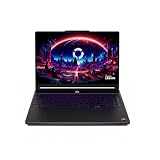
- Desktop-Level Performance, Anywhere: Get legendary gaming performance with the Intel Core Ultra 9 275HX processor, delivering ultra-smooth gameplay and future-ready AI (Up to 13 NPU TOPS). Offload tasks like background removal and audio optimization to the NPU for seamless streaming and gaming, while Intel Application Optimization enhances performance on classic titles.
- Game-Changing Realism: Powered by NVIDIA Blackwell architecture, GeForce RTX 5070 Ti Laptop GPU unlocks the game changing realism of full ray tracing. Equipped with a massive level of 992 AI TOPS horsepower, the RTX 50 Series enables new experiences and next-level graphics fidelity. Experience cinematic quality visuals at unprecedented speed with fourth-gen RT Cores and breakthrough neural rendering technologies accelerated with fifth-gen Tensor Cores.
- Supreme Speed. Superior Visuals. Powered by AI: DLSS is a revolutionary suite of neural rendering technologies that uses AI to boost FPS, reduce latency, and improve image quality. DLSS 4 brings a new Multi Frame Generation and enhanced Ray Reconstruction and Super Resolution, powered by GeForce RTX 50 Series GPUs and fifth-generation Tensor Cores.
- The Ultimate in Ray Tracing and AI: NVIDIA RTX is the most advanced platform for full ray tracing and neural rendering technologies that are revolutionizing the ways we play and create. Over 700 games and applications use RTX to deliver realistic graphics and incredibly fast performance with cutting-edge AI features like DLSS Multi Frame Generation.
- Immersive Depth and Detail: At 18 inches with a 16:10 aspect ratio, the pristine WQXGA screen offering vibrant colors with up to 100% DCI-P3 operates at a fast 240Hz refresh and 3ms overdrive response time. Alongside the suite of features from NVIDIA G-SYNC and NVIDIA Advanced Optimus, you're guaranteed that whatever's on-screen is a distinct viewing delight.
There is no defensible universal winner. A product that is excellent for Linux developer workstations may be unsuitable for a database server, an ARM64 cloud instance, or a Kubernetes environment. The following table is a use-case shortlist rather than a single ranking.
| Product | Best fit | Linux protection position | Architecture or workload note | Main caution |
|---|---|---|---|---|
| Microsoft Defender for Endpoint on Linux | Microsoft 365, Azure, Defender, Intune, or Sentinel customers | Endpoint prevention, behavioral detection, telemetry, and response capabilities | Broad published x64 and ARM64 distribution coverage; verify the exact matrix | Linux server licensing, fanotify conflicts, and workload tuning require attention |
| CrowdStrike Falcon | Enterprise EDR, threat hunting, and incident response | Cloud-managed Linux host and container protection with EDR positioning | Linux host and container coverage is part of the platform positioning | Sales-led buying and module-specific distribution verification |
| SentinelOne Singularity | Autonomous prevention, remediation, and cross-platform management | Behavioral and AI-based prevention with EDR and MDR package options | Linux support is published, but current distribution and architecture details need confirmation | Feature availability and pricing depend on the selected package |
| Bitdefender GravityZone | SMBs and enterprises wanting centralized business endpoint protection | Conventional prevention plus management and, in some editions, advanced capabilities | Exact Linux server, workload, and EDR coverage varies by GravityZone edition | Do not assume every edition has the same Linux feature set |
| ESET PROTECT / ESET Endpoint Antivirus for Linux | Lightweight Linux desktop or focused server antivirus | Linux antivirus with remote management through ESET PROTECT | Published requirements include specific 64-bit desktop distributions | Not automatically equivalent to a full Linux EDR platform |
| Sophos Intercept X / Sophos Central | Organizations already using Sophos endpoint, firewall, email, or MDR services | Business endpoint platform with prevention and broader security integration | Linux scope depends on the exact Sophos product and workload | Windows feature parity must not be assumed |
| ClamAV | Mail gateways, repositories, and custom scanning workflows | Free, open-source, scriptable malware scanning | Useful where scheduled or on-demand file scanning is sufficient | No equivalent centralized behavioral EPP/EDR response stack |
What does endpoint protection mean on Linux?
Linux endpoint protection ranges from signature-based file scanning to full EDR and MDR. Product labels are not interchangeable, so buyers should identify the protection layer they actually need.
| Term | What it normally provides | Where it fits |
|---|---|---|
| Antivirus | Signature, reputation, and sometimes heuristic scanning of files or processes | Desktops, file servers, mail gateways, and repositories |
| NGAV | Next-generation prevention using behavior, reputation, exploit, and cloud intelligence | Modern endpoint prevention |
| EPP | An endpoint protection platform combining prevention, policy, scanning, and management | Managed fleets of desktops and servers |
| EDR | Process telemetry, historical timelines, investigation, threat hunting, and response controls | Security teams investigating compromises and suspicious behavior |
| XDR | Correlation across endpoints and other sources such as identity, email, cloud, or network systems | Organizations consolidating detection across multiple security layers |
| Workload protection | Controls designed for cloud instances, servers, virtual machines, and production workloads | Cloud and data-center infrastructure |
| Container security | Image scanning, registry checks, host visibility, runtime detection, and Kubernetes controls | Containerized and cloud-native estates |
| MDR | Vendor or partner analysts monitor alerts and may investigate or respond | Organizations without a 24/7 internal SOC |
A Linux server protected only by scheduled file scans is not receiving the same protection as a Linux host with process telemetry, behavioral prevention, authentication visibility, network isolation, investigation, and automated remediation. A Linux-compatible agent should therefore be described precisely rather than automatically called “Linux EDR.”
Recommended Free Tools
Why do Linux systems need endpoint protection?
Linux systems remain valuable targets because they power servers, cloud workloads, developer systems, appliances, and security infrastructure. Linux compromises may involve ransomware, cryptominers, web shells, rootkits, stolen credentials, exposed-service exploitation, supply-chain compromise, lateral movement, container escape, or theft of cloud credentials.
Linux attacks also do not always resemble traditional desktop-virus infections. An attacker may abuse legitimate administration tools, steal SSH credentials, create persistence, escalate privileges, or establish outbound communication without dropping a recognizable “virus” file. For servers and cloud instances, visibility into processes, authentication, privilege changes, persistence, kernel activity, and network connections can be more valuable than signatures alone.
Which product is best for Linux desktops and developer workstations?
ESET Endpoint Antivirus for Linux is a reasonable focused-antivirus candidate for supported Linux desktops, while Microsoft Defender, CrowdStrike, SentinelOne, Bitdefender, or Sophos are more appropriate when the workstation must participate in a broader EPP or EDR estate. Desktop buyers should prioritize real-time file protection, central policy management, low and measurable resource use, removable-media controls where available, and compatibility with the organization’s actual desktop environment.
ESET’s published Linux Endpoint Antivirus requirements list 64-bit Ubuntu Desktop 22.04 and 24.04 LTS, Linux Mint 21 and 22, Debian 12 and 13, and RHEL 8–10 with a supported desktop environment, alongside version-specific requirements. The same documentation lists an x64 Intel or AMD processor and at least 700 MB of free disk space, and explicitly excludes AWS-kernel Linux distributions. ESET remote management is provided through ESET PROTECT.
What’s actually slowing this PC down?
Pick the symptom - the matching free tool is one click away.
ESET is not automatically a substitute for a Linux EDR platform. If the security team needs process timelines, host isolation, remote shell, automated remediation, or continuous threat hunting, verify those controls separately or choose a product whose Linux EDR feature set is documented.
Is Microsoft Defender for Endpoint the best choice for Microsoft-centric organizations?
Microsoft Defender for Endpoint is usually the most operationally convenient Linux choice when an organization already uses Microsoft security and management services. The value comes from ecosystem integration as much as from the Linux agent: existing Defender, Intune, Sentinel, Azure, identity, alerting, and investigation workflows can reduce the number of consoles and integrations the security team must operate.
Microsoft’s Linux product documentation describes Linux endpoint detection and response, behavioral analytics, and MITRE ATT&CK-aligned detections. Microsoft’s Linux prerequisites and supported-distribution matrix covers many x64 and ARM64 distributions, including RHEL, CentOS Stream, Ubuntu LTS, Debian, SLES, Oracle Linux, Amazon Linux, Fedora, Rocky Linux, AlmaLinux, and Mariner.
Microsoft documents a minimum kernel version of 3.10.0-327 or later for supported distributions, one CPU core, 2 GB of disk space, and 1 GB of RAM. High-performance workloads may require more resources. Those numbers are minimum published requirements, not a guarantee of acceptable production performance.
Quick wins for a faster PC:
Scan for outdated or missing drivers - takes under a minuteDriver Scan →Repair Windows errors before they cause bigger problemsFix Now →Linux server onboarding requires an applicable server license, such as Defender for Servers Plan 1 or Plan 2, Defender for Endpoint for servers, or Defender for Business servers for SMBs. Ordinary consumer or desktop assumptions about Microsoft Defender pricing should not be applied to Linux servers.
Microsoft explicitly warns that running Defender for Endpoint on Linux alongside another blocking fanotify-based security solution is unsupported and can cause unpredictable behavior, including system hangs. Microsoft documents passive-mode options for some coexistence situations and a specific fapolicyd exception for RHEL and Fedora when health checks are satisfactory. Use one primary blocking agent unless the vendor documents a supported design.
Microsoft’s Linux support-event documentation also records a scheduled change for Amazon Linux 2 on ARM64 effective October 31, 2026. Buyers operating that combination should verify the migration or support plan before deployment.
Is CrowdStrike Falcon the best enterprise Linux EDR?
CrowdStrike Falcon belongs on the shortlist for enterprise Linux estates that prioritize cloud-managed EDR, threat hunting, incident response, and Linux container visibility. CrowdStrike’s Linux materials position Falcon for Linux hosts and containers, including EDR visibility in container environments.
The CrowdStrike Linux solution brief describes Linux host and container protection and EDR-oriented visibility. CrowdStrike’s endpoint-security product page uses a sales-led buying path rather than publishing a universal Linux price.
Falcon is a strong fit for organizations with a SOC, threat hunters, or an existing CrowdStrike program. The main buyer obligation is to confirm the exact Falcon module, Linux distribution, release, architecture, kernel, container model, retention tier, and response controls in the current customer documentation or quote. A broad platform claim is not proof that every Linux feature is included in every package.
Does SentinelOne Singularity offer strong Linux autonomous response?
SentinelOne Singularity is a strong candidate when autonomous behavioral prevention, remediation, and cross-platform endpoint management are priorities. SentinelOne publishes Linux agent support as part of its endpoint-security offering and distinguishes endpoint, support, MDR, and deployment services by package.
The SentinelOne Singularity endpoint datasheet should be used to verify the current package, support tier, and Linux feature coverage. Buyers should specifically confirm whether the selected Linux deployment includes the response functions required by the SOC, such as process termination, quarantine, network isolation, remote investigation, and automated remediation.
SentinelOne is less suitable when the requirement is only an inexpensive Linux file scanner. Exact distribution, architecture, data-retention, MDR, and pricing details should be obtained for the selected Singularity package rather than inferred from the general cross-platform product description.
Is Bitdefender GravityZone a good broad business platform?
Bitdefender GravityZone is a credible choice for SMB and enterprise buyers seeking conventional endpoint prevention with centralized business management, provided the exact GravityZone edition covers the Linux workload. GravityZone editions differ, so the buyer must verify Linux server support, EDR features, workload coverage, management mode, and licensing for the selected edition.
Bitdefender products appear in AV-Comparatives’ 2026 business-security testing, and Bitdefender is included in current enterprise endpoint and EPR comparisons. That evidence supports treating Bitdefender as a serious business-security candidate, but it does not by itself prove Linux-specific performance or feature parity.
Rank #3

- Intel Core i9 HX Power for Elite Gaming: Dominate demanding titles with the Intel Core i9-14900HX and its 24-core hybrid architecture, delivering fast load times, high FPS, and smooth multitasking.
- GeForce RTX 5070 With Ray Tracing & DLSS 4: Powered by NVIDIA Blackwell, the RTX 5070 delivers stronger ray tracing, higher FPS, faster AI upscaling, and more responsive gameplay—ideal for competitive and cinematic gaming.
- QHD 165Hz, 100% DCI-P3 for Ultra-Clear Combat: The QHD 165Hz display reveals more detail, reduces motion blur, and boosts visibility in fast-paced games while delivering richer, more accurate colors.
- Cooler Boost 5 for Sustained Performance: Dual fans and a 5-heat-pipe share-pipe design keep the CPU and GPU cool, maintaining stable frame rates during long gaming marathons.
- 4-Zone RGB Keyboard + Full Game-Ready Ports: Customize your setup with a 4-zone RGB keyboard and highlighted WASD keys. Includes USB-C Gen 2, HDMI up to 8K, multiple USB-A ports, RJ45, Wi-Fi 6E & Hi-Res Audio.
GravityZone is a good fit for organizations that want a broad endpoint portfolio and centralized policies. GravityZone is a poor fit if a buyer chooses an edition without first confirming whether the Linux agent provides active real-time protection, EDR telemetry, response, and server or cloud-workload coverage.
Is Sophos Intercept X suitable for Linux?
Sophos is most attractive to organizations already using Sophos Central, Sophos Firewall, Sophos email security, or Sophos MDR, but Linux support must be verified for the exact Sophos product and workload. Intercept X Advanced appears in AV-Comparatives’ 2026 business-security testing, and Sophos markets endpoint protection, MDR, and broader platform integration.
Use the Sophos recognition and product information as business-platform context, not as proof that every Windows endpoint control is available on Linux. Confirm Linux support for the selected server, endpoint, or workload product and check whether the required controls—real-time protection, behavioral blocking, EDR telemetry, isolation, remote response, device control, vulnerability management, or MDR—are actually available on Linux.
Sophos is a sensible consolidation candidate for an existing Sophos estate. A Linux-only buyer should demand a Linux-specific feature matrix before selecting it.
What can ClamAV do, and why is it not full EDR?
ClamAV is a useful free, open-source scanner for mail gateways, file repositories, and custom Linux workflows, but ClamAV is not a like-for-like replacement for commercial EPP or EDR. ClamAV can be valuable when administrators need scriptable on-demand or scheduled malware scanning without a commercial agent.
Do these 3 things before closing this tab:
1Repair Windows errors before they cause bigger problems2Fix the driver behind crashes, sound loss and screen glitches3Clear out junk files and repair common Windows errorsClamAV should not be selected when the requirement includes centralized behavioral prevention, process telemetry, threat hunting, host isolation, automated remediation, or managed response. ClamAV belongs in a separate “Linux malware scanning” category, not beside commercial EDR products as though the capabilities were equivalent. Verify the current project documentation and version before production deployment.
Which Linux distributions and architectures are supported?
Official support depends on the exact distribution, release, architecture, kernel, edition, and workload. “Supports Linux” is not a sufficient procurement statement. The following comparison summarizes the evidence available in the research and deliberately marks unverified areas as requiring vendor confirmation.
| Product | Ubuntu | Debian | RHEL and derivatives | SLES / Oracle / cloud distributions | ARM64 | Containers |
|---|---|---|---|---|---|---|
| Microsoft Defender for Endpoint | Many Ubuntu LTS releases; verify exact release and server or desktop edition | Published support for listed releases | RHEL, CentOS Stream, Rocky Linux, and AlmaLinux appear in the published matrix | SLES, Oracle Linux, Amazon Linux, Fedora, and Mariner appear in the published matrix; verify each release | Broad published coverage, but check the exact combination; Amazon Linux 2 ARM64 has a scheduled October 31, 2026 support change | Verify the required container and workload feature |
| CrowdStrike Falcon | Verify current release and module | Verify current release and module | Verify current release, kernel, and module | Verify in current customer documentation or quote | Verify exact architecture support | Linux host and container protection is part of CrowdStrike’s Linux positioning |
| SentinelOne Singularity | Linux support is published; verify release and package | Verify current release | Verify current release and package | Verify each distribution with the vendor | Verify exact architecture | Verify whether image, host, or runtime coverage is required |
| Bitdefender GravityZone | Verify exact edition and release | Verify exact edition and release | Verify exact edition and server workload | Verify exact edition and cloud image | Verify exact architecture | Verify the workload module and edition |
| ESET Endpoint Antivirus for Linux | Ubuntu Desktop 22.04 and 24.04 LTS are listed in the cited requirements | Debian 12 and 13 are listed | RHEL 8–10 with a supported desktop environment is listed | AWS-kernel Linux distributions are explicitly excluded in the cited requirements | The cited requirements specify x64 Intel or AMD; verify ARM64 separately | Not a general container-EDR recommendation |
| Sophos | Verify exact Sophos product and release | Verify exact Sophos product and release | Verify exact server or endpoint product | Verify cloud and workload coverage | Verify exact architecture | Verify separately |
| ClamAV | Distribution and architecture compatibility depends on the current project package and the administrator’s deployment method; verify current project documentation. | |||||
Microsoft’s published prerequisites explicitly state that unlisted distributions are unsupported even when they are derived from supported distributions. That distinction matters for Ubuntu derivatives, RHEL clones, custom kernels, embedded systems, and cloud-provider images.
Classify each target as supported when the vendor lists the exact combination, compatible but unsupported when the agent installs but the vendor makes no guarantee, or untested when there is no responsible evidence.
What protection and response features should buyers compare?
Compare prevention, detection, response, and management separately because a product can be strong in one layer and limited in another.
| Capability | Why it matters on Linux | Questions to ask the vendor |
|---|---|---|
| Real-time and on-demand scanning | Catches malicious files without relying only on periodic scans | Which filesystems and workload types are covered? |
| Behavioral prevention | Helps detect abuse of legitimate tools, scripts, and processes | Is behavioral blocking available on Linux or only on Windows? |
| Exploit and ransomware controls | Can stop suspicious execution or destructive activity | Are controls active, configurable, and supported on the target kernel? |
| Process and authentication telemetry | Supports investigation of web shells, credential theft, persistence, and privilege escalation | Are process trees, logins, privilege changes, modules, and network connections retained? |
| Threat hunting and ATT&CK mapping | Lets analysts investigate behavior rather than only review malware alerts | Can analysts search historical Linux events and map detections to techniques? |
| Isolation and remediation | Limits lateral movement and removes or stops malicious activity | Can the console isolate a host, quarantine files, terminate processes, or collect evidence? |
| Remote shell and forensic collection | Reduces the need for emergency access during an incident | Are remote commands, evidence collection, and audit logs supported on Linux? |
| Container and workload security | Addresses ephemeral hosts, images, runtime behavior, and Kubernetes | Does the product scan images, monitor the host, protect runtime, or all three? |
AV-Comparatives’ EPR feature comparison lists Linux support and capabilities such as network isolation, quarantine, process termination, execution prevention, attack visualization, attack context, timelines, continuous monitoring, behavior monitoring, and patching. The comparison also demonstrates that capabilities differ materially among vendors, so a product name alone is not enough.
Rank #4

- Vibrant 15.6" FHD IPS Display: Experience stunning visuals on a large 15.6-inch Full HD (1920x1080) IPS screen. With narrow bezels and wide viewing angles, this laptop offers an immersive experience for streaming movies, online classes, or working on documents with crystal-clear detail
- Efficient Daily Performance: Powered by the Intel Celeron N4020 processor and 4GB LPDDR4 RAM, this notebook delivers reliable performance for web browsing, light multitasking, and school projects. The 128GB storage provides ample space for your essential files, photos, and apps
- Modern Connectivity & PD Fast Charge: Equipped with a versatile Type-C PD 45W port for fast charging and high-speed data transfer. Combined with Dual-Band AC WiFi and Bluetooth, you’ll enjoy a stable and fast internet connection for seamless video calls and cloud-based work
- Silent & Ultra-Portable Design: Featuring an advanced fanless cooling system, this laptop operates in total silence—perfect for libraries or late-night study sessions. Its sleek, lightweight body fits easily into backpacks, making it the ideal companion for students and commuters
- Ready for Work & Play: Pre-installed with Windows 11 Home, offering a secure and user-friendly interface. Includes a HD webcam and high-quality speakers for clear communication. A practical choice for online learning, remote work, or everyday entertainment
How do desktop, server, cloud, and container requirements differ?
Linux desktop, server, cloud, and container deployments need different controls and deployment methods.
Linux desktops and developer workstations
Prioritize real-time file protection, low measured overhead, central policy management, removable-media controls where available, desktop-environment compatibility, and support for the exact distribution. Test package managers, compilers, development tools, browser workflows, VPN clients, virtualization tools, and custom scripts.
Linux servers
Prioritize real-time and on-demand scanning, low I/O disruption, kernel and fanotify compatibility, database and web-server support, exclusion controls, root-level installation, tamper protection, centralized alerting, and the distribution’s support lifecycle. Test database latency, high-throughput shares, backup software, monitoring agents, NFS, CIFS, and overlay filesystems.
Cloud instances and ephemeral hosts
Prioritize automated deployment through golden images, configuration management, or cloud-init; first-boot enrollment; proxy and egress support; autoscaling registration and cleanup; cloud SIEM and identity integration; and a recovery design that preserves forensic evidence during isolation.
Containers and Kubernetes
Installing a conventional endpoint agent inside every short-lived container is often unsuitable. Container programs may instead require image scanning, registry integration, host-based visibility, runtime protection, Kubernetes security, or a cloud-workload product. CrowdStrike’s Linux materials specifically position its platform for Linux hosts and containers, but buyers should still distinguish image scanning from runtime detection and agent-based container coverage.
How important is centralized management?
For more than a small number of Linux systems, the management console can matter as much as the local agent. Evaluate SaaS versus on-premises operation, role-based access control, policy inheritance, multi-tenancy, APIs, Ansible or configuration-management integration, SIEM and syslog support, webhooks, alert deduplication, compliance reporting, asset inventory, vulnerability visibility, agent-health monitoring, offline behavior, and air-gapped operation.
Free tools Windows power users keep installed
One-click scans. No signup required.
Central management is especially important in mixed Windows, macOS, Linux, cloud, and container estates. Existing platform integration can outweigh small differences in malware-test results because analysts spend less time switching consoles and normalizing alerts.
What are the performance and compatibility costs?
Endpoint-agent overhead depends on the workload, scan policy, exclusions, kernel, storage, and telemetry settings, so “lightweight” should be demonstrated in a representative pilot rather than assumed.
- CPU and memory: measure idle, update, scan, and incident conditions.
- File-system overhead: test high-I/O applications, build servers, file shares, and databases.
- Kernel and fanotify: verify hooks, supported kernel ranges, and coexistence rules.
- SELinux, AppArmor, FIPS, and hardened kernels: test the security baseline used in production.
- Containers and overlay filesystems: confirm whether the agent sees the intended host and runtime activity.
- Kernel upgrades: verify agent health and real-time protection after rebooting into the next kernel.
Do not layer several blocking antivirus agents on one Linux server as a generic defense-in-depth strategy. Use one primary prevention agent and integrate other scanners through supported passive modes, APIs, file-repository workflows, or SIEM pipelines.
How should production exclusions be designed?
Use narrow, documented exclusions only where testing shows they are necessary. Avoid blanket exclusions such as /, /home, or an entire application tree. Test each exclusion in staging, record its owner and business reason, review it after upgrades, and remove it when the workload changes.
How should independent security testing be interpreted?
Independent testing is useful evidence, but a Windows business test or market-positioning report is not proof of equivalent Linux detection or performance. Readers should check the tested operating system, product edition, test date, attack scenario, samples, false-alarm methodology, vendor participation, and whether the results measure prevention, detection, response, or all three.
Best Value

- Stunning 15.6" FHD IPS Display: Experience crisp 1920x1080 resolution on this 15.6 inch laptop with an IPS panel that delivers wide viewing angles and vivid colors. The narrow-bezel design maximizes screen real estate for comfortable viewing on this Win 11 laptop, whether you're studying or working.
- Celeron J4105 Processor & 256GB SSD: Powered by a reliable Celeron J4105 processor paired with 12GB DDR4 memory and a fast 256GB M.2 SSD. This laptop computer supports SSD expansion up to 2TB and TF card expansion up to 1TB, so your storage grows with your needs. Delivers smooth multitasking for daily productivity.
- AI-Powered Win 11 Laptop: Built-in AI features enhance your productivity with smart assistance for writing, summarizing, and task management. Pre-installed with Win 11 and includes Office 365 subscription. This student laptop is backed by 1-year warranty and 24/7 customer support.
- All-Day 7000mAh Battery & 180° Hinge: The high-capacity 7000mAh battery keeps this laptop powered through long classes or meetings. The 180-degree lay-flat hinge lets you share your screen effortlessly during presentations. This durable laptop computer adapts to your dynamic workflow.
- Versatile Connectivity Hub: Equipped with USB 3.2, Type-C, Mini HDMI, and 3.5mm audio jack to connect all your peripherals. Stay online anywhere with high-speed 5G WiFi and Bluetooth 4.2. This college laptop keeps you connected at home, in the library, or on the go.
AV-Comparatives’ 2026 business-security test includes products such as Bitdefender GravityZone, CrowdStrike Falcon Enterprise, Microsoft Defender Antivirus with Microsoft Endpoint Manager, and Sophos Intercept X Advanced. The test scope should be read before applying its results to Linux.
The March–April 2026 business-test factsheet provides product-level protection and false-alarm context. False positives can be especially costly on production Linux systems, where blocking a package, build, database, or authentication process can cause an outage.
Gartner’s 2026 Endpoint Protection Magic Quadrant names vendors including Bitdefender, Check Point, CrowdStrike, ESET, SentinelOne, and Sophos. A market-positioning report helps establish the enterprise landscape, but it is not a substitute for Linux compatibility testing, workload measurements, feature verification, or a production pilot.
How much does Linux endpoint protection cost?
Linux endpoint protection pricing varies by endpoint, server, user, virtual machine, container, workload, platform bundle, EDR tier, MDR service, retention period, support level, geography, and purchase volume. The supplied research does not provide comparable public prices, so a responsible shortlist should use pricing models rather than invented per-device figures.
| Potential charge | Why it changes the quote |
|---|---|
| Desktop or user license | May cover user endpoints but not Linux servers |
| Server or workload license | Linux servers can require a separate SKU or plan |
| EDR add-on | Basic antivirus may not include investigation and response |
| MDR add-on | Vendor or partner analysts generally cost extra |
| Cloud and container modules | Ephemeral instances, virtual machines, images, and runtimes may be billed separately |
| Data retention and support | Longer telemetry retention and premium support can increase total cost |
| Minimum quantities and term | Multi-year commitments, minimum seats, and reseller requirements affect the effective price |
Microsoft is a particularly important example: Microsoft’s Linux prerequisites and licensing guidance states that Linux servers require an applicable server license. CrowdStrike and many enterprise EDR vendors use a sales-led buying process, while SentinelOne package and service tiers affect the quote. ClamAV itself is an open-source project, but deployment, integration, monitoring, and response still have operational costs.
How should an organization choose?
Choose the product that passes exact compatibility checks first, then score protection, response, operations, and cost. A high overall score cannot compensate for an unsupported distribution, architecture, kernel, or workload.
| Criterion | Suggested importance | Questions to ask |
|---|---|---|
| Distribution and architecture support | Critical | Is the exact distro, release, kernel, CPU architecture, and image officially supported? |
| Protection depth | Critical | Is the product scanning only, or does it provide behavioral prevention and EDR? |
| Server and workload compatibility | Critical | Does it support databases, high-I/O systems, NFS, containers, and hardened kernels? |
| Response controls | High | Can analysts isolate, quarantine, terminate processes, collect evidence, or use remote shell? |
| Management and integrations | High | Are the console, API, SIEM, RBAC, and reporting adequate? |
| Resource consumption | High | What is the measured CPU, memory, storage, and I/O effect on the actual workload? |
| Deployment automation | High | Can deployment use packages, Ansible, cloud-init, or golden images? |
| Licensing and support | High | Are server, EDR, MDR, retention, and premium support separate charges? |
| Independent evidence | Medium | Does the evidence apply to the tested platform and product edition? |
| Data governance | Medium | Where is telemetry stored, and can retention and regional hosting be controlled? |
Score each candidate from 1 to 5 for compatibility, prevention, EDR visibility, response, workload performance, management, deployment automation, licensing transparency, support, and independent evidence. Apply the hard-fail rule before calculating the score.
What’s actually slowing this PC down?
Pick the symptom - the matching free tool is one click away.
Linux endpoint protection deployment checklist
- Inventory every distribution, release, kernel, architecture, desktop or server edition, cloud image, and workload.
- Separate desktops, production servers, cloud instances, virtual machines, containers, and Kubernetes requirements.
- Confirm official support—not merely package installation—for every important combination.
- Confirm whether Linux servers, EDR, MDR, cloud workloads, containers, data retention, and premium support require separate licenses.
- Deploy the candidate to representative staging systems.
- Measure CPU, memory, storage, file-system I/O, application latency, build times, database performance, and network behavior.
- Test alerts and response actions, including quarantine, process termination, host isolation, evidence collection, and recovery.
- Test package managers, compilers, CI/CD runners, backup tools, databases, monitoring agents, custom scripts, and kernel packages.
- Configure narrow exclusions with an owner, business reason, review date, and rollback plan.
- Validate proxy, firewall, DNS, certificate, time-synchronization, and restricted-network requirements.
- Test a kernel upgrade and confirm that the agent remains healthy and real-time protection is still active.
- Document golden-image installation, first-boot enrollment, autoscaling cleanup, offline queues, and uninstall or recovery procedures.
- Pilot with representative production systems before broad deployment, then monitor agent health and telemetry quality.
Which product should different organizations shortlist?
| Organization profile | Shortlist first | Reason |
|---|---|---|
| Microsoft 365, Azure, Defender, or Sentinel estate | Microsoft Defender for Endpoint | Strong platform integration and published Linux distribution coverage |
| Enterprise SOC requiring Linux threat hunting | CrowdStrike Falcon; Microsoft Defender; SentinelOne | Prioritizes EDR telemetry, investigation, and response over basic scanning |
| Autonomous prevention and remediation priority | SentinelOne Singularity | Behavioral prevention and autonomous-response positioning |
| Broad centrally managed business endpoint platform | Bitdefender GravityZone | Business endpoint portfolio and independent testing presence |
| Lightweight supported Linux desktop antivirus | ESET Endpoint Antivirus for Linux | Concrete published desktop requirements and ESET PROTECT management |
| Existing Sophos Central, Firewall, email, or MDR customer | Sophos Intercept X / Sophos Central | Potential operational consolidation, subject to Linux feature verification |
| Mail gateway, repository, or custom script scanning | ClamAV | Free, open-source, scriptable scanning where EDR is not required |
Frequently Asked Questions
Does Linux need antivirus?
Yes, many Linux systems benefit from antivirus or endpoint detection and response. Linux servers and cloud workloads face ransomware, cryptominers, web shells, credential theft, rootkits, exposed-service exploitation, supply-chain compromise, and lateral movement; the required control may be file scanning, EPP, EDR, workload security, or MDR depending on the system.
Is ClamAV enough for Linux endpoint protection?
ClamAV is enough only when the requirement is free, scriptable, on-demand or scheduled malware scanning. ClamAV is not enough for organizations requiring behavioral prevention, process telemetry, host isolation, threat hunting, automated remediation, or managed response.
Can two Linux antivirus products run together?
Two blocking Linux antivirus products should not be run together unless the vendors document supported coexistence. Microsoft warns that Defender for Endpoint alongside another blocking fanotify-based security solution is unsupported and can cause unpredictable behavior, including system hangs.
Is Microsoft Defender for Linux free?
Microsoft Defender for Linux servers is not automatically free because Linux server onboarding requires an applicable server license, such as Defender for Servers Plan 1 or Plan 2, Defender for Endpoint for servers, or Defender for Business servers for SMBs. The applicable plan and geography determine the final price.
Does endpoint protection work inside containers?
Container security depends on the product and deployment model. Buyers may need image scanning, registry integration, host-based container visibility, runtime protection, Kubernetes security, or cloud-workload protection; installing a conventional endpoint agent inside every short-lived container is often unsuitable.
The Bottom Line
The best Linux endpoint protection software is the product that matches the exact Linux workload and existing security stack. Start with Microsoft Defender for Microsoft-centric organizations, CrowdStrike Falcon for enterprise Linux EDR and threat hunting, SentinelOne for autonomous response, Bitdefender GravityZone for broad business endpoint management, ESET for focused Linux antivirus, Sophos for existing Sophos estates, and ClamAV for free scanning. Confirm official distribution and architecture support, Linux feature parity, licensing, performance, and response controls in a representative pilot before deployment.
Quick Recap
Product prices and availability are accurate as of the date/time indicated and are subject to change. Any price and availability information displayed on Amazon at the time of purchase will apply.

