
Do these 3 things before closing this tab:
1Repair Windows errors before they cause bigger problems2Scan for outdated or missing drivers - takes under a minute3Clear out junk files and repair common Windows errorsThese are the 20 Git commands most useful in a normal project workflow: create or clone a repository, configure Git, inspect changes, stage and commit work, review history, manage branches, synchronize with a remote, mark releases, and recover safely from mistakes.
Git works with four important pieces: the working tree contains your files, the index (or staging area) holds the exact snapshot for the next commit, HEAD identifies the current commit, and a remote such as origin points to another repository. Git itself is the version-control system; GitHub, GitLab, and similar services provide hosted remote repositories and collaboration features. See the official Git reference for the complete command documentation.
Git commands at a glance
The examples below are templates. Replace values such as <url>, <branch>, <file>, and <commit> with values from your repository.
| Command | Purpose | Example | Important caution |
|---|---|---|---|
git init |
Create a local repository | git init |
Does not create a remote or commit files. |
git clone |
Copy an existing repository | git clone <url> |
Use this instead of init when a remote repository already exists. |
git config |
Set Git options and identity | git config --global user.name "Your Name" |
--global affects your user account; without it, settings are repository-local. |
git status |
Inspect repository state | git status |
Run it before and after important operations. |
git add |
Stage content for the next commit | git add <file> |
Review broad staging such as git add .. |
git diff |
Compare file versions | git diff --cached |
Plain diff and diff --cached show different changes. |
git commit |
Record the staged snapshot | git commit -m "Describe the change" |
-a does not include new untracked files. |
git log |
Inspect commit history | git log --oneline --graph --decorate --all |
Use path filters to investigate a particular file. |
git branch |
List, create, or delete branches | git branch <branch> |
Creating a branch does not switch to it. |
git switch |
Change or create-and-change branches | git switch -c <branch> |
Use it for clarity; older documentation may use checkout. |
git merge |
Combine histories | git merge <branch> |
Resolve conflicts before completing the merge. |
git rebase |
Replay commits on a new base | git rebase main |
Rewrites commit ancestry; be careful with shared commits. |
git stash |
Temporarily shelve unfinished work | git stash push -m "work in progress" |
A stash is not a durable backup or substitute for a commit. |
git restore |
Restore file contents or unstage files | git restore <file> |
Can discard uncommitted edits. |
git reset |
Move HEAD, the index, or the working tree |
git reset HEAD~1 |
--hard can destroy local work and move branch history. |
git revert |
Undo a commit with a new commit | git revert <commit> |
Usually the safer undo method for already-published history. |
git fetch |
Download remote updates without integrating them | git fetch origin |
Fetching does not change your current branch files. |
git pull |
Fetch and integrate remote updates | git pull origin main |
Integration can produce conflicts; preserve local work first. |
git push |
Publish local commits or branches | git push -u origin <branch> |
Avoid routine force-pushing shared branches. |
git tag |
Mark an important revision | git tag -a v1.0.0 -m "Release 1.0.0" |
Local tags are not automatically sent to a remote. |
1. git init: create a repository
Use git init when you are starting version control for a project that exists only on your computer. It creates the repository metadata in the current directory, but it does not create a hosted repository, add a remote, or commit existing files.
mkdir my-project
cd my-project
git init
After initialization, run git status, create or copy your project files, then stage and commit them. Running git init again in an existing repository generally reinitializes it rather than creating a second independent history, but it is still wise to confirm your current directory before using it.
2. git clone: copy an existing repository
When a repository already exists on a hosting service or another server, use clone rather than init.
git clone https://github.com/USERNAME/REPOSITORY.git
cd REPOSITORY
Cloning creates a local directory, initializes its Git repository, records the source as the origin remote, downloads the repository’s objects and references, and checks out the remote’s default branch. GitHub describes this remote-to-local workflow in its documentation on getting changes from a remote repository.
3. git config: configure Git
Git uses configuration values for your commit identity and behavior. A common first-time setup is:
git config --global user.name "Your Name"
git config --global user.email "you@example.com"
git config --global init.defaultBranch main
--global applies to your user account. Omit it to configure only the current repository:
git config user.email "work@example.com"To inspect configuration, use:
git config --listRecent Git documentation also describes explicit operations such as list, get, set, unset, rename-section, and edit. Available syntax can depend on your installed Git version, so git config --help is the authoritative reference for your environment. You can check that environment with git --version without assuming a particular release.
4. git status: see what is happening
git status compares the working tree, staging area, and HEAD. It tells you which files are modified, which changes are staged, which files are untracked, and which branch you are on.
git status
git status --short --branch
The compact form is useful during everyday work. --porcelain produces stable machine-readable output intended for scripts:
git status --porcelainMake git status a habit before staging, committing, merging, rebasing, pulling, or using a potentially destructive command.
5. git add: stage the next snapshot
git add copies selected file content into the index, also called the staging area. The next commit records the staged snapshot—not every change currently in your working directory.
git add README.md
git add src/
git add .
git add . stages broadly, so verify the result with git status and git diff --cached. To select only portions of a file, use interactive staging:
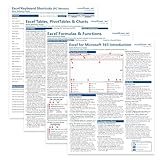
Rank #2

- Windows 11 Shortcut Sticker ①Size:(7.25 x 9 cm) Windows Shortcut Sticker, Windows + Word/Excel Shortcuts Sticker for Windows systems Laptop and Desktop Computer. Compatible for Windows 11 and Windows 10 systems Laptop,Desktop
- BOOST YOUR PRODUCTIVITY INSTANTLY-Stop Googling shortcuts! This visual cheat sheet puts the most essential Windows 11/10, Microsoft Word, and Excel commands directly onto your keys. Master copy/paste, formatting, navigation, and advanced functions without breaking your flow.
- TWO STYLES IN ONE PACK — MAXIMUM FLEXIBILITY-Get both Clear stickers for a sleek, invisible look AND Color-coded stickers for fast visual identification. Use the clear set for work meetings, switch to color when learning new shortcuts. It's like having two products for the price of one.
- PREMIUM QUALITY THAT LASTS-Crafted from durable matte-finish vinyl. These stickers resist fading, smudging, and peeling from daily use. The adhesive is strong enough to stay put but removes cleanly with zero sticky residue—perfect for shared or company laptops.
- UNIVERSAL FIT FOR ANY KEYBOARD-Precisely cut to fit standard US layout keyboards. Compatible with all major brands including Dell, HP, Lenovo, ASUS, Acer, and external mechanical keyboards. Easy peel-and-stick application takes under 2 minutes.
git add -pThis lets you separate unrelated edits into separate commits, which makes review and later troubleshooting easier.
Quick wins for a faster PC:
Repair Windows errors before they cause bigger problemsFix Now →Scan for outdated or missing drivers - takes under a minuteDriver Scan →6. git diff: review changes
The most important distinction is whether you are reviewing unstaged or staged content:
git diff                 # changes not yet staged
git diff --cached        # changes staged for the next commit
git diff HEAD            # staged plus unstaged changes
git diff main..feature   # compare the tips of two branches
Before committing, inspect git diff --cached. If the output includes an unrelated change, unstage or edit it before recording the commit.
7. git commit: record a snapshot
A commit records the content currently staged in the index and adds it to the repository history.
git commit -m "Add user authentication"For tracked files, -a stages modifications and deletions automatically before committing:
Recommended Free Tools
git commit -am "Fix validation bug"However, -a does not stage new untracked files. A dependable sequence is:
git status
git diff --cached
git commit -m "Describe one coherent change"
Keep commits focused enough that another person can understand what changed and why.
8. git log: inspect history
Use git log to review commits, identify a commit to undo, or understand when a file changed.
git log --oneline --graph --decorate --all
git log --author="Name"
git log -- path/to/file
The first form gives a compact graph of local branches and remote-tracking references. The path form filters history to commits that affected a specific file. A commit identifier shown by git log can be used as the <commit> placeholder in commands such as git revert.
What’s actually slowing this PC down?
Pick the symptom - the matching free tool is one click away.
9. git branch: list and manage branches
A branch is a movable name pointing to a commit. Listing or creating a branch does not switch your working tree to it.
git branch
git branch feature/login
git branch -vv
-vv shows extra information such as upstream tracking where available. Delete a merged local branch with a safety check:
Rank #3

- 💻 ✔️ EVERY ESSENTIAL SHORTCUT - With the SYNERLOGIC Reference Keyboard Shortcut Sticker, you have the most important shortcuts conveniently placed right in front of you. Easily learn new shortcuts and always be able to quickly lookup commands without the need to “Google” it.
- 💻 ✔️ Work FASTER and SMARTER - Quick tips at your fingertips! This tool makes it easy to learn how to use your computer much faster and makes your workflow increase exponentially. It’s perfect for any age or skill level, students or seniors, at home, or in the office.
- 💻 ✔️ New adhesive – stronger hold. It may leave a light residue when removed, but this wipes off easily with a soft cloth and warm, soapy water. Fewer air bubbles – for the smoothest finish, don’t peel off the entire backing at once. Instead, fold back a small section, line it up, and press gradually as you peel more. The “peel-and-stick-all-at-once” method only works for thin decals, not for stickers like ours.
- 💻 ✔️ Compatible and fits any brand laptop or desktop running Windows 10 or 11 Operating System.
- 💻 ✔️ Original Design and Production by Synerlogic LLC, San Diego, CA, Boca Raton, FL and Bay City, MI, United States 2025. All rights reserved, any commercial reproduction without permission is punishable by all applicable laws.
git branch -d feature/logingit branch -D feature/login forces deletion even when Git believes the branch may contain unmerged work. Treat -D as a deliberate recovery or cleanup operation, not the normal choice.
10. git switch: change branches
Use git switch to move to an existing branch or create and switch to a new one:
The Tool Desk
Outbyte Driver Updater FREEScan for outdated or missing drivers - takes under a minuteDriver Scan →Outbyte PC Repair FREERepair Windows errors before they cause bigger problemsFix Now →git switch main
git switch -c feature/loginswitch is a focused, clearer command for branch changes. Older tutorials may use git checkout, which combines branch switching with file restoration. You may need to understand checkout in an existing project, but prefer switch for new instructional examples.
11. git merge: combine branches
The branch checked out when you run merge is the receiving branch.
git switch main
git merge feature/login
If Git reports conflicts, open each affected file, remove or revise the conflict markers, and choose the correct final content. Then stage the resolved files and complete the merge:
git add <resolved-file>
git commit
If the merge is still in progress and you want to return to the pre-merge state:
git merge --abort12. git rebase: replay commits on a new base
Rebasing reapplies a branch’s commits on top of another branch’s current tip. It can produce a more linear history:
git switch feature/login
git rebase main
Because rebasing creates new commit ancestry, it rewrites history. Avoid rebasing commits that have already been shared when doing so would force collaborators to reconcile rewritten commits. During a conflict, resolve the file, stage it, and continue:
git add <resolved-file>
git rebase --continue
To cancel the operation:
git rebase --abort13. git stash: temporarily shelve unfinished work
Stashing saves changes from a dirty working directory and gives you a clean working tree, which can help when you must change tasks or branches without making an unfinished commit.
git stash push -m "work in progress"
git stash list
git stash pop
git stash pop reapplies the selected stash and removes the stash entry if the operation succeeds. To reapply it while retaining the entry:
Free tools Windows power users keep installed
One-click scans. No signup required.
git stash applyA stash is not a durable backup. For work that matters, a properly described commit on an appropriate private branch is usually easier to preserve and recover.
Rank #4
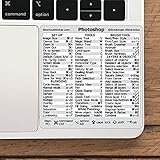
- 💻 ✔️ EVERY ESSENTIAL SHORTCUT - With the SYNERLOGIC Reference Keyboard Shortcut Sticker, you have the most important shortcuts conveniently placed right in front of you. Easily learn new shortcuts and always be able to quickly lookup commands without the need to “Google” it.
- 💻 ✔️ Work FASTER and SMARTER - Quick tips at your fingertips! This tool makes it easy to learn how to use your computer much faster and makes your workflow increase exponentially. It’s perfect for any age or skill level, students or seniors, at home, or in the office.
- 💻 ✔️ QUALITY GUARANTEE - We stand behind our product! It’s made with outstanding military-grade durable vinyl and the professional design gives our stickers an OEM appearance. Our responsive and dedicated customer service team is here to promptly respond to your messages and resolve any issues you may have.
- 💻 ✔️ From BASIC to ADVANCED - Whether you are a seasoned computer professional or a beginner, the SYNERLOGIC Sticker will save you both time and frustration, guaranteed! You can easily reach a new level of computer proficiency using our convenient and affordable sticker.
- 💻 ✔️ Cross-platform compatibility. The sticker is specially designed to work for both PC and Mac computer keyboards.
14. git restore: restore file contents or unstage
git restore focuses on file contents and does not move the current branch tip.
git restore README.md                 # discard unstaged edits to this file
git restore --staged README.md        # unstage it, keeping working-tree edits
git restore --source=HEAD~1 -- README.md
The first example can permanently discard uncommitted edits to README.md. Inspect with git status or git diff first, and do not use it as a casual undo button. The second example is safer when your goal is only to remove a file from the next commit while preserving its contents.
15. git reset: move history or reset the index
reset can move HEAD, change the staging area, and—depending on its mode—change the working tree.
git reset HEAD~1          # move the branch back; keep changes unstaged
git reset --soft HEAD~1   # move the branch back; keep changes staged
git reset --hard HEAD~1   # move the branch and working tree
The first two forms can be useful for revising a local, unpublished commit. git reset --hard is destructive: it can discard uncommitted changes and moves the branch tip. Confirm the target with git log, check git status, and preserve important work before using it. Do not present it as a routine undo command.
16. git revert: undo a published commit safely
git revert creates a new commit that reverses the changes introduced by an existing commit:
git revert <commit>Because it preserves the existing history and records the reversal, revert is generally the safer choice for a commit already pushed to a shared branch. Follow the project’s review and branch-protection rules. If the reversal conflicts with later work, resolve the files, stage them, and complete the revert as Git instructs.
Reset vs. restore vs. revert
| Command | What it changes | Typical use | History effect |
|---|---|---|---|
git restore |
Working-tree files, or the index with --staged |
Discard local file edits or unstage a file | Does not move the branch tip |
git reset |
HEAD, index, and optionally working tree |
Rework local commits or unstage changes | Can move the branch tip and rewrite local history |
git revert |
Creates inverse changes in a new commit | Undo a commit that may already be shared | Preserves the existing commits |
If the change is already public, start by considering git revert. If you are only trying to unstage a file, use git restore --staged. If you are considering reset --hard, stop and verify that the work you would remove is not needed.
PC Slower Than It Used to Be?
A free scan shows the junk files, broken settings and background clutter dragging Windows down - then fixes them in one click.Free scan · Windows 10 & 11Crashes, No Sound, or Screen Glitches?
Random freezes, missing sound and display glitches usually trace back to one bad driver. Find and replace yours safely.Free scan · under a minute17. git fetch: download remote updates without integrating
git fetch downloads objects and references from a remote and updates remote-tracking references. It does not merge those changes into your current local branch.
git fetch origin
git log --oneline HEAD..origin/main
This is the cautious way to inspect what is available remotely before choosing whether to merge or rebase. The HEAD..origin/main range shows commits reachable from origin/main that are not reachable from your current HEAD. GitHub explains the difference between fetching remote information and pulling it into the current work in its remote repository guide.
18. git pull: fetch and integrate
git pull fetches from a remote and integrates the result into the current branch. In the common workflow, that means fetch followed by merge, although configuration and options can select a different integration policy.
git pull origin main
git pull --rebase origin main
Before pulling, commit, stash, or otherwise safely preserve local work. A pull can produce conflicts. If your team prefers a particular policy, make that policy explicit rather than assuming every git pull behaves identically.
Best Value
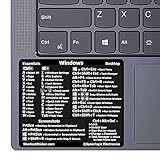
- 💻✔️ EVERY ESSENTIAL SHORTCUT - With the SYNERLOGIC Windows Reference Keyboard Shortcut Sticker, you have the most important shortcuts conveniently placed right in front of you. Easily learn new shortcuts and always be able to quickly lookup commands without the need to “Google” it.
- 💻✔️ Work FASTER and SMARTER - Quick tips at your fingertips! This tool makes it easy to learn how to use your computer much faster and makes your workflow increase exponentially. It’s perfect for any age or skill level, students or seniors, at home, or in the office.
- 💻 ✔️ New adhesive – stronger hold. It may leave a light residue when removed, but this wipes off easily with a soft cloth and warm, soapy water. Fewer air bubbles – for the smoothest finish, don’t peel off the entire backing at once. Instead, fold back a small section, line it up, and press gradually as you peel more. The “peel-and-stick-all-at-once” method only works for thin decals, not for stickers like ours.
- 💻✔️ Compatible with Windows 10 AND 11.
- ⚠️📐 STICKER SIZE - This sticker measures 3" wide and 2.5" tall and designed to fit 14" and smaller laptops. We have a larger sticker (for 15.6" and up) in our store as well.
19. git push: publish local work
push updates references on a remote and transfers the objects needed by that remote.
git push origin main
git push -u origin feature/login
-u establishes upstream tracking for a new branch, so later plain git push and git pull commands can usually infer the remote branch.
Avoid making git push --force part of a normal workflow: it can overwrite remote history. If force-pushing is genuinely required by your team’s workflow, investigate whether --force-with-lease is appropriate and coordinate with anyone using the branch.
20. git tag: mark releases and other milestones
Tags give important revisions stable names, commonly for releases.
Recommended Free Tools
git tag                              # list local tags
git tag v1.0.0                       # create a lightweight tag
git tag -a v1.0.0 -m "Release 1.0.0"  # create an annotated tag
git push origin v1.0.0               # publish one tag
A tag created locally is not automatically published. To publish all local tags, use this only when that is the intended workflow:
git push origin --tagsUse a consistent naming policy and confirm the tag points to the intended commit before publishing it.
A practical beginner Git workflow
For an existing remote repository, this is a compact feature-branch workflow:
git clone <url>
cd <repo>
git status
git switch -c feature/example
# edit files
git diff
git add <file>
git diff --cached
git commit -m "Describe the change"
git push -u origin feature/example
After the branch is pushed, open the project’s normal review or merge process. If you are starting locally instead, replace the clone step with mkdir, cd, and git init, then configure your identity, add files, and make the first commit.
Recovery and safety checklist
- Before staging: run
git statusand inspect changes withgit diff. - Before committing: run
git diff --cachedso you know exactly what the commit contains. - Before pulling, merging, or rebasing: commit or safely preserve local work.
- When conflicts occur: resolve the files, run
git add <resolved-file>, then use the operation’s continuation command—or abort withgit merge --abortorgit rebase --abortwhen appropriate. - For a shared commit that needs undoing: prefer
git revert <commit>over rewriting published history. - For uncommitted edits: treat
git restoreandgit reset --hardas potentially irreversible. Inspect first and preserve important work. - For untracked files: remember that
git cleanis outside this 20-command list but can remove untracked files. Preview withgit clean -n; the official manual notes that actual cleaning normally requires-f. Never use it casually. - For force-pushes: avoid
--forceon shared branches; coordinate with collaborators and consider--force-with-leaseonly when necessary.
For canonical syntax and the full set of options, use the official Git command reference. The online edition of Pro Git is free, while readers who prefer paper can look for a print copy of Pro Git as an optional Git command-line reference book.
Frequently Asked Questions
Should I use git init or git clone?
Use git init for a project that exists locally without a repository. Use git clone when a remote repository already exists and you want a local copy with its history and remote configuration.
What is the safest way to undo a commit?
For a commit already shared with others, use git revert <commit>; it creates a new inverse commit. For a private local commit, git reset may be appropriate, but its modes have different effects and --hard can discard work.
Why does git commit -am not include my new file?
The -a option automatically stages modifications and deletions of files Git already tracks. It does not stage untracked files. Run git add <new-file> first.
Quick wins for a faster PC:
Fix the driver behind crashes, sound loss and screen glitchesFind Drivers →Repair Windows errors before they cause bigger problemsFix Now →Scan for outdated or missing drivers - takes under a minuteDriver Scan →Does git fetch change my current files?
Normally, no. git fetch downloads remote objects and updates remote-tracking references without integrating them into your current branch. git pull fetches and then integrates according to the selected merge or rebase policy.
The Bottom Line
The safest everyday pattern is status, diff, add, diff --cached, commit, then push. Use fetch when you want to inspect remote work before integrating it, use revert for undoing shared history, and pause before commands that can discard files or rewrite commits.
Quick Recap
Product prices and availability are accurate as of the date/time indicated and are subject to change. Any price and availability information displayed on Amazon at the time of purchase will apply.

