
iTechGuides is reader-supported. When you buy through links on our site, we may earn an affiliate commission. As an Amazon Associate I earn from qualifying purchases. Learn more
Four older processors—the AMD Ryzen 5 3600, Intel Core i7-8700K, Intel Core i7-4790K, and Intel Xeon E5-2670 v1—can still have a purpose in 2026, but none is automatically a good buy just because the CPU is inexpensive. Their value depends on the work you want to do, the compatible motherboard and memory you already own, operating-system support, and the cost of running the complete system.
The practical distinction is simple: an older CPU you already own may be worth reusing, while buying one now requires checking the entire platform. The four processors suit different situations; the recommendations below are use-case guidance, not universal benchmark results.
Which of the four CPUs fits your use?
| Processor | Best-fit role | Most important qualification |
|---|---|---|
| AMD Ryzen 5 3600 | Budget desktop or gaming system | Confirm the exact motherboard and BIOS support before reusing or buying a board; the available evidence does not establish current AMD specifications or compatibility for a particular board. |
| Intel Core i7-8700K | Multitasking and more heavily threaded desktop work | It uses LGA1151, but requires a 300-series chipset board; the socket name alone does not establish compatibility. |
| Intel Core i7-4790K | Giving an existing older system a second life | Historical Windows 10 compatibility does not prove that the system receives current security servicing. |
| Intel Xeon E5-2670 v1 | Experimentation or homelab tasks | Evaluate the exact platform and whole-system power draw; a low used-CPU price can be outweighed by platform and operating costs. |
These roles reflect the recommendations in How-To Geek’s September 27, 2026 article, rather than a controlled comparison of the processors. It gives game-performance examples for the i7-4790K and approximate used-market prices for the Ryzen 5 3600 and Xeon E5-2670 v1, but those are dated article-specific observations—not independently verified current prices or reproducible performance guarantees. [How-To Geek’s article]
What to check before buying or reusing one
Verify the motherboard and BIOS
Start with the motherboard’s exact model and its manufacturer’s CPU support list. Check the socket, chipset, supported processor revisions, and minimum BIOS version; a processor fitting the socket does not ensure the board can run it. Intel specifically says 8th-generation desktop Core processors such as the i7-8700K use LGA1151 and require a 300-series chipset board. An older LGA1151 board is not compatible simply because the socket label matches. See Intel’s desktop processor guidance and the board maker’s support page.
#1 Best Overall

- Get ultra-efficient with Intel Core Ultra desktop processors that improve both performance and efficiency so your PC can run cooler, quieter, and quicker.
- Core and Threads 24 cores (8 P-cores plus 16 E-cores) and 24 threads. Integrated Intel Graphics included
- Performance Hybrid Architecture Integrates two core microarchitectures, prioritizing and distributing workloads to optimize performance
- Performance Unlocked Up to 5.7 GHz unlocked. 40MB Cache
- Compatibility Compatible with Intel 800 series chipset-based motherboards
Price the complete platform, not just the chip
Include the motherboard, memory, cooler, and any other parts you would need to make a working system. This matters especially when considering an older Xeon platform: the CPU’s second-hand price says little about the cost of a compatible board or the value of the finished machine. For a system intended to run continuously, measure the complete system at the wall with an electricity monitor and estimate its operating cost using your electricity rate. Processor TDP is not a measurement of whole-system power consumption.
Check Windows eligibility separately from processor capability
Intel’s guidance says 8th-generation Core processors and newer support Windows 11, but that does not establish that a complete PC is eligible. Microsoft’s minimum requirements apply to the system, so use Microsoft’s PC Health Check rather than relying on the CPU name alone. Intel’s Windows 11 compatibility guidance points readers to that whole-PC check.
Rank #2

- Game without compromise. Play harder and work smarter with Intel Core 14th Gen processors
- 24 cores (8 P-cores plus 16 E-cores) and 32 threads. Integrated Intel UHD Graphics 770 included
- Leading max clock speed of up to 6.0 GHz gives you smoother game play, higher frame rates, and rapid responsiveness
- Compatible with Intel 600-series (with potential BIOS update) or 700-series chipset-based motherboards
- DDR4 and DDR5 platform support cuts your load times and gives you the space to run the most demanding games
Older operating-system compatibility is not a promise of current security updates. Intel’s historical table lists Haswell processors such as the i7-4790K as compatible with 64-bit Windows 10 and places Sandy Bridge processors such as the E5-2670 v1 in an unsupported group. That table does not establish what security servicing is available now. Check Intel’s processor compatibility table for its stated context, and consult Microsoft’s current servicing terms before choosing an operating system for a machine that will connect to the internet.
Free tools Windows power users keep installed
One-click scans. No signup required.
When is an old CPU worth keeping, and when should you pass?
Reuse is easiest when the compatible system is already yours
If you already have a working motherboard, memory, and cooler, repurposing one of these CPUs can avoid replacing parts that still meet your needs. The i7-4790K is most compelling in that situation: reusing an existing PC is a different decision from paying to assemble a complete system around an older platform. Consider the software you intend to run and its operating-system requirements before putting the machine back into regular service.
Rank #3
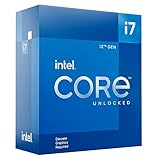
- Intel Core i7 3.60 GHz processor offers more cache space and the hyper-threading architecture delivers high performance for demanding applications with better onboard graphics and faster turbo boost
- The Socket LGA-1700 socket allows processor to be placed on the PCB without soldering
- 11 MB L2 and 25 MB L3 cache offers supreme performance for computation intensive apps
- Intel 7 Architecture enables improved performance per watt and micro architecture makes it power-efficient
Buying makes sense only after the platform checks out
A Ryzen 5 3600 or i7-8700K may be a candidate for a budget desktop if you can obtain a compatible, working platform at a sensible total cost. Neither label guarantees a particular frame rate or workload result. Gaming performance depends on the game, graphics card, settings, memory, and—where relevant—whether the processor is overclocked. The available article’s examples do not provide a reproducible test setup for generalizing performance.
The Xeon E5-2670 v1 is a more specialized choice for a homelab or experiments than a default low-cost desktop recommendation. Its appeal depends on the specific work and platform you have in mind; measure the finished system’s power if it will stay on for long periods. Intel’s Xeon socket information also underscores that platform support is specific, so do not treat Xeon families or sockets as interchangeable: Intel Xeon socket guidance.
Quick Recap
Rank #4

- Next‑Gen Platform Support: Compatible with Intel 800 Series Chipset‑based motherboards with LGA1851 Socket enabling PCIe 5.0/4.0 and high‑speed DDR5 memory (up to 7200 MT/s).
- High‑Performance Core Configuration: Features up to 24 cores (8 P‑cores + 16 E‑cores) for demanding gaming and creator
- Ultra‑Fast Boost Clocks: Reaches up to 5.5 GHz max turbo frequency for top‑tier responsiveness and performance
- Built for Enthusiasts: Unlocked for performance tuning when paired with Intel Z‑series chipsets, making it ideal for overclockers and power users.
- Robust Power & Thermal Design: Engineered with 125W base power and 250W max turbo power to sustain high‑intensity
A quick decision checklist
- Identify the exact motherboard and confirm the CPU appears on its support list.
- Verify socket, chipset, and required BIOS version before purchasing.
- Work out the cost of the whole system, including needed memory and cooling.
- Check whole-PC Windows 11 eligibility with PC Health Check; do not infer it from the processor alone.
- For an older operating system, verify current security servicing rather than treating historical compatibility as a guarantee.
- If the PC will run continuously, measure system-level power and account for electricity cost.
Product prices and availability are accurate as of the date/time indicated and are subject to change. Any price and availability information displayed on Amazon at the time of purchase will apply.

