
The Tool Desk
Outbyte Driver Updater FREEFix the driver behind crashes, sound loss and screen glitchesFind Drivers →Outbyte PC Repair FREERepair Windows errors before they cause bigger problemsFix Now →iTechGuides is reader-supported. When you buy through links on our site, we may earn an affiliate commission. As an Amazon Associate I earn from qualifying purchases. Learn more
Loyalty platforms can help a business organize rewards, member activity, offers and customer communications—but they cannot guarantee repeat purchases. Their value depends on whether customers understand the benefit, find the program easy to use and receive rewards the business can afford. To judge a program fairly, measure active behavior and economics, not sign-ups alone.
How loyalty platforms can support retention
A loyalty platform provides tools to define program rules, enroll and manage members, record activity, issue rewards and coordinate communications. Depending on the product and configuration, it may support points, vouchers, tiers, promotions, referrals, partner offers and connections to CRM, commerce or marketing systems.
Those capabilities can support retention through several mechanisms:
- Rewards give customers a reason to return. Points or vouchers can make a future purchase more appealing, provided the reward is attainable and worthwhile.
- Tiers and recognition make continued engagement visible. Progress toward a status or benefit can encourage participation, but only if customers value what the tier offers.
- Relevant offers can make outreach more useful. Member data and segmentation may help teams tailor communications; irrelevant or excessive messages can instead become a burden.
- Referrals can turn satisfied members into recommenders. This depends on genuine customer satisfaction and clear referral rules.
- Integrations help teams coordinate experiences. Connecting loyalty activity with channels such as ecommerce, CRM or point of sale can make earning and redemption more consistent, subject to the specific integration and implementation.
For example, Salesforce describes Loyalty Management for B2B and B2C programs, with member and program management, promotions, partner management, vouchers and integrations. Antavo describes configurable currencies, tiers, workflows, challenges, referrals, point-of-sale recognition, digital wallets and segmentation. Yotpo describes ecommerce-oriented rewards, earning rules, VIP tiers, referrals and omnichannel engagement. These are vendors’ descriptions of their own products, not independent evidence of comparative performance: Salesforce Loyalty Management, Salesforce help documentation, Antavo platform and Yotpo Loyalty.
#1 Best Overall
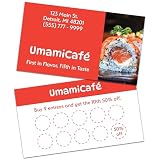
- CUSTOM LOYALTY PUNCH CARDS – Create personalized loyalty cards for your business by adding your logo, custom text, and reward details. Perfect for cafés, restaurants, salons, retail shops, and small businesses.
- DESIGN YOUR OWN – Upload your business logo, enter your address and contact details, and customize the layout to match your brand. Easily create professional customer reward cards in minutes.
- CUSTOM PUNCH OPTIONS – Choose the number of punch spots to fit your loyalty program, whether it’s buy-one-get-one, visit rewards, or repeat-customer incentives.
- FLEXIBLE QUANTITIES – Available in quantities from 50 to 10,000 loyalty cards, making it easy to order for small shops or multi-location businesses.
- STANDARD CARD SIZE – Each loyalty card measures 2" x 3.5", the classic wallet-friendly size customers can easily carry and reuse.
What the available retention evidence does—and does not—show
Salesforce’s 2026 guide reports that 77% of shoppers belong to at least one loyalty program, while 35% belong to a program they have never used. It also says 84% of loyalty-program members report that programs make them more likely to repurchase. These are reported participation and intent findings, not proof that a platform caused additional purchases or retention: Salesforce, The new loyalty landscape.
In a Salesforce report about 2024 holiday shopping, 72% of U.S. shoppers surveyed said loyalty programs make them more likely to continue doing business with brands. That is a survey response, not a controlled test of software impact: Salesforce holiday shopping report.
A Mastercard-commissioned Forrester Consulting study conducted in January 2024 among 210 loyalty-program management decision-makers found that 47% of loyalty leaders, compared with 31% of less mature organizations, reported year-over-year customer-retention performance. This is an association reported in commissioned survey research; it does not establish that platform adoption caused the difference: Forrester Consulting study commissioned by Mastercard.
What’s actually slowing this PC down?
Pick the symptom - the matching free tool is one click away.
Together, these findings suggest that loyalty is widely used and that members often report positive intentions. They do not establish a representative causal retention lift for buying a loyalty platform. The cited evidence is vendor research or vendor-commissioned research, rather than an independent controlled comparison of platforms.
Rank #2
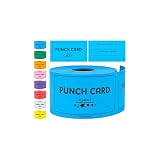
- MULTIPURPOSE REWARD CARDS – These punch cards can be used for all types of incentive and loyalty rewards for business, dental office, grooming, hair salon, medical doctor, nail salon and more.
- LARGE QUANTITY & PERFECT SIZE – Each pack contains 250 beautiful reward cards. Each card is 3.5” x 2”, standard business card size.
- BRIGHT & VIBRANT COLORS – Carewon premium, colored reward cards come in a wide variety of brilliant colors including blue, green, orange, pink, purple, red, white, and yellow. All to match your individual office, event, season or holiday theme.
- WRITABLE SURFACE & EASY TO PUNCH – You’ll find the punch cards have 10 punch hole locations and space for writing names and reward.
- SIMPLE & MODERN DESIGN – Everyone will love the fun, minimalistic design. Your selected colors will make your loyalty/incentive program more memorable. Our premium appointment cards are a must have for your business.
Design the program to be easy to understand and use
Software features do not remove friction by themselves. Salesforce Research reports that consumers would use rewards more if retailers applied rewards automatically (61%), made rewards easier to track (51%) or simplified terms and conditions (41%). The publication date of the page reporting these figures is not stated, so treat them as undated survey findings rather than current benchmarks: Salesforce retail loyalty article.
Make the value clear at sign-up
Explain what members receive, how they earn it and when they can use it. Keep enrollment straightforward and avoid presenting a complicated rule set before customers can see the benefit.
Reduce earning and redemption effort
Where possible, make progress visible and apply eligible benefits without requiring customers to search for them or perform unnecessary steps. Ensure the platform’s actual customer-facing flows match the promised simplicity.
Do these 3 things before closing this tab:
1Repair Windows errors before they cause bigger problems2Scan for outdated or missing drivers - takes under a minute3Clear out junk files and repair common Windows errorsReward relevant activity
Purchase rewards are not the only option. Salesforce documentation describes promotions and games that can reward purchase and non-purchase activities; Antavo describes challenges, surveys and referrals. Select actions that make sense for the business model and customers rather than adding mechanics for their own sake.
Rank #3

- ✅PROFESSIONAL REWARD SYSTEM: 10-punch loyalty card designed to help businesses track customer visits and build repeat clientele through incentive programs
- ✅BUSINESS CARD SIZE: Standard 2 x 3.5 inch dimensions fit perfectly in wallets, card holders, and cash registers for convenient storage and access
- ✅QUANTITY: Includes 50 cards per pack, providing ample supply for small to medium-sized businesses to launch or maintain their loyalty program
Match the program to the business model
A B2B incentive program, ecommerce points scheme, partner program and in-store experience have different members, earning events, service needs and measures. Define those requirements before comparing software, and check current product editions, integration details and implementation constraints directly with vendors.
What to compare when evaluating loyalty software
Use the following criteria to build a shortlist. They are comparison axes, not a ranking of the example products.
| Criterion | What to check |
|---|---|
| Program type | Support for B2C, B2B, partner or channel incentives, subscription clubs, or multiple models. |
| Reward mechanics | Points, vouchers, tiers, custom currencies, experiences, referral incentives and non-purchase engagement. |
| Channels and integrations | Coverage for CRM, marketing, commerce, point of sale, mobile apps and digital wallets; confirm the exact integration and implementation requirements. |
| Flexibility and administration | Whether business teams can configure rules and journeys, and what governance or technical work that flexibility requires. |
| Measurement | Ability to analyze member behavior, service experience, program economics and outstanding points liability. |
| Privacy and data controls | How the program handles consent, access, deletion, export, archiving, retention and processing restrictions. |
The reviewed vendor materials do not establish comparable current prices, total cost of ownership, independent product scores or implementation durations. Request details for the relevant edition and your systems before making a decision.
Free tools Windows power users keep installed
One-click scans. No signup required.
Plan customer-data governance
Loyalty programs collect and use customer data, so privacy controls belong in the program design and operating model—not just in the software checklist. Salesforce documentation identifies decisions businesses should make about deleting, exporting, archiving and restricting access to loyalty data, managing consent, and restricting processing. Define who can access member information, how requests are handled and how records are retained or removed under the requirements that apply to your business: Salesforce loyalty data-protection considerations.
Rank #4

- CUSTOM LOYALTY PUNCH CARDS – Create personalized loyalty cards for your business by adding your logo, custom text, and reward details. Perfect for cafés, restaurants, salons, retail shops, and small businesses.
- DESIGN YOUR OWN – Upload your business logo, enter your address and contact details, and customize the layout to match your brand. Easily create professional customer reward cards in minutes.
- CUSTOM PUNCH OPTIONS – Choose the number of punch spots to fit your loyalty program, whether it’s buy-one-get-one, visit rewards, or repeat-customer incentives.
- FLEXIBLE QUANTITIES – Available in quantities from 50 to 10,000 loyalty cards, making it easy to order for small shops or multi-location businesses.
- STANDARD CARD SIZE – Each loyalty card measures 2" x 3.5", the classic wallet-friendly size customers can easily carry and reuse.
Measure retention and program value
Enrollment counts show reach, not whether members return or whether the program pays for itself. Track a set of measures that covers behavior, experience and costs:
- Participation: enrollment alongside the share of members who are active over a defined period.
- Repeat behavior: repeat purchase or renewal patterns and member inactivity, using time periods suited to the business’s normal buying cycle.
- Program use: earning and redemption activity, plus referral activity where referrals are part of the design.
- Customer experience: member service satisfaction and the effort required to understand, earn and redeem rewards.
- Economics: reward expense, discount or margin effects, partner costs, points liability and operational or service burden.
Salesforce’s loyalty KPI documentation includes “Member Services CSAT” and “Points Contribution to Liability” among its metrics: Salesforce loyalty KPI documentation.
Interpret member-versus-non-member comparisons cautiously: customers who choose to join may already differ from those who do not. Where feasible, use a suitable baseline or experiment to estimate incremental effects. There is no single evaluation method prescribed by the sources cited here; the design should fit the business, its data and the question being tested.
Quick Recap
Product prices and availability are accurate as of the date/time indicated and are subject to change. Any price and availability information displayed on Amazon at the time of purchase will apply.

