
Free tools Windows power users keep installed
One-click scans. No signup required.
iTechGuides is reader-supported. When you buy through links on our site, we may earn an affiliate commission. As an Amazon Associate I earn from qualifying purchases. Learn more
The easiest way to make privileged access safer is to reduce unnecessary access first, then add controls in stages: identify privileged accounts and actions, separate administration from everyday work, remove standing rights that are no longer needed, and use time-limited elevation where it fits. Secure the remaining access, log its use, and test that the controls work. A PAM platform can help manage this program, but purchasing one is not the program.
What does a practical PAM implementation cover?
Privileged access management (PAM) is the set of controls for administering accounts and functions that can make high-impact changes or expose sensitive information. NIST describes least privilege as allowing only access necessary for assigned work, reviewing privileges, and removing or reassigning rights when they are no longer needed. Its SP 800-171 Rev. 3 applies to protecting controlled unclassified information in nonfederal systems; it is useful control guidance, not a universal mandate for every organization. NIST SP 800-171 Rev. 3
A practical program therefore combines identity and authorization decisions with credential protection and visibility into privileged activity. CISA describes PAM capabilities that can manage access and log or alert on privileged-account use. The right mix depends on the systems, identities, and assurance requirements in scope; a vault alone or a just-in-time (JIT) feature alone does not address every part of the problem.
How do I implement privileged access management?
1. Inventory privileged identities and functions
Start with your own identity, asset, and configuration records rather than assuming every environment has the same account types. Identify human administrator accounts, service and system accounts, privileged roles in cloud identity platforms, and the functions that can change security settings or expose sensitive information.
#1 Best Overall
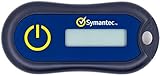
- Standard OATH compliant TOTP token (time based)
- 6-digit OTP code with countdown time bar
- Zero footprint: no need for the end user to install any software
- Secure, sturdy, and long-life hardware design
- Easy to use - Portable key chain design. These tokens will only work with Symantec VIP Access. These tokens will not work for any other Multi-Factor Authentication services, besides Symantec VIP Access.
Include what an account can do, not only whether it is labeled “admin.” NIST examples of privileged functions include establishing system accounts, applying patches, changing configurations, and managing cryptographic keys. Map the identities to the systems and duties they support so the scope is useful for later access reviews.
2. Separate routine work from administration
Give users standard accounts for everyday tasks and designated administrator accounts for administrative work. CISA recommends separate administrator accounts and auditing standard accounts and directory permissions. Keep each administrative account limited to the systems and duties that justify its privileges. CISA red-team findings
Rank #2

- POWERFUL SECURITY KEY: The Security Key C NFC is the essential physical passkey for protecting your digital life from phishing attacks. It ensures only you can access your accounts.
- WORKS WITH 1000+ ACCOUNTS: Compatible with Google, Microsoft, and Apple. A single Security Key C NFC secures 100 of your favorite accounts, including email, password managers, and more.
- FAST & CONVENIENT LOGIN: Plug in your Security Key C NFC via USB-C and tap it, or tap it against your phone (NFC) to authenticate. No batteries, no internet connection, and no extra fees required.
- TRUSTED PASSKEY TECHNOLOGY: Uses the latest passkey standards (FIDO2/WebAuthn & FIDO U2F) but does not support One-Time Passwords. For complex needs, check out the YubiKey 5 Series.
- BUILT TO LAST: Made from tough, waterproof, and crush-resistant materials. Manufactured in Sweden and programmed in the USA with the highest security standards.
3. Remove excess standing privileges
Review who holds administrative roles, what those roles permit, and why each assignment is still needed. Remove or reassign rights that no longer match a person’s duties. For cloud environments, CISA and NSA recommend limiting permanent privileged assignments and periodically reviewing entitlements. CISA and NSA misconfiguration guidance
4. Add time-limited elevation where it fits
JIT access makes elevated rights available only when needed and for a limited period. A request-and-approval workflow can enable access for a defined timeframe; cloud implementations may use per-session federated claims or PAM tools. Microsoft also describes JIT workflows as limiting privilege use to authorized users during the period it is needed. Microsoft privileged-access guidance
Rank #3

- OTP token that provides secure remote access with strong authentication
- Easy to use and easy to carry
- Expected battery life is approximately 7 years
JIT is a design choice, not a switch to apply uniformly. It depends on identity, authorization, and operational integration. Decide how access is requested and approved, how long it lasts, and how urgent work will proceed without turning emergency access into routine standing privilege.
5. Protect credentials and authenticate privileged users
Use strong authentication for privileged access and protect any credentials that must be stored or brokered. CISA’s CDM capability document describes a secrets vault brokering access to target devices that cannot accept PIV authentication directly, and calls for strong, hardware-based authentication to the PAM console. These are capability requirements in a government reference, not automatically legal requirements for every organization. Confirm the rules and technical constraints that apply to your environment. CISA CDM Technical Capabilities Volume 2
Rank #4

- Works with authentication systems that support TOTP tokens: Google, Facebook, Coinbase, GDAX, Dropbox, GitHub, Kickstarter, Microsoft, TeamViewer, etc.
- Programmable an unlimited number of times. Features syncable clock to prevent issues with drift
- About half the size of a credit card and just as thick-easily keep multiple cards in wallet
- Works with "Token2 Token Burner" or "Protectimus TOTP Burner", both available in the Google Play Store. Now also iOS compatible (iPhone 7 and later)
- More secure than software token as your codes cannot be intercepted by malware on your phone.
6. Log, monitor, and review privileged activity
Record privileged functions and make the resulting events useful for detection and review. NIST calls for logging the execution of privileged functions. CISA describes PAM tools as capable of logging and alerting on privileged-account use, and warns that password vaults are high-value assets that warrant additional restrictions and monitoring. Set a review cadence in line with your risk and policy; there is no single organization-independent interval established here. NIST SP 800-171 Rev. 3 CISA red-team findings
Recommended Free Tools
7. Test the controls and keep evidence
Check that access restrictions, authentication, and logging behave as intended, and retain evidence that supports those checks. NIST SP 800-171A Rev. 3 identifies examination of access-control procedures, privileged-account and administrator lists, audit records, configuration settings, and the system security plan, as well as interviews and tests of mechanisms. A useful evidence set includes the documented policy, authorized-role lists, relevant settings, access logs, and test results. NIST SP 800-171A Rev. 3
Best Value

- ✅ PROTECT ONLINE ACCOUNTS – A password manager, two-factor security key, and secure communication token in one, OnlyKey can keep your accounts safe even if your computer or a website is compromised. OnlyKey is open source, verified, and trustworthy.
- ✅ UNIVERSALLY SUPPORTED – Works with all websites including Twitter, Facebook, GitHub, and Google. Onlykey supports multiple methods of two-factor authentication including FIDO2 / U2F, Yubico OTP, TOTP, Challenge-response.
- ✅ PORTABLE PROTECTION – Extremely durable, waterproof, and tamper resistant design allows you to take your OnlyKey with you everywhere.
- ✅ PIN PROTECTED – The PIN used to unlock OnlyKey is entered directly on it. This means that if this device is stolen, data remains secure, after 10 failed attempts to unlock all data is securely erased.
- ✅ EASY LOG IN –No need to remember multiple passwords because by plugging OnlyKey to your computer, it automatically inputs your username and password. It works with Windows, Mac OS, Linux, or Chromebook, just press a button to login securely!
Do we need a password vault or just-in-time access?
These controls address different problems and can be combined. A vault can protect or broker credentials for systems that cannot use your preferred authenticator directly; JIT changes when elevated authorization is available. Some environments need both, while others may use direct strong authentication for their targets and focus first on reducing standing role assignments.
| Approach | What it changes | Best fit to assess |
|---|---|---|
| Standing role | Privilege remains assigned until it is removed or changed. | Whether the role is narrowly scoped, justified, and reviewed. |
| Approval-based JIT | Elevated access is enabled for an approved, limited timeframe. | Whether the request, approval, expiry, and urgent-work paths fit operations. |
| Per-session or federated elevation | Privilege is associated with a session or federated claim rather than a permanent assignment. | Whether identity and target systems support the required integration. |
| Credential vaulting | Secrets are stored or brokered for access to targets, including some legacy systems. | Whether targets can accept direct strong authentication and how the vault itself will be restricted and monitored. |
Evaluate any implementation across its coverage (cloud roles, directories, servers, network devices, applications, and service identities), authentication and credential handling, logs and alerting, operational fit, and applicable assurance requirements. Government or sector rules may specify controls such as PIV or hardware authenticators; do not assume the same requirement applies to every organization.
How can we make the rollout workable?
Reduce risk in a sequence that does not make every administrative task wait on a new workflow from day one. Begin with an inventory and a focused review of high-impact access. Separate everyday and administrative accounts, remove clearly unnecessary assignments, and then introduce time-limited elevation for systems where identity and operational processes can support it. Expand coverage as you validate each change.
Quick wins for a faster PC:
Repair Windows errors before they cause bigger problemsFix Now →Scan for outdated or missing drivers - takes under a minuteDriver Scan →Clear out junk files and repair common Windows errorsFree Scan →- Prioritize roles and functions that can alter security settings, create accounts, or reach sensitive information.
- Preserve a defined path for urgent work while limiting its scope and recording its use.
- Check that role and entitlement data stay current as people change jobs and systems change.
- Review whether the logging you collect captures the privileged actions your policy intends to monitor.
- Restrict and monitor the PAM console and any credential vault as sensitive control points.
The sequence is a practical starting point, not a claim that every organization can deploy JIT or vaulting in the same way. CISA’s advice to consider PAM is a recommendation to manage privileged accounts and resources, not evidence that a particular product or architecture is sufficient by itself. CISA red-team findings
Quick Recap
Product prices and availability are accurate as of the date/time indicated and are subject to change. Any price and availability information displayed on Amazon at the time of purchase will apply.

