
Free tools Windows power users keep installed
One-click scans. No signup required.
iTechGuides is reader-supported. When you buy through links on our site, we may earn an affiliate commission. As an Amazon Associate I earn from qualifying purchases. Learn more
There is no objectively established winner for the most technically impressive useless thing anyone has built. The question comes from a developer-community prompt, and its examples range from playful web experiments to custom hardware. In this context, “useless” usually means that few people besides the maker needed the result—not that the project failed or taught nothing.
What makes a project “useless”?
In Ravi’s DEV Community post, the label covers several different situations: a tool that solves only its creator’s problem, a duplicate of something an existing product handles better, an automation for a rarely performed task, or a build undertaken simply because the idea sounded fun. A hobby project does not need a market. The important distinction is between enjoying the process and claiming that other people need the finished product.
That distinction also explains why “useless” is not the same as “unsuccessful.” A project may work exactly as intended, be valuable to its maker, and still have little or no audience.
What kinds of technically impressive projects have people shared?
The examples in the DEV discussion are individual accounts, not a ranked or independently tested set of projects. They also span such different kinds of work that a single winner would be arbitrary.
#1 Best Overall

- BUILD BREADBOARD CIRCUITS AND MINI PROJECTS - Create LED indicators, button inputs, traffic-light sequences, light-activated circuits, RGB effects and buzzer alarms for electronics practice, classroom demonstrations and maker projects
- 235 PARTS FOR REPEATABLE EXPERIMENTS - Includes a 400-tie-point solderless breadboard, power module, jumper wires, Dupont wires, potentiometer, buttons, LEDs, resistors, capacitors, diodes, transistors, buzzers and light-sensitive components
- LEARN HOW CORE COMPONENTS WORK - Use the 74HC595 to expand outputs, the 4N35 optocoupler to explore signal isolation, PN2222 transistors to switch loads and 1N4007 diodes for polarity protection and rectification experiments
- POWER AND REWIRE PROJECTS QUICKLY - Use the breadboard power module for selectable 3.3 V or 5 V rails, while rigid jumpers and female-to-male leads simplify connections; use a suitable 6.5–9 V DC input and do not exceed 9 V
- COMPONENT KIT WITH CLEAR EXPECTATIONS - A controller board, programming cable and wall power adapter are not included; use a compatible microcontroller for coded projects and follow the current tutorial, datasheets and wiring guidance
- Software experiments: commenters described a ray-tracing library written in C with OpenGL optimizations, a tarot-reading web app, a browser test-recording tool, and “Text Goes Boom,” a browser animation whose particles return to their starting positions for another run.
- Large-scale engineering: one commenter described a Rust project as 200,000 lines long, with zero allocation and 2,600 unit tests. Those figures are the commenter’s claims, not independently audited results.
- Custom hardware: in a separate, older Hacker News discussion, a maker described a live-lighting desk with 36 motorized faders, button boards using ATtiny microcontrollers, a BeagleBone Black for the main loop and DMX generation, and a Raspberry Pi configuration interface. The maker reported using it for hundreds of shows, but also said intermittent kernel panics could cause loss of lighting control.
- Personal infrastructure: another Hacker News commenter described a boat-electronics interface connecting older SeaTalk instruments, an AIS radio, GPS, a Raspberry Pi proxy, and an iOS app. The maker said they knew of no other users, despite the system serving their own needs.
These accounts show why adoption alone is a poor measure of a build’s technical ambition or personal value. They do not establish how common such projects are among developers, or whether complexity makes a project more or less likely to find users.
How should you judge “technically impressive”?
The prompt asks what a project did, why nobody used it, and what its maker learned. Those questions are more useful than trying to crown a universal champion. If comparing projects, consider them along distinct axes:
Rank #2
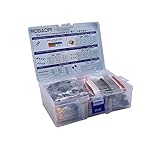
- All products are tested for stability, consistency and reliability,Ensure product excellence
- Save time with this handy box full of the most practical and common electronic components
- Easy to store: Each different component is packaged in a plastic bag, Resistors values are stamped with the according value
- Electronic components set include: diodes, resistors, transistors, LED diodes, electrolytic capacitors, ceramic capacitors
- Electronics component kit: This is a great assortment of components for electronic professionals or enthusiasts
- Technical complexity: What hard engineering, design, or integration problems did the maker solve?
- Originality: Was the project an unusual idea or a new combination of existing components?
- Effort: What time, skills, or unusual implementation choices did it require?
- Execution: Did it work as intended, and what limitations remained?
- Usefulness: Did anyone beyond the maker use it, and did it solve a meaningful problem for them?
- Learning: What did building it teach the maker?
These are practical comparison questions, not a formal scoring system from the discussions. A polished animation, a substantial software project, and a custom lighting desk solve different problems and demand different skills; any ranking depends on what the judge values.
What can a maker learn from a project nobody needs?
Curiosity is a sound reason to build. Ravi puts it plainly: “There is nothing wrong with building for curiosity.” A side project can be worthwhile because it develops a skill, explores an idea, or is enjoyable—even if it never becomes a product.
Rank #3

- All-in-One Electronics & Coding Starter Kit: Learn the fundamentals of electronics, coding, and circuit design with the Horizon Uno board (Arduino-compatible), LEDs, sensors, and specialty components — everything you need to start building.
- Includes Step-by-Step Video Lessons: Gain lifetime access to a full online video course created by robotics engineers. Each lesson walks you through real-world projects, coding examples, and clear explanations designed for beginners. Each kit comes with a unique access code to access on our course website. The course includes lectures, labs, projects and problem sets.
- High-Quality Components for Reliable Learning: Each kit includes premium parts for accurate circuit performance — from durable resistors and sensors to jumper wires and LEDs — ensuring a frustration-free learning experience.
- Perfect for Students, Educators & Hobbyists: Ideal for classrooms, STEM programs, and self-learners. The Horizon Uno Kit makes it easy for beginners to grasp the fundamentals of electricity, coding logic, and microcontroller programming.
- Learn, Build & Innovate with Horizon Robotics Lab: Backed by an experienced team of engineers and educators, Horizon Robotics Lab is dedicated to making robotics and electronics education accessible, inspiring learners to build cool projects and bring ideas to life.
If you do want to know whether a personal project could help other people, Ravi suggests asking:
- Who actually has this problem?
- How are they solving it today?
- Would they change their current process to use my solution?
- Am I building this because it is needed, or simply because I want to build it?
These questions are a way to examine demand, not a rule that every hobby build must be commercialized. The boat interface, for example, could be useful to its maker even without a known audience. Likewise, the lighting desk’s reported use does not make it a broadly adopted product; it shows that a highly customized build can have real value in one person’s work.
Rank #4
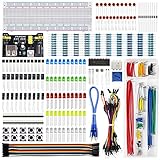
- Highest Cost Components Kit: It comes with more than 400pcs sensors and components for fun and simple electronic projects.
- Safe and Secure Pakcage: Resistors/LED/Transistors and Integrated Circuits are individually packaged and labeled, and well-stored in a sturdy box
- The Breadboard Power Supply come with a USB Power Cables,which is hard to find.
- Datasheet and Tutorial are available to download from our official website or you can contact our customer service.
- Not including the controller board.
So, what is the most technically impressive useless thing?
The discussions do not establish one answer. They offer anecdotes rather than a representative sample, a shared definition of “impressive,” or a common way to measure success. The better answer depends on whether you value ambitious engineering, originality, reliability, personal usefulness, or the lesson learned. A project can be “useless” to almost everyone else and still be a remarkable piece of work for the person who built it.
Quick Recap
Best Value

- 3 Power Options: MT3608 Type-C boost, battery holder, and 9V clip with DC jack. Power breadboard circuits anywhere.
- Dual Breadboards: 830-point for permanent builds, 400-point for quick tests. Never tear down a working project.
- 100+ Components: 60 LEDs + RGB, potentiometers, push buttons, 4 buzzers, rotary encoder, 65 jumper wires, 40 M-M dupont.
- Add-On for Your Arduino, Raspberry Pi, ESP32: 2.54mm headers and 22AWG wires plug into every popular dev board.
- Microcontroller NOT Included: for makers who own a dev board. Pair with your Arduino or ESP32 and start building.
Product prices and availability are accurate as of the date/time indicated and are subject to change. Any price and availability information displayed on Amazon at the time of purchase will apply.

