
Free tools Windows power users keep installed
One-click scans. No signup required.
Lithium-ion batteries have environmental costs at every stage: mining and processing materials, manufacturing cells and packs, using the battery, and managing it when it reaches end of life. Their total impact depends on factors such as chemistry, factory electricity, battery lifetime and what happens to the materials afterward. Recycling can reduce the emissions and mining needs associated with material supply, but it is not impact-free and cannot replace primary mining in the near term.
How to assess a battery’s environmental impact
A fair assessment follows the battery through its full life: raw-material acquisition, materials processing, manufacture, use and final disposition, including reuse and recycling. Results can change depending on whether the study covers a cell, a complete pack, a vehicle or a quantity of energy delivered over the battery’s lifetime. A cradle-to-gate study, for example, does not include use or end-of-life effects.
Comparisons also depend on chemistry, where mining, refining and manufacturing take place, the electricity used at those locations, how long the battery remains useful, and whether end-of-life recycling credits are counted. A single emissions figure should not be treated as representative of every battery or factory.
| Lifecycle stage | Environmental considerations |
|---|---|
| Raw materials and processing | Mining and refining supply the materials used in batteries and can create emissions and other environmental pressures. Impacts depend on the materials and production locations. |
| Cell and pack manufacture | Manufacturing requires energy, so the electricity mix and production location affect its emissions. Cell chemistry and the assessment boundary also matter. |
| Use | The service delivered over the battery’s useful life affects how its manufacturing impacts are spread across use. Repair or repurposing can change the service a battery provides. |
| End of life | Collection, transport, recycling method and actual material recovery all matter. Reuse may be possible, but safety, warranty, remaining life and economics can constrain it. |
How battery impacts compare with those of a petrol or diesel car
The battery has a material footprint within an electric vehicle’s lifecycle, but it is not the largest contributor across the vehicle’s entire lifecycle in the International Energy Agency’s 2024 analysis. For a medium-size battery-electric car, that analysis estimates average lifecycle emissions at half those of an equivalent internal-combustion car globally. This is a global average, not a result guaranteed for every vehicle, battery, electricity grid or location.
Outdated Drivers Are Slowing You Down
One free scan finds every outdated or missing driver and matches the right update for your exact hardware.Free scan · exact hardware matchWindows Errors? Fix Them Before They Spread
Repair common Windows errors and clear accumulated junk for a smoother, more stable PC - no reinstall needed.Free scan · no reinstall#1 Best Overall

- Energizer Double A Lithium batteries are the world's longest lasting AA batteries.
- These AA Energizer batteries power your most critical devices, great for smart home devices, outdoor surveillance systems, digital cameras, Blink outdoor cameras, and handheld games
- An Ultimate Lithium battery can hold power up to 25 years in storage for trustworthy backup energy, so you are always prepared
- Energizer lithium AA batteries are made with leak-proof construction to help protect devices (based on standard use)
- AA lithium batteries can perform in extreme temperatures from -40F to 140°F for year-round, indoor and outdoor use
The comparison is meaningful only when the vehicles and lifecycle boundaries are comparable. Manufacturing emissions are incurred before driving begins, while emissions during use depend in part on the electricity or fuel supply. Battery chemistry, vehicle efficiency, production electricity and the distance and lifetime of use can all affect the result.
What battery recycling can—and cannot—do
Recycling can return useful materials to supply chains and reduce the need for some primary extraction and refining. The IEA’s 2024 analysis reports that recycled lithium, nickel and cobalt have, on average, 80% lower greenhouse-gas emissions than the corresponding primary materials from mining. That figure applies to the materials, not to the full battery lifecycle or the whole battery’s footprint.
Rank #2

- 8 pack of Energizer Ultimate Lithium AA Batteries
- Energizer Ultimate Lithium AA batteries are the world's longest lasting AA batteries
- Performs in extreme temperatures from -40 degrees F to 140 degrees F to ensure reliable use in all seasons
- These double A batteries are leak proof batteries, guaranteed based on standard use
- Lightweight household batteries last up to 25 years in storage
Recycling is not a substitute for new mines and refining. In the IEA’s Announced Pledges Scenario, recycling is projected to reduce new mine development needs by 2050 by 25% for lithium and nickel and 40% for copper and cobalt. These are scenario estimates, not observed outcomes or guaranteed reductions.
Why timing and chemistry affect recycling
Battery deployment has grown faster than the supply of batteries reaching end of life. The IEA’s 2026 analysis says EV and stationary-storage batteries account for around 90% of today’s lithium-ion battery market, and that deployment increased more than sixfold between 2020 and 2025. Batteries put into service recently generally remain in use for years, so end-of-life feedstock arrives later than deployment.
Rank #3

- HIGH-CAPACITY POWER: This rechargeable aa batteries with charger set includes 8 lithium batteries aa, each 1.5V 3600mWh aa lithium batteries offer superior performance, reliability, and delivering long-lasting energy to high-drain devices like remotes, security cameras, wireless toys, and more. No need for separate devices; Perfect for households with battery-powered devices.
- SMART LED DISPLAY: The LED display shows the charging status clearly: Blue light flashing for Lithium battery charging, Blue light solid when battery is fully charged, No light for empty battery slot, and Red light flashing indicates that the battery is defective or non-rechargeable.
- FAST 3-HOUR CHARGING & 8-IN-1 CHARGING CASE: Fully charge all 8 lithium aa batteries in just 3 hours with the 5V/3A charging dock. The charging case also functions as a storage box, keeping your batteries organized and protected.
- LONG-LASTING PERFORMANCE – 2500+ CYCLES & 0V ACTIVATION: Rechargeable aa lithium batteries provide up to 2500+ charge cycles for maximum durability. The 0V Activation technology ensures that even deeply discharged batteries can be safely revived and recharged, giving you extended battery life.
- RELIABLE & SAFE PERFORMANCE: Built-in overcharge, overcurrent, overvoltage, overheat, and short-circuit protection ensures safe, stable charging while maintaining battery health. Our rechargeable batteries have earned multiple global certifications, including UL, FCC, IEC, CE, RoHS, CSA, PSE, CB, CCC, UKCA, and more.
Battery chemistry also affects the economics of recovery. Lithium iron phosphate (LFP) batteries contain a different mix of recoverable materials than nickel-based chemistries, and their lower recovered-material value can make recycling less attractive financially. Toll-based arrangements, in which a customer pays a recycler to process material, are one proposed way to address that challenge; they do not remove the need for collection or responsible processing.
The IEA’s 2026 analysis also reports that over 85% of global battery-recycling capacity is located in China. Capacity location is not the same as the amount of batteries actually collected, the recycling rate, or the quantity of material recovered.
Rank #4

- 2 pack of Energizer Ultimate Lithium AA Batteries
- Energizer Ultimate Lithium AA batteries are the world's longest lasting AA batteries
- Performs in extreme temperatures from -40 degrees F to 140 degrees F to ensure reliable use in all seasons
- These double A batteries are leak proof batteries, guaranteed based on standard use
- Lightweight household batteries last up to 25 years in storage
What happens when a lithium-ion battery is recycled
Processes vary by battery and facility. The US Environmental Protection Agency describes a common pathway that may include these steps:
- Collection, identification and sorting: Batteries are gathered and sorted, with their type and condition considered.
- Assessment for repair or reuse: A battery may be evaluated for another use before material recovery, where that is appropriate.
- Fire-risk management: The battery may be discharged or managed in another way to reduce risk before processing.
- Shredding and separation: Shredding can produce “black mass” as well as separate streams such as copper and aluminum foils, separators, plastics, steel and electrolyte.
- Material recovery: Black mass can be processed to recover metals. Two main approaches described by the EPA are pyrometallurgy, which uses heat, and hydrometallurgy, which uses liquids.
Recovery does not make the process impact-free. Recycling requires collection and processing, and poorly managed operations can create residue, water and air pollution. The quality and quantity of recovered material, transport and safe working conditions also matter.
Best Value
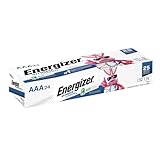
- 1 pack of Energizer Ultimate Lithium AAA Batteries
- These triple A batteries are the #1 longest lasting AAA batteries in high tech devices
- Superior performance in extreme temperatures from -40 degrees F to 140 degrees F ensure reliable use in all seasons
- 1 Pack AAA batteries are leak proof, guaranteed based on standard use
- AAA battery pack lasts up to 25 years in storage for reliable backup batteries
How to dispose of a lithium-ion battery safely
In the United States, the EPA says most discarded lithium-ion batteries are likely to be ignitable and reactive hazardous wastes under US rules. Do not put one in household trash or assume curbside recycling accepts it. Use a collection route that accepts that battery type, and follow local instructions; requirements differ by location and battery condition.
Quick Recap
- For small household batteries, possible routes include retailer take-back, storefront electronics-waste collection or a specialist collection program. Confirm acceptance before dropping off or shipping a battery.
- Larger electric-vehicle packs may be handled through a dealer, mechanic or vehicle dismantler.
- Damaged or swollen batteries may need special handling. Do not assume an ordinary collection bag or standard shipping route is suitable; contact the local program or a qualified handler for instructions.
Product prices and availability are accurate as of the date/time indicated and are subject to change. Any price and availability information displayed on Amazon at the time of purchase will apply.

