
Do these 3 things before closing this tab:
1Scan for outdated or missing drivers - takes under a minute2Repair Windows errors before they cause bigger problems3Fix the driver behind crashes, sound loss and screen glitchesiTechGuides is reader-supported. When you buy through links on our site, we may earn an affiliate commission. As an Amazon Associate I earn from qualifying purchases. Learn more
The Design of CMOS Radio-Frequency Integrated Circuits, Second Edition, is an advanced textbook and reference by Thomas H. Lee for readers studying or designing CMOS RF integrated circuits. Cambridge University Press positions it for senior undergraduates and first-year graduate students—not as a general introduction to electronics. It moves from circuit and wireless foundations through RF building blocks to complete system architectures.
What is this book, and how can you identify the right edition?
Thomas H. Lee’s The Design of CMOS Radio-Frequency Integrated Circuits is a Cambridge University Press textbook on gigahertz RF integrated-circuit design. The publisher identifies Lee with Stanford University, California, and classifies the book in circuits and systems, engineering, and RF and microwave engineering. Its second edition was first published in 2004, although Cambridge’s catalog lists the hardback publication date as December 22, 2003, and the digital publication date as June 5, 2012. These dates refer to different catalog and edition-history records.
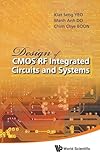
| Format | ISBN | Cambridge catalog date |
|---|---|---|
| Hardback | 9780521835398 | December 22, 2003 |
| Digital | 9780511817281 | June 5, 2012 |
When locating a copy, match both the edition and format to the ISBN. For a physical-book listing, check for hardback ISBN 9780521835398; the digital ISBN identifies a different format. Cambridge’s catalog lists 816 pages, 562 black-and-white illustrations, 30 tables, and 185 exercises. Cambridge University Press book listing
What does the second edition cover?
The material spans more than individual circuit blocks: it begins with background and analysis tools, develops the design of RF components and circuits, and then addresses system-level architectures. The sequence suggests a path from fundamentals toward integrated systems, though it should not be mistaken for a guarantee that every reader can follow it without prior circuit knowledge.
#1 Best Overall
Foundations and analysis tools
The first part covers radio history and wireless principles alongside passive RLC networks, passive IC components, MOS device physics, distributed systems, Smith charts and S-parameters, and bandwidth estimation. These topics establish the vocabulary and analysis methods used in high-frequency circuit work.
RF circuit blocks
Later chapters address high-frequency amplifier design, voltage references and biasing, noise, low-noise amplifiers (LNAs), mixers, feedback systems, RF power amplifiers, phase-locked loops, oscillators and synthesizers, and phase noise. Cambridge describes the LNA, oscillator, and phase-noise chapters as significantly expanded in this edition.
Rank #2

- Used Book in Good Condition
System architectures and examples
The architecture material connects circuit choices to wireless systems. Cambridge says the new wireless-systems chapter links system and circuit issues, and that the architecture chapter adds complete chip-design examples, including a GPS receiver and a wireless LAN transceiver. The book concludes with a chapter on RF circuits through the ages. Cambridge University Press book listing and contents
Who is it suitable for?
Cambridge positions the book for senior undergraduate and first-year graduate readers. It is a better fit for someone with a foundation in electronics and circuit analysis who wants a substantial treatment of CMOS RFIC design than for a beginner seeking a broad, introductory electronics course. Its 185 exercises make it useful as a course text as well as a reference, though the publisher’s listing does not establish the difficulty or solutions available for each exercise.
- Good fit: students or engineers seeking coverage across RF foundations, circuit blocks, and system-level examples.
- Less suitable: readers who need only a quick overview, or who are looking for a general electronics primer.
- Check against your use case: because the second edition was first published in 2004, confirm that its treatment meets your needs for contemporary process-node details or current wireless standards. The catalog information does not establish coverage of any particular newer node or standard.
How should you compare copies or alternatives?
Start by confirming the edition and ISBN, then check format and access method: print and digital are distinct catalog entries. Next, compare coverage and level with your goal. This book’s stated scope ranges from foundational RF concepts to complete architecture examples, and its intended readership is advanced undergraduate to early graduate level.
Finally, consider publication vintage in relation to the specific technology or standards you need. That is a question to check against your course, design project, or reference requirements rather than an assumption that the book does—or does not—cover a particular modern topic. Cambridge’s listing provides publisher information for the hardback and digital editions, but current retailer stock and prices are not established here.
Independent reader supportYour contribution helps us test, update, and keep practical guides available for everyone.What should you check before buying?
- For a physical copy, verify the exact title, second-edition wording, and hardback ISBN 9780521835398 on the listing.
- If you want an electronic copy, look for digital ISBN 9780511817281 and confirm the seller’s access method and format.
- Compare the contents with the topics you need: fundamentals, RF blocks, or system architectures.
- Check whether the book’s 2004 second-edition history suits your need for contemporary process-node or standards information.
Cambridge’s official listing is the source for its edition, format identifiers, stated audience, and contents. The publisher’s contents PDF is available here.
Quick wins for a faster PC:
Scan for outdated or missing drivers - takes under a minuteDriver Scan →Clear out junk files and repair common Windows errorsFree Scan →Fix the driver behind crashes, sound loss and screen glitchesFind Drivers →Quick Recap
Product prices and availability are accurate as of the date/time indicated and are subject to change. Any price and availability information displayed on Amazon at the time of purchase will apply.

