
To measure technical debt, inventory specific weaknesses, estimate the effort to fix each one, and separately record any recurring extra work they cause. Make the scope and method explicit: there is no single universal debt score, and a total is only useful when readers can trace it back to the items and evidence behind it.
What a technical-debt measurement should tell you
A useful measurement answers two different questions. Principal is the estimated effort or cost to correct a weakness that exists now. Interest is the recurring extra effort or inefficiency the weakness causes while it remains. A remediation estimate alone measures principal; it does not tell you how much the item is slowing maintenance or development.
Technical debt also extends beyond code. Requirements debt can include ambiguous, inadequate, missing, or unmet requirements. Its effects may flow into design and implementation, so a code-only assessment should be labeled as such rather than presented as a complete account of a system’s debt.
How to measure technical debt in practice
- Set the boundary. Name the system, release or branch, artifact types, and quality or requirements concerns being assessed. Keep unlike scopes separate or label them clearly.
- Identify specific items. For code, document the chosen method—for example, structural-quality weaknesses, code smells, or architectural smells. If requirements are in scope, record issues such as ambiguity, incompleteness, missing specifications, and unmet needs.
- Estimate principal item by item. Record the estimated remediation effort or cost for each item, along with the assumptions behind the estimate. CISQ’s Technical Debt Standard describes static-analysis estimates for correcting weaknesses covered by its code-quality standards at release. That is a defined approach to a specified set of code weaknesses, not a measure of every kind of debt.
- Track interest separately when you can support the estimate. Capture observable recurring consequences, such as added maintenance effort or inefficiency. State how the team observed them; do not turn an unsupported impression into a precise figure.
- Preserve the evidence. For each item, keep its affected component, metric or review method, date, estimate, and assumptions. A roll-up should remain traceable to this inventory.
- Use the result to make a decision. Compare remediation effort with recurring impact and project needs. An aggregate or ranking is only as dependable as the method and data supporting it.
Choose a method that matches the scope
Measurement approaches do not all assess the same artifacts or concepts. Compare their coverage, assumptions, validation, automation, and availability before treating their outputs as interchangeable.
#1 Best Overall

- Valued Carpenter Pencil Set: You will get 2 pcs solid carpenter pencils with 26 piece 2.8 mm refills, 1 replaceable sharpener, 1 plastic storage box.The complete carpenter pencils combination allows you to finish your work faster and more easily
- Deep Hole Marker Pencil: The deep-hole construction pencils adopts 45mm elongated tip design, which is more convenient to mark in the small hole or in other tight areas that other carpenter markers cannot reach
- Carpenter Pencils with Sharpener: The sharpener is screwed into the top of the work pencil, which won't get lost either. Built-in pencil sharpener that keep the lead with pointed and smooth to Improves line of sight in fine work
- Stronger Solid Lead: This work pencil is matched with a 2.8 mm thick lead , which is much thicker and stronger during the drawing process of construction work, it will not break or damage easily
- Marks on Various Surfaces: 3 colors solid construction pencil can marks on various surfaces,such as metal, plastic, wood, paper etc. Ideals for woodworkers, contractors, craftsmen, builders, merchants and masons
| Approach | What it can measure | What to check |
|---|---|---|
| Standards-based static analysis | Estimated corrective-maintenance effort for specified structural weaknesses covered by a standard. | Which weaknesses are included and what effort assumptions are used. CISQ describes estimates for code-quality weaknesses at release in its Technical Debt Standard; this is not a comprehensive measure of all debt types. |
| Code- or architecture-smell and quality-based methods | Research has explored smells, software-quality properties, and aggregated measures of principal or interest. | Whether the assessment is at code or architectural level, how metrics are combined, and what validation supports the result. See the 2020 empirical study on principal and interest and the 2023 study proposing a machine-learning index based on architectural smells. |
| Requirements-debt models | Requirements-related issues and consequences that may extend into design and implementation. | Whether the model covers the relevant requirements items, user feedback, downstream effects, and available measurements. The 2024 requirements technical-debt model examines existing approaches and reports gaps in metrics for interest and other decision concepts. |
| Measurement tools | Tool-dependent metrics and identification methods; outputs vary across tools. | Terminology, scope, identification method, validation, automation, and availability. The 2021 tool comparison review describes variation among tools; it is not a current product catalog. |
Use the numbers carefully when prioritizing
Principal and interest provide complementary evidence, not a self-executing priority formula. An item that is expensive to fix may impose little recurring burden; a smaller repair may remove repeated friction. Consider the estimated remediation effort alongside observed impact and the needs of the project.
One 2020 empirical study found that classes with similar levels of principal tended to have similar interest. In the studied artifacts, aggregated principal or interest measures identified nearby artifacts better than isolated metrics. The study also found that high values for properties such as size and coupling were, in most cases, associated with higher principal. These findings can inform a ranking, but they do not establish a rule that applies to every codebase or organization. See the study’s account of the relationship between principal and interest.
Rank #2

- Ergonomically Designed: Work in tight areas with a compact design that gets into tough spots
- Compact and Lightweight: Both tools are designed to fit into difficult to reach spaces. The 1/4" impact driver has a length of 5.55 in. and weighs just 2.8 lbs, while the 1/2" drill/driver measures only 7.5 in. and weighs 3.6 lbs
- Both the DEWALT impact driver and electric drill driver feature integrated LED work lights with a convenient 20-second delay, ensuring enhanced visibility in dimly lit or challenging work areas
- One-Handed Loading - Keep one hand free with a 1/4 in. hex chuck that accepts 1 in. bit tips
- Power drill cordless with 1/2" single sleeve ratcheting chuck provides tight bit gripping strength, making bit changes faster and more secure
Likewise, an industrial validation of the Technical Debt Breaking Point framework reported correlation with experts’ opinions about module sustainability and an ability to rank components by maintenance difficulty. It illustrates one way to reason about accumulated interest; it does not supply a universal breakpoint for deciding when a system must be refactored.
Independent reader supportYour contribution helps us test, update, and keep practical guides available for everyone.What a debt count cannot tell you by itself
There is no broadly agreed single quantification approach across the requirements-debt literature. A 2024 study reports no commonly agreed definition or way to quantify requirements debt, distinguishes it from code-related debt, and identifies consequences that can reach design and implementation. It also reports that some decision concepts—including requirements-debt interest constituents and priority—lack associated metrics. Important consequences therefore may not yet have a reliable measure.
Rank #3

- 【Great Compatibility】This Katerk 1/4 inch hex shank bit holder is specifically designed for 1/4 inch hex shank drill bits. It's compatible with most 1/4 fast hex handles, hex sockets, various electric screwdrivers, and handheld screwdrivers. The bit holder makes it a valuable addition for any handyman.
- 【Secure and Safe】Built with a secure backup nut design, each drill bit holder securely locks onto your bits, ensuring they stay firmly in place. Additionally, our bit holder incorporates a high-quality steel ball rolling design that holds up to several kilograms of weight, ensuring your various drill bits don't fall off.
- 【Easy One-Handed Operation】The bit holder for impact driver allows you to change bits single-handedly, simplifying your workflow. Its multi-color design further allows for quick identification of the drill bit you need.
- 【Compact and Convenient】Thanks to its compact size, this 1/4 inch bit holder is easy to carry around. The bit holder allows for easy attachment to various tools, making this a convenient addition to your construction accessories. The Katerk bit holder is cast from high-quality alloy material, promising a long product lifespan. Despite its rugged strength, the bit holder remains lightweight, making it portable.
- 【Cool Christmas Gift For Men Stocking Stuffers】 This screwdriver bit holder, driver bit holder, impact bit holder, can be given as a gift to your loved one, especially for anyone involved in construction or electrical work. It's a must-have for stocking stuffers for men and women, tools gifts for dad, tech gadgets for men, gifts for dad, gifts for him, gifts for husband, gifts for boyfriend, cool gadgets for men, and cool gifts for dad.
Tool outputs are similarly method-specific. A 2021 review found variation in terminology, metrics, identification, and measurement among technical-debt tools. A 2023 architectural-debt study proposed a machine-learning index based on architectural smells; its abstract reported that none of the approaches it reviewed met all three criteria of being fully automated, freely available, and thoroughly validated. That finding describes the approaches reviewed in that study, not the current availability of every tool.
For a broader framing of defining, measuring, and managing technical debt, see Jaspan and Green’s 2023 Google Research publication.
Quick Recap
Best Value
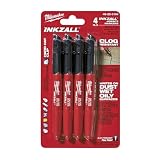
- Milwaukee Ink all Fine Point Marker, Black, 4 Per Pack
- 4 per pack Features Clog Resistant Marker Tip Writes through Dusty, Wet and Oily Surfaces Durable Marker Tip for Writing on Concrete, OSB and Rough Surfaces
- Clog resistant tip writes on dusty, wet and oily surfaces and is optimized for rough surfaces such as OSB, cinderblock and concrete
- Hard hat clip- attaches for easy access
- Quick dry time with reduced smearing and marking
Rank #4

- Long Nib and Deep Hole Marker: Our mechanical carpenter pencil with 45mm nib is designed for easy marking of deep holes or narrow areas. These construction pencils are the great choice for woodworking tools, construction tools, carpenter tools, contractor tools, wood carpentry tools and architect tools
- Extra Refills in 2 Colors for Versatile Marking: The construction mechanical pencil comes with 12 extra 2.8mm refills, including 6 red and 6 black refills. The black refill is suitable for light surfaces, while the red wax is perfect for dark surfaces. Our carpenter mechanical pencil makes sure that you'll have an ample supply for extended use
- Built-in Sharpener: Our construction pencil comes with a built-in sharpener to ensure the mechanical pencil tip is always sharp and ready for use. Never buy an extra pencil sharpener again. A great tool for any woodworker pencil, contractor pencils. The refill can easily be extended or retracted with a simple click of the pencils mechanical, allowing you to work more efficiently and accurately
- Portable Clip Design: Our deep hole construction pencil features a portable clip design, easy to carry and attach to your pocket or tool box, so that you can keep the carpenter pencils mechanical close at hand, making it a convenient tool to have on the go. Great gifts choice for carpenters
- Stronger Pencil Lead: The black refills are made of lead, sturdy and smooth. The red refills are made of wax, clear and light. These marking pencils are much thicker and stronger than normal pencils during the marking process of construction work, suitable for various surfaces, such as glasses, metal, boards, floors, walls, furniture, etc. The written marks can be easily wiped with a wet paper towel when needed
Product prices and availability are accurate as of the date/time indicated and are subject to change. Any price and availability information displayed on Amazon at the time of purchase will apply.

