
What’s actually slowing this PC down?
Pick the symptom - the matching free tool is one click away.
iTechGuides is reader-supported. When you buy through links on our site, we may earn an affiliate commission. As an Amazon Associate I earn from qualifying purchases. Learn more
A single hard drive sitting in a drawer is one copy you cannot easily verify, and that is the real problem. “Bit rot” is a useful shorthand for data that decays or changes over time, but the risk is broader than rot alone. A drive can become unreadable, a file can change without anyone noticing, or a file can survive intact and still be impossible to open because the software, codec, or hardware needed to use it is gone. No official source sets a fixed expiry date for an individual drive. What official guidance does give is a clear pattern of protection: keep at least two copies on separate media, stored in separate places, check that they open every year, refresh them every five years or sooner when warning signs appear, and keep the formats usable.
Three different problems get called bit rot
The phrase covers three risks that behave differently and need different defenses. Treating them as one makes it easy to protect against the wrong thing.
- Physical failure. The drive’s electronics or mechanics fail, and the drive will not mount or read. You usually notice this at the moment you need the data, which is the worst time to find out.
- Silent change. The bits in a file change, but the file may still open, possibly with damaged content. This is the hardest risk to spot because nothing about the drive looks wrong. Only a comparison against a known-good fingerprint will reveal it.
- Obsolescence. The bits are intact, but the file format, codec, program, or hardware required to read them no longer exists or no longer works. The Library of Congress states that bit-level preservation alone does not ensure that content is usable if the format or required software, codecs, or hardware become obsolete.
These risks are related but distinct. A drive can be physically healthy and still hold files you can no longer open. A checksum can catch silent change but does nothing about obsolescence.
How long can an unused drive be trusted?
The most-cited figures come from the National Institute of Standards and Technology. Its NIST IR 8387, Digital Evidence Preservation: Considerations for Evidence Handlers (2022), Table 1, gives longevity values for unused media that is not powered. NIST defines the value as “the amount of time an unused (no power supplied) media can be expected to be readable with very high confidence.” The same report adds that “most media will last longer than the duration indicated in this table.”
#1 Best Overall

- SATA DRIVES ONLY — 2.5in & 3.5in: Works with SATA I/II/III hard drives and SSDs. Does NOT support IDE/PATA, M.2 NVMe, M.2 SATA, SAS, or drives already in a USB enclosure. Check your drive's connector before ordering — a bare SATA drive has a wide flat L-shaped edge connector, not a ribbon cable or a small M.2 gold-finger card.
- USB TYPE-A HOST CABLE — NOT A USB-C PORT: The included host cable ends in USB Type-A and plugs into a USB 3.0 Type-A port. If your computer has only USB-C ports, you will need a USB-C to USB-A adapter, which is not included. For stable operation plug directly into the computer — USB hubs and USB 2.0 ports may cause intermittent disconnections.
- REAL-WORLD SPEED, NOT INTERFACE MATH: USB 3.0 with UASP support (UASP-capable host required). Typical mechanical HDD transfer speeds are 100-160 MB/s, which is the drive's own limit, not the port's; SSD speeds vary up to the USB interface maximum. Backward compatible with USB 2.0 and USB 1.1.
- 12V POWER ADAPTER INCLUDED — REQUIRED FOR 3.5in DRIVES: A 12V/2A AC power adapter is in the box and a wall outlet is needed. 3.5in HDDs cannot run on USB power alone — without the adapter the drive will fail to spin up or drop out during use. 2.5in drives are generally bus-powered, but the adapter is recommended for stability.
- PLUG AND PLAY, TOOL-FREE, HOT-SWAP: No drivers on Windows 10/11, macOS, or Linux. Lay-flat bay accepts a bare drive without tools, swaps without rebooting, and an LED shows power and activity. Note: S.M.A.R.T. diagnostics are not passed through the USB bridge, and on macOS a drive may need remounting after sleep. Drive not included.
| Medium | NIST 2022 value (unpowered, high confidence) | NIST status |
|---|---|---|
| Hard disk drive (HDD) | Less than 2 years | Marked “not recommended for archival use” |
| Solid-state drive (SSD) | Less than 1 year | Marked “not recommended for archival use” |
Read these numbers as a conservative migration warning, not a countdown. They are not observed failure rates, and they do not mean every drive fails at that age. The table is written for digital evidence handlers, and its underlying references are mixed. A drive that is four years old may read perfectly well; nothing on the drive itself tells you whether it will.
The National Archives reaches the same practical conclusion from a different angle. Its Machine-Readable Media guidance (last reviewed May 2, 2023) says media life and reader availability vary, and recommends copying magnetic media, including spinning hard drives, into a current storage environment as soon as possible. The agency also randomly samples its magnetic data tapes each year for readability. That is an archive’s tape practice, not a consumer hard-drive schedule.
Rank #2
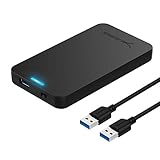
- Tool free design, easy to install,Transfer Rates Up to 480 Mbps when connected to a USB 2.0 port,Transfer Rates Up to 5 Gbps when connected to a USB 3.0 port.
- Suitable for 2.5” SATA/SSD;Supports Standard Notebook 2.5″ SATA and SATA II Hard drives
- Optimized for SSD, Supports UASP SATA III,Backwards-Compatible with USB 2.0 or 1.1
- Hot-swappable, plug and play, no drivers needed
- Operating System:Supported Operating Systems:Mac,Windows;Supported Windows Versions :Windows 7, Windows 8, Windows Vista, Windows XP; Supported Mac Versions: Mac OS X and Higher
Powering a drive up is not a cure
Some people assume that plugging an old drive in once in a while keeps it healthy. The official sources do not support that. Their guidance is about copying, checking, and migrating files. Connecting a drive to confirm that the files open is a legitimate part of a check, but it is not a preservation strategy on its own.
Quick wins for a faster PC:
Repair Windows errors before they cause bigger problemsFix Now →Scan for outdated or missing drivers - takes under a minuteDriver Scan →Clear out junk files and repair common Windows errorsFree Scan →Build a copy plan that survives one failed drive
- Find and rank what matters. Gather files from computers, phones, old drives, and cloud accounts into one place. Sort them into what you could never replace (family photos, scanned documents, tax and legal records) and what you could rebuild. Use consistent folder names so you can find things later.
- Make at least two copies on separate media. The Library of Congress’s personal archiving guidance (the page does not show a publication date) names portable hard drives, thumb drives, optical discs, and internet storage as possible media. Using two different media types lowers the chance that one flaw affects both copies. A portable external hard drive is a practical second copy, but it works only if it lives somewhere else.
- Put one copy in a different location. A second drive on the same desk is not a geographically separate copy. The Library recommends keeping copies as far apart as practical so that a fire, flood, or theft at one site does not take every copy with it.
- Open the files once a year. Check that the files actually open, not just that they are present in a folder. The Library of Congress advises checking readability at least annually.
- Refresh the media every five years, or sooner if needed. The Library advises creating new media copies every five years or when necessary to avoid data loss. Treat five years as a ceiling, not a promise: replace a copy sooner if it shows read errors, physical damage, or any other warning sign.
- Write down what you have. Record the date of each copy, the medium, and the location. A short note on the drive or in a text file in the folder is enough.
Detect silent change with checksums
A checksum is a short fingerprint computed from a file’s contents. If the file changes, the fingerprint changes. The Library of Congress’s Data Integrity Management guidance describes tracking this fixity information with cryptographic hashes such as MD5 or SHA, stored in manifests and compared over time. The Library’s approach is to record values when files are created and compare them later.
Rank #3

- Feature - BENFEI Type-C/Type-A 2.5 inch Hard Drive Enclosure easily hook up your 2.5 inch SATA I/II/III hard drive to transfer files from one PC to another PC, laptop, PS4 or as a USB external hard drive.
- Speed - Up to 5 Gbps data transfer rate with supports UASP SATA III transmission protocol, which is 70% faster than traditional USB3.0. Backward compatible with USB 2.0 or 1.1 ports.
- Design - With USB Type-C/Type-A plug design, provide a easy connection option to laptop/phone/pad. Tool free installation, Plug & Play, No driver needed for this SATA enclosure. Just push out the cover, plug in the drive, close the cover and go. Hot-Swappable.
- Compatibility - BENFEI Hard Drive Enclosure supports Windows, LINUX, MacOS 8.0, and above. Specifically designed for 7/9.5mm thick, 2.5 inches, 6TB HDD & SSD. Compatible with Western Digital, Seagate, Toshiba, Samsung, Kingston, Crucial, Hitachi, and more.
- Warranty - Exclusive BENFEI Unconditional 18-month Warranty ensures long-time protection of your purchase; Friendly and easy-to-reach customer service to solve your problems timely.
You can do the same at home. Create a manifest once, then verify it each year during your readability check. On macOS, or on Linux with the equivalent tools, run the following from the folder that holds the files:
shasum -a 256 * > manifest-2026.sha256
shasum -a 256 -c manifest-2026.sha256
On Linux, sha256sum works the same way. On Windows, PowerShell can produce a comparable list with Get-ChildItem .photos | Get-FileHash -Algorithm SHA256 | Export-Csv manifest.csv. Keep a copy of the manifest with each copy of the files.
Rank #4

- 5 Gbps High-speed Transfer: CLAVOOP 3.5 hard drive enclosure supports UASP protocol for faster data transfer over USB 3.0, with tested read speeds up to 336 MB/s. Actual performance may vary depending on your device's capabilities
- Latest Design: Lay-Flat dock station 3.5 external hdd enclosure made from sturdy ABS material with a unique circular top, large ventilation holes, and four non-slip pads to ensure stable and cool operation
- Humanized Design: 3.5 hdd enclosure case built-in shock-proof sponges protect your drive; LED indicators show the 3.5 external hard drive enclosure working status; Auto-sleep function helps save energy—wake the drive with the power button; Plug and play, no tools or drivers required
- Wide Compatibility: HDD Enclosure 3.5 works with 3.5"/2.5" SATA I/II/III HDDs and SSDs up to 20TB to a PC, laptop, and other devices. Compatible with Windows 9/8/SE/ME/2000/XP, Mac OS 8.6 or latest version, Linux, ChromeOS, and gaming consoles like PS5, PS4, Xbox One, and more. (Note: Not compatible with IDE, mSATA, M.2 drives; System compatible hard disk format details see figure)
- Packing List: USB 3.0 to 3.5 sata hard drive enclosure x1 (include 12V/2A DC power adapter x1, USB 3.0 data cable x1, User manual x1); Please confirm your hard drive type before purchasing
When verification reports a mismatch, do not overwrite anything yet. Compare the file against its copy on the other drive. If the other copy matches the original manifest, the damaged file is the one to replace. If you edited the file on purpose, regenerate the manifest so future checks reflect the new version.
Do these 3 things before closing this tab:
1Repair Windows errors before they cause bigger problems2Fix the driver behind crashes, sound loss and screen glitches3Clear out junk files and repair common Windows errorsA checksum tells you that something changed. It does not repair the file. Recovery depends on having another good copy, which is why the copy plan comes first.
Best Value
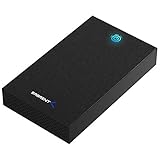
- SATA-Only Compatibility: Fits 2.5" and 3.5" SATA HDDs and SSDs. NOT compatible with SAS, M.2 NVMe, M.2 SATA, NVMe PCIe, or IDE/PATA drives. Note: some 4TB+ 3.5" drives with non-standard PCB height may not seat correctly — verify your drive's physical dimensions before purchasing.
- Tool-Free Setup: Slide, click, and go—no tools or screws needed. Swap drives in seconds without hassle.
- USB 3.0 (USB-A) with UASP: USB Type-A host connection — a USB-C to USB-A adapter is required if your computer only has USB-C ports (not included). Transfer speeds up to 625 MB/s theoretical maximum; typical real-world speeds are 100–180 MB/s for HDDs and up to 400–500 MB/s for SSDs.
- External Power Required: Includes 12V/2A AC power adapter — a wall outlet is needed (not bus-powered via USB). Aluminum shell with internal ABS shock-absorbing tray for durability and heat dissipation.
- Plug & Play — Windows 10/11, macOS & Linux: No drivers needed. LED indicates power and activity status. Note: S.M.A.R.T. diagnostics are not accessible through the USB bridge. Hard drive not included.
Plan for formats and software, not just the disk
Preservation covers future access as well as the physical medium. The Library of Congress’s bit-level guidance makes the point that the usability of content depends on whether formats and software remain available. NIST’s Process Industries Data Handover Guide, Part 1, section 5.5 treats the handover of data as an ongoing task rather than a one-time copy.
- Keep originals, and where a widely readable version exists, keep one as well. For documents, a standard archival format such as PDF/A is one common choice.
- Write a short plain-text note in the archive that says what each folder contains and which program opened it.
- When a program you depend on is retired, export or convert the files during your annual check rather than waiting for the old software to stop working.
Choosing where each copy lives
No single medium is permanent, and the official sources do not name a universal winner. When you compare options, judge each one against the same questions:
- Separation: Is this copy physically apart from the original, and can it survive a local disaster?
- Checkability: Can you verify its integrity, for example against a saved manifest?
- Refresh plan: Who will copy it onto new media, and when?
- Reader availability: Will you still have a device or service that can read this medium in five or ten years?
- Cost and access: What does keeping it cost, and can you reach it when you need it?
- Format: Will the files still be usable in the format you saved them in?
Internet storage is one of the options the Library of Congress lists for personal archives. NIST’s handover guide notes that cloud-based services can become expensive over time, so compare the ongoing cost before relying on one for your only off-site copy. This article does not endorse any provider.
The Tool Desk
Outbyte Driver Updater FREEScan for outdated or missing drivers - takes under a minuteDriver Scan →Outbyte PC Repair FREERepair Windows errors before they cause bigger problemsFix Now →The safest long-term setup is a mix of two or more media, one kept elsewhere, a yearly open-and-verify check, and a refresh schedule you actually write down. A drawer with one drive in it satisfies none of those requirements.
Quick Recap
The Bottom Line
“”

