
Windows Errors? Fix Them Before They Spread
Repair common Windows errors and clear accumulated junk for a smoother, more stable PC - no reinstall needed.Free scan · no reinstallCrashes, No Sound, or Screen Glitches?
Random freezes, missing sound and display glitches usually trace back to one bad driver. Find and replace yours safely.Free scan · under a minuteiTechGuides is reader-supported. When you buy through links on our site, we may earn an affiliate commission. As an Amazon Associate I earn from qualifying purchases. Learn more
The Solidigm D5-P5430 30.72TB E3.S is a high-capacity PCIe 4.0 enterprise SSD best suited to read-heavy storage and selected mixed workloads—not a universal choice for every server. StorageReview’s tests show strong sequential throughput and small-block write performance, but the right fit depends on workload shape, endurance needs, and whether your platform supports this 7.5mm E3.S drive.
What the 30.72TB E3.S model is
The D5-P5430 is a data-center NVMe SSD family built around 192-layer 3D QLC NAND. The reviewed 30.72TB configuration uses PCIe 4.0 x4, NVMe 1.4c, a 7.5mm E3.S form factor, and an 8KB indirection unit. E3.S is a server drive format; this model is not a drop-in desktop SSD.
Solidigm positions the family for mainstream and read-intensive workloads. Its product brief uses 80/20 read/write as an example of mainstream use and 90/10 or higher as an example of read-dominant use. Those ratios are illustrative categories, not performance guarantees: I/O size, access pattern, queue depth, and write bursts can change results substantially. Solidigm’s product page describes the balance as hyper-dense storage with high throughput.
Specifications and manufacturer ratings
| Specification | 30.72TB E3.S detail |
|---|---|
| Interface and protocol | PCIe 4.0 x4; NVMe 1.4c |
| Form factor | 7.5mm E3.S |
| NAND and indirection unit | 192-layer 3D QLC; 8KB |
| Sequential throughput | Family maximum: 7,000MB/s read and 3,000MB/s write, per Solidigm’s product page |
| Random performance | Family maximum: 971K 4KB random-read IOPS and 120K 4KB random-write IOPS; the 30.72TB model is listed at 934.5K random-read IOPS |
| Endurance | 31.92PBW for the 30.72TB model; StorageReview reports this as 0.58 drive writes per day over five years for a 100% random-write workload |
| Power | Up to 25W active and 5W idle, as listed by StorageReview |
| Warranty | Five years, as listed by StorageReview |
These are distinct kinds of figures: family maximums are not capacity-specific guarantees, and the 0.58 DWPD figure carries the stated five-year, 100% random-write workload assumption. Estimate your own daily host writes before selecting a drive; a write-heavy database or ingest tier may consume its endurance budget faster than a read-dominant content store.
#1 Best Overall
![SOLIDIGM D5-P5430 7.68 TB Solid State Drive - 2.5 Internal - PCI Express NVMe [PCI Express NVMe 4.0 x4] - Read Intensive](https://m.media-amazon.com/images/I/21W9lYK2akL._SL160_.jpg)
- Size: 2.5
- Storage Capacity: 7.68TB
- Interface Type: Pcie 4.0 X4, Nvme
- Form Factor: U.2 15mm
- Lithography: 4th Gen Qlc 3d Nand
What StorageReview measured
StorageReview tested the drive in a Dell PowerEdge R760 running Ubuntu 22.04.2 LTS, with a Serial Cables Gen5 JBOF, two Intel Xeon Gold 6430 CPUs, and 1TB of DDR5 memory. Its procedure used two full-drive sequential-write preconditioning fills before steady-state measurement, with re-preconditioning for each transfer size. The results below describe that review setup and its workload parameters, not guaranteed application speeds.
| Test result | StorageReview measurement |
|---|---|
| 128K sequential read | 7,132.1MB/s |
| 128K sequential write | 3,150.2MB/s |
| 4K random read | 975.2K IOPS |
| 4K random-write peak | 152.5K IOPS in the review’s comparison test group |
The sequential results were slightly above Solidigm’s stated family maxima in this test, but the two numbers should not be treated as interchangeable: one set is vendor-rated and the other is a reviewer’s measurement under a particular configuration. Likewise, a peak random-write result does not predict sustained application performance across different queue depths or write patterns. See StorageReview’s test methodology and full results.
Rank #2

- Solidigm D5 Series D5-P5430 - SSD - Read Intensive, Mainstream Performance - 7.68 TB - Internal - E3.S (E3.S) - PCIe 4.0 x4 (NVMe)
How it handles mixed workloads
The strongest case is a system that is predominantly reading but still needs meaningful write capability. StorageReview highlighted the P5430’s small-block write results and considered it plausible for virtualized and mixed-use environments, while large-block reads and read-heavy data tiers are natural fits. Examples include content repositories, object-storage tiers, and warm data lakes when the server’s write budget and I/O pattern align.
Free tools Windows power users keep installed
One-click scans. No signup required.
“Mixed workload” alone is not enough to determine suitability. Compare the drive using the workload’s actual read/write ratio, request size, queue behavior, burst duration, and daily write volume. An 80/20 mix of large sequential transfers is not equivalent to an 80/20 mix of small random operations. If writes are sustained or unusually intense, evaluate endurance and sustained-state behavior rather than relying on a peak IOPS figure.
Rank #3
- High Capacity: 15.36 TB solid state drive provides ample storage for demanding applications
- Fast Data Transfer: U.2 NVMe 4.0 x4 interface delivers up to 6 Gbps data transfer speeds
- Compact Design: 2.5-inch form factor is ideal for desktop and laptop computers
- Reliable Performance: PCIe NVMe interface ensures high speed data access and low latency
- Easy Installation: Pre-installed Windows 10 software makes setup simple
Where the drive gives up ground
Sequential read ceiling versus Gen5
PCIe 4.0 x4 makes the P5430 a Gen4 option, and StorageReview found Gen5 competitors had substantially higher large-block read ceilings. If the primary objective is maximum sequential read bandwidth and the server has suitable Gen5 lanes, that difference matters. Within the review’s Gen4 comparison set, the P5430 remained competitive and led the group’s 4K random-write peak; that is a result from that comparison, not a universal ranking.
Form factor and platform constraints
The 30.72TB model reviewed here is E3.S. The D5-P5430 family also includes U.2 15mm models from 3.84TB through 30.72TB and E1.S 9.5mm models through 15.36TB, but those are physically different products and capacities are not offered in every format. Confirm the exact SKU rather than treating another family form factor as equivalent to this reviewed drive.
Rank #4
![SOLIDIGM D5-P5336 15.36 TB Solid State Drive - 2.5 Internal - U.2 [PCI Express NVMe 4.0 x4]](https://m.media-amazon.com/images/I/31mj01fv68L._SL160_.jpg)
- Item dimensions: 5.5 inches
- Verify that the server has a compatible E3.S bay and backplane.
- Confirm NVMe and PCIe support, available lanes, and the platform’s supported drive list.
- Check airflow, cooling, and power capacity for the target slot and workload.
- Validate firmware, telemetry, security options, and service procedures for the specific SKU.
Security features and SKU checks
Solidigm describes end-to-end protection, power-loss protection, secure boot, and Opal for the product family. StorageReview lists TCG Opal 2.0 and OCP 2.0 telemetry, and says FIPS 140-2 Level 2 is available on select SKUs. The product page uses the conflicting wording “FIPS 130-2 Level 2.” Because the published wording is inconsistent, do not assume a particular drive is FIPS-certified; check the current documentation and certification for the exact part number.
Do these 3 things before closing this tab:
1Repair Windows errors before they cause bigger problems2Scan for outdated or missing drivers - takes under a minute3Clear out junk files and repair common Windows errorsVerdict: who should consider it?
The D5-P5430 30.72TB E3.S is worth considering when a server needs dense capacity, strong Gen4 throughput, and a read-heavy profile with moderate mixed-use demands. StorageReview’s results support that use case, including competitive small-block write behavior. Look elsewhere if your priority is the highest possible Gen5 sequential-read bandwidth, if your platform cannot host E3.S, or if your write workload exceeds the model’s endurance allowance. The decision should be made against the exact workload and server configuration, not the capacity number alone.
Best Value
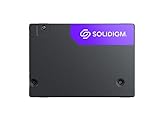
- Solidigm D7-PS1030 Series - SSD - Enterprise - 3.2 TB - internal - 2.5" - U.2 PCIe 5.0 x4 (NVMe)
Solidigm’s product brief, dated 2023-05-14, includes TCO comparisons based on assumptions about rack layout, utilization, refresh cycle, electricity cost, PUE, mirroring or replication, and internal estimator calculations. Those are vendor-modeled scenarios rather than independent current savings estimates, so they should not determine a purchase without your own cost and infrastructure inputs.
Quick Recap
Product prices and availability are accurate as of the date/time indicated and are subject to change. Any price and availability information displayed on Amazon at the time of purchase will apply.

