
Windows Errors? Fix Them Before They Spread
Repair common Windows errors and clear accumulated junk for a smoother, more stable PC - no reinstall needed.Free scan · no reinstallOutdated Drivers Are Slowing You Down
One free scan finds every outdated or missing driver and matches the right update for your exact hardware.Free scan · exact hardware matchiTechGuides is reader-supported. When you buy through links on our site, we may earn an affiliate commission. As an Amazon Associate I earn from qualifying purchases. Learn more
Snowflake is built for analytics, Amazon RDS for relational application data, and Amazon DynamoDB for operational workloads shaped around known key-value or NoSQL access patterns. They are not interchangeable database engines: choose based on how data is written and queried, then use more than one when an application and its analytics have different needs.
How the three services differ
| Dimension | Snowflake | Amazon RDS | Amazon DynamoDB |
|---|---|---|---|
| Primary role | Analytical platform for BI and predictive modeling | Managed service for relational application databases | Managed NoSQL database for operational workloads |
| Data and query shape | Analytical queries across datasets | Relational data queried with SQL, including joins and integrity constraints | Key-value or NoSQL data organized for defined access patterns |
| Architecture | Central persisted data with separate massively parallel processing compute clusters | Managed database instances running a selected relational engine | Distributed, serverless managed service |
| Operational boundary | Snowflake manages infrastructure and software maintenance; teams still design ingestion, governance, and analytical models | AWS manages infrastructure tasks; customers retain responsibility for database software and configuration | AWS manages the service; teams still design the data model, keys, and indexes for application access patterns |
| Typical fit | Reporting and analysis over datasets | Applications that rely on relational semantics | Operational retrieval patterns suited to keys and indexes |
This is a qualitative comparison, not a benchmark. Snowflake describes its architecture as combining a central data repository with compute clusters that process queries in parallel (Snowflake architecture). RDS is a service hosting multiple engines, including PostgreSQL, MySQL, Oracle Database, Microsoft SQL Server, MariaDB, and Db2; engine and configuration affect behavior (RDS concepts). DynamoDB is a distributed NoSQL service for operational workloads (DynamoDB documentation).



When Snowflake is the right fit
Choose Snowflake when the main job is analytical querying over datasets—for example, business intelligence or predictive modeling—rather than serving an application’s routine transactions. Its separation of persisted data and query compute is designed for analytical work.
Snowflake describes its service as self-managed: it handles infrastructure and software maintenance, upgrades, and tuning. It cannot be installed locally or on private cloud infrastructure. That does not remove the need to plan how operational data reaches the platform, how it is governed, or how it is modeled for analysis (Snowflake key concepts and architecture).
#1 Best Overall
When Amazon RDS is the right fit
Choose RDS when the application depends on relational structure: SQL queries, relationships between records, referential integrity, or complex joins. AWS guidance identifies relational databases as a fit for ACID transactions and cases where transactions span multiple rows or queries need complex joins (AWS purpose-built data store guidance; AWS transactional data guidance).
RDS is not one engine with one performance profile. It supports several relational engines, and AWS says query performance depends on database design, instance size, data distribution, workload, and query patterns (RDS service documentation).
Rank #2
What “managed” means for RDS
AWS handles infrastructure work such as hardware provisioning, maintenance, and backups, while customers remain responsible for database software and configuration, as described in the RDS getting-started architecture (RDS concepts and architecture). For high availability, RDS Multi-AZ deployments replicate a primary database to a standby instance in another Availability Zone for failover. The appropriate engine and deployment depend on the application’s requirements.
What’s actually slowing this PC down?
Pick the symptom - the matching free tool is one click away.
When Amazon DynamoDB is the right fit
Choose DynamoDB when the workload is operational and its read and write patterns can be expressed through a key-value or NoSQL model. Examples in AWS’s overview include shopping carts and financial applications. Secondary indexes support queries using alternate keys, but they do not make DynamoDB a relational database centered on arbitrary joins (DynamoDB overview).
Design the model around the application’s actual access patterns: identify business use cases and expected reads and writes before settling on the logical data model, keys, and indexes (DynamoDB data-modeling guidance). AWS describes DynamoDB as offering “consistent single-digit millisecond performance”; that is a vendor service claim, not an independent head-to-head benchmark against RDS or Snowflake (DynamoDB overview).
How to choose for your workload
- Choose Snowflake if the central requirement is analytics over datasets, such as BI or data science work.
- Choose RDS if the application needs relational semantics, including referential integrity, multi-row transactions, or complex joins.
- Choose DynamoDB if the application has understood access patterns that fit a key-value or NoSQL model and benefit from its operational design.
AWS frames this decision as selecting “a purpose-built data store that best supports your data access and storage requirements” (AWS Well-Architected guidance).
Rank #4
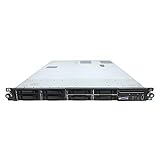
- HP ProLiant DL360 G7 8B Server
- 2x X5650 2.66GHz 12-Cores Total
- 32GB RAM / 8x 146GB 10K 2.5in SAS Hard Drives
- P410 w/ 512MB
Why a system may use an operational database and Snowflake
Transactional processing and analytics often have different read and write profiles. AWS says OLTP databases are optimized for continuous writes and many small reads, while data warehouses are optimized for batched writes and high-volume reads. As AWS puts it, “Data warehouses are optimized for batched write operations and reading high volumes of data” (AWS modern analytics and data warehousing architecture).
Free tools Windows power users keep installed
One-click scans. No signup required.
In a layered design, the application keeps transactions in RDS or DynamoDB, while a data pipeline moves and transforms data for an analytical store such as Snowflake. This separates reporting workloads from the application’s transactional workload; it also means the team must account for ingestion, transformation, and the freshness needs of analytics.
What this comparison cannot tell you
There is no universal winner on speed or cost from these architectural differences alone. Performance depends on the actual workload, data model, configuration, and query patterns; a cost comparison also requires a defined workload and current region-specific pricing. Treat vendor performance descriptions as claims about the vendor’s service, not as controlled comparisons among these three options.
Quick Recap
Product prices and availability are accurate as of the date/time indicated and are subject to change. Any price and availability information displayed on Amazon at the time of purchase will apply.

