
Recommended Free Tools
The MIPS 74K is a licensable 32-bit processor core that combines a general-purpose MIPS32 CPU with DSP-oriented instructions. It can handle signal-processing work alongside ordinary application code, and could reduce the need for a separate DSP in systems with moderate processing demands. It is not a standalone chip or board, and its arithmetic issue rate alone does not tell you how quickly it will run a complete signal-processing application.
What is the MIPS 74K?
The MIPS 74K is processor IP: a core that a chip designer could license and integrate into a system-on-chip (SoC). It implements MIPS32 Release 2 and the MIPS DSP Application-Specific Extension (ASE) Revision 2. The core was positioned for embedded workloads that mix general computing with multimedia or signal processing, including networking, WiMAX, DVD players, VoIP, and set-top boxes.
MIPS described two variants. The 74Kc targets high-performance applications; the 74Kf adds an IEEE-754-compliant floating-point unit. Both belong to the same broader 74K core family, but the floating-point distinction matters when assessing software that relies on floating-point arithmetic.
How does its architecture support signal processing?
The 74K can dispatch two instructions per cycle to asymmetric execution pipelines. The AGEN pipeline handles load/store and control-transfer instructions, while the ALU pipeline handles arithmetic, logic, and general computation. This arrangement allows some computation to proceed alongside memory and address work rather than making every operation compete for a single execution path.
#1 Best Overall
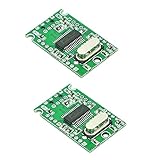
- USB 2.0 high-speed extender module
- Reserve the power input port at the upper left corner of the board, marking the 5Vin position
- When a high current peripheral is connected and the 5V power supply current from the USB input port is insufficient, the external reserved power input port can be enabled
- High speed, stability, low heat, low power consumption
- Size: 29.5mm*18.9mm*4.8mm(L * W * H)
Its fully pipelined multiply-divide unit (MDU) supports a maximum issue rate of one 32×32 multiply, multiply-add, or multiply-subtract operation per clock. That is an instruction issue capability, not a promise that a complete algorithm finishes one operation per clock: data access, dependencies, instruction mix, and software all affect end-to-end throughput.
What DSP ASE Revision 2 adds
DSP ASE Rev 2 adds packed-data arithmetic and multiply or multiply-accumulate forms, along with saturation, rounding, bit-field operations, and addressing support. Packed operations let an instruction work on multiple smaller values held in a wider register, which can suit fixed-point kernels such as filtering and parts of multimedia processing. The instruction set was intended to help with video, image processing, signal processing, and multimedia applications; the available instruction support does not by itself guarantee that a particular codec or algorithm will run faster.
The combination is the 74K’s central design proposition: general-purpose CPU behavior plus operations useful in DSP kernels. BDTI’s 2007 analysis judged that this could eliminate a separate DSP for moderate workloads, such as some set-top-box audio processing, while describing video processing as a more limited possibility rather than a guaranteed replacement.
Rank #2

- Package Include: 1pcs* LicheeRV Nano PicoClaw(Include 16G TF Card)
- Fast startup: ideal for persistent local interaction scenarios.
- Cross-platform compatibility: supports RISC-V, ARM, MIPS and x86 architectures.
- Multi-channel connection: compatible with mainstream instant messaging and community communication platforms.
- Diverse model and tool ecosystem: works with various large language model services, extended protocols, web search functions and practical functional plugins.
How fast was the 74K?
The figures below describe different things and should not be read as measured application performance. In particular, the clock and area figures were implementation targets reported in 2007, not universal specifications for every licensed 74K design.
PC Slower Than It Used to Be?
A free scan shows the junk files, broken settings and background clutter dragging Windows down - then fixes them in one click.Free scan · Windows 10 & 11Crashes, No Sound, or Screen Glitches?
Random freezes, missing sound and display glitches usually trace back to one bad driver. Find and replace yours safely.Free scan · under a minute| Figure | What it describes | Qualification |
|---|---|---|
| Up to 1.11 GHz | Reported clock target for a 65 nm implementation | MIPS-reported or projected figure cited by EE Times in 2008; not a guaranteed speed for all implementations. |
| 1.11 GHz; 2.5 mm² | High-performance reference implementation clock and core-plus-cache area | BDTI, 2007; data credited to MIPS and explicitly not verified by BDTI. |
| 830 MHz; 2.1 mm² | Area-efficient reference implementation clock and core-plus-cache area | BDTI, 2007; data credited to MIPS and explicitly not verified by BDTI. |
| One 32×32 multiply, multiply-add, or multiply-subtract issue per clock | Maximum MDU issue rate | MIPS Technologies manual revision 01.05; an issue-rate capability, not a benchmark or application throughput result. |
Clock rate is only one part of performance. A real comparison would also need the target process and implementation, memory system, compiler and hand-tuned code, algorithm, and power constraints. The available figures do not establish power consumption or comparative application benchmarks.
Can the MIPS 74K replace a separate DSP?
Sometimes, but only if the workload fits the core’s arithmetic, data movement, timing, and software characteristics. The case is strongest where DSP demand is moderate and combining CPU and signal-processing work on one processor simplifies the SoC. Existing MIPS32 software also has a compatibility path: the 74K was described as code-compatible with earlier cores such as the 4KE and 24K.
Rank #3

- MADE FOR ADVENTURE_ Developed for park and pipe riding or hitting features on or off the piste. A versatile helmet to keep every free skier protected
- MIPS_ A versatile helmet, tuned for the backcountry, the Auric Cut BC Mips combines multi-impact protection with Mips for enhanced rotational impact protection
- ADJUSTABLE VENTILATION_ The ventilation is fully adjustable for increased comfort across a broader range of conditions. Detachable ear pads give comfort across a wider range of temperatures
- MULTI-IMPACT PROTECTION_ Snow sports helmet features an advanced multi-impact EPP liner and robust ABS shell for exceptional protection on the mountain
- REMOVEABLE GOGGLE CLIP_ Keep your goggles securely attached to your helmet with the removeable goggle clip
Compatibility is not the same as automatic acceleration. Older binaries can run without recompilation, but they do not thereby begin using DSP ASE Rev 2 instructions. To benefit from the extension, software needs suitable compiler support or changes that use the new instructions, potentially including hand optimization.
For a design decision, compare the actual workload against these criteria:
- Arithmetic fit: Does the algorithm map to the available multiply-accumulate and packed-data operations?
- Data supply: Can the memory path feed the operations at the needed rate?
- Timing: Can the application tolerate variable execution behavior and the core’s pipeline latencies?
- Software effort: Are compiler support and existing libraries adequate, or will the code need significant optimization?
- System benefit: Does combining CPU and DSP work outweigh the benefits of a dedicated DSP for this product?
What are the 74K pipeline stages, and why do they matter?
The MIPS Technologies manual revision 01.05 describes a 15-stage AGEN pipeline and a 14-stage ALU pipeline. Their depth supports the design’s high-frequency goals, but it also means operations can take multiple cycles to pass through the core. Branches and other disruptions can incur recovery costs.
Rank #4

- The C8051F320 /1 series utilizes the proprietary CIP-51 microcontroller core of Silicon Labs. The CIP-51 is fully compatible with MCS-51M instruction sets; Software can be developed using standard 803x / 805x assembler and compiler
- The CIP-51 core provides all the peripherals that come with the standard 8052, including four 16-bit counters/timers, full-duplex UART with extended baud rate configuration, enhanced SPI ports, 2304-byte on-chip RAM, 128-byte Special Function Register (SFR) address space and 25/21 I/0 pins.
- 10-Bit ADC, Up to 200 ksps, Up to 17 or 13 external single-ended or differential inputs ,VREF from external pin, internal reference, or VDD
- USB specification 2.0 compliant, Full speed (12 Mbps) or low speed (1.5 Mbps) operation, Voltage Regulator Input: 4.0 to 5.25 V
- C8051F320 Single Chip Development Board built-in temperature sensor, External conversion start input, Two Comparators, Internal Voltage Reference, POR/Brown-Out Detector
The core’s out-of-order execution can hide some instruction latency, but it makes exact cycle-by-cycle behavior harder to reason about. That trade-off matters when predictable real-time response is essential, particularly if the same core is also running a full operating system or other software. A high maximum issue rate should therefore not be mistaken for simple, deterministic timing.
Independent reader supportYour contribution helps us test, update, and keep practical guides available for everyone.What can limit fixed-point performance?
Arithmetic units only help when data arrives in time. BDTI identified a potential bandwidth mismatch in the fixed-point path: it transfers 32 bits per cycle, which may not supply two 16-bit multipliers with four fresh 16-bit operands every cycle. In that situation, the computation can be limited by data movement rather than by the nominal arithmetic capacity.
BDTI noted that algorithm transformations such as data “zipping” can sometimes help address this mismatch. Whether such a transformation is practical depends on the algorithm and implementation; it is not a general fix or evidence that every workload will reach peak issue rates.
What’s actually slowing this PC down?
Pick the symptom - the matching free tool is one click away.
Is the MIPS 74K still relevant?
The 74K is a historical processor-IP design, so its documented architecture is useful for understanding how a general-purpose embedded CPU can incorporate DSP instructions. Whether a 74K core can be licensed today, what tools or support are available, and who controls any relevant rights are not established by the historical sources cited here; those details need current confirmation before being used in a new design decision.
For a present-day evaluation, treat the old clock and area figures as historical reference points, not current product commitments. The enduring engineering questions are whether the workload maps efficiently to packed arithmetic, whether memory bandwidth is sufficient, whether timing is predictable enough, and whether the software ecosystem can exploit the instructions.
Quick Recap
Product prices and availability are accurate as of the date/time indicated and are subject to change. Any price and availability information displayed on Amazon at the time of purchase will apply.

