
Recommended Free Tools
iTechGuides is reader-supported. When you buy through links on our site, we may earn an affiliate commission. As an Amazon Associate I earn from qualifying purchases. Learn more
The top 15 security information and event management tools are a representative shortlist, not a defensible universal ranking: no vendor pages establish which SIEM is objectively best. The right choice depends on the telemetry you must collect, whether you want a traditional SIEM or converged SecOps platform, your analyst workflow, retention economics, governance requirements, and proof-of-concept results.
A SIEM centralizes security telemetry for collection, normalization, correlation, detection, investigation, reporting, and response. Modern products increasingly combine SIEM with SOAR, UEBA, threat intelligence, XDR, endpoint telemetry, data lakes, or AI-assisted investigation, so a feature-by-feature comparison can mislead unless the desired operating model is defined first.


Product packaging, portals, pricing, availability, retention, and support dates are volatile. Treat the capabilities below as a research-based shortlist and verify the commercial and technical details with each vendor before procurement.
Key takeaways
- A SIEM shortlist cannot establish a universal best product because vendor documentation describes capabilities and packaging, not neutral performance rankings.
- Telemetry coverage and data quality should receive the highest buying priority: test identity, endpoint, cloud, firewall, DNS, SaaS, application, and OT sources rather than counting connectors.
- Microsoft Sentinel is moving new customers toward the Defender portal, and Microsoft says Azure-portal support ends after March 31, 2027.
- Google Security Operations describes a Standard package with one year of hot-data retention, more than 700 parsers, and more than 300 SOAR integrations; buyers must verify the current package, region, and price.
- Converged products such as CrowdStrike Falcon Next-Gen SIEM and Palo Alto Cortex XSIAM should be evaluated as SecOps operating-model decisions, not only as log-management replacements.
- A useful proof of concept reproduces three known incidents, tests one benign high-volume workflow, measures analyst steps and detection quality, and produces 30-, 90-, and 365-day cost models.
What is a SIEM, and what should a buyer compare?
A security information and event management platform centralizes security telemetry, normalizes data, correlates events, detects threats, supports investigation, produces reports, and increasingly automates response. Microsoft describes Sentinel as a cloud-native SIEM with connectors, analytics, hunting, investigation, automation, and threat intelligence; comparable platform overviews from Splunk and Google Cloud show why modern SIEM products now overlap with SOAR, UEBA, XDR, threat intelligence, endpoint telemetry, data lakes, and AI-assisted investigation.
#1 Best Overall

- Used Book in Good Condition
The important comparison is therefore not a checklist of isolated features. A buyer should compare the complete operating model: which data the platform can ingest and understand, how analysts investigate an alert, how detections are engineered and tuned, what actions can be automated safely, where data is stored, how retention is priced, and how much vendor ecosystem dependence the organization accepts.
| Operating model | Primary job | Typical strengths | Main trade-off to test |
|---|---|---|---|
| Traditional SIEM | Broad event collection, search, correlation, alerting, investigation, reporting, and retention | Wide data coverage and flexible analyst search | Ingestion, search, administration, content engineering, and retention can become costly or labor-intensive |
| Cloud SIEM | Managed collection, normalization, detection, investigation, and scalable analytics | Reduced infrastructure responsibility and rapid access to cloud-scale services | Data residency, regional availability, retention tiers, egress, and provider dependency |
| Converged SecOps platform | SIEM combined with endpoint, XDR, SOAR, UEBA, cloud detection, or proprietary telemetry | Fewer tools and tighter native context or automation | Endpoint and ecosystem requirements, migration effort, licensing boundaries, and dependence on one vendor |
Which are the top 15 security information and event management tools?
The following list is a representative buyer shortlist, not a ranking from first to fifteenth. The shortlist combines traditional SIEM products, cloud-native security operations platforms, analytics-oriented products, and converged SecOps offerings. Product names, portals, packaging, retention, regions, and features change, so each entry includes the questions a proof of concept should answer.
| Tool | Operating model | Where it fits | Validate before buying |
|---|---|---|---|
| Microsoft Sentinel | Cloud-native SIEM for multicloud and multiplatform environments | Microsoft-heavy or mixed environments needing connectors, analytics, hunting, investigation, and Logic Apps automation | Defender-portal transition, licensing, data tiers, regions, and Microsoft ecosystem dependence |
| Splunk Enterprise Security | Security analytics and SIEM built on Splunk search and correlation | Organizations valuing broad data coverage, flexible search, risk-based alerting, and an established Splunk workflow | Ingestion, search, retention, administration, and content-engineering costs |
| Google Security Operations | Cloud SIEM/SOAR for large-scale security and network telemetry | Teams needing normalization, indexed investigation, threat-intelligence context, and cloud-scale ingestion | Package, region, hot retention, parsers, integrations, and current pricing |
| Elastic Security | Search- and analytics-oriented security platform with managed or self-managed choices | Organizations already operating Elastic or requiring flexible search and data control | Deployment-specific features, data tiers, connectors, content, and operational workload |
| IBM QRadar SIEM | Enterprise SIEM with event and flow collection and cloud or on-premises paths | Centralized visibility, real-time detection, compliance, and established QRadar estates | Migration, lifecycle dates, SaaS parity, integrations, and QRadar product boundaries |
| Sumo Logic Cloud SIEM | Cloud SIEM integrated with logs, threat intelligence, and automation | Cloud and on-premises collection with normalized records, signals, insights, and playbooks | Retention, normalization, detection content, release changes, and Cloud SOAR boundaries |
| Rapid7 InsightIDR | Consolidated SIEM/SOC platform | Organizations seeking log management, endpoint detection, network traffic analysis, user behavior analytics, and investigation in one candidate | Current packaging, endpoint scope, retention, automation, and whether older feature claims still apply |
| Exabeam Fusion SIEM | Cloud SIEM centered on behavioral analytics and entity timelines | Teams prioritizing UEBA, threat detection, investigation context, and response | Product naming, ingestion limits, integrations, automation, retention, and package contents |
| LogRhythm SIEM | Traditional enterprise SIEM with cloud-native SaaS positioning | Organizations wanting a conventional log-management, detection, investigation, and compliance workflow | Ownership, roadmap, SaaS and on-premises availability, pricing, integrations, and migration |
| Securonix Unified Defense SIEM | Cloud-oriented security analytics and SIEM | Organizations prioritizing UEBA, analytics, threat detection, investigation, and response | Ingestion architecture, retention, content, case management, SOAR, and identity, cloud, endpoint, and SaaS coverage |
| FortiSIEM | Enterprise IT/OT SIEM with analytics, UEBA, CMDB, automation, and AI assistance | Fortinet-heavy environments and organizations requiring IT/OT visibility | Non-Fortinet sources, scale, parser quality, tuning effort, and licensing |
| CrowdStrike Falcon Next-Gen SIEM | Converged SIEM/SecOps using third-party data and Falcon telemetry | Teams seeking native endpoint context, threat intelligence, detection, investigation, dashboards, and response | Economics of Falcon telemetry, independent data sources, parsers, and deployment model |
| Palo Alto Networks Cortex XSIAM | Converged SecOps platform combining SIEM, EDR, XDR, SOAR, cloud detection, UEBA, and more | Organizations considering a platform replacement for traditional SIEM | Endpoint and Palo Alto requirements, third-party ingestion, retention, migration, and licensed modules |
| Datadog Cloud SIEM | Cloud SIEM built on Datadog log management | Organizations where Datadog already serves as the observability standard | Security-log indexing, retention, archives, signal volume, and separate observability and security charges |
| Graylog Security | Log management and security analytics with self-managed or managed choices depending on edition | Organizations seeking flexible collection, search, dashboards, alerting, and security workflows | Edition boundaries, cloud availability, correlation, compliance reporting, integrations, and engineering effort |
1. Microsoft Sentinel
Microsoft Sentinel is a cloud-native SIEM candidate for multicloud and multiplatform environments. Microsoft documents data connectors, analytics rules, threat hunting, investigation, threat intelligence, automation rules, Logic Apps playbooks, AI assistance, and investigation capabilities. Microsoft also documents partner-built Sentinel SIEM solutions and publishing through the Microsoft Security Store; that ecosystem can help a Microsoft-centric SOC, but it should not be treated as proof that a connector or solution covers the buyer’s specific product versions.
The Tool Desk
Outbyte Driver Updater FREEFix the driver behind crashes, sound loss and screen glitchesFind Drivers →Outbyte PC Repair FREEClear out junk files and repair common Windows errorsFree Scan →Portal planning is unusually important. Microsoft says new customers have been onboarded toward the Defender portal since July 2025, while Azure-portal support is scheduled to end after March 31, 2027. Buyers should validate the portal used by their administrators and analysts, current licensing, analytics and data-lake tiers, supported regions, and the degree of dependence on Microsoft Defender and Azure services. The Microsoft Sentinel SIEM solution documentation is the appropriate starting point for checking which components a deployment actually needs.
2. Splunk Enterprise Security
Splunk Enterprise Security is a mature security analytics and SIEM candidate built on Splunk’s search and correlation platform. Splunk documents case management, alert triage, investigations, risk-based alerting, an OCSF-aligned taxonomy, threat intelligence, and integration with Splunk SOAR. Splunk is a logical candidate when an organization already has a strong Splunk operating model or needs broad search flexibility.
Do not infer total cost from a marketing comparison. Model ingestion, search behavior, retention, administration, infrastructure or service costs, and the staff time needed to build and maintain detection content. A POC should show whether analysts can move from a risk signal to related entities, evidence, a case, and an approved response without excessive search or manual enrichment.
3. Google Security Operations
Google Security Operations is a cloud SIEM/SOAR candidate designed for large-scale security and network telemetry. Google documents normalization, indexing, correlation, detection rules, ingestion APIs, collectors, forwarders, third-party integrations, and investigation views for assets, IP addresses, domains, hashes, and users. Those entity pivots make identity-compromise and infrastructure investigations useful POC scenarios.
What’s actually slowing this PC down?
Pick the symptom - the matching free tool is one click away.
Google Cloud’s product page, which is undated in the supplied source map, describes ingestion-based packages and says the Standard package includes one year of hot-data retention, more than 700 parsers, and more than 300 SOAR integrations. Treat those as current vendor descriptions rather than independent performance results. Verify the selected package, region, retention definition, parser applicability, and price during procurement. Google’s SIEM platform overview provides the architecture context, while the Google Security Operations product page describes the commercial packaging.
4. Elastic Security
Elastic Security is relevant when an organization already operates Elastic, wants flexible search and data control, or needs a choice between managed and self-managed deployment. Elastic’s 2025 SIEM Buyer’s Guide, dated April 12, 2026 in the supplied research, positions modern SIEM around endpoint and cloud security, detection, investigation, threat hunting, and scalable analytics.
The main buying question is not whether Elastic can search data. The POC must establish which security features are available in the chosen deployment type, how data tiers and retention work, how much connector and parser coverage is ready for production, and how much engineering is required for detections, dashboards, tuning, upgrades, and response integrations.
5. IBM QRadar SIEM
IBM QRadar SIEM is an enterprise SIEM candidate focused on centralized visibility, real-time threat detection, compliance, event data, flow data, and integrations. IBM documents automatic updates for IBM-supported device support modules, custom parsers, event and flow collection, and both on-premises and cloud-native SaaS paths.
IBM’s integrations page, undated in the supplied source map, describes more than 700 supported integrations. Connector quantity is only a starting point: test the exact identity, endpoint, firewall, cloud, and application sources, including parsing, timestamp handling, enrichment, and detection content. Organizations with legacy QRadar deployments should separately investigate migration effort, lifecycle dates, SaaS feature parity, and the division between QRadar SIEM, QRadar SOAR, and other IBM Security products. IBM’s QRadar integrations documentation is useful for building that source-by-source test list.
6. Sumo Logic Cloud SIEM
Sumo Logic Cloud SIEM is a cloud-based SIEM integrated with Sumo Logic log management, threat intelligence, and automation. Sumo Logic documents collection from on-premises and cloud infrastructure, normalized records, signals, insights, investigation, rules, automations, and integrations. The platform is a candidate for teams that want security analysis alongside a broader log-management service.
Sumo Logic documents detection-as-code and MITRE coverage tools, which makes content lifecycle a central POC topic. Test how a rule is authored, versioned, promoted, tuned, and measured. Also inspect current Cloud SIEM release notes, retention behavior, normalization, detection content, and the boundaries between Cloud SIEM, Logs for Security, Cloud SOAR, and Dojo AI. Sumo Logic publishes frequent Cloud SIEM changes, so older feature comparisons can become stale quickly.
7. Rapid7 InsightIDR
Rapid7 InsightIDR is a SIEM/SOC candidate for organizations seeking a comparatively consolidated combination of log management, endpoint detection and response, network traffic analysis, user behavior analytics, and investigation. Rapid7’s current product brief describes InsightIDR as a SIEM designed to simplify deployment, while an older 2021 solution brief describes endpoint, network-traffic, and behavioral capabilities.
Do these 3 things before closing this tab:
1Clear out junk files and repair common Windows errors2Scan for outdated or missing drivers - takes under a minute3Repair Windows errors before they cause bigger problemsThose capabilities are vendor statements that need current validation. Ask for a trial or POC covering endpoint scope, retention, detection latency, network visibility, behavioral analytics, response automation, and the exact package that contains each required feature. Do not assume that a feature described in the older solution brief is included in the current commercial edition. The current InsightIDR product brief should be checked alongside the quote.
8. Exabeam Fusion SIEM
Exabeam Fusion SIEM is a cloud SIEM candidate centered on behavioral analytics, entity timelines, threat detection, investigation, and response. Exabeam is a natural candidate for teams that want UEBA and analyst context to be central to the workflow rather than an add-on.
Validate the current product name and package before comparing it with older Exabeam material. A POC should test ingestion limits, native integrations, entity timelines, automation, retention, case handling, and whether the required response capabilities are included in the selected Exabeam package.
9. LogRhythm SIEM
LogRhythm SIEM is a traditional enterprise SIEM candidate with cloud-native SaaS positioning and established log-management, detection, investigation, and compliance use cases. It can suit a buyer that wants a conventional SIEM workflow supported by the vendor rather than a broad platform-convergence project.
Quick wins for a faster PC:
Fix the driver behind crashes, sound loss and screen glitchesFind Drivers →Clear out junk files and repair common Windows errorsFree Scan →Scan for outdated or missing drivers - takes under a minuteDriver Scan →Verify current ownership, product roadmap, SaaS and on-premises availability, integrations, pricing model, and migration paths before relying on older LogRhythm comparisons. The POC should include representative event sources, compliance reports, alert triage, investigation pivots, and the administrative effort required to maintain content.
10. Securonix Unified Defense SIEM
Securonix Unified Defense SIEM is a cloud-oriented security analytics and SIEM candidate emphasizing analytics, UEBA, threat detection, investigation, and response. It is relevant to organizations prioritizing behavioral detection and a unified SecOps platform.
Buyers should validate the current ingestion architecture, data retention, detection and analytics content, case management, SOAR integration, and support for identity, cloud, endpoint, and SaaS sources. Ask the vendor to demonstrate how an analyst moves from an unusual entity behavior signal to evidence, a case, enrichment, and an approved containment action.
11. FortiSIEM
FortiSIEM is Fortinet’s SIEM offering for enterprise-wide IT and OT event collection, analytics, UEBA, correlation, CMDB, automation, and AI assistance. Fortinet’s product page, undated in the supplied source map, documents more than 2,800 IT/OT correlation rules and a built-in CMDB. Those numbers describe vendor-published content and should not be treated as an independent measure of detection quality.
Windows Errors? Fix Them Before They Spread
Repair common Windows errors and clear accumulated junk for a smoother, more stable PC - no reinstall needed.Free scan · no reinstallOutdated Drivers Are Slowing You Down
One free scan finds every outdated or missing driver and matches the right update for your exact hardware.Free scan · exact hardware matchFortiSIEM deserves specific evaluation in Fortinet-heavy environments and organizations with IT/OT visibility requirements. Test non-Fortinet data sources as seriously as Fortinet sources, then measure parser quality, deployment scale, tuning workload, correlation usefulness, CMDB accuracy, and licensing. A large rule library is valuable only when rules apply to the buyer’s actual technologies and can be tuned without creating excessive alert volume.
12. CrowdStrike Falcon Next-Gen SIEM
CrowdStrike Falcon Next-Gen SIEM is a converged SIEM/SecOps candidate that combines third-party data with Falcon telemetry, threat intelligence, detection, investigation, dashboards, and response. CrowdStrike describes an index-free architecture, petabyte-scale operation, flexible data connectors, AI-generated parsers, and a developer-documented parsing standard. These are vendor architecture and scale claims, so the POC should establish the buyer’s actual search, retention, latency, and cost outcomes.
The central decision is whether native Falcon telemetry creates enough investigative and response value to justify the platform’s ecosystem dependence. Organizations that do not already use Falcon should compare the cost and coverage of independent endpoint telemetry with Falcon’s native context. AWS-heavy organizations can examine the documented CrowdStrike Falcon Next-Gen SIEM for AWS through AWS Marketplace deployment route, while still verifying contractual terms, data flow, connectors, and total cost.
13. Palo Alto Networks Cortex XSIAM
Palo Alto Networks Cortex XSIAM is a converged SecOps platform that includes SIEM, EDR, XDR, SOAR, cloud detection and response, UEBA, attack-surface management, and threat intelligence capabilities. Palo Alto explicitly positions XSIAM as a replacement or migration path away from traditional SIEM, so buyers should compare it as an operating-model and platform-convergence decision rather than only as a log-management product.
Free tools Windows power users keep installed
One-click scans. No signup required.
Validate endpoint requirements, Palo Alto ecosystem dependencies, third-party ingestion, long-term retention, migration effort, and the modules included in the proposed license. Require a demonstration of identity, endpoint, cloud, and network investigations, plus approval-controlled containment. The Cortex XSIAM documentation should be checked for the current capability boundaries before a migration plan is approved.
14. Datadog Cloud SIEM
Datadog Cloud SIEM is built on Datadog’s log-management platform for security, development, and operations teams. Datadog documents real-time threat detection, signals, cloud-scale environments, detection rules, and workflow-based response. Datadog’s undated onboarding documentation lists more than 1,000 log integrations; the useful question is whether the specific integrations produce the fields, timestamps, enrichment, and security context required by the buyer.
Datadog is particularly relevant where Datadog already serves as the observability standard. Model security-log indexing, retention, archives, signal volume, and the separation between observability and security charges. A POC should also test whether security analysts can investigate across logs, cloud resources, users, and services without losing the context needed for a defensible case. Start with Datadog’s Cloud SIEM onboarding documentation.
Rank #4
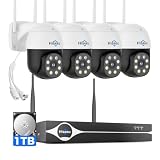
- Note: "Wireless" refers to WiFi connection only. The cameras and NVR still need to be plugged in. Please confirm before ordering.
- 4K Ultra HD & IR Night Vision: Featuring an advanced image sensor with true 3840 × 2160 resolution, this security camera captures fine details clearly, even at a distance. The built-in IR-cut filter automatically switches between color daytime imaging and infrared night vision, delivering sharp, clear footage in complete darkness for reliable 24/7 monitoring. Stay safer with Hiseeu's advanced technology.
- No Blind Spots & Auto Human Tracking: With 355° pan and 90° tilt capability, this PTZ security camera delivers wide-area coverage to minimize blind spots. Intelligent human tracking automatically follows detected movement, helping you monitor activity more effectively and capture important events in real time.
- Dual-Band WiFi (2.4GHz & 5GHz): Supports both 2.4GHz and 5GHz WiFi networks for faster data transmission and a more stable connection. Reduces interference and lag, ensuring smooth live viewing and reliable real-time monitoring indoors or outdoors.
- Two-Way Audio & Remote App Access: Communicate with family or visitors in real time through the HiseeuCloud App. Access live view and playback recordings anytime over WiFi on iOS or Android devices, and securely share viewing access with up to 4 users for simultaneous monitoring.
15. Graylog Security
Graylog Security is a log-management and security-analytics candidate for organizations seeking flexible collection, search, dashboards, alerting, and security-focused workflows. Depending on the edition, Graylog can be evaluated through self-managed or managed deployment options.
Do not compare Graylog only on search or dashboard usability. Validate current edition boundaries, cloud availability, correlation and detection content, compliance reporting, integrations, alert routing, retention, and the engineering effort required to build and maintain detections. A buyer that has a small security engineering team should explicitly score the ongoing content and upgrade workload.
How should you define the SIEM telemetry contract?
Start with the data contract before choosing a platform. List the sources that must be collected, the fields that must be preserved, the expected event volume and peak rate, the required retention, and the investigations the data must support.
| Source category | Questions for every vendor | Failure to catch in a POC |
|---|---|---|
| Identity and authentication | Are sign-ins, privilege changes, MFA events, service accounts, and directory changes parsed with usable user and device identifiers? | An identity investigation cannot connect a user, IP address, device, and cloud action |
| Endpoint and server | Can the platform ingest the required operating systems, process activity, detections, and response state? | The SIEM shows an alert but lacks the endpoint evidence or containment action |
| Firewall, DNS, proxy, and network flow | Are timestamps, source and destination fields, domains, actions, and flow context normalized correctly? | Correlations produce false positives because time zones, NAT, or field names are wrong |
| Cloud control plane and SaaS | Can the platform collect the required audit events, API activity, configuration changes, and administrative actions? | Cloud compromise evidence is unavailable or arrives too late for investigation |
| Email and applications | Can analysts pivot from a message, application account, transaction, or error to related identity and endpoint activity? | The platform detects an anomaly but cannot establish scope or business impact |
| OT and specialized systems | Are the required protocols, devices, flows, and operational constraints supported without unsafe automation? | IT/OT visibility is incomplete or automated response creates operational risk |
Microsoft, Google, IBM, Sumo Logic, CrowdStrike, and Datadog all document broad ingestion or integration capabilities, but connector counts are not equivalent to useful coverage. Require each vendor to demonstrate ingestion, parsing, normalization, timestamp handling, enrichment, and detection coverage for the actual products and versions in the environment.
Should you buy a traditional SIEM or a converged SecOps platform?
Choose a traditional SIEM when broad independent data coverage, flexible search, long-term evidence, and a vendor-neutral operating model matter more than consolidating security tools. Choose a converged SecOps platform when native endpoint, XDR, SOAR, UEBA, cloud, or proprietary telemetry can materially reduce analyst steps and tool sprawl.
The trade-off is ecosystem dependence. Cortex XSIAM and Falcon Next-Gen SIEM are not simply alternate log buckets; both are positioned around a broader SecOps platform. Compare the total operating model, including endpoint coverage, third-party data, migration, staff skills, response controls, and exit or export requirements. A platform with more native features can still be a poor fit if the organization cannot adopt its endpoint or data model.
How should SIEM ingestion and retention costs be modeled?
Request quotes using a normalized workload rather than a vendor’s headline unit. Give every vendor the same daily volume, peak rate, hot retention, searchable retention, archive retention, enrichment needs, replay requirements, egress assumptions, and expected annual growth.
- Record the source-by-source daily and peak volume, not only an average.
- Separate hot, searchable, warm, cold, and archive behavior where the vendor uses multiple data tiers.
- Ask whether pricing is based on ingestion, indexed data, search, users, signals, endpoints, data volume, or a combination.
- Include parsing, enrichment, threat intelligence, storage, replay, egress, and API usage in the model.
- Model 30-, 90-, and 365-day costs with realistic growth and retention changes.
- Include administration, detection engineering, content tuning, migration, and incident-response labor in the business case.
Google describes ingestion-based packages and one year of hot-data retention in its Standard description. Microsoft documents analytics and data-lake tiers; Sumo Logic documents product-specific retention behavior; Datadog’s model is closely connected to log management. These differences make list-price comparisons unreliable without a normalized workload.
Independent reader supportYour contribution helps us test, update, and keep practical guides available for everyone.What analyst workflow should a SIEM proof of concept test?
Start with an alert and require the vendor to demonstrate the complete path through triage, entity pivoting, timeline construction, evidence collection, case creation, threat-intelligence enrichment, containment, documentation, and reporting.
- Triage: Identify why the alert fired, its severity, related alerts, and the affected user, device, IP, domain, hash, or cloud resource.
- Scope: Pivot across identity, endpoint, network, cloud, email, SaaS, and application evidence without exporting data into a separate tool for every step.
- Timeline: Establish the sequence of authentication, process, network, administrative, and response events with reliable timestamps.
- Decision: Record analyst notes, evidence, confidence, ownership, and the reason for escalation or closure.
- Response: Trigger ticketing, notification, enrichment, isolation, account disablement, indicator blocking, or remediation only within approved boundaries.
- Reporting: Export evidence, audit history, case activity, and an incident summary suitable for compliance or post-incident review.
Google documents asset, IP, hash, domain, and user investigation views. Microsoft documents graph investigation, hunting, notebooks, and playbooks. Splunk documents Mission Control, investigations, risk-based alerting, and SOAR integration. Require those workflows to be demonstrated with the buyer’s own data rather than accepted from a slide deck.
Best Value
How should detection engineering and tuning be evaluated?
Ask how detections are authored, versioned, tested, mapped to MITRE ATT&CK, promoted between environments, and measured for false positives and missed detections.
| Capability | POC question | Evidence to keep |
|---|---|---|
| Rule authoring | Can an analyst or engineer create a rule using the fields and data model used in production? | Rule source, required fields, dependencies, and test results |
| Versioning | Can teams review, approve, roll back, and compare detection changes? | Change history, owners, approvals, and rollback procedure |
| Testing | Can a known attack and a benign lookalike be replayed safely? | Detection result, latency, alert volume, and false-positive outcome |
| Coverage | Can the buyer map detections to relevant MITRE ATT&CK techniques without treating a coverage chart as proof of protection? | Technique mapping and the actual source data required by each rule |
| Tuning | Can the team suppress, scope, enrich, or prioritize alerts without hiding meaningful activity? | Before-and-after alert volume, exceptions, and review owner |
Sumo Logic documents detection-as-code and MITRE coverage tools; Google documents YARA-L and curated detections; Microsoft documents analytics rules and hunting queries; CrowdStrike documents custom parsers and its parsing standard. The buyer should measure the full lifecycle from rule creation to tested production deployment, not just the availability of a rule language.
What automation safeguards should a SIEM include?
Automation should enrich and route evidence freely only when the risk is understood; actions such as isolating devices, disabling accounts, blocking indicators, or remediating systems require approval gates, role-based access, rollback, and audit trails.
| Action | Minimum control to test | Failure mode |
|---|---|---|
| Ticket or notification | Deduplication, ownership, severity, evidence attachment, and audit history | Analysts receive duplicate or context-free cases |
| Threat-intelligence enrichment | Source, timestamp, confidence, and the ability to distinguish enrichment from confirmed detection | Low-confidence intelligence drives an overconfident response |
| Account disablement | Approval, privileged-role exception, time-limited action, and rollback | A critical account is disabled without authorization |
| Endpoint isolation | Approval, device identity confirmation, business exception, and release procedure | A production or safety-critical system loses connectivity |
| Indicator blocking | Scope, expiration, duplicate handling, and review | A broad block disrupts legitimate traffic or remains indefinitely |
Microsoft uses Logic Apps playbooks; Google documents SOAR playbooks and more than 300 tools; Splunk documents SOAR integration; Sumo Logic documents playbooks and automation; Cortex XSIAM and FortiSIEM position automation as core capabilities. Test each action with a simulated incident and require the vendor to show who approved it, what changed, how it can be reversed, and what remains in the audit log.
Which deployment and governance requirements matter?
Cloud-native does not automatically mean suitable for every regulated, sovereign, or operational environment. Confirm data residency, supported regions, encryption, customer-managed keys where required, private connectivity, tenant isolation, administrative roles, audit logs, retention controls, and export options in writing.
- Residency: Identify where raw events, indexes, archives, backups, threat intelligence, and support copies are stored.
- Access: Test role-based administration, separation of duties, privileged access, tenant boundaries, and audit visibility.
- Retention: Confirm whether retention is searchable, hot, archived, immutable, exportable, and included in the quoted tier.
- Connectivity: Verify private connectivity, collector placement, firewall requirements, proxy behavior, and offline or intermittent-source handling.
- Exit: Test evidence export, parser portability, rule export, case export, and the cost of retrieving retained data.
- Lifecycle: Obtain current portal, product, support, and migration dates rather than relying on old comparison articles.
What weighted scorecard should a SIEM buyer use?
A weighted scorecard makes priorities explicit, but the weights below are a buyer-provided decision framework rather than a universal benchmark.
| Criterion | Suggested weight | What to score |
|---|---|---|
| Telemetry coverage and data quality | 25% | Required sources, parsing, normalization, timestamps, enrichment, and detection-ready fields |
| Detection and threat hunting | 20% | Rule quality, hunting, ATT&CK mapping, tuning, content lifecycle, and known-incident results |
| Investigation workflow | 15% | Entity pivots, timelines, evidence, cases, intelligence, and analyst steps |
| Response automation | 15% | Playbooks, integrations, approvals, rollback, role controls, and audit history |
| Retention and economics | 10% | Ingestion, search, storage, retention, archive, egress, growth, and staffing costs |
| Deployment and governance | 10% | Regions, residency, keys, connectivity, tenancy, roles, audit, and export |
| Implementation ecosystem | 5% | Skills, services, integrations, training, migration support, and operational fit |
Adjust the weights for the organization’s risk, regulatory environment, endpoint strategy, cloud strategy, and staffing model. Record a separate confidence score for every rating so an untested vendor claim cannot look equivalent to a measured POC result.
What should a SIEM proof of concept include?
A useful SIEM POC uses representative production-like data and produces measurable evidence rather than a polished dashboard demonstration.
- Ingest representative identity, endpoint, cloud, firewall, DNS, SaaS, and application data; add network or OT sources when they are part of the operating environment.
- Reproduce three known incidents and one benign high-volume workflow.
- Measure time to onboard, parse quality, detection latency, search latency, alert volume, and analyst steps.
- Test an identity-compromise investigation across user, device, IP, cloud, and email evidence.
- Build or modify a detection and move it through testing and production.
- Trigger a ticket, notification, enrichment, and containment action with approval controls.
- Export evidence and audit history for a compliance or post-incident review.
- Produce 30-, 90-, and 365-day cost models using realistic growth and retention.
| POC output | Pass condition | Procurement use |
|---|---|---|
| Telemetry report | Every required source is parsed with the fields and timestamps needed for investigation | Separates usable coverage from connector-count claims |
| Incident workbook | Known incidents can be reconstructed with documented analyst steps and evidence | Shows practical detection and investigation quality |
| Detection lifecycle record | A rule moves from creation through test, approval, production, and tuning | Exposes content-engineering workload |
| Automation record | Actions show approval, role, audit history, and rollback | Tests operational safety and governance |
| Cost model | 30-, 90-, and 365-day scenarios include volume, retention, growth, and labor | Prevents a low initial quote from hiding long-term cost |
How should the final vendor decision be made?
Choose the product that satisfies the telemetry contract and produces the strongest measured analyst outcome at an acceptable five-year operating cost. A Microsoft-heavy SOC may begin with Sentinel, an established Splunk operation may favor Splunk Enterprise Security, an Elastic environment may value Elastic Security, and a Datadog-standard observability environment may find Datadog Cloud SIEM easier to evaluate. Those are fit hypotheses, not rankings.
Organizations considering tool consolidation should compare Falcon Next-Gen SIEM and Cortex XSIAM against the cost and risk of keeping independent endpoint, SIEM, XDR, and SOAR products. Organizations with IT/OT requirements should test FortiSIEM and other candidates against actual OT sources. Organizations with legacy QRadar, LogRhythm, or other estates should include migration and lifecycle risk in the scorecard. In every case, the POC result, governance review, and normalized cost model should outweigh an unverified claim about being best, most accurate, cheapest, or easiest.
The Bottom Line
The right SIEM is the one that reliably ingests the telemetry your SOC actually needs, turns that data into useful detections, shortens investigations, automates approved actions safely, and remains financially and operationally sustainable as retention and volume grow.
Use the 15 products as a shortlist of operating models, not a ranking. Test the same incidents, sources, retention scenarios, analyst workflow, automation controls, and 30-, 90-, and 365-day costs in a proof of concept before signing a contract.
Quick Recap
Product prices and availability are accurate as of the date/time indicated and are subject to change. Any price and availability information displayed on Amazon at the time of purchase will apply.

