
Recommended Free Tools
iTechGuides is reader-supported. When you buy through links on our site, we may earn an affiliate commission. As an Amazon Associate I earn from qualifying purchases. Learn more
Possibly—but a single sold-out size between available sizes is not the same as several sizes left stranded around a gap. In Walker Brown’s 2026 scan of 298 Shopify catalogues, 10.3% of buyable styles had at least one interior size gap under the broad definition; the more conservative stranded-stock definition applied to 2.8% of buyable styles. These are findings from the author’s sample, not estimates for every Shopify store.
What counts as a size run with a hole?
A size run is a product’s ordered sequence of sizes, such as XS, S, M, L and XL. Brown counted a run as broken when a size was sold out while sizes on both sides were still available. A style sold out at one end of its size range did not qualify: that can be ordinary sell-through rather than an interior gap.
The study also used a stricter definition intended to avoid treating a nearly sold-through style as a serious stock problem. It counted a run only when two or more sizes remained stranded beside the gap. That operational measure indicates a pattern in listed availability; it does not show that a customer wanted to buy a missing size or that a sale was actually lost.
What did the 298-catalogue scan find?
Brown’s reported rates depend on whether a single interior sold-out size counts or whether multiple sizes must remain stranded:
#1 Best Overall
- Inventory Management Software
- Manage millions of inventory in one program
- Track and manage different types of inventory
| Measure | Broad definition | Conservative definition |
|---|---|---|
| Share of buyable styles with a qualifying gap | 10.3% | 2.8% |
| Analyzed stores with at least one qualifying run | 78.5% (234 of 298) | 63.8% (190 of 298) |
Under the broad definition, 72.6% of broken styles were missing exactly one size. Brown therefore presents the 2.8% style-level and 63.8% store-level results as the more conservative indicators of stranded stock, rather than treating every isolated gap as equally meaningful.
Large catalogues showed gaps more consistently
Among the 101 largest catalogues in the sample, 100% had at least one broad-definition gap and 94.1% had at least one conservative-definition gap. Brown suggests that a small catalogue’s lone gap may reflect near-complete sell-through, while larger catalogues accumulate more gaps. That is the author’s interpretation of the pattern, not a demonstrated cause.
Rank #2
- #1 Best Selling Invoice Software
- Create Custom Invoices, Estimates & Statements
- Receive Payments & Track Invoices in One Place
- Generate Reports on Sales, Invoices, Inventory & More
- PLUS! Data Backup, Label Creation & Credit Card Processing
How the author assembled the sample
Brown attempted to contact 438 stores. Of those, 354 responded and contained 122,425 products. The size-run analysis covered 298 stores that returned readable runs: those stores held 111,774 products and contributed 64,268 analyzed runs. The 354-store response set and the 298-store analysis set are different groups.
The Tool Desk
Outbyte PC Repair FREEClear out junk files and repair common Windows errorsFree Scan →Outbyte Driver Updater FREEFix the driver behind crashes, sound loss and screen glitchesFind Drivers →According to Brown, the analysis fetched public Shopify catalogue data from each store’s /products.json endpoint, using pagination with a limit of 250 products per request. The article says this required no API key or app installation. The figures and methodology are author-reported in the September 30, 2026 article; the page could not be independently opened for this report, so its underlying data and code have not been independently checked.
Rank #3
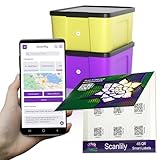
- EASILY CREATE A DATABASE OF YOUR BELONGINGS USING AI: Simply add a QR sticker to your item or container, take pictures, and optionally let AI do the work of adding names, descriptions and other fields for your items. Using this approach, you can very rapidly create an inventory of your belongings that you or others can reference later on the app or on a website. FREE EXPORT TO CSV. NO SUBSCRIPTION WILL EVER BE REQUIRED FOR FREE VERSION.
- GREAT FOR BUSINESSES. SIMPLE FOR CONSUMERS. PERFECT FOR MOVING AND STORAGE: If you’re not comfortable with apps or smart phones, this might not be the app for you. But it’s by far the best for tech–savvy people and businesses. With the help of AI image recognition and simple steps, Scanlily makes inventorying many items a fast and easy process.
- NO APP NEEDED FOR VIEWING: Our QR codes lead directly to URLs, so sharing is hassle-free. After you've used the app or website to add the items, others can view item details just by scanning with their camera—no app download needed. Simply click on the Public checkbox for the item to enable scanning without the app.
- OWN YOUR DATA - NO WALLED GARDEN: Free spreadsheet/CSV export of everything except images. Full backup with images requires just one month of a Business subscription. Your data stays yours.
- QUICKLY CATALOG YOUR ENTIRE BOOKSHELF WITH JUST A FEW PICTURES. Do you have a friend or relative who has lots of books, games or tools to organize? With Scanlily you can take a few pictures of your bookshelf and automatically create a catalog of all your books.
Why interpreting size options matters
Shopify variant options are free text, so a size can appear in different capitalization, languages, abbreviations, numeric forms or waist-and-inseam formats. Brown normalized variant labels and treated a product as a size run only when its variants differed along exactly one ordered axis. One-size products were excluded. Where variants combined colour and size, the analysis split the runs by colour rather than treating the colour-size combinations as one long sequence.
Brown says the size grammar initially failed to recognize spelled-out size names. The author corrected it and reran the analysis on the same cached catalogues; the reported figures rose by a few tenths. An earlier, smaller pass had a slightly lower conservative result. The article points to a page containing both passes and per-catalogue rows, but those details could not be independently verified here. The correction matters because the rates depend partly on how free-text options are recognized and ordered.
Rank #4
![Inventoria Software for Stock Control and Inventory Management and Montoring [Download]](https://m.media-amazon.com/images/I/51RW0EHuk3L._SL160_.jpg)
- Manage and monitor inventory to streamline your operations and boost profits
- Use warnings and reports to make sure you never run out of necessary stock
- Create purchase orders and email them directly to vendors from Inventoria
- Maintain a database of both customers and suppliers
- Scan in barcodes to add new items
How to check whether your own store has a gap
The sample rates can’t tell you whether your store has this pattern. Check the actual size availability in your own catalogue, using a consistent size order for each style and separating colour variants.
Quick wins for a faster PC:
Repair Windows errors before they cause bigger problemsFix Now →Scan for outdated or missing drivers - takes under a minuteDriver Scan →- Choose a style and a single colour. Treat each colour’s size options as its own run so colour variants do not interrupt the size sequence.
- Put sizes in their real order. Normalize labels such as abbreviations or numeric sizes before comparing availability; do not rely on alphabetical sorting.
- Look for an interior sold-out size. A gap requires an unavailable size with available sizes on both sides. A sold-out size at the beginning or end is not an interior gap.
- Separate isolated gaps from stranded runs. Record a single missing size as a broad-definition gap. For the more conservative check, count only runs where at least two sizes remain stranded beside the gap.
- Review the result in context. The check describes listed availability at the time you inspect it. It does not, by itself, establish customer demand, why stock ran out or whether a sale was lost.
What the findings can—and cannot—tell you
This is an observational scan of public catalogues the author could reach and parse, not a representative estimate for all apparel ecommerce or all Shopify merchants. Its results depend on the sample, variant normalization and definitions of a broken run. The figures describe how often the defined availability pattern appeared; they do not establish why it happened, how much revenue it affected or how prevalent it is across every Shopify apparel store.
Quick Recap
Best Value

- AI AUTO-LABELING: Photograph the contents of a box, bin or container and SnapFind automatically names, categorizes, tags and estimates the value of items, reducing repetitive typing
- FIND ITEMS FAST: Scan a label to open its container, search by item name or tag, or browse by category so you can locate stored belongings without opening every box
- 48 UNIQUE COLOR-CODED LABELS: Use the included 2.5 x 2.5 in QR code stickers to organize containers by room, space or purpose. Add more packs as your inventory grows
- VERSATILE STORAGE SOLUTION: Organize moving boxes, storage bins, closets, garages, attics, basements, seasonal decorations, storage units and small-business supplies
- IOS AND ANDROID APP: Tag a container, snap photos of what is inside and search later from the SnapFind app. Includes 48 QR labels and a 2-year manufacturer warranty
Product prices and availability are accurate as of the date/time indicated and are subject to change. Any price and availability information displayed on Amazon at the time of purchase will apply.

