
iTechGuides is reader-supported. When you buy through links on our site, we may earn an affiliate commission. As an Amazon Associate I earn from qualifying purchases. Learn more
Secrets sprawl is an inventory, ownership, access, and lifecycle problem—not simply a lack of centralized storage. A vault can protect and distribute credentials, but it cannot automatically find every copy already embedded in code, logs, caches, deployment settings, or developer tools. A reliable playbook gives every secret an owner, limits who and what can use it, chooses a rotation method that can update the system accepting the credential, and verifies that the change worked before revoking the old value.
What secrets sprawl is—and what a vault can and cannot fix
Secrets sprawl occurs when credentials such as passwords, API tokens, certificates, and encryption keys are scattered across systems and copies without clear ownership or lifecycle control. A credential may appear in a central secrets platform and also persist in a CI/CD variable, a deployment file, a container configuration, a log, or a developer’s tooling. Centralizing one copy does not remove the others.
HashiCorp describes Vault as a platform for centrally storing, accessing, rotating, syncing, and distributing dynamic secrets. That is a vendor description of its product capabilities, not evidence that central storage alone eliminates every copy or resolves unclear ownership. Treat centralization as one control in a larger process: discover, assign responsibility, reduce exposure, rotate at the system that accepts the credential, distribute the matching value, and verify the result.
Quick wins for a faster PC:
Clear out junk files and repair common Windows errorsFree Scan →Scan for outdated or missing drivers - takes under a minuteDriver Scan →Repair Windows errors before they cause bigger problemsFix Now →How to build a useful secrets inventory
Make the inventory operational, not just a list of secret names. For each credential, record:
#1 Best Overall

- POWERFUL SECURITY KEY: The YubiKey 5 NFC is the most versatile physical passkey, protecting your digital life from phishing attacks. It ensures only you can access your accounts
- WORKS WITH 1000+ ACCOUNTS: Compatible with popular accounts like Google, Microsoft, and Apple. A single YubiKey 5 NFC secures 100+ of your favorite accounts, including email, password managers, and more
- FAST & CONVENIENT LOGIN: Plug in your YubiKey 5 NFC via USB and tap it, or tap it against your phone (NFC), to authenticate. No batteries, no internet connection, and no extra fees required
- MOST SECURE PASSKEY: Supports FIDO2/WebAuthn, FIDO U2F, Yubico OTP, OATH-TOTP/HOTP, Smart card (PIV), and OpenPGP. That means it’s versatile, working almost anywhere you need it
- PRIMARY & SPARE KEYS: Just like having a spare house key, we recommend buying two YubiKeys - one for daily use and one as a spare. That way you’ll never get locked out of your accounts
- Identity and ownership: a stable name, a named owner or team, and a recovery contact.
- Use: the consuming application or workload, environment, and privilege level.
- Authority: the backing system that accepts the credential, such as a database, cloud service, or partner service.
- Locations: the intended store, known copies, and systems that distribute or cache the value.
- Lifecycle: the rotation method, last successful rotation, expiration if applicable, and the path to revoke or disable it.
Search configuration files, deployment settings, CI/CD workflows, container and orchestration secrets, logs, developer tooling, and cloud consoles. Record a location as a known copy even if it is temporary or believed to be unused; confirm and remove it rather than assuming it has expired.
Discovery should recur as systems and teams change. If a credential turns up outside its intended store, identify its owner and consumers, update the live system and approved store through a controlled rotation, revoke the exposed copy, and inspect relevant logs and dependent services. A vault does not automatically erase secrets already copied into code, logs, caches, or deployment systems.
How to reduce access and distribution
Give each workload the narrowest access it needs, and scope secret-read permissions to the relevant application or team. Prefer separate credentials for applications and environments where practical. A single credential used in many places expands the number of systems that must be updated and the impact if the value is exposed.
Rank #2

- Security Key : Protect your online accounts against unauthorized access by using FIDO2 and U2F authentication with T120. It's the world's most protective security key that works with windows, Mac OS, Linux as well as Chrome, Firefox, Edge and many other major browsers.
- Certified with the new FIDO2 standard, T120 provides the benefit of fast login and strong protection against phishing, account takeover as well as many other online attactks.
- Works with : Bank of America, Github, Google, Microsoft, DUO, Twitter, Facebook, Dropbox, Apple, ebay, BINANCE, mor and more.
- Fits USB-C port : Insert the T120 security key into the USB-C port of each service and log in conveniently with one touch
- For the driver download and user guide, please visit TrustKey Solutions Home support page.
Use application-specific identities rather than broad administrative credentials. AWS recommends that an application database user have only the privileges required by the application, rather than using the database master user. Apply the same least-privilege reasoning to other backing services.
Where supported, use workload identity or managed identity so an application does not need a long-lived bootstrap credential merely to retrieve another secret. Microsoft identifies managed identity as the preferred way to authenticate to Azure services, while recognizing that some scenarios still require a key, password, or other secret. If a bootstrap secret remains necessary, inventory and protect it like any other credential.
Which rotation method fits each secret?
Select the mechanism based on the credential type, the service that accepts it, and the platform’s supported integration. The following are distinct approaches, not interchangeable labels:
Rank #3
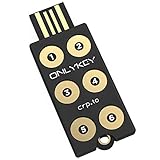
- ✅ PROTECT ONLINE ACCOUNTS – A password manager, two-factor security key, and secure communication token in one, OnlyKey can keep your accounts safe even if your computer or a website is compromised. OnlyKey is open source, verified, and trustworthy.
- ✅ UNIVERSALLY SUPPORTED – Works with all websites including Twitter, Facebook, GitHub, and Google. Onlykey supports multiple methods of two-factor authentication including FIDO2 / U2F, Yubico OTP, TOTP, Challenge-response.
- ✅ PORTABLE PROTECTION – Extremely durable, waterproof, and tamper resistant design allows you to take your OnlyKey with you everywhere.
- ✅ PIN PROTECTED – The PIN used to unlock OnlyKey is entered directly on it. This means that if this device is stolen, data remains secure, after 10 failed attempts to unlock all data is securely erased.
- ✅ EASY LOG IN –No need to remember multiple passwords because by plugging OnlyKey to your computer, it automatically inputs your username and password. It works with Windows, Mac OS, Linux, or Chromebook, just press a button to login securely!
| Approach | When it fits | What to confirm |
|---|---|---|
| Provider-managed rotation | A backing service and secret type have a supported managed rotation path. AWS documents managed rotation for many managed secrets. | Confirm the specific service, credential type, configuration, and region support the method you plan to use. |
| Managed external rotation | A supported partner-held secret can be rotated through an integration. AWS documents managed external rotation for supported partner secrets. | Check that the particular external service and credential type are supported; do not assume every partner credential qualifies. |
| Custom function or workflow | No suitable managed path exists, or the rotation needs service-specific coordination. AWS documents Lambda-based rotation; Microsoft’s Azure example uses an Event Grid-triggered function to rotate a SQL Server password. | The function or workflow must update the system that accepts the credential and publish the corresponding value for consumers. Test failure handling and permissions. |
| Dynamic short-lived credentials | The platform and application can request credentials for a workload and allow them to expire instead of repeatedly distributing a long-lived shared value. | Confirm the backing system, application, and access policies support issuance, renewal, expiry, and recovery. HashiCorp describes dynamic secrets as a Vault capability. |
| Secret synchronization | A changed value must be distributed to supported destinations. | Synchronization distributes a value; it is not the action that changes the credential at the backing system. HashiCorp says Vault secrets sync cannot directly rotate secrets. |
How to rotate without losing track of the live credential
Rotation is complete only when the credential accepted by the backing service and the value available to consumers match. AWS defines rotation as updating the value in both Secrets Manager and the database or service. Use a documented workflow for each secret type:
Do these 3 things before closing this tab:
1Clear out junk files and repair common Windows errors2Fix the driver behind crashes, sound loss and screen glitches3Repair Windows errors before they cause bigger problems- Prepare the change. Identify the consumers, permissions, rollback path, and any overlap window. Determine whether the service supports an alternate credential or identity during transition.
- Change the backing system. Create or activate the new credential at the database or service that accepts it. A vault-only update does not change what that system accepts.
- Publish the matching value. Store the new value in the approved vault and synchronize it to destinations only where that distribution is required.
- Confirm consumer use. Check that each intended workload can retrieve the new value and successfully authenticate to the backing service. A successful write to the vault is not proof that applications have adopted the new credential.
- Watch the transition. Monitor authentication failures, application errors, and rotation-workflow outcomes during the defined overlap or rollback window.
- Revoke the old credential. Disable or remove it after the new value is verified and the planned transition window has elapsed. Record the successful change and any exceptions in the inventory.
AWS’s Secrets Manager user guide discusses single-user and alternating-user database rotation strategies. An alternating-user design can preserve a valid credential during transition in supported scenarios, but it depends on suitable permissions and application behavior. Choose a strategy only after confirming that it fits the database and consumers.
Do not promise zero downtime for every rotation. AWS documents a short interval during some rotations when the stored and live credentials can be out of sync, and recommends retry handling for relevant failure modes. Validate the particular service’s rotation semantics and test rollback in a non-production environment before defining availability expectations.
Rank #4

- ✅ PROTECT ONLINE ACCOUNTS – A password manager, two-factor security key, and secure communication token in one, OnlyKey can keep your accounts safe even if your computer or a website is compromised. OnlyKey is open source, verified, and trustworthy.
- ✅ UNIVERSALLY SUPPORTED – Works with all websites including Twitter, Facebook, GitHub, and Google. Onlykey supports multiple methods of two-factor authentication including FIDO2 / U2F, Yubico OTP, TOTP, Challenge-response.
- ✅ PORTABLE PROTECTION – Extremely durable, waterproof, and tamper resistant design allows you to take your OnlyKey with you everywhere.
- ✅ PIN PROTECTION – Locking your device means that if this device is stolen, data remains secure, after 10 failed attempts to unlock all data is securely erased.
- ✅ EASY LOG IN – No need to remember multiple passwords because by plugging OnlyKey to your computer, it automatically inputs your username and password. It works with Windows, Mac OS, Linux, or Chromebook, just press a button to login securely!
How to prove rotation succeeded
A schedule or a successful job launch is not proof of a successful rotation. Measure the outcome at separate points in the chain:
- Rotation execution: the workflow completed without an error and recorded the intended secret version or change.
- Backing-system acceptance: the new credential authenticates to the database or service that owns it.
- Consumer adoption: intended workloads can retrieve and use the new value; stale consumers and authentication errors are identified.
- Old-value retirement: the former credential is disabled or revoked after the transition, rather than left valid indefinitely.
- Inventory freshness: the last successful rotation, exceptions, and accountable owner are recorded.
AWS Security Hub separates controls that check whether rotation is enabled, whether configured rotation succeeds, and whether a secret’s age exceeds a configured maximum. These checks answer different questions: configuration is not execution, and execution is not by itself evidence that consumers are using the new value.
Outdated Drivers Are Slowing You Down
One free scan finds every outdated or missing driver and matches the right update for your exact hardware.Free scan · exact hardware matchPC Slower Than It Used to Be?
A free scan shows the junk files, broken settings and background clutter dragging Windows down - then fixes them in one click.Free scan · Windows 10 & 11How to set a rotation cadence
Do not apply one interval to every password, token, certificate, or key without considering compromise impact, credential lifetime, provider capabilities, application tolerance, and recovery complexity. Use event-driven rotation after suspected exposure or relevant personnel or service changes when appropriate, alongside a scheduled policy for credentials that remain long-lived. Assign an owner to each exception and track missed rotations, stale consumers, and last successful changes.
Best Value

- Ultra-Compact FIDO2 Security Key - Plug-and-stay or carry on a keychain. This USB-A hardware security key offers portable, always-on protection for desktop and mobile use. (Item Size: 0.75 X 0.74 IN x 0.25 IN)
- USB-A Hardware Key for All Devices - Works with USB-A ports on PC, Mac, Android, and other laptop/notebook device. Enables secure, cross-platform login with FIDO2.0 passkey support.
- FIDO Certified Security Key - Meets FIDO and FIDO2 standards. Works with Google, Microsoft, GitHub, Dropbox, and more. Please check service compatibility before purchase.
- Passwordless Login with Passkey - Supports passkey login via WebAuthn and CTAP2. Enjoy password-free sign-ins where supported. Not all websites or services currently support passkeys.
- Advanced Multi-Factor Authentication - Offers 200 FIDO2 passkey slots and 50 OATH-TOTP slots. Strong, flexible 2FA/MFA support across various apps and authentication platforms.
AWS Security Hub’s Secrets Manager periodic-rotation control accepts a configurable maximum age from 1 to 180 days. Its documented default is 90 days when no custom maximum is supplied. That figure is the control’s default, not a universal security rule or a NIST-prescribed interval. The control’s rotation-enabled, rotation-success, and maximum-age checks should be interpreted separately.
How to choose a vault architecture
Compare platforms against the environment and the team responsible for the credential, not a claim that one product is universally best. Consider deployment scope, native integration with the system that owns the secret, supported rotation types, workload identity, policy granularity, audit and alerting, recovery, operating burden, and cost model.
| Option | Documented role in this playbook | Decision checks |
|---|---|---|
| HashiCorp Vault | HashiCorp positions Vault for centralized management across environments and describes capabilities including secret access, dynamic secrets, rotation, and distribution. Its secrets-sync documentation distinguishes distribution from rotation. | Assess which teams operate Vault, which backing systems and consumers are integrated, and how policies, availability, recovery, and sync destinations will be managed. |
| AWS Secrets Manager | AWS describes central storage, fine-grained IAM access, automatic rotation, replication, and auditing integrations. Its documentation covers managed, managed external, and Lambda-based rotation options. | Check region and service availability, the exact secret type’s supported rotation path, IAM scope, and application behavior during transition. |
| Azure Key Vault with Azure automation | Microsoft documents an Azure Key Vault workflow using an Event Grid-triggered function to rotate a SQL Server password, and recommends managed identity for Azure-service authentication where supported. | Confirm the function can update the backing system, publish the matching secret, authenticate with the required permissions, and handle failures and retries. |
These are vendor descriptions, not independent benchmarks. A single-cloud team may value native integration; a hybrid or multi-cloud organization may prioritize consistent policy and ownership across environments. In either case, test the complete path from credential change through workload adoption and old-value revocation.
What’s actually slowing this PC down?
Pick the symptom - the matching free tool is one click away.
Where key-management standards and HSMs fit
NIST SP 800-57 Part 1 Revision 5, published in May 2020, provides general cryptographic key-management guidance. SP 800-57 Part 2 Revision 1, published in May 2019, addresses organizational planning and documentation; NIST’s publication page reported that Part 2 was under review as of July 1, 2025. Use these publications for key-management governance where applicable. They do not establish one rotation interval for every application password, API token, or certificate.
Hardware security modules are specialized controls for architectures with particular key-protection, compliance, or operational requirements. HashiCorp documents HSM support for Vault integrations, including auto-unseal and other key-protection features, and lists cloud KMS and hardware products as verified integrations. That integration table was last updated May 3, 2023; verify current product, service, region, and version compatibility before relying on a specific integration. An HSM is not a prerequisite for every secrets-management playbook.
Quick Recap
Product prices and availability are accurate as of the date/time indicated and are subject to change. Any price and availability information displayed on Amazon at the time of purchase will apply.

