
The Tool Desk
Outbyte PC Repair FREEClear out junk files and repair common Windows errorsFree Scan →Outbyte Driver Updater FREEScan for outdated or missing drivers - takes under a minuteDriver Scan →iTechGuides is reader-supported. When you buy through links on our site, we may earn an affiliate commission. As an Amazon Associate I earn from qualifying purchases. Learn more
Samsung Galaxy S8 and S8+ specs still look surprisingly complete in 2026: both have sharp AMOLED displays, 4GB RAM, 64GB storage, microSD support, USB-C, wireless charging, IP68-rated water resistance, a headphone jack, and capable cameras. However, Android 9 is the official endpoint for the cited variants, security updates ended in 2021, and every surviving battery is old.
The Galaxy S8 and S8+ were Samsung flagship phones introduced in 2017. Their hardware remains useful for calls, messaging, browsing, music, video, and other basic tasks, but their unsupported software, aging batteries, lack of 5G, and uncertain carrier or app compatibility make them poor choices for most people seeking a dependable long-term primary phone.

Quick verdict
- Best for: an inexpensive secondary phone, media player, camera, music device, or compact Android phone with a headphone jack and microSD slot.
- Choose the S8: if you want the smaller, lighter body and can accept its 3,000mAh battery.
- Choose the S8+: if you prefer a 6.2-inch display and 3,500mAh battery over compactness.
- Avoid both: if you need 5G, current security patches, guaranteed banking or enterprise-app compatibility, modern gaming performance, or reliable multi-year ownership.
Key takeaways
- The Galaxy S8 has a 5.8-inch 2960 × 1440 curved Super AMOLED display, while the S8+ has a 6.2-inch panel with the same resolution.
- Both phones have 4GB RAM, 64GB internal storage in the cited U.S. versions, microSD expansion rated up to 256GB in Samsung’s original documentation, and the same basic camera and processor platform.
- The S8 weighs about 155g and contains a 3,000mAh battery; the S8+ weighs about 173g and contains a 3,500mAh battery.
- The phones launched with Android 7.0 Nougat, and Samsung’s update records show Android 9 Pie and 2021 security-patch levels for the cited S8+ variants.
- Both phones support 4G LTE rather than 5G, and carrier compatibility depends on the exact model number, bands, firmware, VoLTE support, and carrier approval.
- The S8 and S8+ remain unusually well equipped for their age, but software support and battery condition matter more than their original flagship specifications when buying one in 2026.
What are the Galaxy S8 and S8+?
The Galaxy S8 and Galaxy S8+ are Samsung’s 2017 flagship Android smartphones. The S8 is the smaller model, while the S8+ is physically larger but uses essentially the same core platform, camera system, memory configuration, and screen resolution.
Samsung introduced both phones with its curved-edge “Infinity Display” design and moved the fingerprint reader to the rear of the phone. Samsung’s original product materials also list Samsung DeX, Bixby, Samsung Pay, Samsung Health, Knox, wireless charging, NFC, and expandable storage among the platform’s features. These features remain part of the hardware story, but present-day app and service compatibility can change independently of the original specifications. Samsung’s Galaxy S8 and S8+ product announcement describes the launch features and design.
#1 Best Overall

- Tested for battery health and guaranteed to have a minimum battery capacity of 80%.
- Successfully passed a full diagnostic test which ensures like-new functionality and removal of any prior-user personal information.
- Inspected and guaranteed to have minimal cosmetic damage, which is not noticeable when the device is held at arm's length.
- The device does not come with headphones or a SIM card. It does include a charger and charging cable that may be generic.
- Fully Unlocked: Fully unlocked and compatible with any carrier of choice (e.g. AT&T, T-Mobile, Sprint, Verizon, US-Cellular, Cricket, Metro, etc.), both domestically and internationally.
How do the Galaxy S8 and S8+ specifications compare?
The primary S8-versus-S8+ differences are physical size, display size, weight, and battery capacity. The S8+ is not a materially faster version of the S8: both share the same RAM, storage class, camera hardware, screen resolution, and market-dependent processor family.
| Specification | Galaxy S8 | Galaxy S8+ |
|---|---|---|
| Display | 5.8-inch curved Super AMOLED | 6.2-inch curved Super AMOLED |
| Resolution | 2960 × 1440 | 2960 × 1440 |
| Approximate pixel density | 570 ppi | 529 ppi |
| Processor | Octa-core, 2.35GHz + 1.9GHz configuration; chipset varies by market | Same basic market-dependent platform |
| RAM | 4GB | 4GB |
| Internal storage | 64GB in the cited U.S. specification | 64GB in the cited U.S. specification |
| microSD | Up to 256GB in Samsung’s original specification | Up to 256GB in Samsung’s original specification |
| Rear camera | 12MP Dual Pixel, f/1.7, optical image stabilization | 12MP Dual Pixel, f/1.7, optical image stabilization |
| Front camera | 8MP autofocus, f/1.7 | 8MP autofocus, f/1.7 |
| Video | 4K at 30fps; UHD playback listed up to 60fps | 4K at 30fps; UHD playback listed up to 60fps |
| Battery | 3,000mAh, non-removable | 3,500mAh, non-removable |
| Weight | About 155g; 5.47oz in Samsung’s unlocked sheet | About 173g; 6.10oz in Samsung’s unlocked sheet |
| Dimensions | 148.9 × 68.1 × 8.0mm | 159.5 × 73.4 × 8.1mm |
| Cellular generation | 4G LTE; no 5G | 4G LTE; no 5G |
| Charging and ports | USB-C fast charging, wireless charging, 3.5mm headphone jack | USB-C fast charging, wireless charging, 3.5mm headphone jack |
| Water resistance | IP68 under specified test conditions | IP68 under specified test conditions |
The figures above come from Samsung’s Galaxy S8 U.S. specification page, the Galaxy S8+ U.S. specification page, and Samsung’s original unlocked specification sheet. Regional and carrier variants can differ, so a model number is more reliable than the generic “Galaxy S8” name.
How good are the Galaxy S8 and S8+ displays today?
The displays remain among the strongest reasons to consider either phone. The Galaxy S8 uses a 5.8-inch curved Super AMOLED panel and the S8+ uses a 6.2-inch curved Super AMOLED panel; both have a 2960 × 1440 resolution. That works out to approximately 570 ppi on the S8 and 529 ppi on the S8+.
Quick wins for a faster PC:
Scan for outdated or missing drivers - takes under a minuteDriver Scan →Clear out junk files and repair common Windows errorsFree Scan →Fix the driver behind crashes, sound loss and screen glitchesFind Drivers →AMOLED technology provides deep blacks, strong contrast, and support for an always-on display. The tall 18.5:9-era design is comfortable for scrolling and makes the S8 relatively narrow for its screen size. Older video apps or content may display black bars or require cropping because not all content uses the same aspect ratio.
Curved glass also creates trade-offs. Edge reflections, glare, accidental touches, and expensive screen repairs are more likely concerns than they would be with a simple flat panel. A used phone should be checked carefully for AMOLED burn-in, dead pixels, green or pink tint, cracked glass, uneven brightness, and touch-layer failures. Samsung’s original Galaxy S8/S8+ specification sheet verifies the display dimensions, resolution, and pixel densities; the condition of an individual used panel cannot be inferred from those original figures.
How fast are the Galaxy S8 and S8+?
The Galaxy S8 family used a 10nm, 64-bit octa-core platform, but the exact chipset depended on the market. Many U.S. models use Qualcomm’s Snapdragon 835, while many international models use Samsung’s Exynos 8895. Clock speeds, graphics hardware, LTE bands, firmware, and update behavior should therefore be checked against the exact model number.
Samsung’s U.S. listings specify 4GB RAM, 64GB storage, and a 2.35GHz/1.9GHz octa-core configuration. Samsung’s S8 support listing provides those U.S.-specific memory and processor details.
Rank #2
For calls, messaging, music, video, ordinary web browsing, email, and lightweight applications, 4GB RAM can still be adequate. Modern multitasking, demanding games, large web pages, camera processing, and newer applications can expose the phone’s age through reloads, lag, heat, or longer launch times. The S8+ should not be described as a performance upgrade; the larger display and battery are its meaningful hardware advantages.
The 64GB storage figure is the capacity before system files, updates, and application data. A microSD card helps store photos, music, and video, but Android does not treat external storage as a perfect replacement for internal storage. Some applications cannot be moved completely to a card, and demanding games still require internal space. Samsung originally documented microSD support up to 256GB, but card behavior and availability can differ today.
What cameras do the Galaxy S8 and S8+ have?
Both phones have the same camera hardware: a 12MP rear Dual Pixel camera with an f/1.7 aperture and optical image stabilization, plus an 8MP autofocus front camera with an f/1.7 aperture. Both can record 4K video at 30fps. Samsung’s launch materials emphasized autofocus, low-light photography, zoom, and anti-blur capabilities; the Galaxy S8 launch announcement documents those original camera features.
The rear camera can still produce attractive daylight photos, and optical stabilization can help with handheld photography and video. Current phones generally offer more advanced night photography, HDR processing, portrait effects, zoom, subject recognition, and video stabilization. The S8’s 12MP specification does not by itself make the camera equivalent to a current flagship camera.
Do these 3 things before closing this tab:
1Clear out junk files and repair common Windows errors2Fix the driver behind crashes, sound loss and screen glitches3Repair Windows errors before they cause bigger problemsTest a used camera before buying. Focus on both a nearby object and a distant object, switch between the rear and front cameras, inspect the lens for haze or cracks, record video with sound, and check whether autofocus hunts or fails. Camera condition can matter more than the original specification sheet.
How long does the Galaxy S8 battery last in 2026?
The Galaxy S8 has a 3,000mAh non-removable battery, and the Galaxy S8+ has a 3,500mAh non-removable battery. Both support USB-C wired charging, Samsung adaptive fast charging, and built-in wireless charging compatible with the WPC and PMA standards in Samsung’s original documentation. Samsung’s unlocked specification sheet lists the battery capacities and charging features.
The decisive 2026 battery issue is age, not the original capacity. Almost every surviving unit has a battery many years old. A phone showing 100% charge can still have substantially reduced capacity, and real endurance depends on battery health, display brightness, cellular signal, temperature, settings, and usage. Samsung’s historical battery figures describe manufacturer test conditions for a new device and should not be treated as expected battery life from a used S8 or S8+.
Rank #3
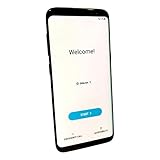
- Infinity Display: a bezel less, full frontal, edge to edge screen. Default resolution is Full HD+ and can be changed to Quad HD+ (WQHD+) in Settings
- Camera resolution Front: 8 MP AF, Rear: 12 MP OIS AF
- Memory: Internal Memory 64 GB, RAM 4GB. Earjack : 3.5 millimeter Stereo
- Battery, talk time is up to 30 hours, video play time is up to 17 hours
- Dust and Water resistant Water resistant and dustproof based on IP68 Rating, which tests submersion up to 1.5 meter for up to 30 minutes. Not shockproof
The S8+ starts with a larger battery and is generally the better choice for reading, video, and DeX, but a heavily worn S8+ battery can perform worse than a well-maintained S8 battery. Battery replacement may restore runtime, but repair quality varies and the phone’s original water resistance cannot be guaranteed afterward. Charging is also slow by modern flagship standards, even though wireless charging remains convenient.
Recommended Free Tools
Is the Galaxy S8 still durable and water-resistant?
Both phones carry an IP68 rating for water and dust resistance under specified laboratory conditions, including submersion up to 1.5 meters for up to 30 minutes. IP68 is not the same as being waterproof, and Samsung states that the device is not shockproof. Samsung’s support documentation describes the rating and its test conditions.
An old phone may no longer have its factory sealing after years of wear, a cracked rear panel, a damaged frame, or a screen or battery repair. Never deliberately submerge a used Galaxy S8 to test its rating. Inspect the USB-C port, front and rear glass, camera lens, buttons, frame, fingerprint reader, and signs of liquid damage instead.
What software does the Galaxy S8 support?
The Galaxy S8 and S8+ launched with Android 7.0 Nougat. Samsung’s official update records show Android 9 Pie as the final major Android version for the cited SM-G955F international and SM-G955U U.S. Galaxy S8+ variants, with listed security-patch levels ending in 2021. Check the exact model because update history varies by region and carrier.
Software support is the biggest reason the Galaxy S8 and S8+ do not satisfy every modern phone expectation. An old Android generation and old security patch can affect app installation, banking and payment services, enterprise requirements, DRM-protected streaming, browser support, and protection against newly discovered vulnerabilities. The Galaxy S8 should not be advertised as currently secure or guaranteed to run every current application.
Custom ROMs can provide a technical route to newer Android versions on some variants, but unofficial software is not equivalent to Samsung support. Bootloader restrictions, camera bugs, payment failures, biometric problems, DRM limitations, SafetyNet or Play Integrity issues, and security or reliability concerns may appear. A custom-ROM installation should be considered an advanced project, not a normal buyer’s solution, and not every Galaxy S8 model can use the same ROM.
Samsung’s SM-G955F international update history and SM-G955U U.S. update history are the relevant official records for the cited variants.
Rank #4

- Tested for battery health and guaranteed to have a minimum battery capacity of 80%.
- Successfully passed a full diagnostic test which ensures like-new functionality and removal of any prior-user personal information.
- Inspected and guaranteed to have minimal cosmetic damage, which is not noticeable when the device is held at arm's length.
- The device does not come with headphones or a SIM card. It does include a charger and charging cable that may be generic.
- Fully Unlocked: Fully unlocked and compatible with any carrier of choice (e.g. AT&T, T-Mobile, Sprint, Verizon, US-Cellular, Cricket, Metro, etc.), both domestically and internationally.
Will the Galaxy S8 work on a current carrier?
Carrier compatibility cannot be determined from the words “Galaxy S8” or “unlocked” alone. U.S. and international models use different cellular bands and firmware, and carrier features such as VoLTE, Wi-Fi Calling, emergency calling, and network approval depend on the exact model and provider.
The Galaxy S8 and S8+ are 4G LTE phones, not 5G phones. AT&T’s approved-device list includes specific U.S. Galaxy S8 and S8+ model numbers, but AT&T approval must not be generalized to Verizon, T-Mobile, or every MVNO. Carrier policies and network requirements can change, so check the intended provider immediately before purchase.
An international Exynos model may work well in its intended region but lack the bands, VoLTE certification, Wi-Fi Calling support, warranty coverage, or firmware required by a U.S. carrier. An “unlocked” listing is a claim to verify, not proof of universal compatibility.
Which useful features do the Galaxy S8 and S8+ still have?
The S8 generation offers a combination of features that many current budget phones omit. Both phones have a 3.5mm stereo headphone jack, microSD expansion, wireless charging, USB-C, an AMOLED display, NFC, and an IP68 rating when the original seals remain intact. Samsung also built in DeX support, allowing a desktop-style interface with compatible accessories, a display, keyboard, and mouse.
Samsung originally specified Samsung Pay, Samsung Health, Knox, Bixby, and other sensors and services, including heart-rate and iris-related hardware on some versions. Hardware support does not guarantee that every associated service, payment feature, or application will remain available on an old, unsupported operating system.
DeX is a useful legacy feature, but the Galaxy S8 should not be presented as a universal laptop replacement. Performance, compatible applications, peripherals, security support, and display connectivity all limit what the DeX experience can do.
Free tools Windows power users keep installed
One-click scans. No signup required.
Which Galaxy S8 model should you buy?
| Choose | Best fit | Main compromise |
|---|---|---|
| Galaxy S8 | One-handed use, lower weight, smaller pockets, and the same basic camera and resolution in a compact body | 3,000mAh battery and smaller viewing area |
| Galaxy S8+ | Video, reading, gaming, DeX, and buyers who prefer a 6.2-inch screen and larger original battery | Larger 173g body, higher handling burden, and no meaningful processor or camera advantage |
Choose the Galaxy S8 when compactness matters and the battery is demonstrably healthy. Choose the Galaxy S8+ when screen area matters more than pocketability. Neither model is the universally better buy, and a well-maintained S8 can be a better purchase than an S8+ with severe battery degradation.
Best Value

- The Galaxy S21 FE sports a sleek polycarbonate back with a premium matte finish that resists fingerprints and feels smooth in hand, giving it a stylish yet practical design.
Is a Galaxy S8 or S8+ worth buying in 2026?
A Galaxy S8 or S8+ can be worth buying only when the price is low enough to compensate for its age, the exact model works on the intended carrier, the battery is acceptable or replaceable at a reasonable cost, and the buyer needs basic functions rather than long-term software support.
The phones are most defensible as inexpensive secondary phones, media devices, music players, compact cameras, or basic everyday phones for users who specifically value the headphone jack, microSD slot, wireless charging, AMOLED display, and compact S8 option. A buyer who needs a dependable primary phone for several years should generally choose a newer supported device instead. Samsung’s Certified Re-Newed program covers newer Galaxy models rather than the discontinued S8 generation and is a more appropriate direction for buyers who prioritize warranty coverage, a newer battery, and current software support.
Do not overpay for a refurbished S8 or S8+. If the total price approaches that of a newer supported budget or refurbished phone, the S8’s excellent display and legacy features may not offset its Android 9 ceiling, old security patches, battery risk, 4G-only connectivity, and uncertain app support.
What should you check before buying a used Galaxy S8?
- Record the exact model number. Open Settings > About phone or inspect the listing and packaging. Do not buy based only on “S8” or “S8+.”
- Confirm network status. Verify the IMEI with the intended carrier, check that the phone is not blacklisted or still tied to an unpaid account, and confirm SIM-unlocked status.
- Check carrier features. Confirm LTE bands, VoLTE, Wi-Fi Calling, emergency calling, and the carrier’s current approved-device policy.
- Assess the battery. Look for rapid percentage drops, unexpected shutdowns, excessive heat, swelling, or charging that stops and starts. A full charge indicator does not prove good battery health.
- Inspect the display. Open white, black, red, green, and blue images to look for burn-in, tint, dead pixels, cracks, and touch problems around the curved edges.
- Test the cameras and audio. Focus near and far, switch cameras, record video with sound, test the microphone, speaker, headphone jack, and volume buttons.
- Test charging and data. Connect a known-good USB-C cable and gently check for a loose port. Test wireless charging if it is important to you.
- Test biometrics and sensors. Check the rear fingerprint reader, proximity sensor, GPS, NFC, vibration, and any advertised iris-related hardware.
- Inspect repair history. Ask whether the screen, rear glass, battery, or charging port has been replaced. Repairs can compromise sealing and may introduce parts or biometric problems.
- Demand buyer protection. Prefer a clear return window, warranty, seller reputation, and an explicit condition grade over the lowest “as-is” price.
- Verify storage expectations. Remember that a microSD card adds media capacity but does not provide the same app-installation space as internal storage.
What are the biggest Galaxy S8 and S8+ failure points?
| Problem | Why it matters | What to do |
|---|---|---|
| Wrong regional model | The phone may lack required bands, VoLTE, Wi-Fi Calling, or carrier approval | Match the model number and IMEI with the intended provider before purchase |
| Aged battery | Runtime may be poor even when the phone reports 100% charge | Test real behavior and budget for professional replacement |
| Screen burn-in or damage | AMOLED wear and curved glass repairs can be costly | Inspect solid-color screens and test the full touch surface |
| Worn USB-C port | Intermittent charging or data transfer can make the phone unreliable | Test with a known-good cable and inspect port movement |
| Old security patch | Banking, corporate, payment, and other security-sensitive apps may reject the device | Check application requirements before relying on the phone |
| Carrier lock or blacklist | A low-priced phone may be unusable on the buyer’s network | Verify unlock status and IMEI directly with the carrier |
| Repair-related sealing loss | Original IP68 protection may no longer be trustworthy | Treat repaired or cracked units as non-water-resistant |
| Custom-ROM problems | Newer software may break payments, DRM, cameras, biometrics, or reliability | Use unofficial software only as an advanced, model-specific project |
Galaxy S8 and S8+ specifications: final verdict
The Galaxy S8 and S8+ still have excellent legacy hardware fundamentals: high-resolution AMOLED screens, 4GB RAM, expandable storage, wireless charging, USB-C, a headphone jack, IP68-rated construction, and stabilized cameras. The S8 is the more compact choice; the S8+ is the better large-screen choice, not the faster choice.
In 2026, the decisive question is whether the buyer accepts an Android 9-era phone with 2021-era security support, an aged non-removable battery, 4G-only connectivity, and model-specific carrier and app limitations. Buy one cheaply, verify the exact model and condition, and treat it as a basic or secondary device. Do not treat either phone as a current flagship substitute or a secure long-term primary phone.
Frequently Asked Questions
Can the Galaxy S8 or S8+ run modern Android apps?
The Galaxy S8 and S8+ may run many basic current applications, but compatibility is not guaranteed because the cited variants officially stop at Android 9 and have security-patch records ending in 2021. Banking, payment, enterprise, streaming, and other security-sensitive apps may impose newer software requirements.
Does the Galaxy S8 support 5G?
No. The Galaxy S8 and S8+ are 4G LTE phones and do not contain 5G hardware. Network operation also depends on the exact regional or carrier model and the provider’s current compatibility policy.
What’s actually slowing this PC down?
Pick the symptom - the matching free tool is one click away.
Can the Galaxy S8 battery be replaced?
The Galaxy S8 and S8+ have non-removable batteries that can be replaced by a repair technician. Replacement quality varies, and a battery repair cannot guarantee that an old phone retains its original IP68 water resistance.
Is the Galaxy S8+ faster than the Galaxy S8?
No. The Galaxy S8+ mainly adds a larger 6.2-inch display and a larger 3,500mAh battery; the two phones share the same basic processor class, 4GB RAM, storage class, resolution, and camera hardware. Regional chipset and modem configurations can vary by model.
The Bottom Line
Bottom line: The Galaxy S8 and S8+ remain attractive only as low-cost, carefully checked legacy phones. Their displays, headphone jack, microSD slot, wireless charging, and IP68-rated design are still useful, but Android 9, 2021-era security support, aging batteries, 4G-only connectivity, and carrier-specific compatibility make a newer supported phone the safer long-term choice.
Quick Recap
Product prices and availability are accurate as of the date/time indicated and are subject to change. Any price and availability information displayed on Amazon at the time of purchase will apply.

