
What’s actually slowing this PC down?
Pick the symptom - the matching free tool is one click away.
iTechGuides is reader-supported. When you buy through links on our site, we may earn an affiliate commission. As an Amazon Associate I earn from qualifying purchases. Learn more
Use a Rust HTTP client to send prompts directly to a Gemma 4 inference endpoint. Use an MCP client when your program needs to connect to a separate server that exposes tools, resources, or prompts. These are different interfaces, not competing ways to reach the same service: an MCP server might call Gemma 4 behind the scenes, but MCP itself is not a Gemma inference API.
What each Rust client actually calls
A model endpoint returns inference
An endpoint client sends a request to a model-serving API and gets a model response. The serving API may use an OpenAI-compatible format, as in Google’s Cloud Run example, but the key boundary is the same: your Rust program is talking to the service that runs the model.
An MCP client connects to server capabilities
An MCP client connects to an MCP server and can use the tools, resources, or prompts that server advertises. The server may access a model, a database, or another backend. It is a distinct component with its own availability and authentication requirements; connecting to it does not by itself send a prompt to Gemma 4.
How to choose between endpoint and MCP
| Question | Call the model endpoint | Call an MCP server |
|---|---|---|
| What is the purpose? | Run inference: send input to Gemma 4 and receive a model response. | Use server-exposed tools, resources, or prompts. |
| What does the Rust program connect to? | The model-serving API. | A separately configured MCP server. |
| What does it return or expose? | A response from the model API. | The capabilities the MCP server makes available. |
| When does it fit? | When your application needs to prompt Gemma 4 directly. | When your application or agent needs access to capabilities provided through MCP. |
You can use both in one system. For example, an agent can call a model endpoint for inference and use an MCP server to query data or perform other actions. Google’s Cloud Run codelab illustrates this split: Gemma 4 31B Instruction-Tuned is served through a vLLM OpenAI-compatible API, while the agent uses a BigQuery MCP server to explore and query data. Google Cloud’s codelab documents that particular deployment, not a universal requirement for Gemma 4 applications.
#1 Best Overall
![Arduino® UNO™ Q 4GB [ABX00173]- Hybrid Board, Qualcomm Dragonwing QRB2210 microprocessor (MPU) & STM32U585 Microcontroller(MCU), AI Vision, Voice, IoT, Robotics, Linux Debian OS, Wi-Fi 5, USB-C](https://m.media-amazon.com/images/I/51cl4xygwGL._SL160_.jpg)
- Dual-Brain Hybrid Power: Combines the Qualcomm Dragonwing QRB2210 MPU (Quad-core Arm Cortex-A53 @ 2.0 GHz CPU, Adreno GPU, AI acceleration) and the real-time, low-power STM32U585 MCU for advanced applications like object recognition, voice commands, and motion detection.
- AI & Linux Capabilities: Unlocks AI-powered vision and sound solutions; runs Linux Debian OS for coding in Python and supports the Arduino ecosystem with libraries and Sketches; quick start with Arduino App Lab.
- Advanced Features: Equipped with 4 GB LPDDR4 RAM, 32 GB eMMC built-in storage, ideal for single-board computer (SBC) mode, running multiple simultaneous high-level processes, more complex AI or ML models, extensive logs. Dual-band Wi-Fi 5 (2.4/5 GHz), Bluetooth 5.1, and high-speed headers for vision, audio, and display peripherals.
- Seamless Expansion & Connectivity: Features the classic UNO form factor for shields compatibility, an 8x13 LED matrix, and a Qwiic connector for easy expansion with Modulino nodes; power and connect via the USB-C connector.
- Intended Use & Development: The perfect platform for prototyping robotics or IoT projects, empowering innovators with a unified development experience to mix Arduino Sketches, Python scripts, and containerized AI models in a single interface.
Connect to an MCP server from Rust
The official Rust MCP SDK documentation describes an SDK for building both clients and servers. Client support is an optional feature, and the documented client transport depends on how the MCP server is deployed:
- Child-process stdio: use
TokioChildProcesswhen the client launches or communicates with a server process over standard input and output. - Streamable HTTP: use
StreamableHttpClientTransportwhen the server is reachable over that transport.
Choose the transport to match the server; stdio and Streamable HTTP are not interchangeable endpoint formats. The SDK documentation also distinguishes general HTTP client support from a reqwest-backed client configuration. Because the cited documentation is not pinned to a crate version, check the version you select for its exact feature names and setup rather than copying an assumed dependency configuration.
Rank #2
- Dual-Brain Hybrid Power: Combines the Qualcomm Dragonwing QRB2210 MPU (Quad-core Arm Cortex-A53 @ 2.0 GHz CPU, Adreno GPU, AI acceleration) and the real-time, low-power STM32U585 MCU for advanced applications like object recognition, voice commands, and motion detection.
- AI & Linux Capabilities: Unlocks AI-powered vision and sound solutions; runs Linux Debian OS for coding in Python and supports the Arduino ecosystem with libraries and Sketches; quick start with Arduino App Lab.
- Advanced Features: Equipped with 2 GB LPDDR4 RAM, 16 GB eMMC built-in storage, ideal to develop in PC-connected mode, running the OS, Python scripts, and basic network services (SSH) without a demanding GUI or heavy multitasking; great for lightweight AI and memory-optimized TinyML applications, needing local storage for basic OS and core libraries. Dual-band Wi-Fi 5 (2.4/5 GHz), Bluetooth 5.1, and high-speed headers for vision, audio, and display peripherals.
- Seamless Expansion & Connectivity: Features the classic UNO form factor for shields compatibility, an 8x13 LED matrix, and a Qwiic connector for easy expansion with Modulino nodes; power and connect via the USB-C connector.
- Intended Use & Development: The perfect platform for prototyping robotics or IoT projects, empowering innovators with a unified development experience to mix Arduino Sketches, Python scripts, and containerized AI models in a single interface.
What Gemma 4 changes—and what it does not
Gemma 4 is a family of open-weight multimodal models, not one fixed-size model. The Gemma Team’s technical report, dated July 2, 2026, describes dense E2B, E4B, 12B, and 31B variants, plus a 26B-A4B mixture-of-experts model with 3.8B activated parameters. The report states that the models are released under Apache 2.0; that model license does not establish the terms of any hosted inference service you use.
Whether you call a Gemma 4 endpoint or connect to an MCP server depends on the interface your application needs. Model size does not turn MCP into an inference protocol: the MCP server remains a separate layer, even when it uses a Gemma model internally.
Rank #3
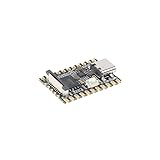
- Single core ARM Cortex-A7 32-bit core, integrated with NEON and FPU
- Built in Micro's self-developed 4th generation NPU, with high computational accuracy and support for mixed quantization of int4, int8, and int16. Among them, int8 has a computing power of 0.5 TOPS and int4 has a computing power of up to 1.0 TOPS
- Built in self-developed 3rd generation ISP3.2, supports 4 million pixels, and supports various image enhancement and correction algorithms such as HDR, WDR, and multi-level denoisin
- It has powerful encoding performance, supports intelligent encoding, adapts to save bit rates according to the scene, and saves more than 50% of the bit rate compared to conventional CBR mode, making the captured images high-definition, smaller in size, and doubling the storage space
- The design with built-in RISC-V MCU supports low-power fast startup, 250ms fast capture, and simultaneous loading of AI model library, enabling facial recognition to be completed within 1 second
Keep deployment and latency measurements separate
Endpoint performance and MCP overhead describe different parts of a request path. For a direct model call, measure the serving API’s response behavior. For an MCP-based workflow, account separately for MCP connection or initialization and tool calls, then for any model request the server or agent makes. A workflow that uses both can include all of those stages; a single end-to-end time does not identify which stage caused a delay.
Google’s Cloud Run codelab says the first request may take about 3–4 minutes when the service has scaled down and needs to start and load the model. That is a detail of the codelab’s deployment example, not a general Cloud Run startup guarantee. The page, accessed October 7, 2026, is marked Pre-GA and makes GPU availability and quota relevant to that setup; its regions and deployment details should not be treated as universal or permanent.
Rank #4

- 【POWERFUL ESP32‑S3 CONTROLLER】Built‑in Xtensa 32‑bit LX7 dual‑core processor, 512KB SRAM, 8MB PSRAM, 16MB Flash for stable AI voice computing and multitask processing.
- 【Preloaded Dual AI Platforms】Comespre-installed with complete Deepseek and OpenAI voice dialogue projects.Experience intelligent voice interaction instantly. (Note: OpenAI functionality requires your own API key.)
- 【STABLE WIRELESS & CLEAR AUDIO】Integrated 2.4GHz Wi‑Fi + Bluetooth 5 (LE); dedicated audio decoding module for natural, responsive voice interaction.
- 【USER‑FRIENDLY VISUAL & PLUG‑AND‑PLAY】2” TFT‑SPI color screen shows real‑time chat; modular design, no extra wiring, ready to use after setup.
- 【FULL LEARNING SUPPORT】45 programmable GPIOs, rich interfaces, online web tutorials, free technical support for beginners & developers.
What the published comparison does—and does not—establish
A search result for the exact-title comparison describes Gemma 4 E2B tested with direct HTTP endpoint calls and a Rig MCP server, using a local llama.cpp GPU and Cloud Run. It says the MCP tools exposed GPU, model, and deployment status, along with Cloud Run time to first token (TTFT). The article page itself was not accessible, so those setup and tool details are attributable to its search-result description and are not independently verified here. No validated head-to-head performance result is established by that description.
Quick Recap
Product prices and availability are accurate as of the date/time indicated and are subject to change. Any price and availability information displayed on Amazon at the time of purchase will apply.

