
In 2001, overclocking an AMD Duron usually began by reconnecting its L1 bridges so the motherboard could change the multiplier. From there, the practical work was testing the individual chip while balancing clock speed, front-side bus, memory, voltage and cooling. A Duron 900 review sample reached 1.2 GHz but crashed in some tests; the reviewer settled on 1.15 GHz for trouble-free testing. That is an example, not a guaranteed target.
How Duron overclocking worked
Early Socket A Durons used a 100 MHz physical front-side bus, described in period terminology as 200 MT/s effective. The CPU’s L1 bridge state determined whether its multiplier was locked. Reconnecting those bridges enabled multiplier control through a compatible motherboard and BIOS. AnandTech’s November 1, 2000 Socket-A guide describes the bridge method and recommends conductive ink.
The basic CPU clock relationship is multiplier × bus frequency. Raising the multiplier increases CPU speed while keeping the bus nearer its specification; raising the bus can increase CPU and memory performance, but also affects more of the system. The exact controls and available headroom depended on the motherboard, BIOS, chipset, RAM, processor sample, voltage and cooling.
Unlocking the Duron L1 bridges
What you need
- A fine-tip conductive ink pen, sometimes sold as a CPU bridge repair pen. AnandTech recommended conductive ink for the connection; its period guide quoted a price of around $10, which is a historical figure, not a current price.
- A compatible Socket A motherboard with BIOS multiplier controls. The board must expose the relevant settings for the unlock to be useful.
- Careful application: conductive ink must connect the intended bridge contacts without bleeding into neighboring bridges, which AnandTech warned could damage the CPU.
Why the “Duron pencil trick” was less reliable
Graphite pencil lead could be used for a quick test, but AnandTech described it as liable to fail. For a more durable bridge connection, the period guide preferred conductive ink. Neither method makes an overclock safe or stable by itself; the CPU and the rest of the platform still have to tolerate the chosen settings.
#1 Best Overall

- Spacious Design: Measuring 21.1" wide and 14.1" deep, our lap desk comfortably fits most laptops up to 15.6". Extra room for accessories ensures convenience.
- Enhanced Functionality: Packed with handy features, including a 5x9" precision tracking mouse pad and a built-in phone slot for seamless work or video calls. Plus, enjoy ergonomic support with the integrated cushioned wrist rest.
- Cool Comfort: Enjoy a stable surface with our lap desk's dual bolster cushion, designed for comfort and airflow, keeping your lap cool during extended use.
- Durable Surface: Work with confidence on our lap desk's solid surface, featuring a sleek black carbon color, ensuring optimal air circulation to prevent your laptop from overheating.
- On-the-Go Convenience: With an integrated handle and lightweight design (2.8 lbs), our lap desk is portable for travel or moving around the house, offering flexibility in any space.
Multiplier-first or FSB-first?
| Approach | What changes | Trade-off |
|---|---|---|
| Multiplier-first | Raise the CPU multiplier after unlocking the L1 bridges. | Keeps the bus closer to specification, making it the direct route to a higher CPU clock with less pressure on memory and bus-linked devices. |
| FSB-first | Raise the front-side bus frequency, which can also raise memory bandwidth. | Can destabilize memory, chipset operation and PCI/AGP-derived clocks, so a failure may not be caused by the CPU core alone. |
For a first attempt, the multiplier-first approach is easier to interpret: if the system fails, fewer platform clocks have changed. FSB tuning may be useful when the RAM and motherboard can handle it, but it is a broader system overclock rather than a CPU-only adjustment.
What a Duron 900 could reach in one 2001 review
Ryan Shrout’s April 2001 PC Perspective review reported that its particular 900 MHz Duron ran at 1.2 GHz somewhat reliably, but crashed in some 3DMark 2001 tests. The reviewer reduced it to 1.15 GHz for trouble-free testing. The same sample reached approximately a 115 MHz bus. These figures describe one reviewed processor and test setup, not an expected result for every Duron 900.
Rank #2

- 5-in-1 Connectivity: Equipped with a 4K HDMI port, a 5 Gbps USB-C data port, two 5 Gbps USB-A ports, and a USB C 100W PD-IN port. Note: The USB C 100W PD-IN port supports only charging and does not support data transfer devices such as headphones or speakers.
- Powerful Pass-Through Charging: Supports up to 85W pass-through charging so you can power up your laptop while you use the hub. Note: Pass-through charging requires a charger (not included). Note: To achieve full power for iPad, we recommend using a 45W wall charger.
- Transfer Files in Seconds: Move files to and from your laptop at speeds of up to 5 Gbps via the USB-C and USB-A data ports. Note: The USB C 5Gbps Data port does not support video output.
- HD Display: Connect to the HDMI port to stream or mirror content to an external monitor in resolutions of up to 4K@30Hz. Note: The USB-C ports do not support video output.
- What You Get: Anker 332 USB-C Hub (5-in-1), welcome guide, our worry-free 18-month warranty, and friendly customer service.
The review also illustrates why a machine that boots or completes one benchmark is not necessarily stable. The appropriate target is the highest setting that remains reliable under the workloads that matter, not the largest number that starts Windows.
Choosing a motherboard and tuning the rest of the system
There is no single “best motherboard for Duron overclocking” established by these period sources. Look for a Socket A board whose BIOS offers multiplier and bus controls, and consider the chipset and its ability to run the memory and buses at the desired settings. A board that cannot adjust the multiplier cannot make practical use of the L1 unlock for multiplier tuning.
Do these 3 things before closing this tab:
1Scan for outdated or missing drivers - takes under a minute2Repair Windows errors before they cause bigger problems3Fix the driver behind crashes, sound loss and screen glitchesRank #3
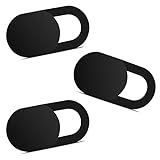
- Note: Not suitable for MacBooks released after 2023 or devices with a protruding front camera; Not applicable to full-screen or notch-style tempered glass screen protectors; Do not use on the rear camera of the phone.
- 💻 Why Do You Need a Webcam Cover Slide? — Safeguard your privacy by covering your webcam with our reliable webcam cover when not in use. Don't let anyone secretly watch you. Stay protected!
- ✅ Thin & Stylish — Enhance your laptop's functionality and aesthetics with our 0.027" ultra-thin webcam covers. Seamlessly close your laptop while adding a touch of sophistication.
- ✅ Fits Most Devices — Compatible with laptops, phones, tablets, desktops! Keep your privacy intact on Ap/ple, Mac/Book, iPh/one, iP/ad, H/P, L/novo, De/ll, Ac/er, As/us, Sa/msung devices.
- ✅ 365 Days Protection — Our upgraded 3.0 adhesive ensures a strong hold that won't damage your equipment. Experience reliable, long-term privacy protection day in and day out.
- RAM: Faster memory settings can improve memory performance, but the RAM must remain stable at the selected bus and timings.
- Voltage: More voltage may provide additional headroom on some combinations, but also increases heat and risk. There is no universal safe setting established for every Duron, motherboard and cooling setup.
- Cooling: A higher clock or voltage increases thermal demands. Adequate cooling is part of the overclock, not a substitute for testing stability.
- Platform clocks: With FSB increases, account for chipset and PCI/AGP-derived clocks as well as CPU and memory limits.
A cautious period-style tuning sequence
- Confirm the exact Socket A processor, motherboard, BIOS options, RAM and cooling configuration before changing settings.
- Reconnect the L1 bridges carefully with conductive ink, avoiding contact between neighboring bridges. Do not treat a graphite test connection as a dependable permanent unlock.
- Use the motherboard BIOS to raise the multiplier in small increments while leaving the bus near its standard setting. Change one variable at a time.
- Check operation under demanding applications and games, not only at startup. If crashes or other instability occur, return to the last stable setting.
- Only then explore FSB or memory changes, testing after each adjustment because those changes can affect several parts of the platform.
These are historical Socket A techniques, not guidance for current processors. The cited sources do not establish a broad success or failure rate, and current availability or compatibility of bridge tools and vintage hardware should be checked before purchase or use.
Quick Recap
Best Value

- Spacious Design: Measuring 21.1" wide and 12" deep, our lap desk comfortably fits most laptops up to 15.6". Extra room for accessories ensures convenience.
- Enhanced Functionality: Packed with handy features, including a 5x9" precision tracking mouse pad and a built-in phone slot for seamless work or video calls. Plus, enjoy laptop support with the integrated device ledge.
- Cool Comfort: Enjoy a stable surface with our lap desk's dual bolster cushion, designed for comfort and airflow, keeping your lap cool during extended use.
- Durable Surface: Work with confidence on our lap desk's solid surface, featuring a blush pink color, ensuring optimal air circulation to prevent your laptop from overheating.
- On-the-Go Convenience: With an integrated handle and lightweight design (2.14 lbs), our lap desk is portable for travel or moving around the house, offering flexibility in any space.
Rank #4

- Anti-Slip Surface - Transform your laptop into a mobile workstation with the AboveTEK portable laptop lap desk. The anti-slip surface provides a strong grip for laptops up to 15.6 inches(Diagonal), while the double rubber strip on the bottom ensures a stable display or typing experience on your lap, couch, or bed.
- Retractable Mouse Pad - Retractable laptop mouse pad extends on both directions for the left/right handed with elevation along the edges for stopping mouse from falling off. The size of laptop tray is 14" X 9.7" and the size of mouse pad is 7.4" X 6.1".
- Effective Heat Shield - The effective heat shield made of sturdy and thick material protects your laptop from overheating. Prioritizes your comfort and safety, an ideal lap pad or board for working anywhere.
- EASY to Carry and Store - With an ergonomic and simplistic design, the lap desk is portable to store in a backpack. Only 15" in size, 2.2 lb of weight and with slim 0.6 inch thickness, it is ready to be easily carried around.
- Widely Applicable - The smooth platform accommodates laptops and tablets up to 15.6 inches(Diagonal), making it a versatile accessory and one of the best gifts for mom, dad, students and professionals. Perfect for use as a laptop bed tray or tablet holder anywhere at home, library, or park.
Product prices and availability are accurate as of the date/time indicated and are subject to change. Any price and availability information displayed on Amazon at the time of purchase will apply.

