
iTechGuides is reader-supported. When you buy through links on our site, we may earn an affiliate commission. As an Amazon Associate I earn from qualifying purchases. Learn more
In the Razer Tartarus V2 vs Pro comparison, the Tartarus V2 is the better value for conventional gaming keys, macros, and profiles, while the Tartarus Pro is worth its extra US$50 only for compatible games and workflows that benefit from analog key input, adjustable actuation, or dual-function presses.
Razer’s US storefront listed the Tartarus V2 at US$79.99 and the Tartarus Pro at US$129.99 during the August 16, 2026 research pass. The Pro therefore costs US$50 more—about 62.5% more than the V2—but the two keypads share the same basic one-handed layout, 32 programmable keys, eight-way thumbpad, scroll wheel, palm rest, Chroma RGB, profiles, macros, and 1,000 Hz polling.
The central question is not whether the Tartarus Pro has more features. It does. The useful question is whether your games can use those features and whether analog input is worth paying for.
The Tool Desk
Outbyte PC Repair FREERepair Windows errors before they cause bigger problemsFix Now →Outbyte Driver Updater FREEScan for outdated or missing drivers - takes under a minuteDriver Scan →Key takeaways
- The Tartarus V2 costs US$79.99 and the Tartarus Pro costs US$129.99 on the US Razer storefront prices observed August 16, 2026.
- The Tartarus V2 uses mecha-membrane switches for conventional digital key input, while the Tartarus Pro adds analog optical switches, adjustable actuation, and dual-function keys.
- Both models have 32 programmable keys, an eight-way thumbpad, a programmable scroll wheel, Chroma RGB, macros, profiles, adjustable palm rests, and 1,000 Hz polling.
- The Pro’s analog behavior is most useful in games that support controller-style input; keyboard-only games may treat the keys as ordinary digital commands.
- Neither keypad provides a true analog thumbstick: Razer lists an eight-way thumbpad on both models.
- Both models currently depend on Razer Synapse 4 on Windows 10 64-bit or Windows 11 for their full customization features, and Razer limits joystick functionality to Windows.
What is the difference in the Razer Tartarus V2 vs Pro comparison?
The Tartarus V2 is a digital one-handed gaming keypad, while the Tartarus Pro adds analog sensing to its main keys. That hardware difference enables adjustable actuation and two actions on one key, but it does not automatically make every game more responsive or more compatible.
#1 Best Overall
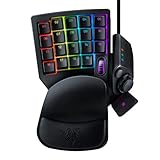
- HIGH-PERFORMANCE MECHA-MEMBRANE SWITCHES — Provides the tactile feedback of mechanical key press on a comfortable, soft-cushioned, membrane, rubber dome switch suitable for gaming
- 32 MECHA-MEMBRANE KEYS FOR MORE HOTKEYS AND ACTIONS — Perfect for gaming or integrating into creative workflows with fully programmable keys
- THUMBPAD FOR IMPROVED MOVEMENT CONTROLS — The 8-way directional thumbpad allows for more natural controls for console-oriented players and a more ergonomic experience
- FULLY PROGRAMMABLE MACROS — Razer Hypershift allows for all keys and keypress combinations to be remapped to execute complex commands
- ULTIMATE PERSONALIZATION and GAMING IMMERSION WITH RAZER CHROMA — Fully syncs with popular games, Razer hardware, Philips Hue, and gear from 30 plus partners; supports 16.8 million colors on individually backlit keys
| Feature | Razer Tartarus V2 | Razer Tartarus Pro |
|---|---|---|
| US price observed August 16, 2026 | US$79.99 | US$129.99 |
| Switch technology | Mecha-membrane | Analog optical |
| Programmable keys | 32 | 32 |
| Thumb control | Programmable eight-way thumbpad | Programmable eight-way thumbpad |
| Scroll wheel | Programmable three-way scroll wheel | Programmable scroll wheel |
| Dual-function keys | Not listed as a core feature | Yes |
| Adjustable actuation | No | Yes |
| RGB lighting | Per-key Razer Chroma RGB, with 16.8 million customizable colors | Razer Chroma RGB, with 16.8 million customizable colors |
| Profiles and macros | Unlimited profiles and macro lengths | Unlimited profiles and macro lengths |
| Polling rate | 1,000 Hz | 1,000 Hz |
| Software | Razer Synapse 4 on PC | Razer Synapse 4 on PC |
| Dimensions listed by Razer | 150 × 203 × 59.6 mm | 151 × 202 × 63.5 mm |
| Weight | 340 g | 363 g |
| Mac joystick support | Not supported | Not supported |
These specifications come from Razer’s Tartarus V2 support specifications, Razer’s Tartarus Pro support specifications, and the Razer US gaming-keypad storefront.
What does the Tartarus Pro add?
The Tartarus Pro adds three features that can change how a key behaves: analog optical key sensing, adjustable actuation, and dual-function presses.
Analog optical key sensing
Ordinary keyboard-style keys generally report a binary state: pressed or not pressed. The Tartarus Pro can detect how deeply an analog optical key is pressed and translate that depth into a scaled input. A partial press can represent one level of movement while a full press represents another, such as walking with a lighter press and running with a deeper press.
Do these 3 things before closing this tab:
1Clear out junk files and repair common Windows errors2Scan for outdated or missing drivers - takes under a minute3Repair Windows errors before they cause bigger problemsRazer describes the Pro’s adjustable actuation range as 1.5 mm to 3.6 mm in its explanation of the device’s analog optical input. That range is an actuation setting, not proof that the Pro has lower latency or that it is “faster” than the V2. Razer’s analog-input explanation establishes the feature, but the supplied primary material does not establish a comparative latency, durability, noise, or consistency advantage.
Adjustable actuation
Adjustable actuation lets you choose how far a Pro key must travel before the configured action activates. A shorter setting may suit quick commands, while a deeper setting can reduce accidental activation for users who prefer more deliberate presses. The benefit is personal and application-dependent; adjustable actuation is not the same as a verified performance improvement in every game.
Dual-function keys
Dual-function keys let a single physical key perform one action at a partial press and another action at a full press. For example, a light press could produce a walking input while a deeper press produces running. The feature can save physical key positions, but it requires a game or software setup that accepts the resulting input scheme.
What does the Tartarus V2 still do just as well?
The Tartarus V2 retains the main features most buyers want from a one-handed keypad: programmable buttons, macros, profiles, thumb navigation, a scroll wheel, RGB lighting, and an adjustable palm rest.
Free tools Windows power users keep installed
One-click scans. No signup required.
Razer lists the V2 with 32 programmable keys, full anti-ghosting, unlimited macro lengths, unlimited game profiles, an eight-way directional thumbpad, a programmable scroll wheel, per-key Chroma RGB customization, and a 1,000 Hz polling rate. MMO rotations, MOBA commands, push-to-talk, streaming controls, productivity shortcuts, and ordinary digital game bindings usually depend more on those capabilities than on analog key depth.
Rank #2
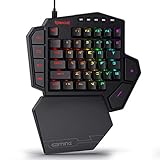
- 7 Onboard Macro Keys for Instant Combos - Bind multiple commands to each of the 7 keys (28 total across 4 profiles), so MMO and MOBA ability rotations fire with a single press instead of fumbling for a full keyboard.
- Swap Switches Without Soldering - The upgraded socket accepts almost any 3-pin or 5-pin switch, so you can tune the feel of your off-hand keypad to match your main board.
- USB Pass-Through Port, Detachable Wrist Rest - Plug your mouse or headset directly into the keypad for a cleaner desk, and unclip the magnetic wrist rest whenever you want a smaller footprint.
- 16.8 Million Colors, 5 RGB Modes - Vibrant lighting effects let your off-hand setup match the rest of your battlestation.
- Pro Software for Even Deeper Customization - Record your own macro sequences and design custom lighting effects, so the keypad adapts to your exact keybinds.
The V2 is therefore not a cut-down version of the basic keypad experience. The V2 provides the same general control surface and conventional macro functionality at a lower price. The main things the V2 does not provide are the Pro’s analog sensing, adjustable actuation, and partial-press/full-press behavior.
Do the Tartarus Pro’s analog keys work in every game?
No. The Tartarus Pro’s analog advantage depends on the game accepting controller-style or analog input and handling that input properly alongside keyboard input.
Games with gamepad support are the best candidates. A game designed strictly around keyboard commands may simply interpret a Pro key as an ordinary digital key, leaving the analog hardware underused. Some PC games also change button prompts when they detect controller input, or behave unpredictably when keyboard and controller inputs are active at the same time.
What’s actually slowing this PC down?
Pick the symptom - the matching free tool is one click away.
Before paying the Pro premium, check these questions for each important game:
- Does the game support a controller or gamepad?
- Does the game allow keyboard and controller input simultaneously?
- Does the desired control scheme genuinely need variable movement or pressure?
- Can the game assign separate behavior to partial and full presses, or will Synapse handle the mapping in a way the game recognizes?
- Can you save and switch between an analog profile and a conventional digital profile?
The Pro should not be described as a controller replacement for every FPS, racing game, flight simulator, or action game. Compatibility varies by title. The Pro’s analog optical main keys are also separate from the thumb module: Razer lists an eight-way thumbpad on both models, not a full-resolution analog thumbstick.
Are the Tartarus V2 and Pro physically the same?
The Tartarus V2 and Tartarus Pro have a very similar layout and intended use, but they are not identical internally or dimensionally. The V2 uses mecha-membrane technology, whereas the Pro uses analog optical switches and the associated sensing hardware.
| Physical detail | Tartarus V2 | Tartarus Pro | Practical meaning |
|---|---|---|---|
| Listed dimensions | 150 × 203 × 59.6 mm | 151 × 202 × 63.5 mm | The Pro is listed as slightly wider in one dimension and deeper overall. |
| Weight | 340 g | 363 g | The Pro is 23 g heavier. |
| Key layout | One-handed keypad layout | Similar one-handed keypad layout | Existing Tartarus users should find the overall concept familiar. |
| Thumb control | Eight-way thumbpad | Eight-way thumbpad | The Pro does not turn the thumbpad into a true analog stick. |
| Palm support | Adjustable palm rest | Adjustable palm rest | Fit depends on hand position and desk space. |
The 23 g weight difference is unlikely to decide the purchase, but the Pro’s listed extra depth may matter when desk space or wrist position is tight. Neither keypad should be assumed to be universally more comfortable; hand size, desk height, palm-rest position, and the position of the mouse matter more than the small dimensional differences.
How do the switches feel, and which one is more durable?
The documented design distinction is straightforward: the V2 uses mecha-membrane keys and the Pro uses analog optical switches. The supplied specifications do not establish which keypad is quieter, smoother, more durable, or less prone to key chatter or thumbpad problems.
Rank #3

- CHOSEN BY PRO’S FOR ADVANCED FPS MOVEMENT — With Rapid Trigger, Adjustable Actuation and Razer Snap Tap, the Huntsman V3 Pro offers lightning-fast, precise movements that provides gamers an unbeatable edge especially in FPS games
- RAZER SNAP TAP — Prioritize the latest input between two selected keys without having to release the previous one, and enjoy more responsive inputs for near-instant directional changes in FPS games (latest firmware update required)
- RAPID TRIGGER — A step up from traditional mechanical or optical keyboards to achieve the most responsive and precise inputs; reset keys at the slightest lift of a finger, and experience an advantage in speed that is especially useful for movement in competitive FPS games
- ANALOG OPTICAL SWITCHES GEN-2 — Max out on precision and response with advanced switches for ultra fast repeated inputs, a 0.1–4.0 mm adjustable actuation range, and a 100 million keystroke lifespan
- QUICK ONBOARD ADJUSTMENTS — Make precise, on-the-fly adjustments to actuation height or Rapid Trigger sensitivity with the visual aid of an onboard LED array while saving the settings to the keyboard with no software required
That means buyers should avoid treating the Pro’s optical technology as proof of longer life, or treating the V2’s mecha-membrane construction as proof that it is louder or less reliable. Those are hands-on testing questions requiring independent long-term reviews or laboratory measurements. The defensible buying distinction is input behavior, not an unsupported durability ranking.
What do both keypads share?
Both models target the same basic use case: moving common keyboard controls onto a one-handed device while leaving the other hand on a mouse. The shared features make the V2 especially competitive for ordinary gaming and macro work.
- 32 programmable keys: enough for MMO abilities, game commands, application shortcuts, and macros, although the advertised count should be understood as the entire control surface rather than only a simple rectangular key block.
- Eight-way thumbpad: useful for directional commands, but not equivalent to a full-resolution analog stick.
- Programmable scroll wheel: available for scrolling, zooming, weapon selection, or other mapped commands.
- Adjustable palm rest: lets users alter the hand-support position.
- Razer Chroma RGB: both models support customizable lighting with up to 16.8 million colors.
- Profiles and macros: both support unlimited profiles and macro lengths through Razer’s software.
- 1,000 Hz polling: the listed polling rate is the same, so the Pro’s analog features should not be presented as a higher polling-rate upgrade.
Because these shared features cover most conventional keypad tasks, RGB, button count, and macro capacity are not strong reasons to choose the Pro over the V2.
Windows Errors? Fix Them Before They Spread
Repair common Windows errors and clear accumulated junk for a smoother, more stable PC - no reinstall needed.Free scan · no reinstallOutdated Drivers Are Slowing You Down
One free scan finds every outdated or missing driver and matches the right update for your exact hardware.Free scan · exact hardware matchWhat are the best choices by gaming use case?
The best Tartarus model depends on whether a particular game needs analog depth or merely needs more programmable digital controls.
| Use case | Recommended model | Reason | Important qualification |
|---|---|---|---|
| MMO hotbars and rotations | Tartarus V2 | Digital keys, profiles, and macros are usually the main requirements. | Use the Pro only if a specific MMO workflow benefits from analog or dual-function presses. |
| MOBA commands | Tartarus V2 | The lower price buys the same general programmable keypad concept. | Analog key depth is unlikely to be the deciding feature for ordinary bindings. |
| RPGs and conventional action games | Tartarus V2 | It provides conventional key mappings and macros at lower cost. | Check controller compatibility before considering the Pro. |
| Racing and movement-heavy games | Tartarus Pro, if compatible | Variable input may be useful for gradual movement or walk/run behavior. | The target game must recognize the analog or controller-style input correctly. |
| Flight and simulation games | Tartarus Pro, if compatible | Analog-style key behavior can be useful for selected controls. | The Pro does not provide a true analog thumbstick. |
| FPS gaming | Usually Tartarus V2 | Most players need reliable digital bindings and macros rather than analog key depth. | Choose Pro only after confirming a specific analog setup and mixed-input behavior. |
| Productivity, shortcuts, and streaming | Tartarus V2 | Both models provide programmable controls, profiles, and macros, so the cheaper model is usually the rational choice. | Synapse 4 and Windows requirements still apply to full customization. |
| Mac use | Neither for full feature parity | Razer limits joystick functionality to Windows for both models. | Basic key input may work, but do not assume full Synapse, joystick, or analog parity on macOS. |
How much is the Tartarus Pro premium?
At the US prices observed August 16, 2026, the Tartarus Pro costs US$50 more than the Tartarus V2: US$129.99 versus US$79.99. The Pro is approximately 62.5% more expensive than the V2 at those listed prices. The prices can change by region, retailer, promotion, and date, so the comparison applies specifically to the observed US storefront pricing.
The premium is easy to justify when a buyer has a confirmed game or workflow that benefits from analog input, adjustable actuation, or partial/full-press commands. The premium is difficult to justify when the buyer wants only extra digital keys, macros, profiles, RGB, or an MMO/MOBA control pad. In that situation, the V2 supplies the capacity without charging for specialized input hardware.
What software and operating-system limits matter?
Both keypads currently list Razer Synapse 4 support on PC, and full customization should be evaluated as part of the purchase rather than treated as an optional detail.
Windows requirements
Razer’s Synapse 4 support documentation lists Windows 10 64-bit and Windows 11 as supported operating systems. The Tartarus V2 model RZ07-02270 appears in Razer’s Synapse 4 supported-device documentation, while the Pro support page lists Synapse 4 support for model family RZ07-03110.
Rank #4
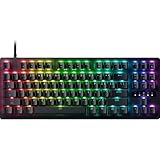
- PRO-LEVEL SPEED AND PRECISION — Gain ultra-fast repeated inputs with Gen‑2 Razer Analog Optical Switches featuring Rapid Trigger and a 0.1–4.0 mm adjustable actuation range for competitive FPS and esports play
- CLEANER MOVEMENT IN CLUTCH MOMENTS — Execute faster directional changes with Razer Snap Tap, which prioritizes your intended input when two assigned keys are pressed simultaneously during intense gameplay
- True 8000 Hz Polling for near-zero latency - Gain a split-second advantage over your opponents with a blistering polling rate 8 times faster than the industry standard. Experience the fastest response and pull off every play without delay.
- NEAR-ZERO INPUT LATENCY — React instantly with true 8000 Hz HyperPolling, delivering response times up to 8× faster than standard gaming keyboards for split-second advantages in shooters and competitive titles
- ONBOARD PERFORMANCE TUNING — Adjust actuation height and Rapid Trigger sensitivity directly on the keyboard using the number row, then save settings to onboard memory with no software required
What happened to Synapse 3?
Razer states that Synapse 3 stopped receiving updates and cloud-service support on February 3, 2026. Existing Synapse 3 installations may remain configurable, but users who remove devices completely need Synapse 4 for continued customization. Razer recommends using its Profile Migration Tool instead of manually importing Synapse 3 profiles. Razer’s Synapse 4 support FAQ also explains that Synapse 4 can be used offline after a previous session has been logged in.
Readers buying used hardware or moving from an older setup should preserve exported or locally saved configurations before uninstalling older software. A profile that worked under an old installation should not be assumed to continue cloud synchronization after the Synapse 3 cutoff.
What works on a Mac?
Razer explicitly says the joystick function is supported only on Windows and is not compatible with Mac systems for both the Tartarus V2 and Tartarus Pro. Basic USB key input is not the same as full software support: macOS users should not assume access to complete Synapse customization, thumbpad joystick behavior, or Pro analog functionality.
Are either keypad ideal for users who dislike proprietary software?
No. Razer’s advertised customization depends heavily on Synapse. Buyers who require completely software-independent configuration, broad macOS support, hot-swappable switches, or an open mechanical-keyboard platform may be better served by a conventional compact mechanical keypad, macro pad, full keyboard, or another specialized keypad.
The Tartarus layout is valuable precisely because it combines a palm rest, thumbpad, scroll wheel, and programmable key cluster. A conventional macro pad may offer simpler hardware or replaceable switches but usually will not reproduce that exact thumb-and-palm control arrangement. A full keyboard and gaming mouse offer the broadest compatibility with fewer specialized peripheral dependencies, but they do not provide the same one-handed reach reduction.
What alternatives should you consider?
The Tartarus V2 and Pro are not the only ways to reduce keyboard reach. Alternatives serve different priorities rather than replacing the two models feature-for-feature.
| Alternative | Best for | What it may do better | What you give up or should verify |
|---|---|---|---|
| Azeron gaming keypad | Users seeking aggressive ergonomics and a thumbstick-oriented design | More physical customization and a different hand-fitting approach | It is a different product class; current price and availability should be checked with the official Azeron vendor. |
| Compact mechanical keypad or macro pad | Users who value replaceable mechanical switches or simpler hardware | Potentially more hardware and software flexibility | Usually lacks the Tartarus thumbpad-and-palm-rest layout; exact features vary. |
| Full keyboard plus gaming mouse | Users who want broad compatibility and minimal peripheral specialization | General-purpose support and fewer device-specific dependencies | Does not offer the same one-handed ergonomics or dedicated thumb control. |
How do you troubleshoot common Tartarus problems?
Device is detected, but macros or lighting do not work
- Confirm that Synapse 4 is installed and updated.
- Connect the keypad directly to the computer instead of through a USB hub.
- Try another USB port.
- Restart Synapse and then restart the computer.
- Check that the correct device profile is active.
Razer’s Tartarus V2 troubleshooting guidance specifically recommends a direct USB connection and trying another port when device functions fail.
Recommended Free Tools
An old Synapse profile no longer syncs
Do not assume Synapse 3 cloud syncing is still available after February 3, 2026. Install Synapse 4, preserve local or exported configurations, and use Razer’s Profile Migration Tool rather than relying on a manual import.
Best Value

- ANALOG OPTICAL SWITCHES GEN-2 — Max out on precision and response with next-gen switches featuring Rapid Trigger for ultra fast repeated inputs, a 0.1–4.0 mm adjustable actuation range, and a 100 million keystroke lifespan
- RAZER SNAP TAP — Prioritize the latest input between two selected keys without having to release the previous one, and enjoy more responsive inputs for near-instant directional changes in FPS games
- TRUE 8000 HZ HYPERPOLLING RATE — Gain a split-second advantage over opponents with a blistering polling rate 8 times faster than the industry standard to pull off every play without delay
- QUICK ONBOARD ADJUSTMENTS — Make precise, on-the-fly adjustments to actuation height or Rapid Trigger sensitivity with the visual aid of an onboard LED array; save the settings to the keyboard with no software required
- MULTI-FUNCTION DIGITAL DIAL AND DEDICATED CONTROL BUTTONS — Manage it all with a dedicated dial for volume and analog switch settings, backed by a trio of buttons for media control and custom macros
Analog behavior does not appear in a game
- Confirm that the game supports controller or gamepad input.
- Check whether the game permits simultaneous keyboard and controller devices.
- Test a simple analog action, such as walk/run behavior.
- Try a conventional digital profile to distinguish game compatibility from device detection.
- Do not assume the game will expose a dedicated analog setting.
The thumbpad behaves like directional keys
That may be normal. Razer lists an eight-way directional thumbpad on both devices. The Tartarus Pro’s analog optical main keys do not turn the thumbpad into a full analog stick.
Mac does not provide joystick behavior
That is an operating-system limitation documented by Razer for both models. The Tartarus V2 and Pro should not be purchased by a Mac user who requires the Windows joystick function or complete feature parity.
Which Tartarus should you buy?
Buy the Razer Tartarus V2 for the best value and safest conventional gaming experience. The V2 is the sensible choice for MMO hotbars, MOBA commands, RPG bindings, productivity shortcuts, streaming controls, push-to-talk, and macros when every command is fundamentally digital.
Buy the Razer Tartarus Pro only when you can name a specific reason to use its extra input capabilities. The Pro is the specialist choice for compatible controller-supporting games, adjustable actuation, analog-style movement, or two actions assigned to different press depths on one key.
Buy neither if you need a true analog thumbstick, complete native Mac support, wireless operation, hot-swappable switches, or configuration that does not depend on proprietary software. The Pro is not automatically a better V2, and the V2 is not missing the core one-handed keypad experience.
Frequently Asked Questions
Is the Razer Tartarus Pro worth $50 more than the V2?
The Razer Tartarus Pro is worth $50 more only when you will use analog key input, adjustable actuation, or dual-function presses in compatible games or workflows. For ordinary digital key bindings, macros, profiles, MMO commands, and productivity shortcuts, the Tartarus V2 provides the core experience for less.
Does the Razer Tartarus Pro have an analog thumbstick?
No. Razer lists an eight-way thumbpad on both the Tartarus V2 and Tartarus Pro. The Pro’s analog optical technology applies primarily to its main keys and does not transform the thumbpad into a full-resolution analog stick.
Quick wins for a faster PC:
Repair Windows errors before they cause bigger problemsFix Now →Fix the driver behind crashes, sound loss and screen glitchesFind Drivers →Does the Razer Tartarus V2 work fully on Mac?
No. Razer limits joystick functionality to Windows for the Tartarus V2 and Tartarus Pro. Basic key input may work on a Mac, but buyers should not assume full Synapse customization, thumbpad joystick behavior, or Pro analog feature parity on macOS.
Which is better for MMO gaming, the Tartarus V2 or Pro?
The Tartarus V2 is usually better for MMO gaming because MMO hotbars and rotations primarily need programmable digital keys, profiles, and macros, all of which the V2 provides. The Pro is worthwhile only if a particular MMO workflow benefits from analog or dual-function input.
The Bottom Line
Bottom line: Choose the Razer Tartarus V2 for conventional one-handed gaming, macros, profiles, and value. Choose the Tartarus Pro for confirmed analog-compatible games, adjustable actuation, or partial/full-press commands. The Pro’s extra US$50 buys specialized input—not a universally better keypad.
Quick Recap
Product prices and availability are accurate as of the date/time indicated and are subject to change. Any price and availability information displayed on Amazon at the time of purchase will apply.
Free tools Windows power users keep installed
One-click scans. No signup required.

