
What’s actually slowing this PC down?
Pick the symptom - the matching free tool is one click away.
Usually, you cannot take a modern Windows application and simply recompile it for Windows 95. A practical port is a backport: rebuild around the Win32 APIs and runtime components available on Windows 95, replace newer dependencies, and test the result on the operating system itself or in a controlled virtual environment. Microsoft’s Visual C++ 2008 change history says Windows 95, Windows 98, Windows ME, and Windows NT were no longer supported targets; it also removed those platforms from the C runtime and standard library.
Why a modern rebuild usually fails
Compiling for an older operating system is not just a matter of choosing a target setting. The compiler, C runtime, standard library, libraries used by the application, and every imported Windows API must all work on that operating system.
Microsoft’s Visual C++ 2008 change history states: “The Windows 95, Windows 98, Windows ME, and Windows NT platforms are no longer supported.” The change also applied to the C runtime and standard library. A modern application may rely on language features, runtime behavior, or system functions that a Windows 95 machine cannot provide. Even if compilation succeeds, the executable can fail at startup when it requests a missing DLL or imported function.
That makes a Windows 95 port a source and dependency project, not a compiler checkbox. The realistic options are a native backport, a compatibility-layer build if an appropriate layer is available for the target environment, or a rewrite.
Do these 3 things before closing this tab:
1Scan for outdated or missing drivers - takes under a minute2Repair Windows errors before they cause bigger problems3Fix the driver behind crashes, sound loss and screen glitches#1 Best Overall

- The Anker Advantage: Join the 50 million+ powered by our leading technology.
- Massive Expansion: Equipped with a USB C PD-IN charging port, 2 USB-A data ports, 2 HDMI ports, an Ethernet port, and a microSD/SD card reader, giving you an incredible range of functions—all from a single USB-C port.
- Dual HDMI Display: Stream or mirror content to a single device in stunning 4K@60Hz, or hook up two displays to both HDMI ports in 4K@30Hz. Note: For macOS, the display on both external monitors will be identical.
- Power Delivery Compatible: Compatible with USB-C Power Delivery to provide high-speed pass-through charging up to 85W. Please note: 100W PD wall charger and USB-C to C cable required.
- Compatibility: Supports USB-C, USB4, and Thunderbolt connections. Compatible with Windows 10 and 11, ChromeOS, and laptops equipped with DP Alt Mode and Power Delivery. Note: This device is not compatible with Linux.
Which Visual C++ version should you use?
The available Microsoft documentation establishes two useful points, but not the exact newest Visual C++ release that supports Windows 95. Visual C++ 2008 removed Windows 95 support; Microsoft Visual C++ 4.0 documentation explicitly describes its tools and MFC as designed for Windows 95 development. Those facts make VC++ 4.0 a historical reference, not proof that it is the newest suitable release.
Before selecting a compiler, verify the exact version’s target support, generated imports, compiler runtime, standard library, and licensing and media availability. A compiler that can emit a Windows-compatible executable is not sufficient if the application depends on unsupported libraries or APIs. Isolate the selected legacy toolchain in a reproducible build environment rather than mixing it casually with current development tools.
Choose an approach before changing code
| Approach | Source changes | Dependencies and API coverage | Installer and testing | Maintenance trade-off |
|---|---|---|---|---|
| Native Windows 95 backport | Keep the existing code where it fits; replace unsupported language, runtime, library, and API dependencies. | Must be restricted to functions and components available on Windows 95. Every dependency needs an explicit compatibility check. | Requires packaging compatible components and testing installation, operation, and removal on the target. | Preserves more of the original application, but creates a separate legacy build to maintain. |
| Compatibility-layer build | May reduce operating-system-specific changes, depending on the layer and application. | Coverage depends on the particular layer; do not assume it implements every API or graphics and networking behavior the application needs. | Adds the layer as a deployment and test dependency. Reproduce the same layer version and configuration in release testing. | Can shift some compatibility work out of the application, but adds another component whose availability and behavior must be maintained. |
| Rewrite | Reimplement the required workflows against a Windows 95-compatible design and toolchain. | Offers the opportunity to avoid incompatible components, but required functionality still has to fit the target’s APIs and capabilities. | Installer, runtime, and target-system testing remain necessary for the new implementation. | Can simplify a deeply incompatible codebase, at the cost of rebuilding and validating its behavior. |
These are architectural choices, not guarantees of compatibility. Decide based on the application’s API use, graphics and networking needs, installer, available dependencies, reproducibility of the test environment, and the cost of maintaining a separate release.
Rank #2
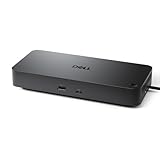
- Powerful compatibility: Power essential productivity across the AI PC workplace. The Dell Pro Dock offers enhanced compatibility and drives up to 100W of power to new mainstream Dell AI PCs and non-Dell PCs.
- Modern manageability: The Dell Pro Dock is part of the world’s most manageable commercial docking family, with flexible management capabilities, designed to uplevel IT efficiency and keep users working without disruption.
- Thoughtful design: Configure your workspace with an ambidextrous USB-C cable that can be routed left or right. Features a new robust USB-C connector, designed for enhanced durability.
- A leader in sustainable innovation: Experience up to 72% reduction in power consumption on standby mode. Built with at least 65% postconsumer recycled materials and packaged with 100% recycled or renewable packaging.
- Upgraded for modern work: Expand your views with native support for up to four high-res displays. Keep your PC accessories connected and charged with the latest ports, while staying productive with faster USB and network speeds.
Inventory the application and its dependencies
Start by listing what the application actually needs at build time, installation time, and runtime. Include components used indirectly by plug-ins, installers, or shared libraries; a dependency that is not obvious in the main executable can still block installation or startup.
- Build assumptions: compiler and linker version, language features, runtime libraries, standard-library features, and any generated code or assembly.
- Imported functions and DLLs: inspect the application and bundled components for dependencies that are absent from Windows 95. Include delay-loaded and plug-in dependencies where applicable.
- Platform services: check use of services, drivers, shell and security APIs, and other operating-system facilities. Identify which have a Windows 95-compatible alternative, if any.
- Data and configuration: record filesystem and registry operations, file formats, path assumptions, and ANSI/Unicode conversions. Test the actual behavior rather than assuming newer conventions are available.
- Networking, graphics, and output: inventory networking libraries and protocols, GDI or other graphics code, printing, and any hardware requirements.
- Installation and removal: include the installer engine, prerequisite checks, runtime installation, shared components, upgrade behavior, and uninstall cleanup.
Microsoft’s Win32 porting guidance recommends identifying problematic code, shared components, legacy assembly, and technologies that will not be ported, then finding substitutes. Apply that audit to the whole delivered product, not just its main executable.
Map every API and library to Windows 95
For each Windows function, library, and runtime feature, establish whether it exists on the exact Windows 95 configuration you intend to support. Remove calls introduced after Windows 95, replace unsupported libraries, and avoid runtimes that require Windows 2000, Windows XP, or later. A function that exists on a later Windows version is not made compatible by compiling its call into an older executable.
Rank #3

- Docking Station 14 in 1:This usb c docking station could extend your laptop from one usb c/thunderbolt 3/4/type c port into 14 ports:2 HDMI port(4K),Display Port(4K),100W USB C Power Delivery port,Ethernet(1Gbps), 1 USB C port and 2 USB A 3.1 ports(10Gbps), 1 USB C 2.0 and 2 USB 2.0(480Mbps),SD/Micro SD card reader,and 3.5mm Mic/audio.NOTE: Not all USB-C device is compatible with the hub,the incompatible device cannot use theHDMI orDP of this usb c dock
- Ultra High-definition 4K Dual Monitor Output and Triple Displays: This docking station dual monitor support dual monitor and triple displays for Windows. While single use HDMI 1 port or displayport resolution up to 4K@60Hz, single use HDMI2 resolution up to 4K@30Hz. Dual monitors will be 4K@30Hz and 1080P@60Hz(DP1.4). Triple monitors will be 1080P(DP1.4). 𝐍𝐨𝐭𝐞: 𝐌𝐚𝐜𝐁𝐨𝐨𝐤 𝐥𝐚𝐩𝐭𝐨𝐩𝐬 𝐨𝐧𝐥𝐲 𝐬𝐮𝐩𝐩𝐨𝐫𝐭 𝐬𝐚𝐦𝐞 𝐢𝐦𝐚𝐠𝐞 𝐨𝐧 𝐞𝐱𝐭𝐞𝐫𝐧𝐚𝐥 𝐦𝐨𝐧𝐢𝐭𝐨𝐫𝐬
- Super Speed Data Transfer: Laptop docking station equipped with USB C port & 2USB A 3.1 ports(speed up to 10Gbps) that allows you transfer files in seconds from your usb flash driver,usb/usb c hard disks.Provide USB C 2.0 and 2 USB A 2.0 ports(speed up to 480Mbps),USB A 2.0 special for connecting to mouse without any lags.And USB C to SD/TF card reader for you conveniently browse photos or videos on your USB-C devices and transfer photos in seconds to your laptop
- USB C Power Delivery 100W Charging Port & Gigabit Ethernet: This docking station for lenovo support power input up to 100W, safe power out (charging) is limited to 87W. NOTE: Charging cable and adapter are not included.And please make sure your laptop's USB C port support Power Delivery protocol.Also this docking station for dell support 10/100/1000BASE-T Lan networks,provide you with a stable and reliable wired Ethernet.Plug and play. This usb c hub have 3.5mm Mic/Audio jack for your wired headset
- Strong Compatibility: This usb c dock dongle hub multiport adapter 𝐜𝐨𝐦𝐩𝐚𝐭𝐢𝐛𝐥𝐞 𝐰𝐢𝐭𝐡 𝐚𝐥𝐥 𝐥𝐚𝐩𝐭𝐨𝐩𝐬 𝐰𝐢𝐭𝐡 𝐭𝐡𝐮𝐧𝐝𝐞𝐫𝐛𝐨𝐥𝐭𝟑/𝟒/𝟓/𝐮𝐬𝐛-𝐜/𝐭𝐲𝐩𝐞 𝐜(𝐰𝐢𝐭𝐡 𝐯𝐢𝐝𝐢𝐞𝐨 𝐨𝐮𝐭𝐩𝐮𝐭 𝐟𝐮𝐧𝐜𝐭𝐢𝐨𝐧)such as Dell Latitude 5420,5430,5520,5530,7530,7420,7480,7400,Dell Inspiron,Vostro,XPS 13/15/17;HP Elitebook Zbook g7,g8, Probook;Lenovo Thinkpad, t14/s,t490,Yoga;Surface Pro 8/7/X/Go/Laptop 3,etc. This usb c laptop dock hub multiple monitors Not Support Using Converter
Microsoft’s GDI compatibility guidance documents Windows 95-specific limitations and directs developers targeting multiple Windows versions to the supported Win32 function list. Treat graphics as its own compatibility area: verify the functions used, the expected rendering behavior, and the target system’s practical limits. Do the same for networking, printing, file and registry access, and any dependency with platform-specific behavior.
Keep platform-specific code behind small, clearly identified interfaces. That makes it easier to substitute an older implementation, disable a feature that cannot be supported, and prevent a newer API from leaking into code intended for Windows 95. Choose data types and language constructs the selected historical toolchain actually supports; do not assume a modern compiler feature or type is available merely because the source currently builds.
Build and package a reproducible legacy release
- Freeze the target definition. Record the Windows 95 edition and configuration, toolchain, build settings, and supported hardware assumptions. Treat the backport as a distinct product configuration.
- Set up an isolated build environment. Use a toolchain verified for the target rather than relying on a current compiler’s unsupported-target behavior. Microsoft’s Visual C++ 4.0 documentation is a historical Windows 95 development reference.
- Replace incompatible dependencies. Select only libraries and runtime components confirmed to work on the target. Rebuild components from source where necessary, and remove features that have no viable substitute.
- Inspect the built files. Check DLL imports and other runtime requirements against the target. A successful link is not proof that the program can load or run on Windows 95.
- Package and record dependencies. Include required components only when their redistribution is permitted. Record their exact versions and installation order so a release can be reproduced and dependency conflicts investigated.
- Keep the release separate. Maintain distinct build settings, installer behavior, and release checks for the Windows 95 version. Do not let a modern build’s dependencies or assumptions silently become part of the legacy package.
Test the actual Windows 95 release
Compilation is only one check. Microsoft’s porting guidance recommends treating a port as a separate product release with additional testing. For a Windows 95 backport, test in the target operating system on suitable hardware or in a controlled emulator or virtual machine, and preserve the environment details so failures can be reproduced.
Rank #4

- 5-in-1 USB-C Hub: Experience comprehensive connectivity featuring a Power Delivery input, two USB-A 2.0 ports, a USB-A 3.0 port, and an HDMI port. (Note: The USB-C power delivery input port is only for connecting an external wall charger to power your laptop and cannot power peripheral devices.)
- 90W Pass-Through Charging: Achieve optimal charging with 90W pass-through power to your laptop, supported by a total input of 100W, with the hub reserving 10W for operational efficiency. (Note: Wall charger not included.)
- Quick Data Transfers: Accelerate your productivity with rapid data transfers using a high-speed 5Gbps USB 3.0 port and two 480Mbps USB 2.0 ports.
- 4K HDMI Display: Enhance your visual experience with a hub capable of delivering 4K resolution at 30Hz in both mirror and extend modes. Please note that this hub is compatible with MacBook (macOS 12 and newer), Windows 10 and 11, ChromeOS, and laptops equipped with DP Alt Mode and Power Delivery. Note: This device is not compatible with Linux.
- What You Get: Anker USB-C Hub (5-in-1, 4K HDMI), welcome guide, 18-month warranty, and our friendly customer service.
- Install and remove: test a clean installation, prerequisite handling, upgrades if supported, and uninstall. Confirm that shared files and configuration are handled as intended.
- Start and exercise core workflows: launch the program and run its essential tasks, including opening and saving representative files.
- Check system interactions: verify filesystem and registry behavior, graphics and GDI output, networking, printing, and any supported hardware integration.
- Test failures and recovery: exercise missing or damaged data, unavailable network connections, and other relevant error paths. Confirm that the application recovers safely and that a crash does not leave the installation unusable.
- Verify shutdown and repeatability: close normally, restart the application and system as relevant, and repeat tests after installation or configuration changes.
Record the exact operating-system setup, installed components, and steps that reproduce each defect. If the application only works after undocumented changes to the test machine, the release is not yet reproducible.
When a Windows 95 port is not practical
A native backport may not be worthwhile when essential features rely on APIs or libraries unavailable on Windows 95, no compatible substitutes exist, or the installer and runtime cannot be deployed reliably. A compatibility layer helps only if it covers the particular functions the application needs and can be delivered and tested in the intended environment. A rewrite can remove inherited assumptions, but it does not remove the need to validate the new program against the target’s APIs and capabilities.
Make the decision from the dependency audit: identify which core workflows can be preserved, which require replacement, and which must be dropped. If a required workflow cannot be implemented and tested on the target, describe the limitation rather than presenting a partial build as a fully supported port.
The Tool Desk
Outbyte Driver Updater FREEScan for outdated or missing drivers - takes under a minuteDriver Scan →Outbyte PC Repair FREERepair Windows errors before they cause bigger problemsFix Now →Quick Recap
Product prices and availability are accurate as of the date/time indicated and are subject to change. Any price and availability information displayed on Amazon at the time of purchase will apply.

