
Do these 3 things before closing this tab:
1Scan for outdated or missing drivers - takes under a minute2Repair Windows errors before they cause bigger problems3Fix the driver behind crashes, sound loss and screen glitchesiTechGuides is reader-supported. When you buy through links on our site, we may earn an affiliate commission. As an Amazon Associate I earn from qualifying purchases. Learn more
Polymarket order-book imbalance compares the displayed size of resting bids with the displayed size of resting asks for one outcome, within a clearly defined depth window. It describes liquidity visible at a particular time—not a stand-alone price forecast or proof of what traders intend to do.
What Polymarket’s order book shows
Each Polymarket outcome has an outcome token traded on the central limit order book (CLOB). Its price reflects what users are willing to pay, while the order book lists resting bids and asks at different price levels. The official FAQ says outcome-share prices range from 0.00 to 1.00 USDC and that a YES/NO pair is fully collateralized by 1.00 USDC; those prices are determined by users’ willingness to buy and sell (Polymarket FAQ).


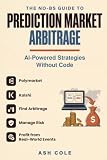


Each book level contains a price and a size. A book response also identifies the outcome asset and condition, and includes fields such as a timestamp, tick size, minimum order size, and book hash. These details help establish which outcome and which snapshot you are examining (Prices and Order Books).
Quick wins for a faster PC:
Repair Windows errors before they cause bigger problemsFix Now →Fix the driver behind crashes, sound loss and screen glitchesFind Drivers →How to calculate imbalance
First choose a depth window, then sum bid size and ask size within that same window. One descriptive calculation is:
#1 Best Overall
imbalance = (bid depth − ask depth) / (bid depth + ask depth)
For example, you could sum the first five price levels on each side, or sum all levels within a fixed price distance of the best price. Use the same definition on both sides. A positive result means more displayed size on bids; a negative result means more on asks; a result near zero means the summed sizes are similar within that window.
This is an analytical convention based on Polymarket’s documented price-size levels, not an official Polymarket statistic. The chosen window affects the result, so report both the window and the time of the snapshot. If bid and ask depth are both zero, the denominator is zero and this calculation is undefined.
Free tools Windows power users keep installed
One-click scans. No signup required.
How to interpret the snapshot
Check the spread and best prices
Depth alone leaves out price quality. Look at the best bid, best ask, and the spread between them. Polymarket documents the best execution price as the highest bid for a sell and the lowest ask for a buy. A large amount of size farther from the best price is not equivalent to size immediately available near it (Prices and Order Books).
Keep outcome and units consistent
Compare bids and asks for the same outcome token, using the same size units and depth window. Do not combine YES and NO books as though they were two sides of one book unless you explicitly explain how you are relating them.
Check time and changes
A book is a snapshot, and its displayed size can change. Include the timestamp when reporting an imbalance. The book hash can be compared with a prior response to check whether the book changed between reads. For a live view, Polymarket’s market stream documents book, price-change, last-trade-price, and tick-size-change events; enabling customFeatureEnabled adds event types including best bid/ask and market lifecycle updates (Real-Time Data).
Account for trading constraints
Tick size and minimum order size affect what participants can practically submit. They provide context for reading the book, but a displayed depth total does not guarantee a particular order can execute entirely at one price. Polymarket’s quickstart explains that market orders fill against available liquidity and cancel any unfilled amount rather than leaving it open (Place Your First Order).
Where to get the data
The REST documentation describes retrieving a book for one outcome from the CLOB /book endpoint and retrieving multiple books through /books. The returned levels are price-ordered: bids in ascending order and asks in descending order, with the best bid and ask identified as the last entries in their respective arrays. Confirm the endpoint’s current response shape before relying on array positions in code (Prices and Order Books).
For live updates, the market stream subscribes by outcome asset ID. The current quickstart calls this identifier assetId: use the token ID for a CTF market or the position ID for a Polymarket Protocol V2 market. Check the market’s version and the current API documentation when selecting the identifier (Place Your First Order; Real-Time Data).
What imbalance cannot tell you
A bid-heavy or ask-heavy snapshot does not establish that traders have a durable directional view, predict the next price move, or prove that displayed size will remain available. Polymarket’s technical documentation describes market-data fields and feeds; it does not establish predictive performance for an imbalance reading. Treat the metric as a concise description of visible depth at a stated time and window, and interpret it alongside prices, spread, trades, and subsequent book changes.
Quick Recap
Product prices and availability are accurate as of the date/time indicated and are subject to change. Any price and availability information displayed on Amazon at the time of purchase will apply.
The Tool Desk
Outbyte PC Repair FREERepair Windows errors before they cause bigger problemsFix Now →Outbyte Driver Updater FREEScan for outdated or missing drivers - takes under a minuteDriver Scan →
