
What’s actually slowing this PC down?
Pick the symptom - the matching free tool is one click away.
iTechGuides is reader-supported. When you buy through links on our site, we may earn an affiliate commission. As an Amazon Associate I earn from qualifying purchases. Learn more
“Polychromic plastics” is a broad label for polymers whose optical appearance changes in response to a stimulus—not one material with one universal color-changing mechanism. Depending on the material, the trigger may be light, heat, electricity, or mechanical force. The practical question is therefore not simply whether a plastic changes color, but what triggers the change and how the material is built into a device.
What “polychromic plastics” means
The phrase points to chromogenic, or stimulus-responsive, polymers: materials that can change an optical property in response to their surroundings or an applied input. The changes may involve color, transparency, reflection, or other optical behavior. An ACS overview of chromogenic effects in polymers describes several distinct categories, including electrochromism, photochromism, photoelectrochromism, piezochromism, mechanochromism, tunable electroluminescence, and photonic band-gap structures.
These terms are not interchangeable. A polymer that responds to voltage is not necessarily using the same mechanism as one that responds to light or pressure. The useful common thread is that the material’s optical behavior can be tuned in real time.
How different stimuli can change a polymer’s appearance
Electricity: electrochromism
In electrochromic conjugated polymers, applying or removing electrical charge can dope or dedope the material. An ACS review of multicolored electrochromic polymers explains that these changes alter the electronic structure of the polymer backbone and, in turn, its optical behavior. This mechanism applies to electrochromic conjugated polymers; it should not be treated as a general explanation for every color-changing plastic.
#1 Best Overall
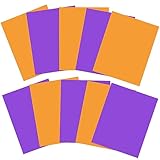
- High Light Transmission Material: the transparent color gel filter is made of high light transmission material with light weight, steady color temperature and low loss. PLEASE DON'T ATTACH THE GEL FILTERS TO MODELING LAMP OR IT WILL BE MELTED
- Vibrant Colors: these PVC plastic film sheets have 2 colors, purple and orange, different colors meet your different needs, The thickness is approximately 0.3mm, 5 piece per each color
- Two-sided Protective Film: these correction gel light filters are protected by coverings on the both sides of filters, don't worry about being scratched, easy to remove them.
- Create Different Effects: Color filters used for lighting effects and color correction, involving additive and subtractive color, color mixing, color transmission, absorption and filtering of the different wavelengths of light, perfect for transforming regular LED house lights, ground lights, landscape lights and spotlights to Halloween light.
- Wide Application: light filters fit for film, video, photo, stage, theater, party, and DJ lighting; Halloween orange + purple combination will add the Halloween atmosphere.
Electrochromic devices can be designed to change absorption or transmission, to change reflectivity, or to display patterned areas. These formats make the technology relevant to different kinds of displays and optical components, but a material’s color response alone does not establish that it will meet a particular device’s requirements.
Light and combined light-and-electricity effects
Photochromism describes an optical response to light. Photoelectrochromism involves both light and an electrical input. These are separate categories in the ACS overview, so a light-triggered change should not be described as electrochromism unless electrical control is also part of the effect.
Rank #2
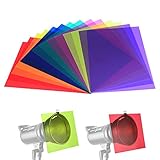
- Contains 14pcs gel filter sheets in 7 different colors, including red, yellow, orange, green, purple, pink, blue; Each color for 2 pieces;Please don't attach the gel filters to modeling lamp or it will be melted.
- Color filters are used for lighting effects and color correction, involving additive and subtractive color, color mixing, color transmission, absorption and filtering of the different wavelengths of light.
- Colored overlays size: each color film sheet is 11.7 x 8.3 inches in dimension, each is covered with a protective film to avoid being scratched, easy to peel off.Use combinations of these filters to create different effects.
- Made of high light transmission materials with light weight, steady color temperature and low loss.
- Colored gels for lights used in film, video, photo, stage, theater, party, and DJ lighting.Note: the strobe light is not included.
Heat and temperature
Temperature-responsive chromogenic polymers can take different physical forms. Fraunhofer IAP describes work involving hydrogels, thermoplastic foils, thermosets, and additives. Its description identifies forms under development, not a single standardized material or product specification.
Mechanical forces
Mechanochromic and piezochromic effects relate optical changes to mechanical input. The terms identify different classes of response; the precise behavior depends on the material and how it is configured. A polymer that changes under strain or pressure cannot be assumed to behave like one switched electrically.
Rank #3
- 🎞️High Transmittance: These gel light filters are made of high light transmission plastic material, lightweight, steady color temperature and low loss, Help kids reduce reading frustration, improve clarity and eye movement control.
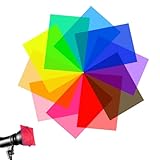
- 🎞️Multi Color Combination: The color gels for lighting contains 10 colors, yellow, red, pink, fluorescent green, purple, green, light blue, dark blue, orange, rose red. Each color for 1 sheets, Different colors meet your different needs.
- 🎞️Create Different Effects: The color filters are used for lighting effects and color correction, involving additive and subtractive color, color mixing, color transmission, absorption and filtering of the different wavelengths of light.
- 🎞️Double-sided Protective Film: The PVC plastic film sheets is 11.7 x 8.3 inches in dimension, Both sides of each light diffuser film are protected by removable film to maintain clarity and integrity.Easy to cut to any shapes meet different needs.
- 🎞️Wide Application: These correction gel light filters fit for film, video, photo, stage, theater, party, and DJ lighting. Also great for kids to use for hand collages, memory albums scrapbooks and many other art projects.
How multicolor electrochromic polymers are made
The 2004 ACS review describes several routes to multicolor electrochromic materials:
- Modify a parent polymer through substitution.
- Control polymerization of comonomers.
- Combine homopolymers in blends or laminates.
These approaches offer different ways to build color responses into a polymer system. The review also discusses patterning methods such as line-patterning, screen-printing, and metal vapor deposition. They are documented research approaches; their suitability for a commercial application depends on the device, manufacturing process, and performance requirements.
Rank #4

- [EASY TO USE]: Light gels have a protective film on either side which removed it before use. If you want to use these on your recessed led lights just cut them to fit the light shape.
- [MORE USES]: These gel filters can help correct the initial captured image or video, also suit for memory albums scrapbooks and various other art projects, can improve clarity and helps kids with dyslexia reduce reading frustration.
- [FUNCTION]: This colored plastic sheets was perfect for transforming regular LED garage flood lights, ground lights, landscape lights, spotlights.
- [PREMIUM MATERIAL]: The gel filter is made of high light transmission PVC plastic, It's very sturdy, lightweight, steady color temperature, can be folder and bent to your needs,you can cut to different sizes to suit your creative needs.
- [PACKAGE]: You will get 10pcs gel filter, red, yellow, blue, pink, purple, green, orange,rose red,dark blue, tea black, each light gels sheets is 11.7 inches long and 8.3 inches wide, Each filter sheet is precisely sized to A4 dimensions;If you feel the colored plastic sheets are transparent,you could to double (or more) up to get the deep color you want.
How to compare electrochromic materials and devices
A useful comparison looks beyond the color a sample can display. The ACS review identifies device and material considerations that help explain whether an option may fit a particular use:
- Optical contrast: How visibly the optical state changes between conditions.
- Coloration efficiency: How effectively an applied charge produces a change in optical density.
- Switching speed: How quickly the device changes state.
- Stability: How well the optical response and device operation persist over repeated use or time.
- Device format: Whether the design changes absorption or transmission, reflection, or patterned regions.
- Patterning approach: How the responsive material is placed or shaped in the device.
There is no single “best” electrochromic polymer on these measures alone. A fast switch, a strong visual contrast, stable cycling, and a particular display format may matter in different proportions depending on the application.
Best Value

- Gel filter material: these gel filters are made of high light transmission plastic material, lightweight, steady color temperature and low loss, helpful to use
- Colored overlays size: each color film sheet measures approx. 11.7 x 8.3 inches in dimension, come in vivid color, and each is covered with a protective film to avoid being scratched, easy to peel off
- Wide Applications: colored overlays filters are suitable for film, video, photo, stage, theater, party, and DJ lighting, good for photo studio strobe flash light LED lights,you can use it to decorate your Halloween and Christmas lights, which will bring you a different experience
- More using occasions: also suit for memory albums scrapbooks and various other art projects, can improve clarity, eye movement control and helps people with dyslexia reduce reading frustration
- Quantity: 9 pieces of gel light filters in total, enough for using; Note: please do not leave the product close to the light which is on, or it will be melted
What the 2004 headline tells us—and what it does not
“Polychromic plastics: the magic starts here” was the headline of a Chemistry World news item by Michael Gross dated 1 May 2004. The publisher’s summary says chemists were opening new applications for colour-changing polymers. The article’s full text is not available in the retrieved source material, so its headline and summary do not establish which specific chemistries, experiments, researchers, or applications it covered.
The broader subject remains a useful way to understand responsive materials, but the term should not imply that all such plastics share one mechanism or are ready for the same uses. For a technical overview of the different optical effects, the ACS publisher also lists the chapter “Chromogenic Effects in Polymers: An Overview of the Diverse Ways of Tuning Optical Properties in Real Time.”
Quick Recap
Product prices and availability are accurate as of the date/time indicated and are subject to change. Any price and availability information displayed on Amazon at the time of purchase will apply.

