
The Tool Desk
Outbyte PC Repair FREEClear out junk files and repair common Windows errorsFree Scan →Outbyte Driver Updater FREEFix the driver behind crashes, sound loss and screen glitchesFind Drivers →iTechGuides is reader-supported. When you buy through links on our site, we may earn an affiliate commission. As an Amazon Associate I earn from qualifying purchases. Learn more
Yes—PHP can be used in IoT systems, chiefly for the application and backend layer. A PHP service can call an IoT platform’s management APIs, process application data, and power dashboards or administrative tools. That is different from using PHP to run firmware on a device or to provide the MQTT broker that receives device traffic.
Where PHP fits in an IoT system
A useful way to plan an IoT application is to separate the system into layers. A device runs firmware and communicates over a network; an ingestion endpoint or broker receives messages; a platform or messaging service manages or routes them; and application services turn device data into features people use. PHP belongs naturally in that last layer, and can also call platform APIs for management tasks.

- Device and firmware: Code on the physical device reads sensors or controls hardware. The cited documentation does not establish PHP as a typical low-level firmware choice.
- Connectivity and ingestion: Devices send data using a protocol such as MQTT or HTTPS to an endpoint or broker.
- Messaging and platform services: A platform or backend service handles device management, message routing, or related operations.
- Application services: PHP can integrate with platform APIs, apply application logic, and serve dashboards or administrative tools.
Alibaba Cloud publishes an IoT Platform SDK for PHP. Its guide documents installing the dependency with Composer and initializing a client to call platform API operations; it does not make the PHP SDK a device-side SDK. Alibaba’s catalog distinguishes platform SDKs from device SDKs. See the PHP SDK guide (updated June 10, 2026) and the SDK catalog (updated June 3, 2026).
Do these 3 things before closing this tab:
1Fix the driver behind crashes, sound loss and screen glitches2Repair Windows errors before they cause bigger problems3Scan for outdated or missing drivers - takes under a minuteHow device data reaches a PHP application
A typical flow is device → MQTT broker or HTTPS endpoint → messaging or platform service → PHP application logic → dashboard or other client. The exact services depend on the platform. PHP may call management APIs directly, or consume data after a platform or messaging component has routed it. Do not assume that a management SDK itself receives device telemetry.
#1 Best Overall
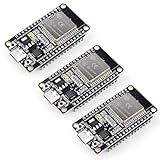
- Dual-Core Performance Up to 240 MHz: Run sensor processing, wireless communication, automation logic and connected-device tasks on a 32-bit dual-core ESP32 platform designed for responsive embedded and IoT projects
- Built-in Wi-Fi and Bluetooth 4.2: Connect to 2.4 GHz Wi-Fi networks or use Bluetooth Classic and BLE for wireless sensors, smart devices, remote controls, home automation and other connected projects
- Flexible Power-Saving Modes: ESP32 power-management features support dynamic clock scaling and low-power operating modes, helping developers reduce energy use in compatible sensing, monitoring and connected-device applications, suitable for battery-powered Internet of Things (IoT) devices.
- USB-C Programming with CP2102: Connect through USB-C for power, sketch uploads and serial monitoring, while GPIO, UART, SPI and I2C interfaces support sensors, displays, motor drivers and other modules (USB-C cable not included)
- Over-the-Air Update Support: Configure OTA functionality through a compatible ESP-32 software framework to update deployed firmware over Wi-Fi without reconnecting the board by USB for every revision
Google Cloud’s connected-device architecture guidance describes two broad MQTT approaches: connect clients through an MQTT connector to a backend messaging service, or operate a complete MQTT broker. A connector can reduce complexity, operating cost, and maintenance burden; a full broker can provide broader MQTT protocol features and bidirectional capabilities, at the cost of more operational responsibility. Choose based on required protocol behavior and who will maintain the infrastructure.
Choose MQTT or HTTPS for the device connection
MQTT and HTTPS are both common ingestion choices, but neither is universally best. The connected-device architecture guidance describes HTTPS as broadly supported by mobile devices, browsers, and other applications, while noting its higher overhead compared with MQTT. MQTT may suit a device communication pattern that needs its protocol capabilities, but the endpoint and broker design determine which features are actually available.
Rank #2

- Certified & Future-Ready: Espressif-certified ESP32-WROOM-32E ensures full hardware compatibility and lifetime firmware support. Upgraded 8MB Flash handles IoT data and OTA updates.
- Dual-Core Speed: 240MHz dual-core processor runs Wi-Fi/BLE and sensors 2x faster. 38 GPIO pins (10 RTC) support SPI/I2C/UART for LCDs, motors, and industrial sensors.
- Plug & Play Dev: USB-C driver pre-installed: upload code instantly on Windows/Mac/Linux. Works with Arduino IDE, MicroPython, and Espressif IDF.
- All-Environment Ready: Run Wi-Fi smart switches (Home Assistant) and BLE tracking on one board. Industrial-grade stability (-40°C~85°C) for outdoor/automated systems.
- Advantages: The ESP32 development board offers high performance, low power consumption, and rich wireless connectivity, making it suitable for developers of all levels, especially beginners.
| Decision factor | MQTT | HTTPS |
|---|---|---|
| Overhead | The cited Google Cloud guidance describes it as lower overhead than HTTPS. | The cited Google Cloud guidance describes it as higher overhead than MQTT. |
| Client support | Assess device and endpoint support, including the MQTT features the application needs. | Broadly supported by mobile devices, browsers, and other applications, according to Google Cloud guidance. |
| Operational design | Decide between a connector to a messaging service and a full broker; these differ in feature coverage and operating burden. | Use an endpoint and platform integration suited to the device and backend; the cited guidance does not prescribe one universal design. |
Before settling on a protocol, check device constraints, platform limitations, delivery and bidirectional requirements, client compatibility, backend integration, and operational ownership. Alibaba’s IoT architecture documentation is another vendor reference for evaluating its platform’s options.
PC Slower Than It Used to Be?
A free scan shows the junk files, broken settings and background clutter dragging Windows down - then fixes them in one click.Free scan · Windows 10 & 11Outdated Drivers Are Slowing You Down
One free scan finds every outdated or missing driver and matches the right update for your exact hardware.Free scan · exact hardware matchConnect PHP to Alibaba Cloud IoT Platform
The official PHP guide gives a concrete starting point for platform API calls. It shows the Composer package and client initialization using a region and credentials. The guide was updated June 10, 2026; verify current region support, API coverage, and authentication requirements in the vendor documentation before implementing a production integration.
Rank #3
- Install the SDK: Run
composer require alibabacloud/iotin the PHP project. - Prepare configuration: Identify the target region and provide the credentials required by the SDK. Keep secrets in protected configuration rather than source code or user-accessible files.
- Initialize the client: Follow the guide’s client initialization example for the selected region and credentials.
- Call the needed platform API: Use the SDK for documented IoT Platform API operations, and handle responses and errors in the application.
- Keep device connectivity separate: If physical devices need to publish telemetry or receive commands, select and implement the appropriate device SDK or protocol path rather than treating this PHP management SDK as firmware.
The official guide contains the current initialization details and operation examples. The source material establishes this Alibaba Cloud SDK example, not equivalent PHP SDK coverage across every IoT provider.
Plan identity, credentials, and application security
IoT security crosses the device, transport, platform or broker, and application boundaries. Google Cloud’s IoT security guidance highlights device identity and management, credential provisioning, authentication, access control, and how edge devices access cloud resources. A managed platform may provide some of these capabilities; a broker-centered design can leave more of the work to the operator.
Rank #4

- 2.4GHz Dual Mode WiFi + Bluetooth Development Board
- Support LWIP protocol, Freertos
- SupportThree Modes: AP, STA, and AP+STA
- Ultra-Low power consumption, Compatible with Arduino IDE
- ESP32 is a safe, reliable, and scalable to a variety of applications
- Define how each device is identified and provisioned, and how its credentials are stored, rotated, and revoked.
- Authenticate devices and restrict their permissions to the resources and operations they need.
- Secure transport and the broker or platform boundary; do not rely on application login controls to secure device traffic.
- Authorize users separately in the PHP application, especially for device administration and sensitive data.
- Plan for updates and incident response across devices, gateways, platform configuration, and application services.
The PHP application also needs standard web security controls. The PHP manual’s security section covers user-submitted data, sessions, filesystem and database security, error reporting, and keeping PHP current. Apply these controls to the service that exposes dashboards or APIs, as well as the IoT-specific identity and authorization measures.
When a Raspberry Pi gateway is useful
A Raspberry Pi can be useful for a local prototype or gateway experiment, such as testing a device-to-cloud path near the hardware. It is optional: the Alibaba PHP platform-SDK example does not require a Raspberry Pi, and no particular model is established as necessary.
Best Value
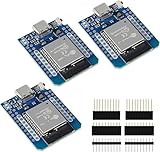
- D1 Mini NodeMCU Type-C ESP32 WLAN WiFi Bluetooth IoT Development Board 5V Compatible for Arduino
- Designed with ultra-low power technology, it offers the full range of performance and features of the ESP32 chip. The pin arrangement provides compatibility with the modules developed for the D1 Mini ESP8266 while also offering fast WLAN, enhanced GPIO, Bluetooth functionality, and with its higher performance, a wider range of applications.
- 100% compatible with Arudino IDE, Lua and Micropython, it shows robustness, versatility, and reliability in a wide variety of applications and power scenarios.
- All I/O pins have interrupt, PWM, I2C and one-wire capability, except the pin DO.
- Designed with ultra-low power technology, it offers the full range of performance and features of the ESP32 chip. The pin arrangement provides compatibility with the modules developed for the D1 Mini ESP8266 while also offering fast WLAN, enhanced GPIO, Bluetooth functionality, and with its higher performance, a wider range of applications.
For an on-premises Raspberry Pi gateway, treat device and disk security as deployment decisions. Raspberry Pi’s security documentation describes verified boot and encryption options and states: “By default, Raspberry Pi OS doesn’t support encrypted root file systems; if you want disk encryption, you must either build your own encrypted storage or use the Raspberry Pi Secure Boot Provisioner tool to enable encryption during provisioning.” This is specific to Raspberry Pi OS and is not a general requirement for PHP IoT development.
Quick Recap
Product prices and availability are accurate as of the date/time indicated and are subject to change. Any price and availability information displayed on Amazon at the time of purchase will apply.

