
Do these 3 things before closing this tab:
1Fix the driver behind crashes, sound loss and screen glitches2Clear out junk files and repair common Windows errors3Scan for outdated or missing drivers - takes under a minuteiTechGuides is reader-supported. When you buy through links on our site, we may earn an affiliate commission. As an Amazon Associate I earn from qualifying purchases. Learn more
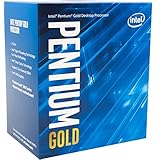
The Pentium G4560 CPU by Intel Review verdict is simple: it was an exceptional $64-class budget processor in 2017, but it is usually a poor foundation for a new PC in 2026. Keep or buy one only when a compatible LGA1151 system already exists or the complete used machine is exceptionally cheap.
The G4560 remains useful for basic office work, browsing, media playback, retro gaming, light emulation, and some older games. Its two cores, four threads, missing AVX/AVX2 support, weak integrated graphics, discontinued platform, and possible BIOS problems make newer hardware the safer choice for modern gaming and demanding applications.
Key takeaways
- The Intel Pentium G4560 launched in Q1 2017 with two cores, four threads, a 3.50 GHz base frequency, 3 MB cache, and a 54 W TDP.
- Hyper-Threading gave the G4560 four logical threads at Pentium pricing, allowing it to compete closely with some contemporary entry-level Core i3 processors in selected workloads.
- Tom’s Hardware recorded approximately 40.3 FPS for the G4560 and 43.8 FPS for the faster G4620 in its 2017 aggregate gaming tests using a Radeon RX 470 at 1920×1080.
- Intel lists the G4560 as discontinued, with a discontinuation date of March 31, 2024, so 2026 purchases are generally used, refurbished, or old-stock transactions.
- The G4560 is a reasonable replacement for an existing compatible LGA1151 computer, but a complete modern platform is usually the better new-build investment.
Is the Pentium G4560 CPU by Intel Review verdict still favorable in 2026?
The G4560 is still a good processor only in a narrow situation: the buyer already owns, or can obtain extremely cheaply, a compatible LGA1151 motherboard, memory, storage, and power supply. The G4560 is not a sensible default choice for a new gaming or productivity computer in 2026.
The processor’s historical reputation is justified. Intel enabled Hyper-Threading on this Pentium, giving it two physical cores and four logical threads at a launch-era price of about $64. That combination made the G4560 unusually capable for an inexpensive 2017 gaming PC. Tom’s Hardware’s February 24, 2017 review described the G4560 as a strong value option, particularly when paired with a discrete graphics card.
#1 Best Overall

- Up to 31% better office productivity vs. 5 year old PC1
The 2026 buying decision is different. A low CPU price does not make an old platform inexpensive if the motherboard is scarce, the BIOS is incompatible, the board uses the wrong memory type, or a complete newer system costs only modestly more. The G4560 is best viewed as a repair part, temporary replacement, low-cost secondary-PC processor, or retro-budget component.
What are the Pentium G4560 specifications?
The Intel Pentium G4560 is a desktop Kaby Lake processor from Intel’s 7th-generation platform era. The processor has two physical cores and four threads through Hyper-Threading, runs at a fixed 3.50 GHz base frequency, and has no Turbo Boost.
| Specification | Intel Pentium G4560 |
|---|---|
| Architecture | Kaby Lake |
| Launch | Q1 2017 |
| Physical cores / threads | 2 / 4 |
| Base frequency | 3.50 GHz |
| Turbo Boost | None |
| Cache | 3 MB |
| Manufacturing process | 14 nm |
| Processor TDP | 54 W |
| Integrated graphics | Intel HD Graphics 610 |
| Socket | LGA1151 |
| Memory support | Dual-channel DDR4-2400, subject to motherboard support |
| PCI Express | PCI Express 3.0 |
| Multiplier | Locked |
| Lifecycle | Discontinued; Intel lists March 31, 2024 |
These core specifications come from Intel’s Pentium G-series specifications and the G4560 product specification page. The G4560 is a locked, desktop-only CPU rather than an enthusiast processor.
The Tool Desk
Outbyte Driver Updater FREEFix the driver behind crashes, sound loss and screen glitchesFind Drivers →Outbyte PC Repair FREERepair Windows errors before they cause bigger problemsFix Now →Retail packaging varied. Some boxed packages included Intel’s stock cooler, while used tray processors or incomplete listings may not include a cooler. Confirm the exact contents before buying. A stock Intel cooler in good condition is normally sufficient for the G4560 at stock settings.
Why was the G4560 so popular in 2017?
The G4560 became notable because four logical threads were unusual at Pentium pricing. Earlier low-end Pentium desktop chips commonly had two cores and two threads, while the G4560’s Hyper-Threading allowed two hardware threads to run on each physical core.
Hyper-Threading did not turn the G4560 into a four-core processor. Two physical cores remain a fundamental limit, especially when a game, browser, launcher, voice-chat application, antivirus scanner, and operating system all compete for CPU time. Nevertheless, four threads were enough to make the G4560 much more competitive with contemporary low-end Core i3 models than its Pentium name suggested.
The G4560 was not universally equivalent to a Core i3. The G4560 had less cache than many Core i3 models, no Turbo Boost, a lower clock than the Core i3-7100, and no AVX or AVX2 support. The G4560 was close to some Core i3 processors in selected gaming and everyday workloads, not identical in every application.
Quick wins for a faster PC:
Repair Windows errors before they cause bigger problemsFix Now →Fix the driver behind crashes, sound loss and screen glitchesFind Drivers →Clear out junk files and repair common Windows errorsFree Scan →The low historical price was central to the value argument. Tom’s Hardware’s launch-era coverage cited pricing of approximately $64 for the G4560. That 2017 price should not be treated as a valid 2026 used-market price; current value depends on condition, seller, warranty, motherboard availability, and the cost of the complete platform.
How well does the G4560 handle gaming?
The G4560 can still handle older esports games, lighter titles, and some older AAA games when paired with a suitable discrete graphics card and sensible settings. The processor is much less comfortable in modern open-world, simulation, multiplayer, and heavily threaded games, where two physical cores can produce stutter, low minimum frame rates, or severe background-task contention.
Rank #2

- 2 Cores / 4 Threads
- Socket Type LGA 1200
- Compatible with Intel 400 series chipset based motherboards
- Intel Optane Memory Support
Historical benchmark results show why the G4560 earned its reputation, but those results are not modern performance guarantees. In Tom’s Hardware’s 2017 gaming tests, the G4560 averaged approximately 40.3 FPS and the G4620 averaged approximately 43.8 FPS using a Radeon RX 470 at 1920×1080. Both processors delivered playable results in the tested games, while CPU-heavy titles exposed their limitations.
| Game or workload type | What to expect from the G4560 | Main limitation |
|---|---|---|
| Older esports and lightweight games | Often usable with low or moderate settings and an appropriate GPU | CPU saturation can appear when high frame rates are requested |
| Older AAA games | Potentially playable, depending on the graphics card and game | Frame-time consistency may be poor even when average FPS looks acceptable |
| Modern open-world games | High risk of stutter, low minimums, or failure to meet software requirements | Two physical cores and missing instruction-set support |
| Modern simulation and multiplayer games | Generally a poor match | Game logic and background services can saturate four threads |
| Retro gaming and light emulation | Usually a suitable low-cost option | Emulator-specific CPU requirements still apply |
Average FPS alone is not enough to judge this processor. A game can show a tolerable average while producing noticeable pauses whenever the CPU handles streaming assets, physics, artificial intelligence, shader preparation, or background software. A G4560 system should be evaluated by frame-time behavior and responsiveness as well as average frame rate.
Recommended Free Tools
A discrete graphics card was the G4560’s strongest historical gaming configuration. Pairing the processor with an excessively powerful modern GPU is usually inefficient because the CPU can become the bottleneck. The appropriate graphics card depends on the games, resolution, settings, and used-market price, so no universal GPU pairing should be assumed.
Is Intel HD Graphics 610 good enough for gaming and media?
Intel HD Graphics 610 is suitable for display output, basic desktop use, light games, and older titles at low settings; HD Graphics 610 is not a sensible 2026 gaming GPU for demanding games.
Intel lists a maximum display capability of 4096×2304 at 24 Hz under the specified configuration on the G4560 specification page. That specification describes a display-output capability, not a promise of smooth 4K gaming, 4K video playback, or 4K streaming.
Actual display support depends on the motherboard’s video connectors, firmware, drivers, operating system, monitor, and cable. A motherboard without HDMI, DisplayPort, or another suitable output cannot expose the processor’s integrated graphics, even though the CPU contains the graphics engine.
Streaming-service behavior also depends on the browser, operating system, digital-rights-management path, codecs, drivers, and application. Check hardware-decoding support for the exact media application and operating system instead of assuming that the HD Graphics 610 guarantees modern streaming compatibility.
Dual-channel memory is particularly important when the integrated GPU is used. Installing matched memory modules can improve available memory bandwidth, while single-channel memory can further restrict already limited integrated-graphics performance.
What can the G4560 do for productivity?
The G4560 remains adequate for moderate web browsing, office applications, media playback, lightweight coding, basic home-server tasks, older software, simple point-of-sale systems, kiosks, and administrative computers. An SSD and sufficient memory can make such a system feel substantially more responsive than a hard-drive-based configuration.
Rank #3

- Boxed Intel Pentium Processor G4400 (3M Cache, 3
- Design that delivers high availability, scalability, and for maximum flexibility and price/performance
- Made in China
- Instruction set is 64 bit. Instruction set extensions are intel sse4.1 and intel sse4.2
Eight gigabytes of RAM is a bare minimum for a basic system, while 16 GB is a more practical target for gaming and general use. Moderate tab counts and ordinary documents are reasonable; heavy browser sessions with many extensions, large spreadsheets, virtual machines, and simultaneous background tasks can overwhelm two physical cores.
The G4560 is a poor choice for video encoding, large software builds, 3D rendering, modern content creation, machine-learning workloads, and virtual machines that need multiple cores. Tom’s Hardware’s productivity testing found the G4560 behind contemporary Core i3, i5, and i7 processors in threaded workloads such as media encoding and file compression.
The missing AVX and AVX2 instruction sets are a practical compatibility issue, not just a benchmark detail. Some applications require AVX or AVX2, while other applications can use slower fallback code. A modern application refusing to launch may therefore be limited by processor instructions rather than by clock speed alone. Software requirements must be checked individually.
What motherboard and memory does the G4560 need?
The G4560 uses the LGA1151 socket, but socket matching alone does not guarantee compatibility. Kaby Lake processors require an appropriate motherboard chipset and BIOS version.
| Platform group | Example chipsets | Compatibility consideration |
|---|---|---|
| Intel 100-series | H110, B150, H170, Z170 | May require a BIOS update before recognizing a Kaby Lake CPU |
| Intel 200-series | B250, H270, Z270 | Designed for the same Kaby Lake generation, but exact board support still must be checked |
| Older or unspecified LGA1151 board | Varies | Do not assume compatibility from the socket name alone |
Before installing a G4560, verify the motherboard’s exact model, installed BIOS version, manufacturer CPU-support list, memory type, maximum memory capacity, and video outputs. Intel’s 200-series desktop platform overview provides platform context, but the motherboard manufacturer’s support page is the authority for a particular board’s BIOS and processor list.
Free tools Windows power users keep installed
One-click scans. No signup required.
A 100-series board may need a BIOS update using an older supported processor. If the board cannot flash its BIOS without a working CPU, the buyer may need a supported older chip, a retailer update service, or a board already confirmed to recognize Kaby Lake. Installing the G4560 into an unupdated board can result in a system that powers on but does not complete the boot process.
Memory support varies across LGA1151 boards. Many compatible boards use DDR4, but some older boards use DDR3L. DDR3L and DDR4 are not interchangeable. Confirm the exact board’s memory technology, supported speeds, module capacity, and maximum total capacity before buying RAM.
For a basic office system, 8 GB is the minimum practical target. For gaming and general-purpose use, 16 GB is preferable. A SATA SSD is also a high-value upgrade: storage latency often affects everyday responsiveness more noticeably than replacing a G4560 with another slightly faster two-core processor.
How much cooling and power does the G4560 need?
Intel rates the G4560 at a 54 W TDP, so the processor is easy to cool at stock settings. A clean, correctly mounted Intel stock cooler is normally sufficient when the cooler is included and the fan works properly.
Rank #4
A 54 W TDP is a processor rating, not the complete system’s power consumption. A discrete graphics card, hard drives, fans, motherboard, and USB devices can contribute substantially to total system draw. A used build should therefore be assessed as a complete system rather than sized from the CPU’s TDP alone.
Unexpectedly high temperatures usually point to a cooler that is not latched correctly, dried thermal compound, dust blocking the heatsink, or a failing fan. Shut the system down, inspect the cooler mounting and fan operation, clean accumulated dust, and replace old thermal compound when appropriate.
Can the Pentium G4560 be overclocked?
The G4560 has a locked multiplier, so conventional multiplier overclocking is not available. Buyers should not choose the processor expecting normal enthusiast overclocking controls.
Some older boards and modified BIOS configurations enabled experimental BCLK-tuning methods, but those methods were board-specific, unofficial, and risky. BIOS modification can brick a motherboard, create instability, remove support for other processors, or make troubleshooting more difficult. BCLK modification is not a general recommendation for a used G4560 system.
PC Slower Than It Used to Be?
A free scan shows the junk files, broken settings and background clutter dragging Windows down - then fixes them in one click.Free scan · Windows 10 & 11Crashes, No Sound, or Screen Glitches?
Random freezes, missing sound and display glitches usually trace back to one bad driver. Find and replace yours safely.Free scan · under a minuteMemory-profile behavior also depends on the motherboard and chipset. Advertised RAM speed is not guaranteed simply because the memory module supports that speed; board firmware and chipset limits may prevent the profile from operating as advertised.
What are the best alternatives to the G4560?
The best alternative depends on whether the buyer already owns the LGA1151 platform. A slightly faster processor can be reasonable as a drop-in replacement, but buying an expensive old motherboard and CPU together often makes less sense than purchasing a newer platform.
| Alternative | What it improves | When it makes sense | Important limitation |
|---|---|---|---|
| Core i3-7100 | Higher 3.90 GHz base frequency with the same 2-core/4-thread design | Only when the price premium is very small and the existing board already works | It does not solve the fundamental two-physical-core limitation |
| Pentium G4600 | 3.60 GHz base frequency with 2 cores and 4 threads | Only when priced at or below the G4560 in a compatible system | Performance improvement is modest |
| Pentium G4620 | 3.70 GHz base frequency with 2 cores and 4 threads | Only when the price difference is negligible | Tom’s Hardware found only a modest gaming advantage over the G4560 |
| Core i5-7500 | Four physical cores | Existing compatible board and favorable used price | Old platform, used condition, and possible scarcity premium |
| Core i7-7700 | Four cores and eight threads | Existing compatible board when substantially cheaper than a modern platform | Used prices can be irrational because of scarcity |
| Modern budget platform | Newer cores, instruction support, I/O, operating-system compatibility, and upgrade potential | Almost every new build or serious gaming system | Higher initial platform cost may be required |
Intel’s G4560 versus Core i3-7100 comparison confirms the i3-7100’s higher base frequency and 51 W TDP. Intel’s G4560, G4600, and G4620 comparison lists the G4600 at 3.60 GHz and the G4620 at 3.70 GHz, while all three processors have two cores, four threads, and 3 MB cache.
The i5-7500 and i7-7700 are logical upgrade candidates for an existing compatible board, subject to BIOS support and used pricing. Neither processor should automatically be preferred over a modern six-core system if the buyer must purchase a motherboard and memory as well.
For a new computer, compare the complete price of the CPU, motherboard, memory, storage, power supply, case, and cooling. Current Intel desktop processors and AMD Ryzen processors should be evaluated by exact model and current local pricing, because a universal 2026 recommendation would become stale and prices vary by country.
Best Value

- 2 Cores /4 Threads
- 3.8 GHz
- Compatible with Intel 300 Series chipset based motherboards
- Bios update may be required for motherboard compatibility
- Supports Intel Optane Memory
Official product catalogs for comparison research include Intel’s desktop processor catalog and AMD’s Ryzen desktop processor catalog.
Independent reader supportYour contribution helps us test, update, and keep practical guides available for everyone.What should you check before buying a used G4560 system?
- Confirm the complete platform cost. Add the processor, motherboard, RAM, storage, power supply, case, cooler, shipping, and any missing cables. A cheap CPU can become poor value when the surrounding parts are expensive.
- Verify the motherboard model and BIOS. Confirm that the exact board supports Kaby Lake and that the installed BIOS recognizes the G4560.
- Check the memory type. Confirm whether the board requires DDR4 or DDR3L and whether the installed modules are present and functional.
- Inspect the LGA socket. Bent socket pins can cause missing memory channels, no display, or a complete failure to boot.
- Check the cooler. Confirm that a cooler is included, mounts correctly, and has a working fan.
- Prefer an SSD. A system booting from a mechanical hard drive may feel slow even when the CPU is functioning normally.
- Check the power supply. Old or unknown-brand power supplies are a reliability risk, particularly in systems with discrete graphics cards.
- Test under the intended workload. Check booting, memory detection, video output, temperatures, storage health, and the specific applications or games the system must run.
- Check operating-system requirements. Do not describe the G4560 as officially Windows 11-supported without verifying Microsoft’s current supported-CPU documentation. A workaround installation is not the same as official support.
How do you troubleshoot common G4560 problems?
| Problem | Likely cause | Practical action |
|---|---|---|
| System does not boot after installation | BIOS does not support Kaby Lake, or the socket has bent pins | Reinstall the previous supported CPU if available, update the BIOS, inspect the socket, and verify the board’s CPU list |
| No display output | Wrong motherboard port, missing board video output, unsupported BIOS, or graphics-card connection issue | Connect the display to the active graphics output, test the discrete GPU if present, and confirm motherboard video connectors |
| Memory runs below its advertised speed | Chipset or firmware limitation | Check the board manual and BIOS memory settings; do not assume the rated module speed is guaranteed |
| Modern application refuses to launch | Application requirement for AVX or AVX2 | Check the application’s official requirements; a newer CPU may be required |
| Gaming stutters despite acceptable average FPS | Two physical cores are saturated by the game and background tasks | Reduce background programs, cap the frame rate, lower CPU-heavy settings, or move to a newer multi-core platform |
| Temperature is unexpectedly high | Poor cooler mounting, dried compound, dust, or failing fan | Remount or replace the cooler, clean the heatsink, replace compound, and verify fan operation |
| System is poor value | Motherboard, RAM, or power-supply costs exceed the CPU savings | Compare the total used-platform cost with a newer CPU-and-board bundle |
Should you buy, keep, or replace the G4560?
Keep the G4560 if the existing computer handles office work, browsing, retro games, media playback, or basic home-server duties and does not have a specific software-compatibility problem. Upgrading from a hard drive to an SSD or from insufficient memory to 16 GB may improve daily use more cost-effectively than replacing the processor with another marginally faster two-core model.
Buy the G4560 when a compatible motherboard and memory are already available, the processor is inexpensive relative to the complete system, or the intended machine is a temporary replacement, office box, kiosk, retro PC, or light-use secondary computer. Test or inspect the used processor and motherboard carefully because old hardware may have no meaningful warranty.
What’s actually slowing this PC down?
Pick the symptom - the matching free tool is one click away.
Skip the G4560 when building from scratch, running modern games, using AVX/AVX2-dependent software, performing heavy multitasking, creating content, compiling large projects, running demanding virtual machines, or seeking a long-lived operating-system-supported platform.
Intel’s official product page marks the G4560 discontinued, and availability in 2026 is therefore primarily through used markets, refurbished systems, remaining inventory, or complete older PCs. No single current price can establish value without checking the country, condition, shipping, warranty, and included parts.
Frequently Asked Questions
Is the Intel Pentium G4560 still good for gaming in 2026?
The Intel Pentium G4560 is still usable for older esports, lightweight games, retro gaming, and some older AAA titles when paired with a suitable graphics card, but the processor is a poor choice for most modern games. Two physical cores can cause stutter and low frame-time consistency even when average FPS appears acceptable.
Does the Pentium G4560 support Windows 11?
The Pentium G4560 should not be described as officially Windows 11-supported without checking Microsoft’s current supported-CPU documentation. A workaround installation does not provide the same status as official hardware support, and operating-system requirements can change.
Free tools Windows power users keep installed
One-click scans. No signup required.
Will a Pentium G4560 work in any LGA1151 motherboard?
No. A Pentium G4560 requires a compatible LGA1151 motherboard BIOS and chipset; many 100-series boards need a BIOS update before recognizing the Kaby Lake processor. The exact motherboard model, BIOS version, memory type, and manufacturer CPU-support list must be checked.
Is the G4560 equivalent to a Core i3?
The G4560 was close to some contemporary entry-level Core i3 processors in selected workloads because both processors could provide four logical threads, but it was not universally equivalent. The G4560 has two physical cores, no Turbo Boost, less cache than many Core i3 models, and no AVX or AVX2 support.
The Bottom Line
Bottom line: The Intel Pentium G4560 remains a historically excellent budget CPU and a serviceable replacement for an existing LGA1151 computer. The G4560 is usually not a sensible foundation for a new 2026 system because its discontinued platform, two physical cores, missing AVX2 support, weak integrated graphics, and uncertain used-market value outweigh its low chip price.
Quick Recap
Product prices and availability are accurate as of the date/time indicated and are subject to change. Any price and availability information displayed on Amazon at the time of purchase will apply.

