
What’s actually slowing this PC down?
Pick the symptom - the matching free tool is one click away.
Choose HTML for information people will read on a website. It can follow a reader’s browser settings and is generally easier to update. Choose PDF when you need a fixed, downloadable or archival artifact whose page layout must remain stable. Neither format is automatically accessible: accessibility depends on how the document is authored, marked up and supported by browsers and assistive technologies.
The practical answer is often both: publish the essential information as HTML, then provide a properly created PDF when a handout, signed record, print layout or archive copy is genuinely required.


HTML and PDF solve different problems
HTML is the native format of the web. A browser lays it out for the current screen, allows text resizing and reflow, and can apply user preferences such as zoom, colors and other settings. A content team can normally update one page without rebuilding and redistributing a file.
PDF is a document artifact. It is designed to preserve pages, typography, spacing and positioning across devices and printers. That stability is valuable for a form, a print-ready handout, a contract copy, a report submitted as a file, or a record that must be retained in a defined version.
Quick wins for a faster PC:
Clear out junk files and repair common Windows errorsFree Scan →Fix the driver behind crashes, sound loss and screen glitchesFind Drivers →Repair Windows errors before they cause bigger problemsFix Now →#1 Best Overall
These are tendencies, not guarantees. A poorly structured HTML page can be difficult to navigate, while a tagged PDF can be highly usable. The format is only the starting decision; implementation determines the result.
Use HTML for online reading and changing information
Why HTML is usually the web default
- Reader control: browser zoom, text preferences, reflow and assistive-technology settings can affect the presentation.
- Maintenance: editors can correct, update or expand a page without asking every reader to download a replacement file.
- Findability and linking: headings, anchors and ordinary site navigation let readers reach a section directly.
- Responsive presentation: the same source can adapt to a phone, tablet or desktop instead of forcing a page designed for paper onto a narrow screen.
- Progressive delivery: a page can expose the key answer before optional details, media or interactive controls finish loading.
Government Digital Service and the Central Digital and Data Office advise publishing in HTML wherever possible so documents can use users’ custom browser settings. Their guidance also warns that PDFs can be harder to find, use and maintain and may work poorly with screen readers.
Content that normally belongs in HTML
- Help and reference articles that change frequently.
- Instructions, policies and service information that must be searchable and linkable.
- Essential public information, especially when readers may use phones, zoom or assistive technology.
- Long-form material that benefits from headings, in-page navigation and responsive reflow.
- Content with live data, forms, calculators or other interaction.
HTML implementation still matters
Use a logical heading hierarchy, meaningful link text, semantic lists and tables, labels for form controls, keyboard-accessible controls, sufficient color contrast and text alternatives for informative images. Test with keyboard navigation, zoom and the assistive technologies used by your audience. Do not describe a page as accessible merely because its source is HTML.
Use PDF when a fixed, downloadable artifact is the requirement
Situations where PDF is the better starting point
- Fixed page design: a brochure, certificate, worksheet or print handout must retain exact pagination and placement.
- Download and distribution: readers need one file to save, email or submit to another system.
- Archiving: a non-editable snapshot is being retained as a record.
- Offline or controlled review: people need to annotate, print or review a defined edition rather than a page that may change.
- Formal exchange: a recipient explicitly specifies a PDF file or a page range.
For static, non-editable attachments intended for download or archiving, the UK government open-standards profile specifies PDF/A-1 or PDF/A-2. PDF/A is an archival profile; selecting it does not, by itself, make a document accessible.
What a PDF gives you—and what it does not
A PDF can preserve visual composition and embed fonts or other resources needed to reproduce the page. It can also carry document metadata, bookmarks, tags and a text layer. Those capabilities are optional, however. A PDF exported as a collection of positioned shapes may be difficult to search, copy or navigate, and a file that looks perfect on paper can still fail users of screen readers or magnification.
Provide a clear filename, title and language metadata, logical reading order, bookmarks for long documents, tagged headings and tables, meaningful alternative text, sufficient contrast and form labels where applicable. Check the result in more than one viewer and with keyboard and assistive-technology testing.
Rank #2
Scanned PDFs require an extra text step
A scan of a paper page may contain only an image. In that state, text is not searchable and a screen reader cannot read the words. Optical character recognition (OCR) can create a text layer, making the content searchable and potentially available to assistive technology.
OCR is not proof of accessibility. Recognition errors can change names, numbers, punctuation or table structure. After OCR, review the text against the source, set the correct reading order, add tags and headings, describe meaningful images, identify the document language and test navigation. When the information is essential, provide an HTML version as well where possible; the Office for National Statistics manual says essential information should always be available elsewhere as HTML.
Accessibility is a requirement for either format
W3C guidance on WCAG 2.2 explains that conformance depends on the specific way a technology is used and on its support by user agents and assistive technologies. HTML and PDF are both examples of web-content technologies in that guidance. Section 508 guidance in the United States applies WCAG 2.0 Level AA requirements to web and non-web electronic content, including HTML and PDF.
Those are standards and jurisdiction-specific guidance, not a universal legal rule. Determine which laws, procurement rules or organizational policies apply to your audience. Treat accessibility as an acceptance criterion for the finished document, not as a reason to assume one file type is compliant.
Minimum checks for an HTML page
- Headings form a logical outline and landmarks identify navigation, main content and complementary areas.
- Every function works from the keyboard, with a visible focus indicator.
- Text remains usable when zoomed and on a narrow viewport.
- Images have appropriate alternative text; decorative images are ignored by assistive technology.
- Links, controls, tables and error messages have semantic names and relationships.
- Contrast, motion and color choices do not hide information.
Minimum checks for a PDF
- The file has a title, language and sensible metadata.
- Tags represent headings, paragraphs, lists, tables and figures; the tag order matches the intended reading order.
- Text is selectable and searchable; scanned pages have been reviewed after OCR.
- Bookmarks help users navigate long documents.
- Figures have useful alternative text, decorative figures are marked accordingly, and links and form fields have labels.
- Keyboard navigation, zoom and a screen reader work in the target viewer.
A decision framework for choosing the format
| Reader or publishing need | Better starting point | Reason and qualification |
|---|---|---|
| Information read on a website | HTML | It can respect browser settings and is easier to maintain; accessibility still depends on implementation. |
| Fixed page layout, downloadable handout or static archive | It preserves a document artifact. For government static, non-editable attachments, PDF/A-1 or PDF/A-2 is the specified profile. | |
| Scanned legacy paper document | OCR, then an accessible document and HTML alternative where possible | OCR can make text searchable and available to screen readers, but recognition and structure must be checked. |
| Essential public information also distributed as a file | HTML plus the necessary accessible file | Keep the essential route available in HTML rather than making the download the only source. |
| Interactive service, live status or frequently changing instructions | HTML | Readers need current content and controls; a PDF becomes stale unless a controlled release process exists. |
| Print-ready design whose pagination is part of the meaning | PDF, with HTML for essential text where practical | PDF protects the layout while HTML provides a more adaptable reading route. |
Ask these questions before publishing
- Will the reader primarily read this in a browser, or must the recipient receive a file?
- Does exact pagination or visual placement carry meaning?
- How often will the content change, and how will old versions be retired?
- Must the document work offline, on paper or in an archival system?
- What accessibility standard, law or procurement requirement applies?
- If a PDF is necessary, can the essential information also be offered as HTML?
A practical publishing workflow
For an HTML-first publication
- Write the content as semantic sections with a useful title, headings and lists.
- Build responsive layouts that reflow at the reader’s zoom and viewport rather than relying on fixed page coordinates.
- Add labels, alternatives, keyboard behavior and status messages as each component is created.
- Test with keyboard navigation, zoom, a mobile viewport and the assistive technologies relevant to your audience.
- Keep the page as the canonical version and link any downloadable artifact beside the relevant section.
For a PDF deliverable
- Create the source with real text and semantic structure; do not flatten every page into an image.
- Set document language, title and metadata, then export with tags, bookmarks and a logical reading order.
- Use PDF/A-1 or PDF/A-2 when the requirement is a static, non-editable archive or download covered by that profile.
- If the source is scanned, run OCR, proofread recognition, repair tables and reading order, and add alternatives for meaningful figures.
- Open the result in the viewers your recipients use, check search and keyboard navigation, and test with assistive technology.
- Publish an HTML route to essential information whenever the PDF is necessary but not the best reading experience.
Capturing a web page as an image or PDF
A browser can produce a visual artifact when you need to document a page, create a review copy or preserve how a page looked at a moment in time. For a do-it-yourself capture, open the page in a current browser, wait for all relevant content to load, use the browser’s print dialog for a PDF or its developer/screenshot command for an image, select the required page range or full-page option, and inspect the output. A browser capture records presentation; it does not replace an accessible HTML source or guarantee that a PDF has tags, a text layer or a correct reading order.
Or skip the browser setup
ScreenshotNeo is a website screenshot API and MCP server for developers. One GET request can return a PNG, JPEG, WebP or PDF. Before capture it can accept cookie or consent banners and remove more than 60 known consent platforms, newsletter popups and chat widgets; each step can be turned off. Bot checks or CAPTCHAs, blank pages, timeouts, failed loads and cache hits are not billed, and the response identifies the page verdict and billing status in X-Page-Verdict and X-Billed headers. Its MCP server exposes take_screenshot, get_page_info and capture_pdf for Claude, Cursor and other MCP clients.
The Tool Desk
Outbyte Driver Updater FREEFix the driver behind crashes, sound loss and screen glitchesFind Drivers →Outbyte PC Repair FREEClear out junk files and repair common Windows errorsFree Scan →Use the API documentation at https://screenshotneo.com/docs/ for all options. This cURL request saves a WebP capture:
Rank #3
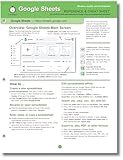
- hole punched
- high quality card stock
- 4 pages
- made in USA
- keyboard shortcuts
curl -G "https://api.screenshotneo.com/v1/shot" -d access_key=YOUR_API_KEY --data-urlencode url=https://stripe.com -o shot.webpThe same request in Python:
import requests
r = requests.get("https://api.screenshotneo.com/v1/shot", params={"access_key": "YOUR_API_KEY", "url": "https://stripe.com"}, timeout=90)
open("shot.webp", "wb").write(r.content)
And in Node.js:
const q = new URLSearchParams({ access_key: 'YOUR_API_KEY', url: 'https://stripe.com' });
const res = await fetch(`https://api.screenshotneo.com/v1/shot?${q}`);
ScreenshotNeo has 63 options, including full-page capture with lazy images loaded, CSS-selector element capture, dark mode, 12 device presets or a custom viewport, retina scale, PDF paper size, margins, landscape and page ranges, HTML/CSS-to-image, custom CSS and JavaScript, clicks, selector waits, delays, network-idle waits, ad/tracker/request/resource blocking, headers, cookies, user agents, Authorization, timezone, geolocation, transparent backgrounds, resizing, chosen cache TTLs, signed links, asynchronous jobs with signed webhooks, bulk capture of 100 URLs per call, a usage API and an OpenAPI specification. Common screenshot-API parameter names also work, which helps when switching.
The Free plan includes 1,000 shots each month with no card. Paid plans are Starter $5 for 3,000 shots, Growth $15 for 15,000, Pro $39 for 60,000, Scale $99 for 250,000 and Business $249 for 1,000,000; yearly billing gives two months free, and every feature is on every plan. Create a free ScreenshotNeo account to start with 1,000 screenshots a month and no card.
Independent reader supportYour contribution helps us test, update, and keep practical guides available for everyone.Common mistakes and fixes
“The PDF looks right, so it is accessible.”
Cause: visual appearance says nothing about tags, reading order, alternatives or keyboard access. Fix: inspect structure, add semantic tags and test with assistive technology; keep essential information in HTML where possible.
“Our scan cannot be searched.”
Cause: the pages contain only images. Fix: run OCR, proofread every page and repair structure. OCR errors can be worse than an obvious blank text layer.
“The HTML version and PDF disagree.”
Cause: two independent copies were updated on different schedules. Fix: designate HTML as the canonical content, generate the file from the same source where possible, and show the PDF edition or date clearly.
“The PDF is unreadable on a phone.”
Cause: a fixed paper page is being viewed without reflow. Fix: provide HTML for reading, offer a reflow-capable accessible PDF when feasible, and reserve the fixed file for printing or formal submission.
“A browser screenshot contains a cookie banner or chat bubble.”
Cause: the page was captured before consent handling or UI cleanup. Fix: accept or dismiss the banner and hide transient elements in the browser workflow, or configure ScreenshotNeo’s consent, popup and chat-removal steps before capture.
FAQ
Should every PDF have an HTML version?
Not every incidental file needs a duplicate page, but essential information should have an HTML route whenever practical, especially when the PDF is fixed-layout, scanned or difficult to use on small screens.
Is PDF/A the same as an accessible PDF?
No. PDF/A addresses archival characteristics. Accessibility requires appropriate tags, reading order, alternatives, metadata, keyboard behavior and testing.
Can I make an accessible document by exporting HTML to PDF?
Export can preserve useful structure, but the result must still be checked. Verify tags, headings, tables, links, reading order, language, contrast and assistive-technology behavior in the exported file.
When is a PDF preferable even if HTML exists?
Use the PDF when the recipient needs a stable page layout, an offline handout, a defined submission file or an archive artifact. Keep the HTML route for adaptable reading and current updates.
Crashes, No Sound, or Screen Glitches?
Random freezes, missing sound and display glitches usually trace back to one bad driver. Find and replace yours safely.Free scan · under a minutePC Slower Than It Used to Be?
A free scan shows the junk files, broken settings and background clutter dragging Windows down - then fixes them in one click.Free scan · Windows 10 & 11Frequently Asked Questions
Does a PDF preserve links?
A properly authored PDF can contain active links, but link behavior and accessibility depend on how the PDF was created and tagged.
Is a scanned PDF acceptable for archival use?
It can be an archival artifact, but add OCR and verify the resulting text and structure; archival status alone does not make the scan searchable or accessible.
Which format should I update first when content changes?
Update the canonical HTML content first, then regenerate or replace the PDF so readers are not left with conflicting editions.
Quick Recap
Product prices and availability are accurate as of the date/time indicated and are subject to change. Any price and availability information displayed on Amazon at the time of purchase will apply.
Do these 3 things before closing this tab:
1Repair Windows errors before they cause bigger problems2Scan for outdated or missing drivers - takes under a minute3Clear out junk files and repair common Windows errors
