
iTechGuides is reader-supported. When you buy through links on our site, we may earn an affiliate commission. As an Amazon Associate I earn from qualifying purchases. Learn more
Choose a platform-as-a-service (PaaS) when managed deployment workflows and service-specific building blocks fit the workload; choose a virtual private server (VPS) when root access or custom server configuration matters more than handing off infrastructure work. They are not mutually exclusive: assigning different workloads to each can be sensible, but the right split depends on each application’s operational needs and measured costs.
What actually differs between PaaS and VPS?
The main distinction is how much control you retain and how much of the operating environment you manage. Render documents deployment-oriented services and managed data products. VPS providers may offer unmanaged servers with root access, which require technical knowledge to manage. Those are descriptions of particular providers’ offerings, not universal definitions of every PaaS or VPS.



| Decision point | Managed application platform | Unmanaged VPS |
|---|---|---|
| Control | Work within the provider’s documented service types and deployment workflows. | Root access supports direct server configuration. |
| Operations | The provider supplies platform workflows and managed service options, but you still configure and operate your application. | You take more responsibility for server administration; management tools may help, but do not remove that responsibility. |
| Deployment | Render supports automatic deploys from linked code branches. | Deployment and server setup depend on how you configure the VPS. |
| Data persistence | Render’s default service filesystem is ephemeral; use an appropriate persistent storage option for data that must survive. | Storage configuration and data protection depend on the server setup and plan. |
When does a managed platform fit?
A managed platform is a strong candidate when its deployment workflow and service types match the application, and you would rather use those platform features than configure a server from the ground up. Render documents these service types:
Windows Errors? Fix Them Before They Spread
Repair common Windows errors and clear accumulated junk for a smoother, more stable PC - no reinstall needed.Free scan · no reinstallCrashes, No Sound, or Screen Glitches?
Random freezes, missing sound and display glitches usually trace back to one bad driver. Find and replace yours safely.Free scan · under a minute- Web services and static sites
- Private services and background workers
- Cron jobs and workflows
- Managed Postgres and Key Value
Render also supports automatic deploys from linked code branches. That can simplify a deployment flow, but it does not mean every operational task disappears: the application still needs appropriate configuration, data handling, and cost monitoring.
#1 Best Overall
Plan explicitly for persistent data on Render
Render’s default service filesystem is ephemeral, so files written there should not be treated as durable application storage. If a workload needs persistence, select a managed datastore, a custom datastore, or a persistent disk according to the data and service design. This distinction matters for uploads, databases, and any state that must remain after a service restart or replacement. See Render’s persistent disk documentation.
How should you estimate PaaS costs?
Do not compare providers using a plan minimum as though it were a guaranteed monthly bill. Render’s billing can combine a workspace plan with service compute, storage, bandwidth, and other applicable usage. Its Hobby workspace plan is free, but compute and storage charges may still apply. Render announced the new workspace plans on April 23, 2026, and announced new compute-plan names on August 26, 2026; it says corresponding legacy and new plans have identical specifications and pricing. Check the current plan and usage details before budgeting. Render’s pricing page
Railway describes a subscription-plus-resource-usage model. Its Hobby plan has a $5 monthly minimum with $5 in monthly usage credits, according to its pricing page accessed in 2026. The minimum is not a promise that every project’s bill will total $5: additional resource usage may be billed. Railway recommends running a project and checking estimated usage to understand expected costs. Use an estimate or measured consumption from your own workload rather than extrapolating from the minimum. Railway pricing · Railway pricing documentation
Free tools Windows power users keep installed
One-click scans. No signup required.
When is a VPS the better fit?
A VPS is worth considering when root-level access, a custom software stack, or direct control of server configuration is important. Some providers offer unmanaged VPS plans with full root access. Management tools, backups, snapshots, and one-click deployment options can assist with administration without changing the underlying responsibility of managing an unmanaged server.
Rank #3
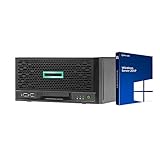
- HP MicroServer Gen10 Plus Tower Server for Business with Microsoft Windows Server 2019 OS!
- Intel Xeon E-2224 Quad-Core 3.4GHz 8MB CPU, Up To 4.6GHz Turbo
- 32GB (2 x 16GB) DDR4 PC4-21300 2666MHz Unbuffered Memory
- 16TB (4 x 4TB) 7.2K 6Gb/s SATA 3.5" HDDs in RAID
- Hard drives and memory upgrades included separately NOT installed, installation required.
VPS plans may offer different configurations, and regional configurations and prices can differ. Verify current availability, renewal terms, and included features for the relevant region on the provider’s product page and plan documentation.
Independent reader supportYour contribution helps us test, update, and keep practical guides available for everyone.How can you split workloads across platforms?
Decide service by service rather than choosing one provider for every component. A practical allocation rule is:
Rank #4
- Map each workload’s needs. Note whether it is a public web application, static site, worker, scheduled task, data store, or custom server process.
- Match managed workloads to documented platform services. For example, Render lists web services, static sites, workers, cron jobs, workflows, and managed datastores.
- Identify where direct control is necessary. Consider a VPS for workloads that genuinely need root access or custom server configuration, provided someone can maintain it.
- Choose durable storage deliberately. Do not rely on Render’s ephemeral default filesystem for data that must persist; select a suitable datastore or persistent storage option.
- Estimate each bill using expected use. Account for usage-based charges and the separate components of provider billing, not just a subscription minimum.
- Revisit the placement when requirements change. Reassess when a service needs more control, its operating burden grows, or measured resource use changes the cost calculation.
This is a workload-placement framework, not a performance ranking. The provider information cited here establishes documented features and billing models, not comparative speed, uptime, savings, or a universally cheapest option.
What’s actually slowing this PC down?
Pick the symptom - the matching free tool is one click away.
Quick Recap
Best Value
Product prices and availability are accurate as of the date/time indicated and are subject to change. Any price and availability information displayed on Amazon at the time of purchase will apply.

