
Free tools Windows power users keep installed
One-click scans. No signup required.
AI memory is not a single store that grows as a conversation continues. At each step, a system has to choose what to put in the model’s limited working context, what to retrieve from external storage, and what to preserve as longer-term state. The most reliable way to overcome the bottleneck is to match that choice to the task: use long context for compact, coherent material; retrieval for large external collections; and specialized memory or cache methods for long-running workloads.
Why AI seems to forget
A language model does not automatically carry every earlier message into each new answer. Its apparent memory is assembled at inference time from several components, each with limits:
- The context window holds the prompt and other material available for the current inference. If relevant history is omitted or crowded out, the model cannot use it.
- Retrieved text can bring information in from documents, databases, or conversation history. But retrieval may miss the right passage, rank it too low, or return so much irrelevant material that useful evidence gets lost in the prompt.
- Persistent or recurrent state can carry selected information across turns or process a stream in stages. It depends on decisions about what to retain, compress, update, and retrieve.
- The key-value (KV) cache stores intermediate attention data used during generation. It can make continued inference faster, but consumes memory and becomes a resource constraint for long inputs or many concurrent requests.
These are different failure modes. A model may have access to the right information but fail to reason over it; a retrieval system may never supply it; or a long-running agent may have compressed or updated its state poorly. Adding more context addresses only some of these problems.
Why a bigger context window is not a complete fix
Transformers use attention to relate tokens to one another. The quadratic scaling of computational complexity with input size has historically constrained longer sequences, as described by Bulatov, Kuratov, Kapushev, and Burtsev in their 2024 paper “Beyond Attention.” Longer inputs can also increase KV-cache memory, latency, and inference cost. The exact burden depends on the model and serving setup, so a token-window specification alone cannot tell you the cost of a real workload.
#1 Best Overall

- Boosts System Performance: 16GB DDR4 Pro Series desktop memory RAM kit (2x8GB) that operates at 3200MHz, 3000MHz, or 2666MHz to improve multitasking and system responsiveness for smoother performance
- Easy Installation: Upgrade your desktop RAM with ease—no computer skills required Follow step-by-step how-to guides available at Crucial for a smooth, worry-free installation
- Compatibility Guaranteed: Ensure seamless compatibility with your desktop by using the Crucial System Scanner or Crucial Upgrade Selector—get accurate recommendations for your specific device
- Trusted Micron Quality: Backed by 42 years of memory expertise, this DDR4 RAM is rigorously tested at both component and module levels, ensuring top performance and reliability
- ECC Type = Non-ECC, Form Factor = UDIMM, Pin Count = 288-pin, PC Speed = PC4-25600, Voltage = 1.2V, Rank and Configuration = 1Rx16, 1Rx8 or 2Rx8
Even if a model accepts a very long prompt, acceptance is not the same as reliable use. A relevant fact can be buried among distractions, split across distant passages, or difficult to combine with other evidence. Long context is most useful when the material is compact enough to fit and coherent enough that the model benefits from seeing it together. For a large archive, passing everything in is often wasteful and may make the answer less dependable.
Published results illustrate both the potential and the limits, but they are experimental findings, not guarantees for a deployed product:
- In the 2024 BABILong benchmark, the authors reported about 60% single-fact question-answering accuracy for RAG, with modest accuracy regardless of context length. In the benchmark’s reported experiments, recurrent-memory transformers reached the highest context-extension performance, up to 50 million tokens after fine-tuning.
- “Beyond Attention” reported recurrent-memory augmentation that stored information for sequences up to two million tokens while scaling compute linearly with input length. That result describes the authors’ method and experiments, not a general capacity available in every model.
How the main approaches address different bottlenecks
RAG, long-context inference, recurrent or hierarchical memory, and KV-cache techniques are not interchangeable. Each moves a different constraint, and each introduces its own costs.
Rank #2

- Boosts System Performance: 32GB DDR5 RAM laptop memory kit (2x16GB) that operates at 5600MHz, 5200MHz, or 4800MHz to improve multitasking and system responsiveness for smoother performance
- Accelerated gaming performance: Every millisecond gained in fast-paced gameplay counts—power through heavy workloads and benefit from versatile downclocking and higher frame rates
- Optimized DDR5 compatibility: Best for 12th Gen Intel Core and AMD Ryzen 7000 Series processors — Intel XMP 3.0 and AMD EXPO also supported on the same RAM module
- Trusted Micron Quality: Backed by 42 years of memory expertise, this DDR5 RAM is rigorously tested at both component and module levels, ensuring top performance and reliability
- ECC Type = Non-ECC, Form Factor = SODIMM, Pin Count = 262-Pin, PC Speed = PC5-44800, Voltage = 1.1V, Rank And Configuration = 1Rx8
| Approach | Best fit | Recall and reasoning trade-off | Operational trade-off |
|---|---|---|---|
| Long-context inference | Compact documents or a coherent task where the relevant material is known in advance. | Can expose the model to related evidence at once, but a larger window does not ensure effective recall across it; irrelevant text can distract. | Simple to integrate, but longer prompts can raise attention, KV-cache, latency, and compute costs. |
| Retrieval-augmented generation (RAG) | Large, changing external collections where only a small subset is likely to matter for a query. | Keeps the prompt smaller, but success depends on finding and ranking the right evidence; multi-hop questions may require several useful passages. | Requires a maintained index and retrieval pipeline. Freshness depends on how source changes reach that index. |
| Recurrent or hierarchical memory | Long-running streams or agents that need state carried forward across stages or sessions. | Can preserve selected information beyond a single prompt, but retention, updates, and transfer to new tasks must be validated. | Requires memory policies and careful evaluation of what gets retained, compressed, and recalled. |
| KV-cache compression or sparsity | Inference workloads constrained by cache memory or throughput. | Targets the model’s working cache, not the quality of external retrieval or the agent’s long-term memory. Quality loss depends on the method and deployed model. | Must be benchmarked for both memory savings and any added cache-loading overhead. |
| Hybrid routing | Workloads with varied queries and input sizes. | Can select retrieval, long context, or a memory module for each case rather than relying on one method. | Adds routing and evaluation complexity, but avoids treating one approach as universally best. |
The trade-off is supported by comparative evaluations. LaRA’s 2025 study tested 2,326 cases across four question-answering tasks and three long-context types. Its authors concluded that the optimal choice between RAG and long context depends on model capability, context length, task type, and retrieval characteristics. A 2025 ICLR paper, “Inference Scaling for Long-Context Retrieval Augmented Generation,” reported gains of up to 58.9% over standard RAG in its benchmark when inference compute and configurations were scaled. The reported maximum is evidence that retrieval can improve with more deliberate inference, not a universal improvement for every system or query.
Do these 3 things before closing this tab:
1Scan for outdated or missing drivers - takes under a minute2Clear out junk files and repair common Windows errors3Fix the driver behind crashes, sound loss and screen glitchesWhen retrieval helps—and when it fails
RAG is useful when a model needs selective access to a collection too large or changeable to place in every prompt. The collection remains external, and the system retrieves candidate evidence for each question. This can reduce prompt size and allow the underlying documents to be updated without retraining the model.
That advantage depends on the retrieval chain working end to end. Poor chunk boundaries can separate a claim from its context; weak search can miss the relevant passage; ranking can put a useful result below the cutoff; and an overloaded prompt can make good results harder to use. Multi-hop questions are especially demanding because the system may need to retrieve several pieces of evidence and connect them. The 2024 BABILong result—about 60% single-fact QA accuracy for RAG in the benchmark—underscores that retrieval is not a guarantee of recall, even on a focused question.
Rank #3
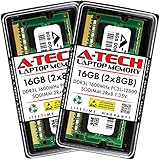
- A-Tech 16GB RAM Kit (2 x 8GB Modules), DDR3/DDR3L SO-DIMM 204-Pin, 1600MHz PC3L-12800 (PC3L-12800S)
- Non-ECC Unbuffered, 2Rx8 (Dual Rank x8), JEDEC DDR3 Low Voltage 1.35V
- Compatible with select DDR3 SODIMM capable Laptop, Notebook, Mini PC, and All-in-One (AIO) computer systems. Please verify your system's memory type, form factor, and maximum supported capacity before purchasing
- Not compatible with desktop (DIMM), DDR2, DDR4, DDR5, ECC Registered (RDIMM), ECC Load Reduced (LRDIMM), or ECC Unbuffered (ECC UDIMM) memory types
- Increases available memory capacity to enhance system responsiveness, application performance, and multitasking capabilities.
MATTER’s authors, in Findings of ACL 2024, noted that retrieved context can bring increased computational cost and latency due to long context length. In other words, retrieval reduces unnecessary input only if the retrieval and prompt-building stages actually keep the context focused.
Make a RAG system more dependable
- Choose chunk sizes and boundaries that preserve the evidence and its surrounding context.
- Use suitable indexing and hybrid retrieval where appropriate, then rerank candidates rather than assuming the first search results are the best evidence.
- Keep retrieved passages limited to what the question needs, and ground claims in those passages with citations where the application requires verifiability.
- Evaluate whether the system retrieves the necessary evidence, not just whether its final answer sounds plausible. Include multi-hop questions and cases where relevant facts are hard to find.
- Measure indexing freshness and update behavior so changes in source material do not silently leave the system answering from stale content.
How persistent memory should work for an agent
An agent expected to remember a user over months needs more than a long conversation transcript. Persistent memory is a policy for selecting and maintaining state. It must decide which facts are likely to matter later, how to represent them compactly, when to revise or remove them, and how to retrieve them for a particular task.
Recurrent and hierarchical memory methods can extend processing across long streams or organize state at different levels, but published token limits are method-specific experimental results. The BABILong finding of up to 50 million tokens after fine-tuning, for example, should not be read as a general-purpose agent memory size. A system must still show that the retained information is accurate, useful for downstream tasks, and updated safely.
Rank #4

- Capacity – 32GB RAM KIT (2 x 16GB Modules) Speed up to 2666MHz Non-ECC Unbuffered 260-Pin 1.2V SODIMM.
- Specs – PCB Color (Green or Black) and Rank (1Rx8 or 2Rx8) may vary depending on production batch. Performance and quality remain consistent across all Timetec products.
- Compatibility – Designed for selected DDR4 Laptop, Notebook, Mini PCs, and All-In-One systems(AIO) that support 260-Pin SODIMM memory. NOT compatible with Desktop DIMM slots.
- Installation – Plug-and-Play Upgrade, Quick and Easy to Install, no expertise required (please refer to your system's manual for guidelines).
- Warranty – All Timetec products are high-quality and rigorously tested to meet stringent standards. Backed by Timetec Limited Lifetime Warranty and professional technical support based in the United States.
For user-facing memory, also decide what information is permitted to persist, how it is isolated between users, how a user can inspect or correct it, and how deletion is handled. These are system-design and privacy requirements, not properties that follow automatically from choosing a memory architecture.
Independent reader supportYour contribution helps us test, update, and keep practical guides available for everyone.How to choose and evaluate a memory design
Do not optimize only for the advertised context window or a single benchmark score. Measure whether the system selects the right evidence and whether it can use that evidence within operational constraints.
- Define the workload. Separate compact, coherent inputs from queries over large collections and from long-running sessions that need durable state.
- Set a recall target. Test direct fact recall and multi-hop reasoning on realistic examples, including cases where relevant details occur far apart or are surrounded by irrelevant text.
- Measure end-to-end cost. Record latency, compute use, and peak memory for the deployed model and serving configuration. Include retrieval, reranking, prompt construction, and cache-loading overhead where applicable.
- Test freshness and updates. Check how quickly source changes reach answers, how memory corrections behave, and whether stale facts can persist.
- Review privacy and isolation. Verify that stored or retrieved information is accessible only in the intended user or data boundary, and decide how retention and deletion work.
- Plan observability and recovery. Make it possible to inspect which passages or memories informed an answer, detect retrieval or update failures, and recover from bad indexes or state without silently trusting corrupted memory.
- Compare methods on the same cases. Use application-level retrieval tests as well as low-level KV-cache measurements. LaRA’s comparison of RAG and long context, and SCBench’s focus on KV-cache behavior, illustrate why both layers matter.
These measurements expose trade-offs that headline capacity cannot: effective recall, multi-hop quality, latency, peak memory, compute cost, freshness, privacy, update complexity, observability, and failure recovery.
What’s actually slowing this PC down?
Pick the symptom - the matching free tool is one click away.
Best Value

- Capacity – 32GB RAM KIT (2 x 16GB Modules) Speed up to 2666MHz Non-ECC Unbuffered 288-Pin 1.2V UDIMM.
- Specs – Black PCB Color and Dual Rank (2Rx8).
- Compatibility – Designed for selected DDR4 Desktop PCs and workstations that support 288-Pin UDIMM memory. NOT compatible with Laptop SODIMM slots.
- Installation – Plug-and-Play Upgrade, Quick and Easy to Install, no expertise required (please refer to your system's manual for guidelines).
- Warranty – All Timetec products are high-quality and rigorously tested to meet stringent standards. Backed by Timetec Limited Lifetime Warranty and professional technical support based in the United States.
A practical default: route by workload
For most systems, a hybrid design is the defensible starting point. Keep compact, related material together in long context when the task benefits from seeing it all. Use RAG to search large external collections rather than loading them wholesale. Add recurrent or hierarchical memory when a long-running agent needs durable state, and consider cache compression or sparsity when inference memory is the specific constraint.
Route between these options based on measured task performance, not a universal rule. The choice should account for the model’s capabilities, input length, task type, retrieval quality, and serving costs—the same interacting factors identified by LaRA. A practical guide for implementing the underlying techniques is Hands-On Large Language Models, which covers attention, context encoding, embeddings, semantic search, dense retrieval, RAG, advanced RAG, and evaluation.
Quick Recap
Product prices and availability are accurate as of the date/time indicated and are subject to change. Any price and availability information displayed on Amazon at the time of purchase will apply.

